
 By admin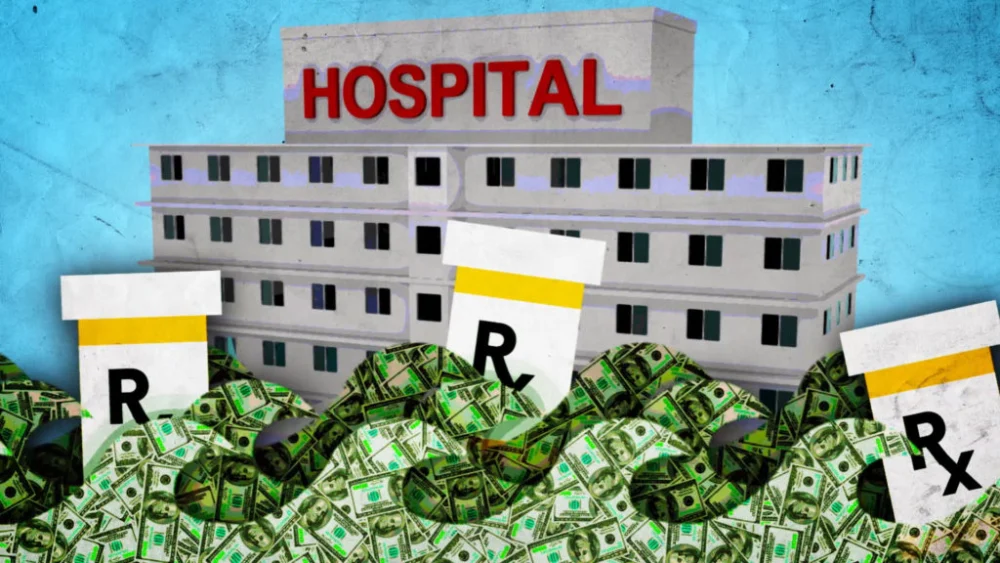
The 340B program, created by Congress in 1992, was originally designed to stretch scarce federal resources as far as possible, allowing safety-net providers—known as "covered entities"—to purchase outpatient drugs from manufacturers at significantly discounted prices. These discounts typically range from 25% to 50% off the average manufacturer price. However, the program does not mandate that hospitals pass those savings directly to patients or insurers. Instead, hospitals can bill insurers at the full negotiated rate and retain the "spread" between the discounted purchase price and the higher reimbursement amount to fund services for low-income and uninsured populations.
The Minnesota report details that in 2024, participating hospitals and clinics in the state received $3.045 billion worth of medicines (valued at wholesale acquisition cost) through the 340B program. To acquire these drugs, the entities paid $1.53 billion. After accounting for $165 million in administrative fees paid to third-party administrators and other partners, the net benefit to the providers totaled approximately $1.34 billion. Perhaps most striking is the concentration of these gains: the state’s largest hospitals accounted for more than $1 billion of that revenue, representing roughly 80% of the total financial benefit collected across the state.
Minnesota remains the only state in the nation to mandate such comprehensive reporting and analysis of 340B data for public consumption. This transparency initiative was born out of growing legislative concern that the program, while vital for the survival of some rural clinics, has expanded far beyond its original intent, transforming into a massive profit center for large, urban hospital systems. The 2024 data suggests that the program’s benefits are heavily skewed toward massive healthcare conglomerates, fueling the argument that the program requires more stringent federal oversight.
The National Context: A Program Under Fire
The 340B program has grown exponentially over the last decade. According to data from the Health Resources and Services Administration (HRSA), which oversees the program, discounted drug purchases reached nearly $54 billion nationally in 2022, a figure that has likely risen significantly in the intervening years. This growth is driven by several factors, including the expansion of the Medicaid program under the Affordable Care Act, the rise of high-cost specialty drugs (particularly in oncology and hematology), and the proliferation of "contract pharmacy" arrangements.
Contract pharmacies allow hospitals that do not have their own in-house pharmacies to partner with external retail pharmacies, such as CVS, Walgreens, or independent local shops, to dispense 340B-discounted drugs. While this was intended to increase patient access, pharmaceutical manufacturers argue that it has led to "duplicate discounts"—where they are forced to provide both a 340B discount and a Medicaid rebate on the same unit of a drug—which is prohibited by law.
In response to this perceived "gold rush," several major drugmakers, including Merck, Eli Lilly, and Sanofi, began restricting 340B discounts for drugs dispensed through contract pharmacies starting in 2020. This triggered a wave of litigation. In 2024, federal appeals courts have largely sided with manufacturers, ruling that the 340B statute does not explicitly require drugmakers to deliver discounted drugs to an unlimited number of contract pharmacies. This legal environment has created a patchwork of access and intensified the lobbying efforts in Washington D.C. and state capitals like St. Paul.

The Debate Over Community Benefit
The central tension of the 340B program lies in the definition of "community benefit." Hospital advocates, led by groups like 340B Health and the American Hospital Association (AHA), argue that the $1.34 billion in revenue identified in Minnesota is not "profit" in the traditional sense. Instead, they contend these funds are essential "lifeblood" that allows hospitals to keep their doors open in the face of dwindling reimbursements for Medicare and Medicaid services.
In Minnesota, proponents point out that 340B revenue supports a wide array of mission-critical services that do not pay for themselves. These include mobile health clinics, free immunization programs, subsidized transportation for patients in rural areas, and the provision of expensive infusion drugs for patients who lack adequate insurance coverage. Without the 340B cushion, advocates warn, many "safety-net" providers would be forced to cut services or close altogether, particularly in the state’s more isolated northern and western regions.
Conversely, the pharmaceutical industry—represented by the Pharmaceutical Research and Manufacturers of America (PhRMA)—and some policy think tanks argue that the program lacks accountability. They point to the fact that many 340B hospitals provide less charity care as a percentage of their total expenses than the average for-profit hospital. Critics also highlight the "site-neutral" payment issue: because 340B hospitals can make such a high margin on drugs, they have a financial incentive to acquire independent physician practices and move those patients into the hospital setting, where drug costs (and the resulting 340B spreads) are higher for the healthcare system as a whole.
Minnesota’s Role as a Regulatory Pioneer
The Minnesota Department of Health’s report is a direct result of state legislation passed in 2023 aimed at pulling back the curtain on drug pricing. State lawmakers expressed frustration that while they were being asked to increase healthcare spending and address rising premiums, they had no visibility into how 340B funds were actually being utilized.
The 2024 report is more comprehensive than the inaugural 2023 version, reflecting improved data collection methods and higher compliance from covered entities. By highlighting that 80% of the revenue stays within the largest institutions, the report has already begun to shift the political conversation. Some Minnesota legislators are now considering "payout" requirements, which would mandate that a certain percentage of 340B savings be spent on direct patient financial assistance or specific public health initiatives.
Other states are watching Minnesota closely. Maine and Oregon have explored similar transparency measures, and federal lawmakers have introduced the "340B SUSTAIN Act" in Congress, which seeks to codify the role of contract pharmacies while simultaneously increasing transparency and preventing duplicate discounts.
Expert Perspectives and Economic Impact
Healthcare economists suggest that the $1.34 billion figure in Minnesota may actually be a conservative estimate. The "wholesale acquisition cost" (WAC) used as a baseline in the report is often lower than the actual list price or the price paid by private insurers. Therefore, the "spread" or profit margin could be even wider than the $1.5 billion difference reported by the MDH.

"The Minnesota data confirms what many have suspected: 340B is no longer a niche program for small clinics; it is a massive financial engine for the modern hospital system," said one healthcare analyst. "The challenge for policymakers is that this engine is now integrated into the very foundation of hospital finances. Pulling it back or placing too many restrictions on it could lead to a systemic shock that impacts patient care in unpredictable ways."
On the other hand, patient advocacy groups have expressed concern that the "340B revenue" is not always translating into lower out-of-pocket costs for the patients themselves. If a patient with a high-deductible plan goes to a 340B hospital, they are often charged the full list price for a drug, even though the hospital purchased it at a steep discount. This "pharmacy benefit gap" is a primary target for future legislative reform.
Looking Ahead
As the 340B program enters its fourth decade, it faces an existential crisis. The Minnesota report provides the empirical evidence that both sides of the debate will use to sharpen their arguments. For the pharmaceutical industry, the $1.34 billion in revenue is proof of a program gone off the rails. For hospitals, it is proof of the immense scale of the "uncompensated care" they provide in an increasingly expensive medical landscape.
In the coming months, the Minnesota Department of Health is expected to engage in further discussions with stakeholders to refine the reporting process for 2025. Meanwhile, the federal government is under pressure to provide clearer guidelines on the use of contract pharmacies and to establish a more robust system for tracking where every 340B dollar goes.
The 2024 Minnesota report serves as a landmark document in the history of U.S. healthcare transparency. It confirms that the 340B program is a billion-dollar enterprise within a single state, concentrated in the hands of its largest healthcare players. Whether this revenue is viewed as a necessary subsidy for a fragile healthcare system or an unchecked windfall for corporate medicine remains the central, unresolved question of the American drug pricing debate. For now, Minnesota has provided the data; it is up to the public and the policymakers to decide what to do with it.
