
 By admin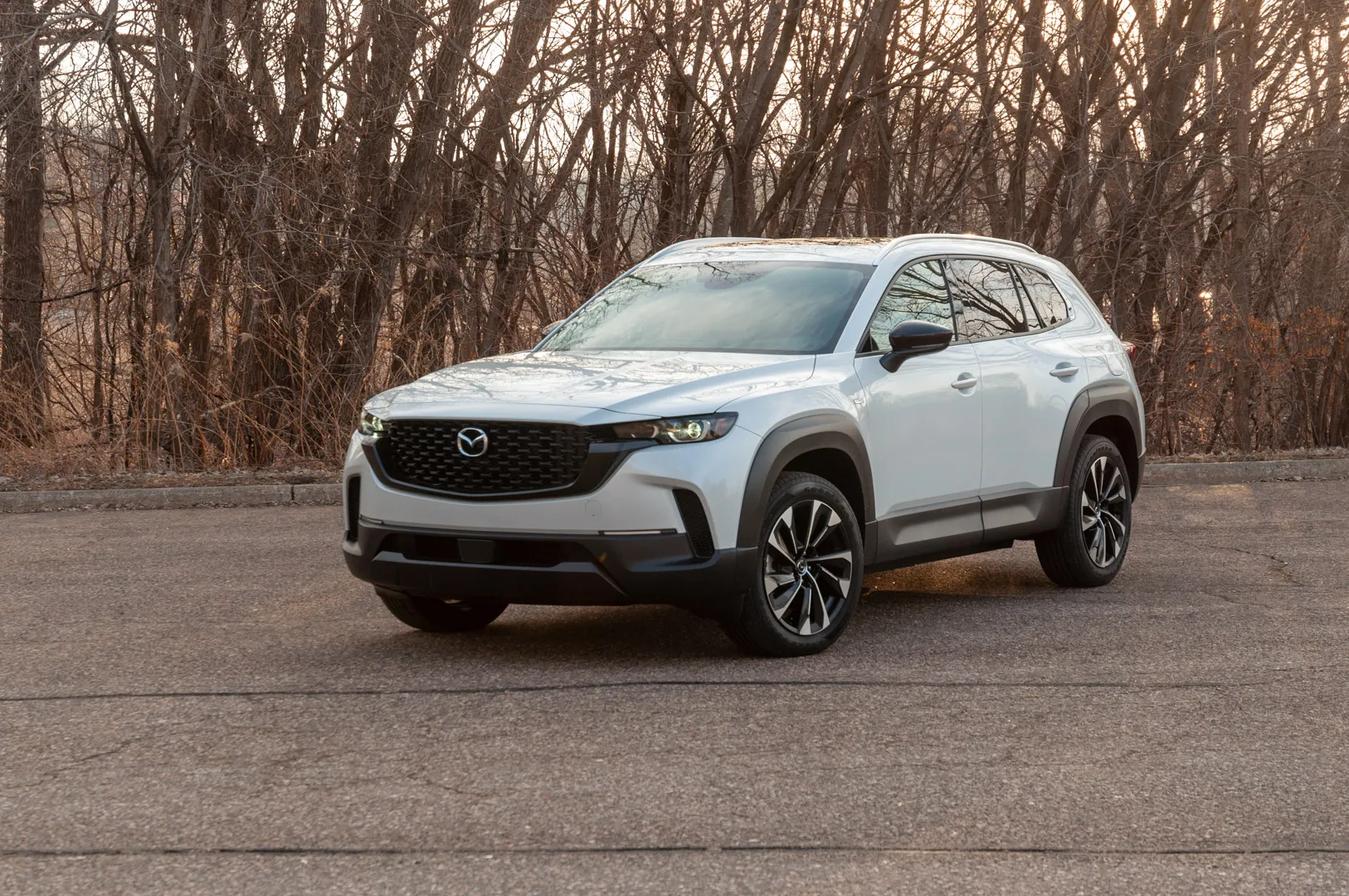
Mazda has meticulously cultivated a brand identity centered around driving exhilaration, sophisticated design, and a premium feel that often punches above its weight class. The CX-50 itself, introduced as a more rugged, adventure-oriented sibling to the well-loved CX-5, was already a departure from the brand’s typical road-focused dynamics, prioritizing off-road aesthetics and capability over the lithe handling of its stablemates. Integrating a hybrid powertrain, particularly one sourced from Toyota, carries the potential to enhance its practicality, yet in the case of the 2025 Mazda CX-50 Hybrid, this integration introduces unexpected compromises that tarnish the overall experience. This isn’t just about enthusiasts whose hearts won’t be set aflame; it’s about a vehicle that struggles to raise anyone’s pulse while simultaneously failing to deliver the seamless refinement expected from either Mazda or Toyota.
And yet, despite these significant drawbacks, the 2025 Mazda CX-50 Hybrid paradoxically emerges as the most "sensible" offering within the CX-50 lineup from a purely value-focused, practical standpoint. With its more fuel-efficient powertrain, it promises better fuel economy than its gasoline-only counterparts, providing sufficient power for the rigors of daily driving. However, the existing packaging flaws of the non-hybrid CX-50, particularly concerning the seating arrangement, are not only carried over but are in some instances exacerbated by the hybrid system. Furthermore, the powertrain itself, which one might expect to be a beacon of Toyota-esque reliability and smoothness, introduces unexpected refinement issues that detract from the driving experience.
Our comprehensive evaluation of the 2025 Mazda CX-50 Hybrid involved a week of diverse driving scenarios, ranging from the stop-and-go demands of urban commuting to a brief family road trip on the highway. This extended assessment allowed us to uncover the vehicle’s strengths and weaknesses in detail, offering a nuanced perspective on where it succeeds and where it falls short of expectations.

Pro: The Hybrid is the Most Efficient 2025 Mazda CX-50 Model
The primary raison d’être for any hybrid vehicle is superior fuel efficiency, and in this regard, the 2025 Mazda CX-50 Hybrid delivers. This is, unequivocally, the most efficient model in the CX-50 lineup. The powertrain, a direct transplant from the highly successful Toyota RAV4 Hybrid, is a sophisticated system comprising a 2.5-liter inline-4 engine paired with a planetary torque-split hybrid system. This arrangement utilizes two electric motors, with an additional 54-horsepower motor dedicated to the rear wheels, enabling an advanced all-wheel-drive capability. Powering this electric componentry is a 1.59-kWh nickel-metal-hydride battery pack. The combined system output is a respectable 219 horsepower and 163 lb-ft of torque.
The official EPA ratings for the CX-50 Hybrid are highly competitive, checking in at an impressive 39 mpg in the city, 37 mpg on the highway, and a combined rating of 38 mpg. To put this into perspective, these figures are significantly better than the standard gasoline CX-50’s 25/31/28 mpg (city/highway/combined) and especially the turbocharged model’s 23/29/25 mpg ratings. For consumers prioritizing fuel economy in a compact SUV, this represents a substantial improvement, potentially leading to considerable savings at the pump over the vehicle’s lifespan.
However, real-world driving conditions often paint a slightly different picture. During our testing, the trip computer indicated an average of 34.0 mpg over 190 miles of mixed suburban driving. This figure, while still commendable and notably better than the non-hybrid models, fell short of the EPA’s combined rating. On a subsequent highway journey covering approximately 120 miles at speeds exceeding 70 mph, the CX-50 Hybrid averaged 31.2 mpg. This is also below the highway rating, suggesting that while the hybrid system excels in stop-and-go city traffic where electric assist is maximized, sustained higher-speed driving reduces its advantage, a common characteristic of conventional hybrids compared to plug-in hybrids or purely electric vehicles. Despite these real-world discrepancies, the CX-50 Hybrid still stands as the clear winner for fuel efficiency within its own family, providing a compelling argument for environmentally conscious buyers or those simply looking to reduce their operating costs.
Con: Mazda CX-50 Hybrid Powertrain is Less Refined than Toyota RAV4
One of the most perplexing and disappointing aspects of the 2025 Mazda CX-50 Hybrid is the unexpected lack of powertrain refinement, particularly when considering its Toyota RAV4 Hybrid lineage. Toyota’s hybrid systems are renowned for their seamless operation and quiet transitions between gasoline and electric power. Yet, in the CX-50 Hybrid, these qualities are conspicuously absent, replaced by a series of tactile and auditory disturbances that significantly detract from the driving experience.

At idle, for instance, a discernible on-and-off quiver manifests through the steering column, steering wheel, and even the front seat. This vibration, which comes and goes, suggests an issue with the engine mounts, the engine’s start-stop mechanism, or perhaps an accessory load affecting the engine’s balance during its transitions. Such a persistent tremor is uncharacteristic of modern vehicles, especially those bearing the refinement standards of either Mazda or Toyota.
More concerning is the behavior while the vehicle is in motion. When accelerating with approximately three-quarters throttle, a distinct driveline lash occurs. This sensation is akin to a vibration or shudder, feeling as though components are not meshing correctly within the drivetrain. It propagates throughout the entire car, creating an unsettling feeling for occupants. This consistent issue, experienced repeatedly during our week-long test, points to a potential calibration problem between Mazda’s chassis and the Toyota-sourced hybrid system, or perhaps a mechanical resonance specific to the CX-50’s integration. What makes this even more puzzling is that these specific refinement issues—the idle quiver and the driveline lash during acceleration—are phenomena we have never encountered in the Toyota RAV4 Hybrid, the very vehicle from which this powertrain was ostensibly borrowed. This suggests that the issue isn’t with the core hybrid components themselves, but rather with their adaptation and tuning within the CX-50’s platform, representing a significant oversight in engineering and quality control that undermines the perceived value and comfort of the vehicle.
Pro: Mazda CX-50 Hybrid is a Sleeper
In an era where many hybrid vehicles are explicitly designed to broadcast their eco-credentials through distinctive styling cues, the 2025 Mazda CX-50 Hybrid takes a refreshingly understated approach. It truly is a "sleeper" in the hybrid segment. Unless one is actively looking for them, the subtle indications of its hybrid nature are easily missed. The only visual identifiers are a small, discreet "Hybrid" badge located on the front fender and another on the rear tailgate. For those with an encyclopedic knowledge of Mazda’s design language, certain wheel designs might also offer a clue, but these are hardly overt signals.
This subtle branding aligns perfectly with Mazda’s broader strategy of presenting a more premium and sophisticated image. Unlike some competitors that opt for futuristic or overtly aerodynamic designs to signal efficiency, the CX-50 Hybrid retains the handsome, rugged aesthetic of its gasoline-powered siblings. Its Kodo design philosophy, characterized by flowing lines, muscular proportions, and a sense of dynamic motion, remains untainted by "green" embellishments. This approach allows the CX-50 Hybrid to appeal to buyers who appreciate the fuel economy benefits of a hybrid but prefer not to make a conspicuous statement about their vehicle’s powertrain. It’s a choice for those who value efficiency without sacrificing style or blending into the general automotive landscape. In essence, it offers the best of both worlds: advanced hybrid technology wrapped in an appealing, conventional SUV package that quietly commands attention rather than loudly demanding it.

Con: CX-50 Hybrid Compromises Compromised Packaging
The Mazda CX-50, even in its non-hybrid form, has been criticized for its rear-seat packaging, which is objectively worse than that of its sibling, the CX-5. Where the CX-5 offers a more upright and spacious rear cabin, the CX-50’s design, influenced by its wider, lower stance and "outdoorsy" aesthetic, results in a more constrained rear seating area. The "stadium seating" arrangement, intended to give rear occupants a better view over those in front, is a laudable concept, but its execution already places adults in a somewhat less comfortable, knees-up position.
The introduction of the hybrid powertrain, specifically the placement of the battery pack, unfortunately exacerbates these existing compromises. The 1.59-kWh nickel-metal-hydride battery is housed beneath the rear seat. While this placement avoids infringing on cargo space, it necessitates modifications to the rear seating area. As a result, rear-seat occupants in the hybrid model sit even closer to the floor than in the non-hybrid, yet paradoxically, they are also positioned higher from the ground. This combination leads to a further reduction in effective legroom, making an already less comfortable rear seat even more restrictive. For families or those frequently transporting adult passengers, this becomes a significant drawback, undermining the practicality of a compact SUV.
Beyond the rear seats, the front seating arrangement also presents ergonomic challenges. The front seats are mounted on brackets that position them notably higher than expected. This creates what multiple members of our editorial team have described as a "booster-seat impression," an unnatural and somewhat perched seating posture that doesn’t quite align with the rest of the vehicle’s interior ergonomics. While this setup might be "livable" once settled, the ingress and egress for taller individuals proved problematic. Both my father and a friend struggled to enter the front passenger seat without contorting their torsos and ducking significantly to avoid hitting their heads on the roofline. The resulting grunts and groans underscored a fundamental design flaw that impacts daily usability and passenger comfort. This demonstrates a puzzling lack of consideration for basic human factors in an otherwise well-designed interior. It highlights that while Mazda aims for premium, some fundamental ergonomic aspects are still being overlooked, particularly in this hybrid iteration.
Pro: CX-50 Hybrid Delivers Premium Look and Feel
Despite the aforementioned compromises and powertrain quirks, the 2025 Mazda CX-50 Hybrid unequivocally continues Mazda’s commendable trend of offering an interior aesthetic and material quality that punches significantly above its weight class. Stepping inside the CX-50 Hybrid, one is immediately greeted by an ambiance that feels genuinely premium, challenging perceptions of what a mainstream compact SUV can offer.

Across the cabin, soft-touch materials are abundant, gracing the dashboard, door panels, and other frequently contacted surfaces. This tactile richness is complemented by thoughtful design details, such as sophisticated stitching on the dashboard and subtle contrast piping on the seats, which elevate the visual appeal. The attention to detail extends to the control interfaces; for instance, the climate and audio functions are operated via knurled buttons and dials. These aren’t just aesthetically pleasing; they offer a satisfying tactile feedback, reinforcing the sense of quality and precision.
When compared directly to its rivals, the CX-50 Hybrid’s interior truly shines. It surpasses the cabin quality of any Toyota RAV4, which, while functional and durable, often feels more utilitarian and less luxurious. Similarly, it handily beats the interior of a Kia Sportage, which, despite its contemporary design, doesn’t quite match the material richness and refined execution found in the Mazda. This commitment to a premium look and feel is a cornerstone of Mazda’s strategy to move upmarket, positioning its vehicles as a more accessible alternative to entry-level luxury brands. For buyers who prioritize interior aesthetics and material quality, the CX-50 Hybrid offers a compelling argument, providing an upscale environment that belies its non-luxury badge and price point. This aspect is a consistent strength across Mazda’s lineup, and the CX-50 Hybrid maintains that high standard, making the time spent inside the cabin a genuinely pleasant experience, at least visually and tangibly.
Con: The CX-50 Hybrid is Loud
Hybrids, by their very nature, are often associated with quiet operation, especially at lower speeds when relying solely on electric power. Around town, the 2025 Mazda CX-50 Hybrid generally adheres to this expectation, maintaining a relatively subdued cabin environment as long as the throttle isn’t aggressively engaged. The gasoline engine, when it does kick in, remains a background presence, its ruckus kept to a minimum. However, this tranquility evaporates once the vehicle reaches highway speeds, revealing a significant flaw in its acoustic insulation and aerodynamic design.
Above 55 mph, the CX-50 Hybrid becomes surprisingly loud inside. The primary culprits appear to be a rather astonishing amount of wind noise emanating from both the side mirrors and the A-pillar area. This persistent whooshing and buffeting sound creates a constant, intrusive drone that makes conversations difficult and requires occupants to raise their voices. It detracts significantly from the premium cabin experience that Mazda otherwise strives to deliver. In a segment where competitors like the Honda CR-V Hybrid often prioritize a quiet cabin for passenger comfort, the CX-50 Hybrid’s highway noise levels are a glaring oversight. This issue suggests either inadequate sound deadening in critical areas or an aerodynamic design that generates excessive turbulence, or perhaps a combination of both. For a vehicle intended for family road trips, as suggested by our test, such high levels of cabin noise can lead to passenger fatigue and diminish the overall enjoyment of long journeys. This stark contrast between its quiet urban demeanor and its noisy highway performance is a major disappointment and undermines the hybrid’s otherwise practical appeal.

Pricing and Value Proposition
The 2025 Mazda CX-50 Hybrid enters the market with a starting price of a reasonable $35,390, which includes a $1,420 destination charge. Our test vehicle, a Premium Plus trim model, carried a price tag of $41,920. This top-tier trim added a host of desirable features designed to enhance comfort, convenience, and technology. These niceties included a head-up display, which projects essential driving information onto the windshield; stylish 19-inch alloy wheels that contribute to its distinctive appearance; a premium Bose audio system for an elevated auditory experience; and ventilated front seats, a welcome luxury during warmer weather.
When positioned against its direct competitors, the CX-50 Hybrid’s pricing strategy reveals an interesting play. Notably, Mazda managed to undercut a fully loaded Honda CR-V Hybrid Sport Touring model by $1,025 with the CX-50 Hybrid we drove. This competitive pricing makes the CX-50 Hybrid an attractive option for buyers seeking a well-equipped hybrid SUV without breaking the bank, especially given Mazda’s reputation for premium interiors. However, this financial advantage comes with a significant asterisk: the CX-50 Hybrid carries over and, in some cases, exacerbates the compromised packaging issues inherent to the non-hybrid CX-50, particularly concerning rear-seat comfort and front-seat ingress/egress.
Ultimately, the value proposition of the 2025 Mazda CX-50 Hybrid becomes a delicate balance. On one hand, it offers superior fuel economy within its lineup, a genuinely premium-feeling interior, and an understated aesthetic at a competitive price point. On the other hand, potential buyers must weigh these benefits against the significant drawbacks of powertrain refinement issues, notably the vibrations and driveline lash, the compromised seating arrangements that diminish practicality, and the surprisingly loud cabin at highway speeds. For a brand that prides itself on delivering refined driving experiences, these flaws are difficult to overlook.
Conclusion
The 2025 Mazda CX-50 Hybrid represents a pivotal, albeit conflicted, moment for Mazda. It delivers on the promise of increased fuel efficiency, a necessary step for the brand in a rapidly electrifying market. It also maintains Mazda’s commendable commitment to a premium interior aesthetic, offering a cabin that feels more upscale than many rivals. However, the decision to integrate a Toyota-sourced hybrid powertrain, seemingly a pragmatic shortcut, has introduced a host of unexpected refinement issues and exacerbated existing packaging compromises. The uncharacteristic vibrations, driveline lash, and excessive cabin noise at highway speeds fundamentally undermine the "Jinba Ittai" (horse and rider as one) philosophy that Mazda so ardently champions.

This model, while making "practical value-focused sense" for its efficiency, ultimately gives us pause. It feels like a necessary but imperfect bridge to Mazda’s electrified future, rather than a fully realized embodiment of the brand’s core values. The disappointment stems from the fact that a Mazda, traditionally praised for its driving dynamics and meticulous engineering, feels less polished than expected, particularly when compared to its donor vehicle, the RAV4 Hybrid.
The future, however, holds promise. Mazda is actively developing its own in-house hybrid system for the next generation of its vehicles, starting with the upcoming CX-5. This suggests that the CX-50 Hybrid, with its borrowed powertrain, might be a temporary solution. We anticipate that Mazda’s own hybrid technology will be more seamlessly integrated, better tuned to the brand’s chassis, and ultimately deliver the refined, driver-centric experience that customers have come to expect. Until then, the 2025 Mazda CX-50 Hybrid remains a practical choice for efficiency-minded buyers, but one that demands a considerable tolerance for its significant, and frankly, un-Mazda-like compromises. It’s a step forward in fuel economy, but a regrettable stumble in the brand’s otherwise confident stride towards premium quality and driving enjoyment.
2025 Mazda CX-50 Hybrid Premium Plus
Base price: $35,390 including $1,420 destination charge
Price as tested: $41,920
Powertrain: 219-hp hybrid system, all-wheel drive
EPA fuel economy: 39/37/38 mpg (city/highway/combined)

The hits: Sleeper hybrid status with subtle badging, sharp and rugged exterior design, premium interior materials and aesthetic, competitive pricing that undercuts rivals like the CR-V Hybrid, offers the best fuel economy of any CX-50 model.
The misses: Persistent powertrain refinement issues including idle vibrations and driveline lash, compromised rear-seat packaging and challenging front-seat ingress/egress, surprisingly loud cabin at highway speeds due to wind noise.
