
 By Lina Irawan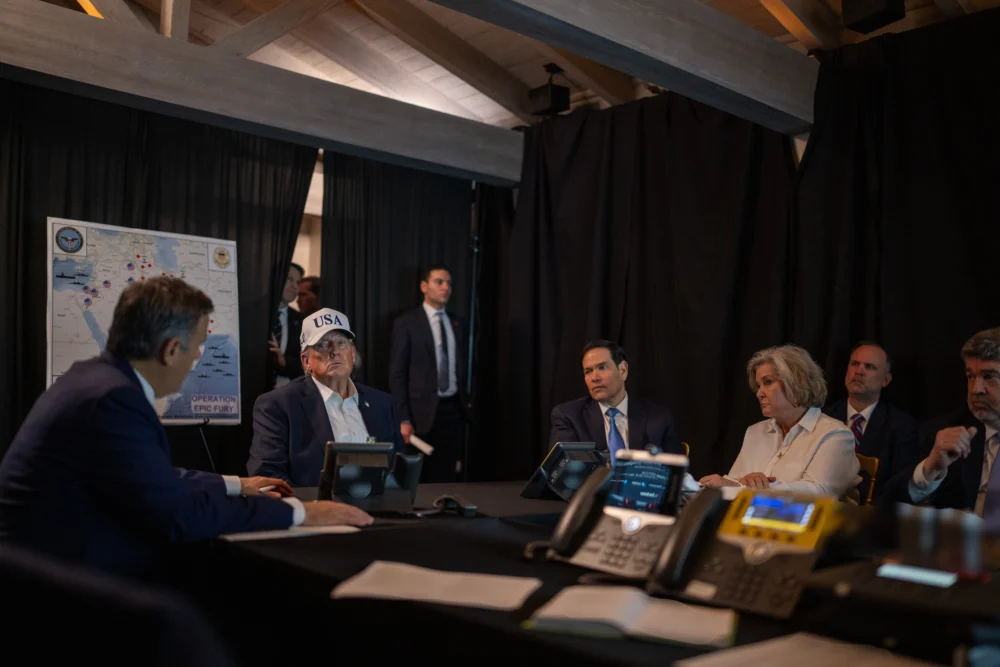
At the outset of any escalation in geopolitical conflict, the humanitarian cost of military action will be the first question for many. When tensions between the U.S. and Iran erupted into war this weekend in early March 2026, sparked by escalating naval confrontations in the Persian Gulf and a critical attack on a major oil facility, economists were acutely mindful of the potential loss of life and livelihoods. Still, they observed that the reaction in financial markets was remarkably rational, suggesting that while the immediate shock was profound, some degree of geopolitical risk had already been priced into global assets. As news of the full-scale conflict broke, Dow futures experienced an initial dip but quickly stabilized, while oil prices surged, reflecting immediate supply concerns.
As traders return to their desks today, it will be those on energy and oil teams who will have the most complex in-trays to unpick. The Middle East, a pivotal region for global energy supply, is now a theater of war, with supply chain disruption widely expected—and in some cases, risks already partially priced in—as a result of the chaos that unfurled over the weekend. The Strait of Hormuz, through which roughly one-fifth of the world’s total oil consumption passes daily, immediately became a focal point of anxiety. While initial reports indicated it remained open, the threat of its closure or disruption loomed large, pushing benchmark crude prices like Brent and West Texas Intermediate (WTI) upward by over 10% in early trading, signaling a profound shift in energy market dynamics. Analysts recalled the 1970s oil shocks and the Gulf War’s impact, underscoring the potential for prolonged volatility and inflationary pressures.
From a macroeconomic lens, UBS’s Chief Economist Paul Donovan told clients this morning, there are four critical considerations that will shape the global economic outlook in the coming weeks and months. These factors, ranging from immediate commodity price shocks to long-term fiscal sustainability, paint a complex picture for policymakers and investors alike.
Most obviously is the consequence of higher oil prices and how that trickles through to the inflation number—a particular concern for U.S. economists whose ears are pricked for any further threats to affordability. A sustained increase in crude oil prices directly impacts transportation costs for goods and services, raises manufacturing expenses, and ultimately pushes up consumer prices across the board. For an economy already grappling with post-pandemic inflationary pressures and a Federal Reserve carefully navigating its monetary policy, a significant oil shock could force difficult choices. A $10-$20 per barrel increase, if sustained, could add several tenths of a percentage point to headline inflation figures, potentially derailing hopes for interest rate cuts and placing further strain on household budgets already squeezed by persistent cost-of-living increases. The prospect of "stagflation," a dreaded combination of high inflation and stagnant economic growth, once again enters the economic discourse.
The second critical factor is whether global trading routes will be disrupted and slowed, with the Yemen-based Houthi military potentially launching attacks on ships passing through the Red Sea. This maritime chokepoint, a vital artery for East-West trade, sits strategically between the continents of Africa and Asia. It funnels into the Suez Canal, which leads to the Mediterranean Sea, meaning if ships could not pass safely through the Red Sea in the south, where it borders Yemen, the boats would instead have to divert around the entire African continent via the Cape of Good Hope. Such a diversion adds weeks to transit times, significantly increases fuel consumption and costs, and dramatically inflates shipping insurance premiums.
The Suez Canal and Red Sea route handles approximately 12% of global trade by volume, including a substantial portion of containerized cargo, bulk goods, and energy shipments. A disruption here would create cascading effects across global supply chains, delaying everything from electronics and apparel to agricultural products and critical industrial components. Manufacturing schedules would be thrown into disarray, inventory levels would plummet, and consumers would face higher prices and reduced availability of goods. The implications for European economies, heavily reliant on this route for imports from Asia, would be particularly severe, potentially tipping some into recession. Moreover, the environmental impact of longer voyages and increased emissions from ships taking the arduous route around Africa cannot be overlooked.
These two factors, higher oil prices and trade route disruptions, are relatively shorter-term in their immediate impact, added Donovan. However, their cumulative effect could reverberate for months, if not years, reshaping global economic geography and trade patterns. The longer-term thinking, Donovan explained, begins with how the U.S. will bankroll yet another foreign conflict. This concern comes at a time when many economists and consumers have been growing steadily more worried about the fiscal trajectory of the U.S., which is sitting on a national debt pile of more than $38.5 trillion. This monumental figure, a consequence of decades of deficit spending, including previous wars, tax cuts, social program expansions, and pandemic-era stimulus, represents a significant burden on future generations.
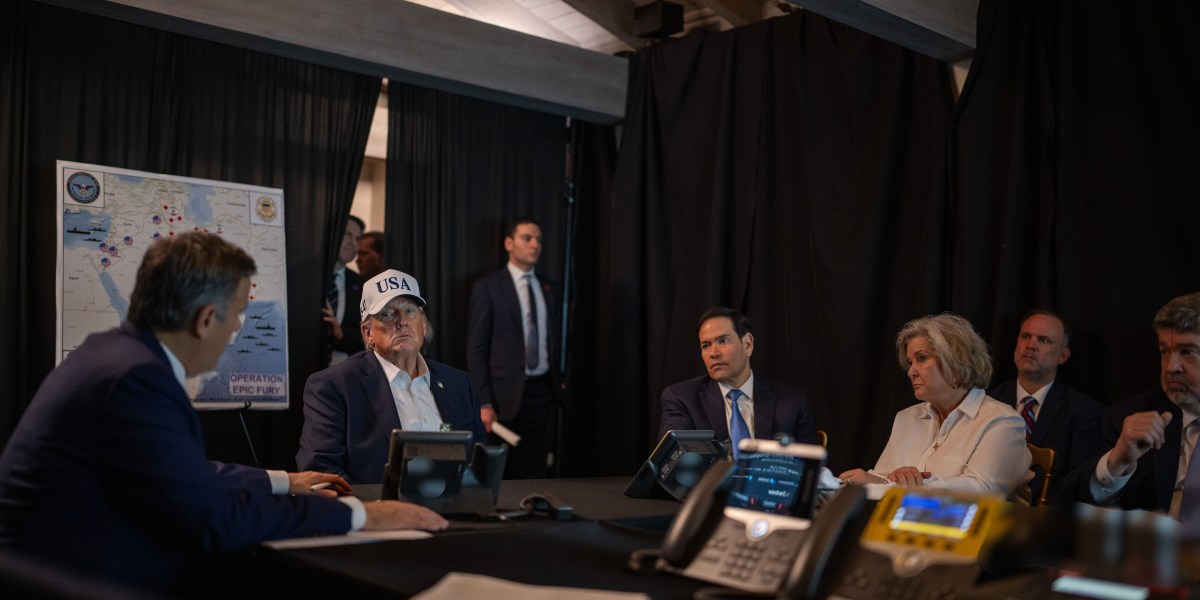
Economists aren’t primarily concerned about whether Uncle Sam will ever be able to reduce that astronomical number; rather, they’d like to see the U.S. government adding to it at a slower pace, courtesy of more balanced federal budgeting. Many have suggested the annual deficit could be shaved to 3% of GDP in a bid to slow the accumulation, a target often cited as sustainable for developed economies. However, Donovan points out the immediate challenge: “President Trump indicated attacks could go on for four or five weeks, and there are already reports of a need to urgently replenish weapons stockpiles. That potentially adds significantly to the fiscal deficit.” Modern warfare, especially against a sophisticated adversary, is incredibly expensive, involving advanced munitions, intelligence gathering, and logistical support that runs into billions of dollars per week. Replenishing high-tech missile inventories, drone fleets, and precision-guided bombs, which can cost millions per unit, will strain an already stretched defense budget.
“It’s not likely to be a huge increase in the near term that immediately pushes the debt ceiling to breaking point,” Donovan clarified, “but it may well be noticeable coming alongside the presumed rebate of illegal tariffs, which represents a substantial loss of government revenue.”
Indeed, the White House’s finances have taken a significant hit in recent weeks, exacerbating the fiscal challenges posed by the new conflict. The Supreme Court ruled late last month (in February 2026) that the grounds under which President Trump had introduced a plethora of tariffs throughout 2025—including his controversial ‘Liberation Day’ global update, which imposed broad duties on various imports—were not legal. The Court found that the administration had overstepped its authority under the International Emergency Economic Powers Act (IEEPA), which is typically reserved for genuine national security emergencies, by applying it to broad trade policy without sufficient justification.
As a result of this landmark ruling, a portion of tariff revenues, estimated to be some $175 billion, will now be passed back to international trade courts for reimbursement to U.S. businesses that paid these duties. This unprecedented repayment obligation represents a massive unexpected expenditure for the Treasury. Widely, the expectation is that this reimbursement process will take years, involving complex legal battles and administrative procedures. Treasury Secretary Scott Bessent, while acknowledging the immediate financial hit, insisted that despite this income being effectively lost, the trajectory of U.S. duty revenue collection would not slow in the long term. He argued that new, legally sound tariff policies would offset the loss. Indeed, in a swift response to the Supreme Court’s decision and to shore up revenue, President Trump has already imposed an immediate 10% levy on global trading partners, a move that critics fear could ignite fresh trade wars and further complicate global economic stability.
However, additional spending on costly overseas military endeavors, coupled with a staggering $175 billion hit to the government’s bottom line from the tariff rebates, will do little to reassure budget hawks who want to see the U.S. on a steadier fiscal footing. These fiscal conservatives, comprising economists, policymakers, and advocacy groups, argue that accumulating debt poses long-term risks to economic growth, national security, and intergenerational equity. They fear that escalating interest payments on the debt will crowd out essential government investments in infrastructure, education, and research, thereby undermining future prosperity.
Speaking just a week ago, following the news of the IEEPA ruling and prior to the Middle East action, Maya MacGuineas, president of the Committee for a Responsible Federal Budget, delivered a stark warning. “Ultimately, the president’s agenda thus far has added significantly to the national debt, and we will be spending even more because of our past refusal to pay for our priorities,” MacGuineas stated. She highlighted the alarming trajectory of interest payments: “Interest payments on the debt will total nearly $17 trillion between now and 2036; annual payments will rise from more than $1 trillion this year to more than $2 trillion by 2035.” These figures underscore the growing cost of servicing the national debt, which is projected to become the largest category of federal spending, surpassing even defense and Medicare in the coming years. This surge in interest costs is driven by both the sheer volume of outstanding debt and a rising interest rate environment, making the government’s borrowing increasingly expensive.
Returning to Donovan, the UBS economist added that beyond the direct economic and fiscal impacts, the Middle Eastern conflict will also hit growth in the region, for obvious reasons. The immediate violence and heightened instability will deter investment and disrupt local economies. “For the Gulf region, although the peak tourism season has passed, there could be significant reputational damage arising from social media coverage and international news,” he observed. Major hubs like Dubai, known for their luxury tourism and status as a tax-free haven for the global elite, could see a sharp decline in visitors. Travel advisories, flight cancellations, and a general perception of insecurity can cripple an industry that has become a cornerstone of many Gulf economies’ diversification strategies.
Furthermore, Donovan noted, this reputational damage and instability “might also have a bearing on decisions of the nomadic wealthy.” These ultra-high-net-worth individuals, who frequently move their residences and investments across global financial centers, are highly sensitive to geopolitical risk and stability. A perceived erosion of safety or economic certainty in the Gulf could prompt an outflow of capital and talent, hindering regional development plans such as Saudi Arabia’s Vision 2030 or the UAE’s ambitious economic diversification efforts. The conflict threatens to undermine years of work aimed at transforming these oil-dependent economies into global hubs for finance, technology, and tourism, pushing them back into a reliance on volatile energy markets.
In summary, the eruption of war between the U.S. and Iran in early 2026 presents a multifaceted challenge to the global economy. From immediate oil price shocks and severe trade route disruptions to profound strains on U.S. fiscal health and significant damage to regional growth and investment in the Middle East, the repercussions are far-reaching. Policymakers face the unenviable task of navigating persistent inflation, precarious supply chains, and mounting national debt, all while grappling with the unpredictable costs of prolonged military engagement. The "rational" market reaction may belie a deeper, more systemic vulnerability that this conflict is now exposing, demanding urgent and coordinated global responses to prevent a deeper economic downturn.
