
 By Lina Irawan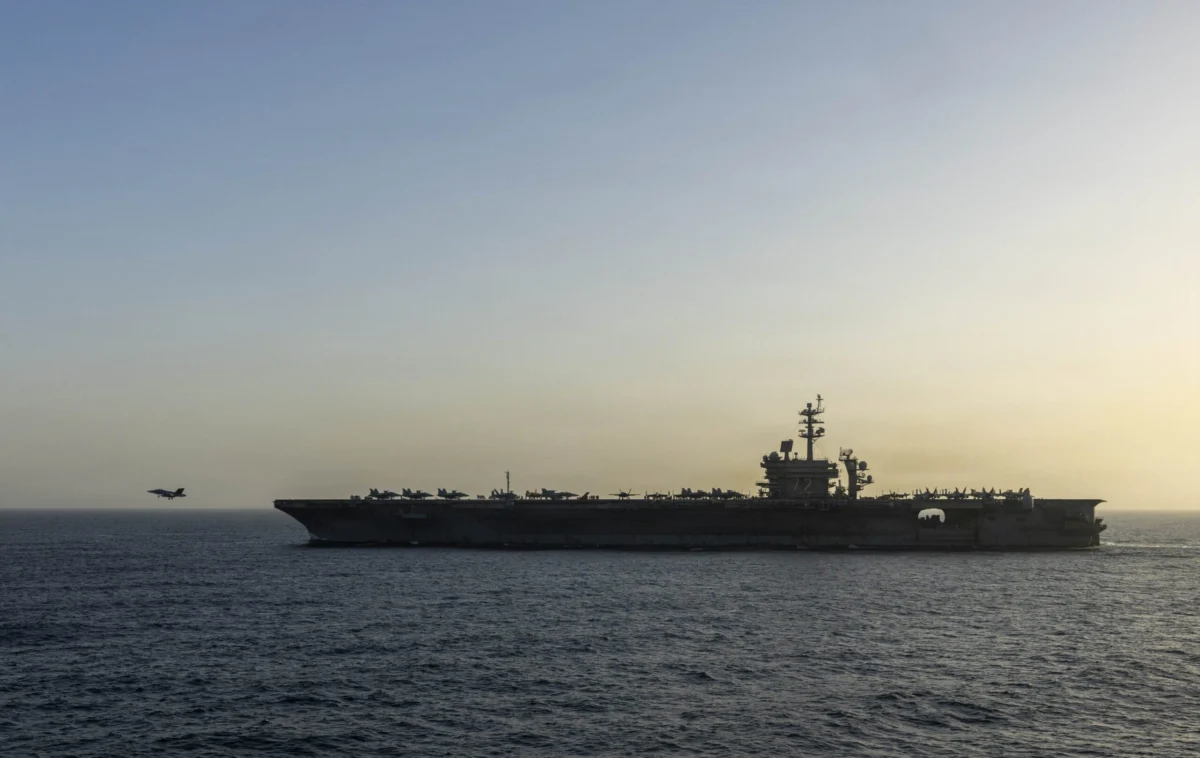
The dramatic 24-hour period began on Friday morning with a flicker of hope for de-escalation. Iranian Foreign Minister Abbas Araghchi, a figure often associated with the more diplomatic and outward-looking elements of the Iranian establishment, announced that the Strait was "completely" open to ships adhering to Iran’s established maritime routes. This declaration was swiftly echoed by U.S. President Donald Trump, who, perhaps eager to signal a potential breakthrough, also proclaimed Iran had reopened the crucial passage. The news, even if tentative, sparked an immediate and significant rally in global stock markets, reflecting the immense relief at the prospect of easing tensions and unhindered energy flows. For a world grappling with the economic fallout of the "war against Iran" – a conflict initiated in late February by the U.S. and Israel that saw the targeted killing of Supreme Leader Ali Khamenei and several other top Iranian leaders – any sign of a return to normalcy was eagerly embraced.
However, this brief moment of optimism was shattered almost as quickly as it emerged. The Islamic Revolutionary Guard Corps (IRGC), Iran’s powerful military and ideological backbone, wasted no time in asserting its continued, firm control over the Strait. Their rebuttal wasn’t just a quiet correction; it was a loud, public condemnation of the Foreign Minister’s statement, indicative of deep fissures within the regime. Tasnim news agency, a media outlet closely affiliated with the IRGC, took the unusual and pointed step of criticizing Araghchi’s declaration, labeling it "a complete lack of tact in information dissemination." This was not merely a dispute over facts, but a public dressing-down, signaling a direct challenge to the authority and messaging of the Foreign Ministry. Fars, another IRGC-linked news agency, further amplified the criticism, stating that "following the unexpected tweet from the Foreign Minister about the liberation of the Strait of Hormuz, Iranian society has been plunged into an atmosphere of confusion." This unprecedented public squabble between key branches of the Iranian government laid bare the fierce power struggle unfolding in Tehran.
The roots of this internal discord are deeply intertwined with the cataclysmic events of the past few months. Since the U.S. and Israel launched their offensive and eliminated Supreme Leader Ali Khamenei, the landscape of Iranian power has irrevocably shifted. Khamenei, for decades, had served as the ultimate arbiter, the unifying figure whose authority, while sometimes challenged, ultimately held together the disparate and often competing factions within the Islamic Republic. His death created a profound power vacuum, unleashing long-simmering rivalries and ideological differences that he had previously managed to contain.
In this new, fragmented environment, the IRGC has rapidly solidified and expanded its influence, taking a far more assertive and dominant role in the regime’s military and diplomatic responses. While IRGC commanders have also suffered significant casualties in the ongoing conflict, the remaining officers are widely seen as steering Iran toward an increasingly hard-line and combative stance. Their institutional interests, deeply entrenched in the nation’s security apparatus and economy, align with a strategy of continued resistance rather than seeking a ceasefire deal. For the IRGC, maintaining a posture of defiance and control over critical choke points like the Strait of Hormuz represents their primary source of leverage against the U.S. and its allies. A cessation of hostilities, particularly one that might involve concessions on maritime access or Iran’s regional influence, could diminish their power and legitimacy.
Experts have been quick to highlight the gravity of these internal dynamics. Saeid Golkar, an Iran expert at the University of Tennessee in Chattanooga, articulated this crisis of leadership, telling the Wall Street Journal, "Because the main arbitrator is gone, the fight between different factions has started." This struggle is not merely about policy but about the very future direction and control of the Iranian state. The absence of a strong, central figure to mediate disputes has allowed ideological and strategic differences to escalate into open public confrontation, eroding the regime’s facade of unity.
Echoing this analysis, the Institute for the Study of War (ISW) stated in a Friday note that the IRGC’s public criticism of Araghchi was "reflective of broader divisions within the Iranian regime." The ISW further cited reports indicating that these internal disagreements had significantly disrupted ceasefire talks held in Islamabad just the previous weekend. This suggests that the various Iranian factions are operating with fundamentally different negotiating positions, making any unified and coherent diplomatic strategy incredibly difficult, if not impossible. "The factional infighting in the regime has been exacerbated by the death of former Supreme Leader Ali Khamenei, who used to cohere the regime’s various factions and act as an arbiter between the factions," ISW added. Their grim conclusion was that "the absence of a strong leader to keep IRGC factions in line means that these factions will likely continue to play a dominant role in shaping Iranian decision-making." This implies a future where Iran’s policies will be increasingly dictated by military hardliners, potentially leading to prolonged conflict and greater regional instability.
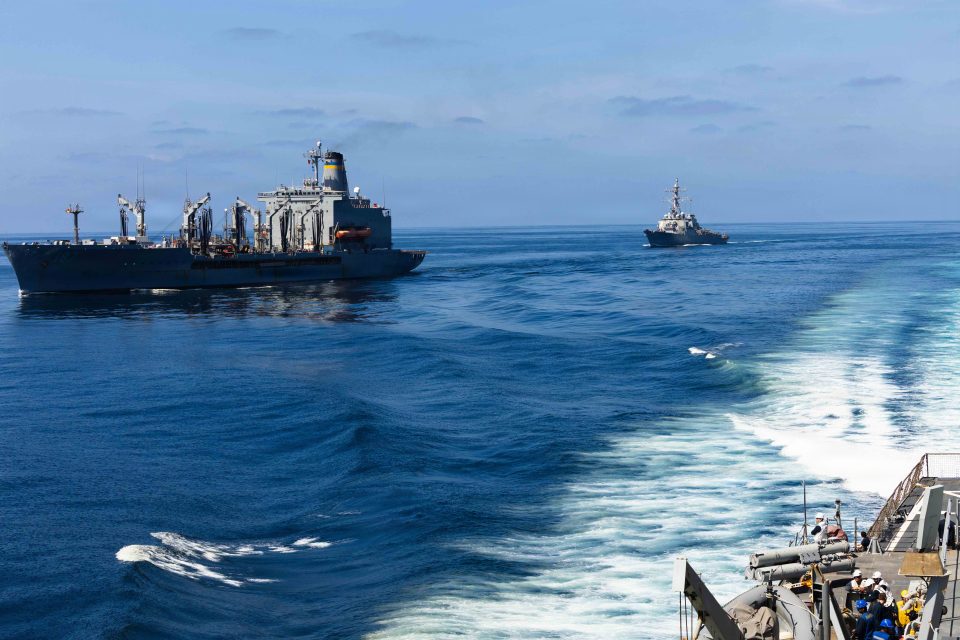
Compounding Iran’s internal turmoil is the relentless external pressure from the U.S. naval blockade. The IRGC had explicitly warned that this blockade would prevent any genuine reopening of the Strait. President Trump, on Friday, reiterated that the blockade would remain in effect "until a deal is reached." The U.S. Central Command (CENTCOM), under the leadership of Adm. Brad Cooper, confirmed the efficacy and sustainability of the operation. Cooper told reporters on Friday that the blockade could be maintained "as long as necessary," proudly noting that "no ships have been able to evade it" and that U.S. forces have been actively engaged in removing mines from the Gulf – a dangerous, ongoing effort that underscores the volatile environment.
The economic impact of this blockade is severe and far-reaching. Lloyd’s List Intelligence reported that at least five Iran-linked tankers, initially bound for Malaysia, had been forced to change course since the U.S. Navy intensified its interdiction operation to target ships carrying Iranian oil globally. This global reach of the blockade is designed to choke off Iran’s primary source of revenue, putting immense strain on its already struggling economy and, crucially, cutting off funding for the IRGC itself. The financial squeeze is intended to weaken the regime’s ability to wage war and sustain its regional proxies.
Against this backdrop of economic strangulation and internal power struggles, the Strait of Hormuz remains a critical stage for both resistance and diplomacy. On Saturday, reports emerged of ships in the Persian Gulf coming under attack from projectiles and small, fast-attack boats – tactics famously employed by the IRGC’s naval units. These actions, likely a defiant response to the blockade and the perceived humiliation of the Foreign Minister’s premature announcement, further raise the stakes and demonstrate the IRGC’s resolve to challenge international maritime control.
Yet, even amid these aggressive displays, signals of potential diplomacy persist. Iranian state television reported that the Supreme National Security Council (SNSC), a high-level body responsible for national security policy, was discussing new U.S. proposals for a peace deal. This indicates that while the hardliners may be ascendant, the possibility of a negotiated settlement has not been entirely extinguished, even if it is fraught with internal disagreements.
Gregory Brew, a senior analyst covering oil and Iran for the Eurasia Group, offered a more nuanced perspective on the regime’s internal disagreements, though he acknowledged that President Trump’s swift declaration of Hormuz being open had exacerbated matters. In a post on X (formerly Twitter) on Saturday, Brew explained, "Such public spats between diplomats and ‘the battlefield’ are not unusual, though there haven’t been many during the war." He suggested that the immediate incident might be "evidence of miscommunication, not serious divisions." However, he crucially added, "Though the outcome—a firmer line from IRGC and SNSC, kinetic actions against tankers, silence from MFA—aligns with the broader trend of the military’s expanding power." Brew’s analysis implies that even if the initial confusion was a misstep, the resulting clarification firmly cemented the IRGC’s hawkish position and further marginalized the diplomatic wing, solidifying the military’s growing dominance in shaping Iran’s response to the ongoing conflict.
In conclusion, the past 24 hours have underscored the precarious and complex state of affairs in Iran. The conflicting messages regarding the Strait of Hormuz are not merely a communication breakdown but a stark manifestation of the profound power struggle ignited by the death of Supreme Leader Ali Khamenei and the ongoing war. With the IRGC increasingly asserting its hard-line stance and effectively sidelining more moderate voices, the prospects for a swift resolution or a unified diplomatic front appear dim. The Strait of Hormuz, a critical artery for global energy, remains a highly contested flashpoint, now reflecting both the external pressures of a naval blockade and the internal convulsions of a regime grappling with its own fractured identity and uncertain future. The world watches with bated breath as Iran’s internal power dynamics continue to shape global energy security and regional stability.
