
 By Titik Puspa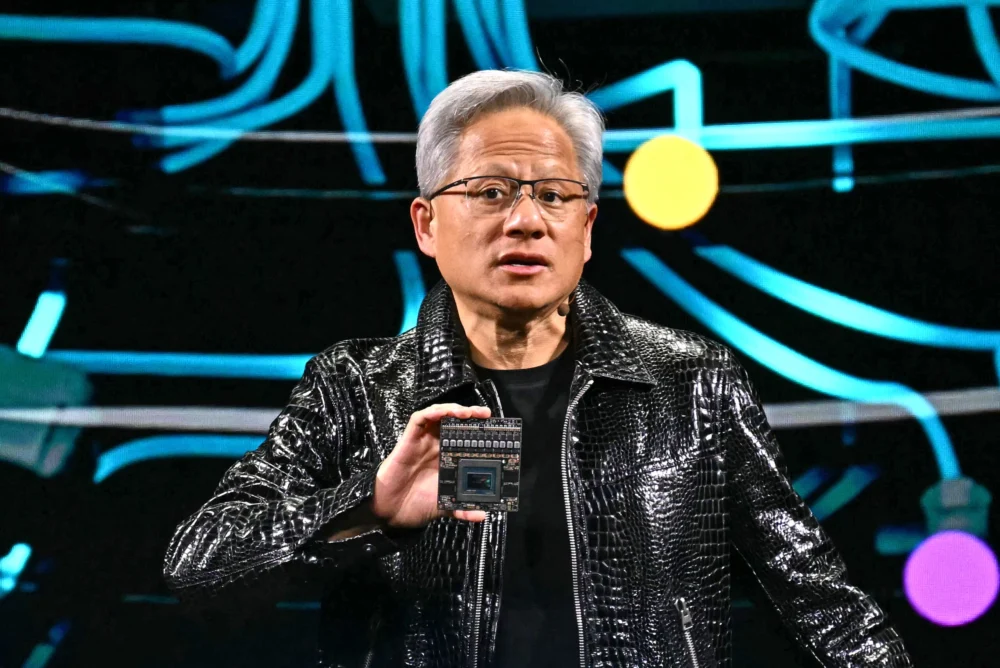
At the recent Morgan Stanley Technology, Media, and Telecom conference held in downtown San Francisco on Wednesday, Nvidia CEO Jensen Huang articulated a significant shift in the company’s investment strategy, stating that its recent substantial investments in artificial intelligence leaders OpenAI and Anthropic are likely to be their last. Huang’s remarks, delivered with a characteristic directness, suggested that the window for such large-scale private equity involvement closes once these entities are anticipated to go public later this year. This pronouncement arrives at a pivotal moment for the AI sector, marked by rapid advancements, intense competition, and increasingly complex geopolitical considerations.
While it might appear straightforward, the decision to potentially cease further investment in these two AI titans warrants a deeper examination. Typically, companies might continue to inject capital into promising ventures right up to their initial public offering (IPO) in pursuit of maximizing their returns. However, Nvidia finds itself in a unique and highly profitable position, not necessarily needing to chase incremental gains through further equity stakes. The core of Nvidia’s business – the design and sale of the high-performance GPUs that are the foundational hardware for advanced AI model training and inference – is experiencing unprecedented demand. Companies like OpenAI and Anthropic are not just potential investment targets; they are also colossal customers, driving significant revenue for Nvidia. This symbiotic relationship, while profitable for Nvidia, also introduces complexities that may be influencing the company’s strategic pivot.
Nvidia itself has offered limited additional commentary on Huang’s statements. When approached for further clarification following the CEO’s remarks, a company spokesperson directed inquiries to a transcript from Nvidia’s fourth-quarter earnings call. During that call, Huang emphasized that all of Nvidia’s investments are "focused very squarely, strategically on expanding and deepening our ecosystem reach." This strategic goal, he suggested, has been largely met by its earlier stakes in both OpenAI and Anthropic, implying that the primary objective of establishing and strengthening these relationships has been achieved.
However, several other intertwined dynamics likely contribute to this strategic recalibration. The circular nature of some of these arrangements has drawn scrutiny, raising questions about their ultimate economic benefit beyond strengthening existing partnerships. When Nvidia initially announced its intention to invest up to $100 billion in OpenAI last September, MIT Sloan professor Michael Cusumano characterized the deal to the Financial Times as "kind of a wash." His observation highlighted the reciprocal nature of the agreement: Nvidia was investing a substantial sum in OpenAI stock, while OpenAI simultaneously committed to purchasing a comparable or greater value of Nvidia chips. This mutual dependency, while ensuring business for both parties, also created a scenario where the financial benefits were heavily intertwined.
The growing apprehension surrounding such "circular deals" potentially contributing to an investment bubble in the AI sector may have influenced the scaling back of Nvidia’s commitment. The investment Nvidia ultimately finalized as part of OpenAI’s recent $110 billion funding round was reportedly $30 billion, a significant reduction from the initial $100 billion pledge. This adjustment suggests a more cautious approach, perhaps in response to market sentiment or a re-evaluation of the direct financial upside of further capital infusion. It’s worth noting that Huang has already dismissed as "nonsense" the popular theory that there might be any animosity or "bad blood" between Nvidia and OpenAI, reinforcing the idea that the decision is rooted in strategic and financial considerations rather than interpersonal conflict.
Meanwhile, Nvidia’s relationship with Anthropic has also presented its own set of unique challenges and complexities. Just two months after Nvidia announced a $10 billion investment in Anthropic in November, the latter’s CEO, Dario Amodei, delivered a notable address at the World Economic Forum in Davos. Without directly naming Nvidia, Amodei drew a stark analogy, comparing the practice of U.S. chip companies supplying high-performance AI processors to approved Chinese customers to "selling nuclear weapons to North Korea." This strong condemnation of the export of advanced AI technology underscored a fundamental disagreement on the ethical and geopolitical implications of AI development and deployment.
The gravity of Amodei’s statement was amplified by subsequent events. Days after his remarks, the Trump administration designated Anthropic as a supply chain risk, effectively barring federal agencies and military contractors from utilizing its technology. This move was a direct consequence of Anthropic’s refusal to allow its AI models to be used for autonomous weapons systems or mass domestic surveillance, reflecting the company’s commitment to ethical AI principles.
The geopolitical implications of these decisions became even more pronounced within hours of the U.S. government’s announcement. OpenAI revealed it had secured its own deal with the Pentagon. Anthropic’s leadership, including CEO Dario Amodei, characterized OpenAI’s public messaging around this military deal as "mendacious." The public perception, as reflected in app store rankings, appeared to align with Anthropic’s stance. Within 24 hours of these overlapping announcements, Anthropic’s AI chatbot, Claude, surged to the number two spot in the free app rankings on Apple’s U.S. App Store, notably overtaking OpenAI’s ChatGPT. This significant rise, from outside the top 100 apps in January to near the top in March, according to Sensor Tower data, suggests a public resonance with Anthropic’s ethical position and a potential backlash against OpenAI’s collaboration with the Pentagon under these circumstances.
This unfolding scenario leaves Nvidia in a complex position. The company now holds significant stakes in two of the leading AI development firms, OpenAI and Anthropic, which are increasingly charting divergent courses. These diverging paths are not merely philosophical; they are manifesting in critical business decisions, including partnerships with government entities, and are potentially influencing the broader AI ecosystem, including customers and other partners.
It remains uncertain whether Jensen Huang foresaw the extent of these developing complexities when Nvidia forged its web of partnerships. However, his stated rationale for potentially halting future investments – the closing of the IPO window – is debatable in the context of how late-stage private investing typically operates. Many investors continue to participate in funding rounds even as companies approach their public debut. A more plausible interpretation of Huang’s statement is that it serves as a polite exit from a situation that has rapidly evolved into a multifaceted and potentially unwieldy landscape. The confluence of intense market competition, the ethical dilemmas surrounding AI deployment, and the increasing geopolitical scrutiny of advanced AI technologies has transformed what might have begun as straightforward strategic investments into a far more intricate and challenging domain. Nvidia’s decision to step back from further direct equity investments in OpenAI and Anthropic may signal a strategic shift towards prioritizing its core hardware business and navigating the increasingly complex global AI market with greater caution. The era of straightforward, large-scale capital infusion into foundational AI labs by hardware giants might be giving way to a more nuanced and perhaps more selective approach, dictated by evolving market dynamics and ethical considerations.
