
 By admin
The current landscape features four formidable contenders that continue to stream out of showrooms: the Honda Odyssey, Toyota Sienna, Kia Carnival (formerly Sedona), and Chrysler Pacifica. For years, these stalwarts have served as great family providers, offering cavernous interiors, versatile seating, and powerful (though often thirsty) V6 engines. Their fuel economy, while adequate for their size, has largely been middling, a common trade-off for their capacity. However, this long-standing dynamic is on the cusp of a profound transformation, ushering in what many are calling a true renaissance for the segment, driven largely by electrification.

After years of eager anticipation and a series of delays, the new 2025 Volkswagen ID.Buzz electric van is poised to revolutionize the minivan market. This battery-electric marvel isn’t just a new model; it’s a statement, single-handedly revitalizing the segment with its zero-emission powertrain and iconic retro-futuristic design. But the ID.Buzz isn’t alone in pushing the segment forward into an electrified future. Today, three other minivans—the Chrysler Pacifica, Toyota Sienna, and Kia Carnival—already offer hybrid or plug-in hybrid options, leaving the venerable Honda Odyssey as the sole remaining gas-only model in its class. While these hybrid offerings provide a bridge to greater efficiency, the ID.Buzz stands as the only pure battery-electric model, with no direct competitors on the immediate horizon. It masterfully capitalizes on the burgeoning "retromod" trend, resurrecting the beloved spirit of the classic VW Bus, but those signature power-sliding side doors firmly plant it in the practical minivan camp, making it an undeniable standout.
This new wave of minivans, whether powered by traditional gasoline, efficient hybrids, innovative plug-in hybrids, or pure electricity, are all strong performers within their respective niches. The critical question for discerning buyers is: which of these minivans are the best to own? Is it the long-standing stalwarts with their proven reliability, or the newfangled electrified entrants promising lower running costs and cutting-edge technology? The choice extends beyond mere aesthetics or brand loyalty, delving deep into the practicalities of family life and long-term value.
Our comprehensive rankings delve into a multitude of factors that extend far beyond the initial sticker price. We place significant emphasis on the total cost of ownership, an area where electrified vehicles often gain a substantial advantage due to lower fuel consumption and potential government incentives. However, safety remains paramount, with rigorous evaluations of crash test ratings, standard driver-assistance features, and overall structural integrity. Interior roominess and versatility are, naturally, core tenets of minivan excellence. This includes not just maximum cargo volume and passenger capacity, but also the ease with which seating configurations can be adapted – how effortlessly "small hands can move big seats" to create space for everything from sports equipment to sleepovers. Modern connectivity and user-friendly features, such as intuitive infotainment systems, ample charging ports, and thoughtful storage solutions, also rate highly, recognizing the central role technology plays in today’s family vehicles.
From the seamless convenience of power-sliding side doors that simplify school drop-offs to the enhanced traction of all-wheel drive combined with electrified efficiency, these contemporary family haulers are making all the right moves, adapting to the evolving needs and expectations of modern families. Here’s a detailed breakdown of how they rank, with all prices inclusive of destination charges, providing a clear picture of their strengths and weaknesses in a competitive, yet evolving, segment.

5. Honda Odyssey
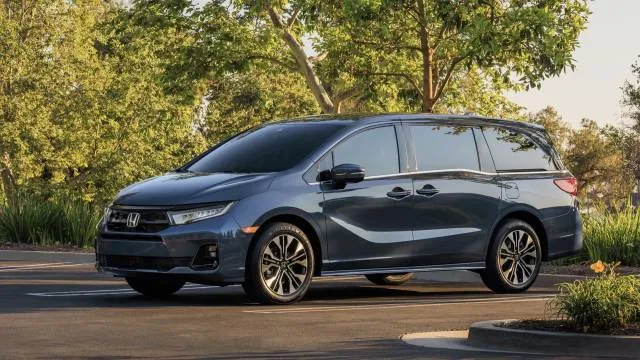
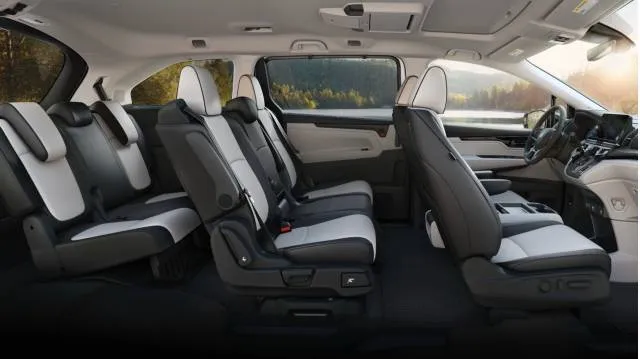
The Honda Odyssey, once a benchmark in the minivan segment, finds itself at the bottom of our current rankings, a testament to the rapid evolution occurring around it. The fifth-generation Odyssey, last redesigned in 2018, has unfortunately grown stale in comparison to its increasingly innovative rivals. Its most significant drawback is its singular powertrain option: it remains the only minivan in the class to exclusively offer a gasoline-only engine, lacking any hybrid or plug-in hybrid alternative. Furthermore, it is only available with front-wheel drive, limiting its appeal in regions with challenging winter weather where all-wheel drive has become an increasingly sought-after feature.
On the upside, the Odyssey still offers a rewarding driving experience, remaining one of the better-handling minivans with responsive steering that instills confidence. Its traditional 3.5-liter V6 engine, producing 280 horsepower and 262 lb-ft of torque, provides ample grunt for highway merging and full-load acceleration, a characteristic many loyal Honda buyers appreciate. This V6 is paired with a smooth 10-speed automatic transmission. Another enduring strength, largely a benefit of its consistent design over the years, is Honda’s exceptional reputation for reliability and resale value, making it a dependable long-term investment for many families.
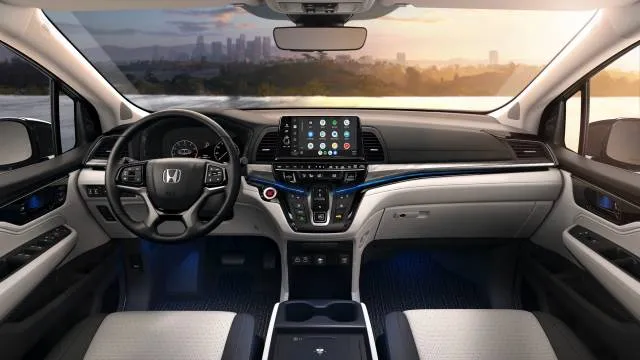
However, these traditional virtues are increasingly overshadowed by its shortcomings. The Odyssey’s infotainment system and overall tech suite noticeably lag behind its competitors. Its user interface can feel dated, and while it offers essential connectivity features, it lacks the intuitive, modern touches found elsewhere. The absence of electrification also means it falls short on fuel efficiency, with an EPA rating of 19 mpg city, 28 mpg highway, and 22 mpg combined, which is significantly lower than its hybrid rivals.
This combination of an aging design and a lack of electrified options has fueled considerable speculation regarding the Odyssey’s future. After a successful 30-year run, industry observers wonder if Honda will eventually discontinue the model or, more likely, finally update it with a hybrid powertrain in the next year or two. Honda’s broader corporate strategy clearly indicates a belated but determined push towards electrification, with the CR-V Hybrid and Accord Hybrid now serving as top-selling variants for their respective models. The company has also announced plans for an electric three-row crossover due in 2027. Whether the Odyssey’s journey, much like Homer’s epic, will continue into this electrified era remains an open question. For now, it appeals primarily to buyers who prioritize traditional V6 power, proven reliability, and confident handling over cutting-edge efficiency and technology.
3. Chrysler Pacifica (tie)
The Chrysler Pacifica stands as a fascinating "tale of two minivans," offering distinct experiences depending on whether you opt for the gasoline-powered model or the innovative plug-in hybrid (PHEV). Launched in 2017 as the successor to the long-running Town & Country, the Pacifica quickly re-established Chrysler’s presence in the segment, while the PHEV variant, introduced in 2018, truly set it apart.
The standard gasoline Pacifica is a testament to traditional minivan strengths, powered by a robust 287-horsepower 3.6-liter V6 engine paired with a nine-speed automatic transmission. Its defining feature, the revolutionary Stow ‘N Go seating system, allows both the second and third rows of seats to fold seamlessly into the floor, transforming the spacious passenger cabin into a vast, flat cargo area in mere seconds. This unparalleled versatility remains a significant draw for families who frequently need to haul large items. Additionally, the gasoline Pacifica offers available all-wheel drive (AWD), a crucial feature for families in snowy climates, providing enhanced traction and confidence.

The Pacifica Hybrid, however, carves out a unique niche as the only plug-in hybrid minivan on the market. It boasts an impressive 32 miles of all-electric range, allowing many families to complete daily errands, school runs, and commutes without ever engaging the gasoline engine. This capability significantly reduces fuel consumption and emissions, making it an environmentally conscious and cost-effective choice for urban and suburban driving. The total range with a full tank and charge is a substantial 520 miles, offering peace of mind on longer trips. The hybrid powertrain combines a specially adapted version of the 3.6-liter V6 with two electric motors and a 16-kWh battery pack, delivering a combined 260 horsepower. A key trade-off for the PHEV’s electric capabilities is that it cannot be had with the second-row Stow ‘N Go seats (the battery pack occupies the underfloor storage space) nor with all-wheel drive, a decision point for many potential buyers.
Adding a third wrinkle to Chrysler’s minivan strategy, the Voyager was reintroduced this year. Previously relegated primarily to fleet sales, the Voyager now serves as a budget-friendly base model for retail customers. While it wears the Pacifica’s older exterior skin, it incorporates modern content, including a standard 10.1-inch touchscreen with wireless Apple CarPlay and Android Auto, along with Stow ‘N Go seating in both rear rows. However, at a starting price of nearly $42,000, its "value" proposition as a budget model can be debated, especially when compared to the more luxurious options available in the higher trims of the Pacifica, which can push past the $60,000 mark.

A significant financial advantage for the Pacifica PHEV is its eligibility for the full $7,500 federal EV tax credit. Depending on a buyer’s income and tax situation, this incentive can substantially reduce the effective purchase price, potentially making the PHEV nearly as affordable as the gas-powered model, thereby enhancing its appeal and reinforcing its competitive edge in the market. The Chrysler Pacifica, in its various forms, caters to a wide array of family needs, from those prioritizing ultimate cargo versatility and AWD in the gas model, to those seeking significant electric range and tax incentives in the PHEV, even if it means foregoing some seating flexibility.
3. Toyota Sienna (tie)
The Toyota Sienna earns its shared third-place ranking by masterfully checking nearly all the practical boxes for minivan owners, primarily due to its unwavering commitment to efficiency. The Sienna differentiates itself by offering a standard hybrid powertrain across its entire lineup, meaning there are no gasoline-only options. This dedicated approach delivers impressive fuel economy figures: 36 mpg combined with front-wheel drive (FWD) and a highly competitive 35 mpg combined with available all-wheel drive (AWD). This makes the Sienna an exceptionally economical choice in terms of running costs, especially for families who log many miles.

The Sienna’s powertrain consists of a 2.5-liter inline-4 engine paired with two electric motors (three motors for the AWD variant), producing a combined output of 245 horsepower. While this setup lacks the outright "grunt" of the V6 engines found in some rivals, Toyota has meticulously tuned the system for smooth, refined operation. Acceleration is adequate for most family duties, and the hybrid system seamlessly transitions between electric and gasoline power, ensuring a quiet and comfortable ride. The available AWD system, a rarity in the minivan segment, further enhances the Sienna’s practicality, offering improved traction and confidence in adverse weather conditions without a significant penalty to fuel efficiency.
Despite its many strengths, the Sienna does have a notable limitation in terms of interior versatility: its second-row seats are bolted down and are considerably more difficult to remove than those in any other minivan in the class. This design choice restricts its ability to transform into a maximum cargo hauler, a feature many minivan buyers highly value. For families who frequently need a completely flat load floor for large items, this could be a significant drawback.

Toyota offers the Sienna in six distinct trims, coupled with a wide array of options, ensuring there’s a configuration to suit most tastes and budgets. While the Sienna’s interior design is undeniably practical, it can also lean towards the luxurious in higher trims, offering features like a built-in vacuum cleaner and cooler (though the vacuum has been temporarily unavailable due to supplier issues), footrests for second-row passengers, and premium materials. However, even with these fancy additions, the Sienna’s core identity remains rooted in practicality rather than outright opulence. Its suspension is tuned to be less "wobbly" than some rivals, contributing to a stable and composed highway ride, making long family journeys more comfortable. Like the Chrysler Pacifica, the Sienna can become quite expensive in its top-tier configurations, but its consistent fuel savings and Toyota’s legendary reputation for reliability often offset the initial investment over the vehicle’s lifespan. The Toyota Sienna is an ideal choice for families who prioritize maximum fuel efficiency, available all-wheel drive, and Toyota’s renowned dependability, even if it means a slight compromise on second-row seating flexibility.
2. Kia Carnival
The Kia Carnival, which replaced the Sedona, has made a remarkable ascent in the minivan segment, and its new hybrid option solidifies its position as a truly compelling choice. Kia provocatively markets the Carnival as an "MPV" (Multi-Purpose Vehicle) rather than a traditional minivan, strategically blurring the lines between a minivan’s practicality and an SUV’s rugged aesthetic. This design philosophy is evident in its bold, SUV-like exterior styling and its well-appointed interior, which feels more upscale and modern than many competitors.

The introduction of the hybrid option for the refreshed Carnival is a game-changer. It elevates the vehicle beyond just a stylish and spacious family hauler, adding crucial layers of efficiency and refinement. While the exact specifications of the Carnival Hybrid’s powertrain are a recent addition, it is expected to deliver competitive fuel economy, allowing the Carnival to challenge the efficiency leaders in the segment, like the Toyota Sienna, without sacrificing much of its dynamic appeal. The standard gasoline engine, a potent 290-horsepower 3.5-liter V6, remains available for those who prefer traditional power, but the hybrid variant is poised to become the more popular and economically sensible choice.
The Carnival excels in numerous areas, especially in its hybrid guise. It comes exceptionally well-equipped across its trim levels, offering a rich array of standard features that often cost extra on rivals. Its infotainment interface is intuitive and easy to use, boasting large screens and seamless smartphone integration, which are crucial for busy families. Furthermore, Kia’s industry-leading warranty—a 10-year/100,000-mile powertrain warranty and a 5-year/60,000-mile basic warranty—provides unparalleled peace of mind and significantly enhances its value proposition.

While the Carnival boasts many strengths, it does have a couple of notable omissions compared to its direct competitors. It currently lacks an all-wheel-drive option, which might deter buyers in regions prone to heavy snow. Additionally, like the Toyota Sienna, its second-row seats do not fold into the floor, nor are they as easily removable as some rivals, which slightly limits its ultimate cargo versatility when compared to the Chrysler Pacifica’s Stow ‘N Go system.
Despite these minor drawbacks, the Kia Carnival remains a strong "value play" in the class. It manages to offer premium features, sophisticated styling, and now, impressive efficiency, without ever feeling like a budget-compromised vehicle. Its blend of modern design, comprehensive features, an excellent warranty, and the added efficiency of its new hybrid powertrain make it a highly attractive option for families looking for a versatile, stylish, and economical vehicle that comfortably bridges the gap between a minivan and an SUV.

1. Volkswagen ID. Buzz
The Volkswagen ID. Buzz claims the top spot in our rankings, not just for being a "shiny new thing," but because it fundamentally revitalizes the minivan segment while boldly pointing it toward a sustainable, electric future. Our TCC Rating system, which weighs factors like efficiency, safety, features, and overall driving experience, acknowledges the groundbreaking nature of this vehicle. The return of the iconic Volkswagen Bus in its electric ID. Buzz form is more than just a nostalgic nod; it’s a meticulously engineered vehicle designed to meet modern demands with an undeniable charm.
Visually, the ID. Buzz is a masterclass in "retromod" design. Its long wheelbase, snubbed front and rear ends, and available two-tone paint schemes instantly evoke the beloved T1 Microbus, appealing to generations of fans. Yet, underneath this retro façade lies thoroughly modern technology. The ID. Buzz is built on VW’s dedicated MEB electric vehicle platform, sharing its architecture with other ID. models. For the U.S. market, it will launch with a larger 91-kWh battery pack, feeding a powerful one- or two-motor drivetrain. The standard rear-wheel-drive (RWD) variant is expected to offer 282 horsepower, while an all-wheel-drive (AWD) option with two motors will push that figure to 330 horsepower.

While its estimated range of "up to 234 miles" might seem modest compared to some long-range EVs, it’s important to consider that the ID. Buzz is arguably the roomiest and heaviest minivan currently on sale. This range is perfectly adequate for most daily family duties and typical road trips, especially with the rapidly expanding charging infrastructure. The electric powertrain delivers instant torque, providing a surprisingly decent launch from a stop and making city driving remarkably sprightly for a vehicle of its size. The battery pack, strategically placed in the floor between the axles, contributes to a low center of gravity, making the ID. Buzz feel remarkably planted and stable on the road.
The interior of the ID. Buzz is a testament to clever design and modern functionality. The "cockpit views without a hood" design, reminiscent of the original Bus, offers excellent forward visibility. Thoughtful storage solutions abound, including a dash shelf for the passenger, a dedicated smartphone charging recess, and a generally clean, minimalist aesthetic. The cabin prioritizes space and light, with an airy feel that enhances passenger comfort.

However, the ID. Buzz isn’t without its drawbacks. Like many modern EVs, it integrates crucial functions like climate controls into its 12.9-inch touchscreen, which can be less intuitive and precise to operate on the go compared to physical buttons and dials. The temperature sliders, in particular, can be finicky. Another significant consideration for American buyers is that, as it is manufactured in Germany, the 2025 Volkswagen ID. Buzz will not qualify for the $7,500 federal EV tax credit. This absence of a substantial incentive means the ID. Buzz will be relatively more expensive compared to other minivans, especially the plug-in hybrid Chrysler Pacifica which does qualify for the credit.
Despite the higher price tag and the touchscreen-centric controls, the ID. Buzz represents the future of family transportation. It offers a unique blend of nostalgic charm, cutting-edge electric performance, and practical minivan utility. Such is the cost of shiny – and comparatively clean – new things, but for buyers seeking a truly distinctive, emissions-free, and exceptionally spacious family vehicle that makes a statement, the Volkswagen ID. Buzz is an unparalleled choice, proving that innovation can indeed make minivans better than ever before.

In conclusion, while the minivan segment may no longer command the massive sales volumes of its past, the vehicles it offers today are undeniably superior in quality, technology, and versatility. The current crop of minivans demonstrates a remarkable adaptability, embracing electrification to address modern demands for efficiency and environmental responsibility. From the proven reliability and traditional strengths of the Honda Odyssey, to the innovative plug-in hybrid options of the Chrysler Pacifica, the unwavering efficiency of the Toyota Sienna, the stylish practicality of the Kia Carnival, and the groundbreaking, retro-futuristic appeal of the all-electric Volkswagen ID. Buzz, each model presents a compelling case for families.
The shift towards hybrid and electric powertrains is not just a trend; it’s a critical evolution that promises lower operating costs, reduced emissions, and enhanced driving dynamics for these large family haulers. The ID. Buzz, in particular, marks a pivotal moment, challenging the status quo and potentially inspiring other manufacturers to explore fully electric minivan offerings.

For families prioritizing space, safety, and practicality, minivans remain an unbeatable choice, often outperforming SUVs in terms of pure interior volume and ease of access. The current generation of minivans are not just survivors; they are innovators, offering more comfort, connectivity, and efficiency than ever before. As the market continues to evolve, the question isn’t whether minivans will disappear, but rather how their renewed focus on cutting-edge technology and electrification will redefine their role as the ultimate family vehicle for the 21st century. The journey of the minivan is far from over; in fact, its most exciting chapter may have just begun.
