
 By admin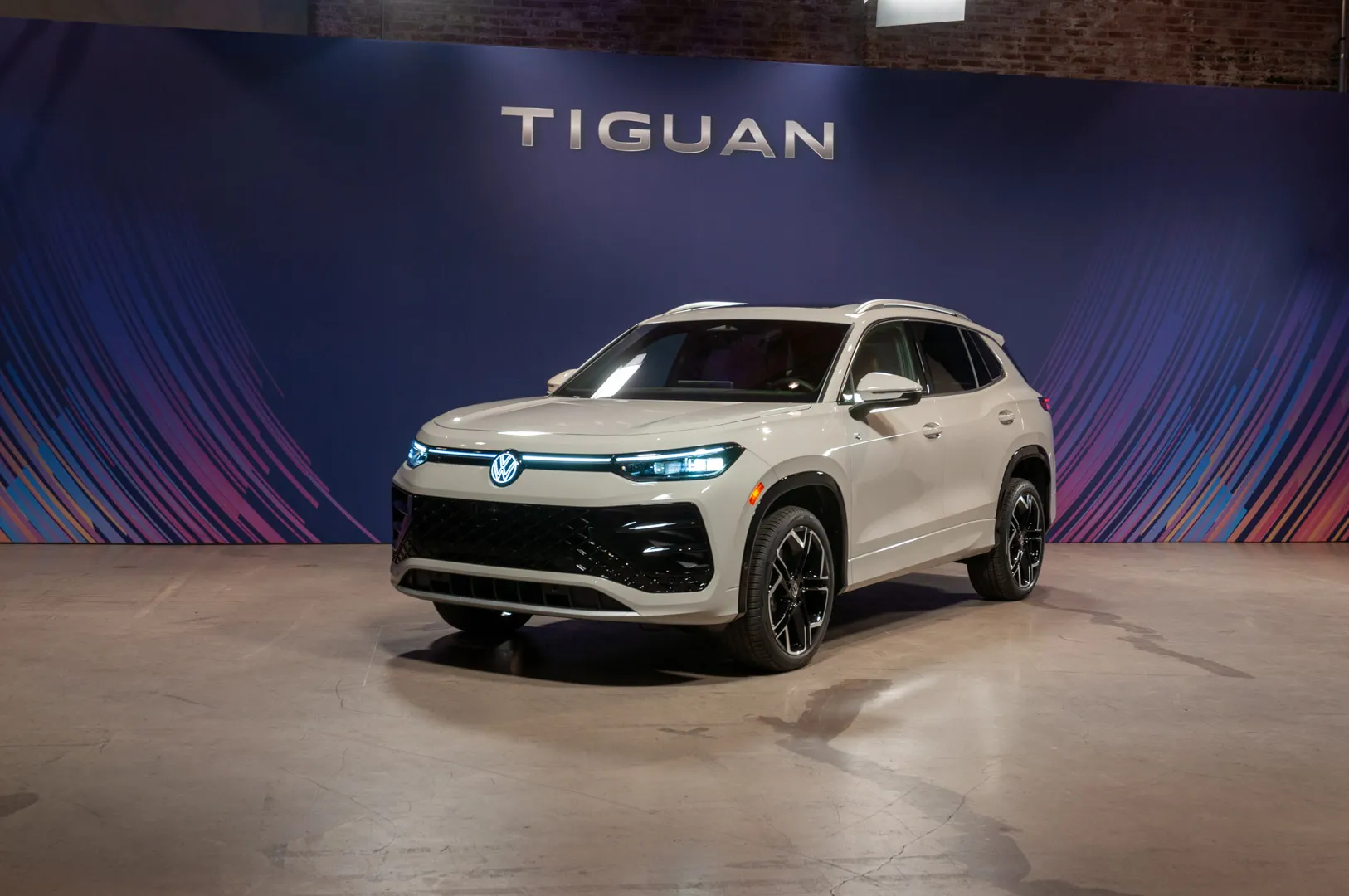
Volkswagen has officially lifted the veil on the pricing and specifications for its comprehensively redesigned 2025 Tiguan, a pivotal model poised to reassert its presence in the fiercely competitive small crossover segment. Announced on Wednesday, March 20, 2025, this latest iteration promises a significant evolution, boasting a more potent powertrain and a lighter curb weight, albeit with the notable decision to discontinue the optional third-row seating, streamlining its focus to a two-row configuration. The entry point for the new Tiguan will be the S grade with front-wheel drive, commanding a starting price of $30,920, which includes a $1,425 destination charge. This represents a modest increase of $615 over the outgoing model, a premium justified by a wealth of enhanced standard features and a complete ground-up redesign.
The 2025 Tiguan S, despite its status as the base model, arrives impressively equipped to challenge its rivals. Standard amenities include stylish 17-inch alloy wheels that provide a confident stance, while the interior immediately impresses with a cutting-edge digital cockpit. This comprises a 10.2-inch digital instrument cluster, offering drivers configurable information and a modern interface, complemented by a expansive 12.9-inch touchscreen infotainment system. This central hub for connectivity and entertainment comes standard with wireless Apple CarPlay and Android Auto, ensuring seamless smartphone integration from the get-go. Comfort is addressed with durable cloth upholstery, striking a balance between practicality and modern aesthetics. In a segment where value is paramount, the Tiguan S aims to deliver a compelling package that punches above its weight, especially when pitted against segment stalwarts like the Subaru Forester, Toyota RAV4, Honda CR-V, and Mazda CX-50, all of which offer varied propositions at similar price points. The decision to equip even the base model with such advanced digital displays underscores Volkswagen’s commitment to technology and user experience across the range.
Stepping up the ladder, the Tiguan SE, priced from $34,420 (including destination), builds upon the S grade’s strong foundation by adding a suite of desirable convenience and comfort features. Aesthetically, it distinguishes itself with larger 19-inch wheels, lending a more upscale appearance. Practicality is enhanced with remote start, a sought-after feature for pre-conditioning the cabin, and a power tailgate, simplifying loading and unloading. The interior ambiance is elevated through multi-color ambient lighting, allowing occupants to personalize their driving environment, alongside an auto-dimming rearview mirror for improved night driving comfort. Driver comfort is prioritized with a power-adjustable driver’s seat, while the upholstery transitions to premium leatherette, offering a more luxurious feel and easier maintenance. This trim level targets buyers seeking a more refined daily driving experience without venturing into the highest echelons of luxury, providing a sweet spot in terms of features and price.
For those desiring a sportier aesthetic and more aggressive road presence, the SEL R-Line Black grade enters the lineup at $36,880. This variant is designed to visually stand out, featuring a distinctive body kit that enhances its athletic contours. It rides on striking 20-inch wheels, further accentuating its dynamic appeal. The "R-Line Black" designation translates into a curated mix of dark and chrome exterior and interior trim elements, creating a sophisticated yet assertive visual statement. A standard panoramic sunroof adds to the sense of spaciousness and allows for an influx of natural light, enriching the cabin experience. This trim is clearly aimed at customers who prioritize style and a sporty character, making a bold statement without necessarily opting for the absolute top-tier performance.
Crowning the lineup is the Tiguan SEL R-Line, available from $41,180. This premium trim encapsulates the pinnacle of the Tiguan experience, integrating similar visual upgrades as the R-Line Black but elevating the interior with an array of luxury and technology features. The infotainment system receives a significant upgrade to an expansive 15.0-inch touchscreen, serving as the central command for an even more immersive digital experience. Audiophiles will appreciate the standard 12-speaker Harman Kardon audio system, meticulously engineered to deliver a rich, clear, and powerful soundstage throughout the cabin. Comfort reaches new heights with three-zone climate control, allowing individualized temperature settings for the driver, front passenger, and rear occupants. The front seats are not only power-adjustable for both driver and passenger but also include memory functions for the driver and an advanced massage feature, ensuring unparalleled comfort on long journeys. Premium leather upholstery further underscores the luxurious intent of this top-tier model, positioning it as a strong contender against more premium-badged crossovers in its class.

Under the hood, all 2025 Tiguan models share a common heart: a 2.0-liter turbocharged inline-four engine. While this engine configuration carries over from the previous generation, Volkswagen engineers have refined it for increased performance. Output has been boosted by a significant 17 horsepower, bringing the total to a robust 201 hp. This power is seamlessly managed by an 8-speed automatic transmission, a proven unit known for its smooth shifts and efficiency. Beyond the power bump, a notable engineering achievement for the new model is a substantial weight reduction of 170 pounds. This lighter curb weight, combined with the increased horsepower, is expected to translate into improved acceleration, more agile handling, and potentially better fuel economy, enhancing the overall driving dynamics. The platform underpinning the new Tiguan is almost certainly an evolution of Volkswagen’s highly versatile MQB architecture, likely the MQB Evo, which allows for greater structural rigidity and the integration of advanced technologies.
Volkswagen’s renowned 4Motion all-wheel-drive system remains a key option, offering enhanced traction and stability across various driving conditions. It is available as a $1,500 option on the Tiguan S and SEL R-Line Black grades, with late availability noted for the latter. For the Tiguan SE, the all-wheel-drive upgrade comes at a slightly lower cost of $980, making it an attractive proposition for those in regions with inclement weather or who frequently navigate challenging terrains. The top-tier SEL R-Line trim receives all-wheel drive as a standard feature, reinforcing its premium positioning and capability. This strategic pricing and availability across trims ensure that customers can tailor their Tiguan to their specific needs and driving environments.
The decision to eliminate the third-row seat option is a strategic one that merits closer examination. In previous generations, the Tiguan offered a cramped and often underutilized third row, which while technically present, rarely provided comfortable seating for adults. By removing it, Volkswagen is likely aiming to optimize the second-row passenger experience, increase cargo capacity, and perhaps reduce vehicle weight and complexity. This move also clearly distinguishes the Tiguan from Volkswagen’s larger, dedicated three-row SUVs like the Atlas and Atlas Cross Sport, preventing internal cannibalization and allowing each model to cater to a specific demographic. While some competitors like the Mitsubishi Outlander or select versions of the Kia Sorento still offer a third row in this segment, many popular rivals such as the Forester, RAV4, and CR-V have long focused on a two-row configuration, suggesting Volkswagen is aligning with market preferences for a more comfortable and spacious five-seater experience in this class. This shift allows the Tiguan to compete more directly as a premium, technology-forward compact SUV, emphasizing quality over quantity of seating.
The small crossover segment is arguably one of the most fiercely contested in the automotive industry, populated by a litany of strong and well-established rivals. The 2025 Volkswagen Tiguan will need to be more than just good; it will need to offer a compelling and distinctive proposition to truly stand out. Its primary competitors, such as the ever-popular Toyota RAV4 with its strong hybrid options and robust reliability reputation, and the adventurous Subaru Forester known for its standard AWD and spacious cabin, present formidable challenges. Other key rivals include the refined Honda CR-V, the stylish Mazda CX-50 with its premium aspirations, and the value-packed Hyundai Tucson and Kia Sportage, both offering distinctive designs and advanced features.
Volkswagen’s strategy with the new Tiguan appears to be centered on a combination of sophisticated European driving dynamics, a highly advanced and user-friendly technological interior, a strong suite of standard features, and a premium feel that belies its segment. The increased power and reduced weight suggest a more engaging driving experience, a hallmark often associated with German engineering. The bold interior, dominated by large digital screens and premium materials in higher trims, positions the Tiguan as a tech-forward choice. With sales slated to commence early this summer, the Tiguan is poised to make a significant impact. Its success will depend on how effectively it communicates its enhanced value proposition and how well its refined two-row experience resonates with discerning buyers looking for a blend of performance, technology, and sophisticated design in their next compact SUV. This relaunch is critical for Volkswagen’s continued success in the North American market, further solidifying its SUV-centric strategy and bridging the gap between its entry-level offerings and larger family vehicles.
