
 By admin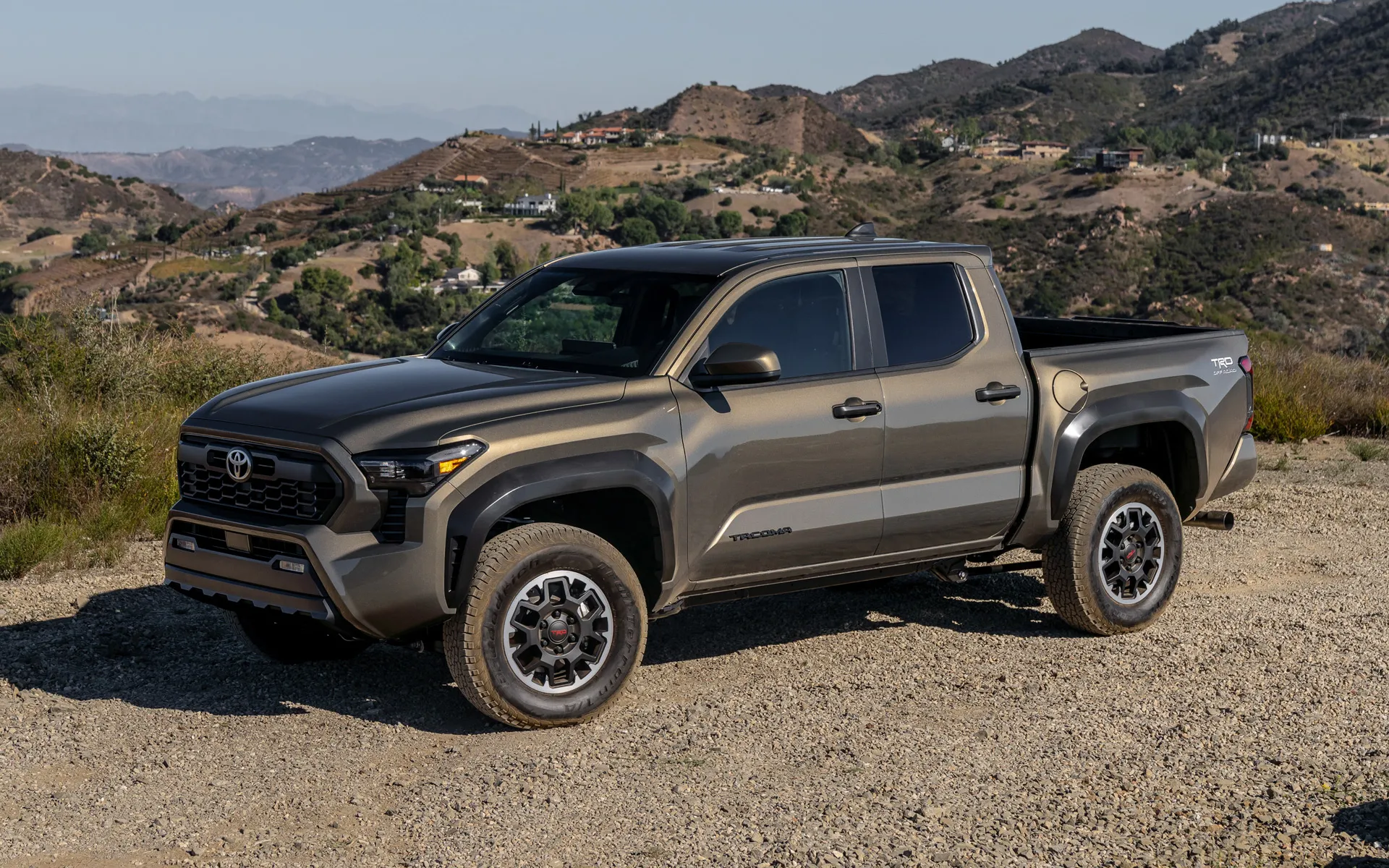
Midsize pickups occupy a crucial niche in the automotive landscape, offering a compelling blend of utility and daily drivability that full-size trucks often overshadow. While they can’t match the sheer hauling and towing capacity of their larger, more expensive brethren, midsize trucks excel in maneuverability, affordability, and fuel efficiency, making them ideal for a wide range of buyers who need capability without the bulk. This segment’s enduring popularity is a testament to its practical appeal, with two titans consistently vying for supremacy: the recently updated 2025 Toyota Tacoma and the robust 2025 Nissan Frontier. Both offer distinct philosophies and capabilities, appealing to different facets of the midsize truck market. The Tacoma, a perennial favorite, boasts an expansive lineup, cutting-edge technology, and an available hybrid powertrain, catering to a diverse audience from basic work truck users to extreme off-road enthusiasts. The Frontier, on the other hand, presents a more straightforward, value-driven proposition with a single, potent V6 engine and a strong emphasis on traditional truck utility, often at a more accessible price point. As both trucks go head-to-head against formidable competitors like the Chevrolet Colorado and Ford Ranger, the question remains: which is the better choice for the discerning midsize truck buyer?
Pricing, Features, and Value Proposition
The initial price tag and the features packed within are often the first points of comparison for potential buyers. Here, the Toyota Tacoma and Nissan Frontier present contrasting approaches, reflecting their distinct market strategies.

How much is a Nissan Frontier?
Nissan offers the 2025 Frontier in a concise lineup of S, SV, SL, and Pro-X/Pro-4X trim levels, prioritizing a clear value proposition. The base Frontier S King Cab (extended cab) kicks off at an approachable price point of around $33,000. For this, buyers receive a no-frills but functional truck equipped with essentials like cloth upholstery, manually adjustable front seats, an 8.0-inch touchscreen infotainment system with wired Android Auto/Apple CarPlay, power features, a basic urethane steering wheel, a four-speaker audio system, a sliding rear window, a composite front skid plate, and 16-inch steel wheels. It’s a solid foundation for those seeking a dependable workhorse without unnecessary complexities. Opting for the more spacious Crew Cab body style adds approximately $1,300, while the capability of four-wheel drive tacks on an additional $3,000, allowing buyers to customize their needs.
Moving up, the 4×4 SV model with the Crew Cab, priced around $40,000, arguably offers the best balance of features and value. This trim significantly enhances the cabin experience with a larger, more advanced 12.3-inch touchscreen, the convenience of wireless Apple CarPlay and Android Auto, power-adjustable exterior mirrors, an eight-way power driver’s seat with two-way lumbar adjustments for improved comfort, a six-speaker audio system, a satellite radio trial, a robust steel front skid plate, and attractive 17-inch alloy wheels. This mid-tier offering positions the Frontier as a well-equipped daily driver and light-duty work truck.
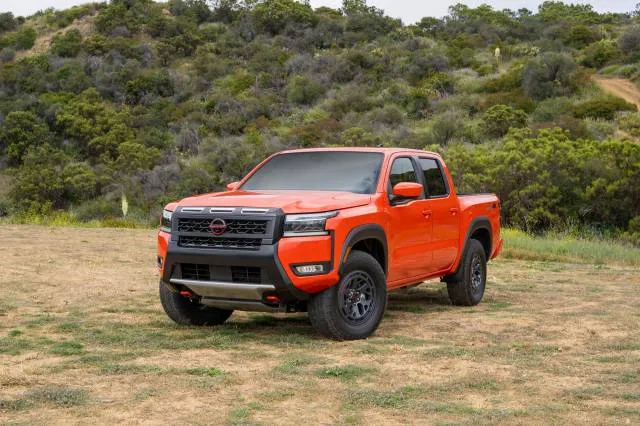
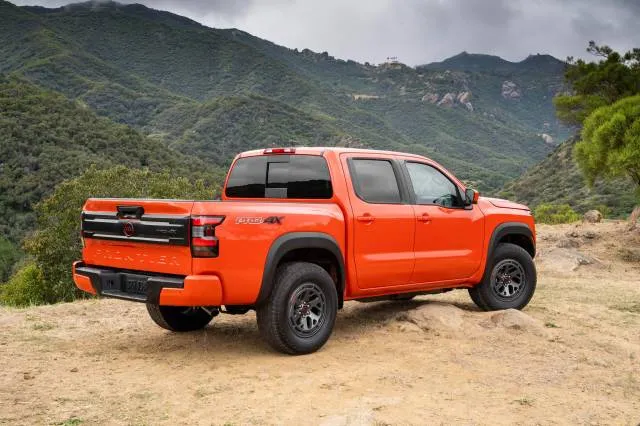
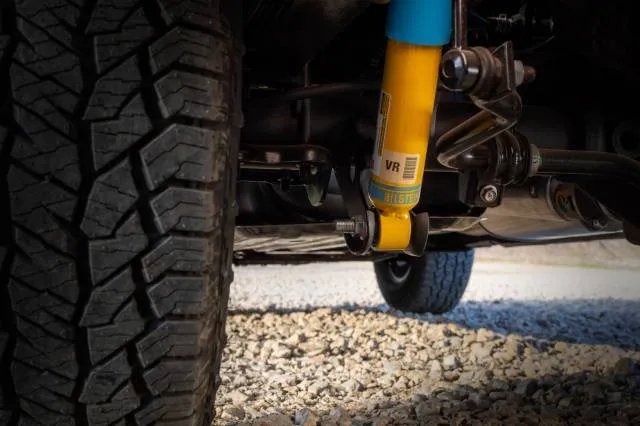
For off-road aficionados, the Crew Cab Pro-4X, starting just over $43,000, is the dedicated choice. It transforms the Frontier into a trail-ready machine with performance-oriented Bilstein shock absorbers, an aluminum front skid plate, additional skid plates for the transfer case and fuel tank, and aggressive all-terrain tires, ready to tackle challenging terrain.
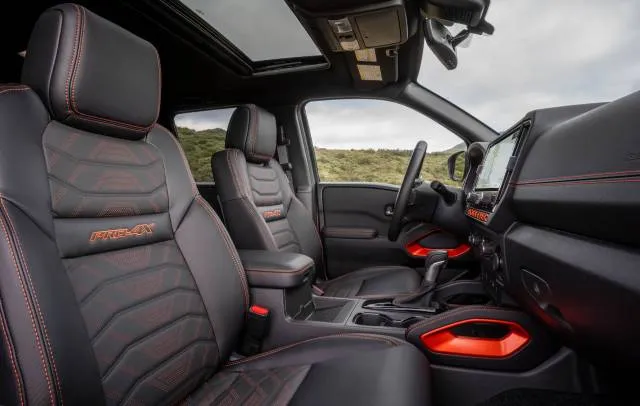
At the pinnacle of the lineup, the 4×4 Crew Cab SL model, priced north of $46,000, caters to those desiring more creature comforts and premium features. This trim elevates the interior with leather upholstery, heated front seats, a heated steering wheel, integrated navigation, a wireless smartphone charger, a 120-volt outlet for convenience, a premium 10-speaker Fender audio system, remote start, a Class IV tow hitch for enhanced utility, under-rail LED cargo bed lights, a versatile bed tie-down system with two adjustable cleats, a sunroof, and a surround-view camera system for easier maneuvering. Nissan backs the Frontier with a standard 3-year/36,000-mile basic warranty.
How much is a Toyota Tacoma?
Toyota’s approach with the 2025 Tacoma is one of vast diversification, offering an expansive range of models designed to meet nearly every conceivable midsize truck need. The lineup includes the SR, SR5, TRD PreRunner, TRD Sport, TRD Off-Road, Limited, Trailhunter, and TRD Pro. This breadth of choice means buyers can find a Tacoma tailored precisely to their budget and intended use.
The base Tacoma SR model starts at a similar price point to the Frontier, around $33,000. It includes foundational features such as cloth upholstery, manually adjustable seats, an 8.0-inch touchscreen with Apple CarPlay and Android Auto (wired), power features, and 17-inch steel wheels. Four-wheel drive is an option for $3,200, and the Crew Cab body style (paired with the short bed) adds another $2,200, making the entry-level Tacoma competitive in pricing but with a slightly less powerful base engine.
For many, the sweet spot lies around $42,000 for a 4×4 SR5 Crew Cab with the long bed. This configuration significantly upgrades the truck with LED fog lights, alloy wheels, a versatile deck rail system, and a crucial coil-spring rear suspension (on crew cab models) that greatly improves ride comfort compared to the base leaf springs. It also adds practical safety features like blind-spot monitors with rear cross-traffic alerts.
The Tacoma truly begins to differentiate itself with its advanced powertrain options. The TRD Sport i-Force Max, priced around $48,000, introduces the highly anticipated hybrid drivetrain. Beyond the electrified power, this trim includes a 12.3-inch digital gauge cluster, LED bed lighting, and 18-inch wheels. It also unlocks access to desirable optional features such as cooled synthetic leather seats, a sunroof, and a comprehensive towing package.
The Tacoma’s lineup extends considerably higher than the Frontier’s, culminating in specialized, premium offerings. The TRD Pro, for instance, commands a price tag of approximately $65,000. This top-tier off-roader features a massive 14.0-inch touchscreen, heated and cooled front seats, a premium audio system, and a host of heavy-duty off-road hardware designed for extreme adventures. Similarly, the Trailhunter model targets the overlanding crowd with factory-integrated accessories and enhanced durability.
Toyota matches Nissan’s basic 3-year/36,000-mile warranty but adds a significant value proposition with 2 years/24,000 miles of complimentary scheduled maintenance, a benefit that can save owners hundreds of dollars over the first few years of ownership.
Advantage: Toyota Tacoma for features, lineup, and options; Nissan Frontier for pure price accessibility in specific configurations. While the base prices are similar, the Tacoma quickly outpaces the Frontier in terms of available technology, luxury, and specialized off-road trims. However, for buyers seeking a straightforward, capable truck at a lower price point, particularly in its mid-range trims, the Frontier presents a very attractive proposition. The Tacoma’s free scheduled maintenance is also a notable perk.
Performance and Drivetrain Dynamics
The heart of any truck lies in its powertrain, and here the Tacoma and Frontier offer distinct philosophies in terms of power delivery, towing, and ride quality.
Toyota Tacoma Performance:
The Tacoma steps into 2025 with a significantly revamped powertrain lineup, moving away from its long-standing V6. The base engine is a 2.4-liter turbocharged inline-four, producing a respectable 228 horsepower. While not a segment leader, it’s a decent output for a midsize truck and is paired with a responsive 8-speed automatic transmission or, notably, a 6-speed manual for purists. Higher-line models receive a more potent version of this turbo-four, delivering either 270 hp (with the automatic) or 278 hp (with the manual). This upgraded engine, despite some critics noting a "diesel-like clatter" at times, provides ample power for most buyers, pairs seamlessly with the automatic transmission, and offers a responsive throttle.
The real game-changer for the Tacoma is the optional i-Force Max hybrid powertrain. This advanced system combines the upgraded turbo-four with an electric motor, generating a formidable 326 hp and a robust 465 lb-ft of torque. This hybrid setup significantly improves both power and towing confidence, providing instant torque that rivals some V8s. However, this power comes with a modest fuel economy gain, rated at an estimated 23 mpg combined, which is good but not revolutionary for a hybrid.
In terms of ride and handling, the Tacoma’s suspension varies by configuration. Base models, particularly extended cabs, still employ a traditional leaf-spring rear suspension and a solid rear axle, which can result in a somewhat choppy ride, especially when unladen—a common trait among traditional pickups. However, a significant upgrade is found in all Crew Cab models, which feature a multi-link rear suspension with coil springs. This setup dramatically smooths out the ride, offering better articulation off-road and a more composed feel on pavement, making it a more comfortable daily driver. Toyota also offers a plethora of off-road-tuned suspensions across its extensive TRD lineup, catering to various levels of rugged terrain.
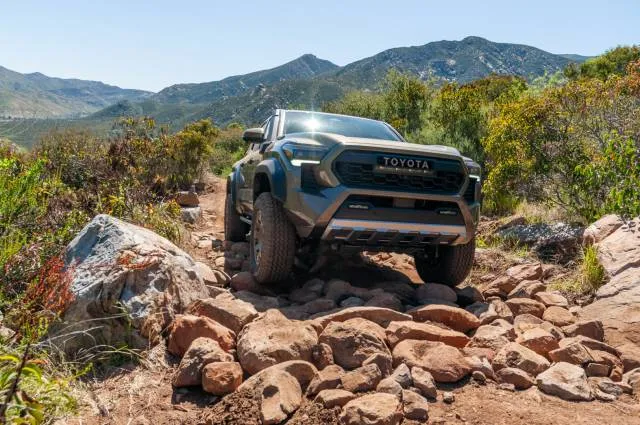
The Tacoma’s towing capacity maxes out at 6,500 pounds, while its payload capacity reaches 1,710 pounds. This means the Tacoma excels in payload but is slightly behind the Frontier in maximum towing.
Nissan Frontier Performance:
The Frontier maintains a more traditional, straightforward approach to power. It features a single engine option: a naturally aspirated 3.8-liter V6 that produces 310 horsepower and 281 lb-ft of torque. This engine is exclusively paired with a smooth and efficient 9-speed automatic transmission. The V6 is a proven performer, delivering strong, consistent power that makes highway passing a no-fuss proposition. Its naturally aspirated nature provides predictable power delivery without the lag sometimes associated with turbochargers. The 9-speed automatic is well-tuned, providing seamless shifts and optimizing power delivery across various driving conditions.
For 2025, the Frontier boasts a maximum towing capacity of 7,150 pounds, a significant increase of 500 pounds from previous model years, giving it a clear advantage over the Tacoma in this crucial metric. Its payload capacity tops out at 1,620 pounds, slightly less than the Tacoma. This makes the Frontier a compelling choice for those who frequently tow trailers, boats, or other heavy equipment.
The Frontier’s suspension setup is more conventional, featuring a leaf-spring rear suspension combined with front double wishbones. Like the base Tacoma, this configuration can lead to a somewhat choppy ride when the bed is empty. While the Frontier’s ride is generally comfortable for a truck, it doesn’t offer the coil-spring rear suspension option found in the Tacoma’s crew cab models, which means a consistently firmer ride for the Nissan. Nissan does offer an off-road-tuned suspension in its Pro-4X model, which includes Bilstein shocks to enhance rough-terrain capability.
Advantage: Tacoma for advanced powertrain and suspension options; Frontier for superior maximum towing and a proven V6. The Tacoma’s hybrid powertrain offers a significant boost in power and torque, along with the technological appeal of electrification, while its coil-spring rear suspension greatly enhances ride comfort. However, the Frontier’s higher towing capacity and the reliable, strong V6 engine appeal to those prioritizing traditional truck capabilities and a simpler, robust powertrain.
Off-Road Capability and 4×4 Systems
For many midsize truck buyers, off-road prowess is a significant factor. Both the Frontier and Tacoma offer capable 4×4 systems, but Toyota takes a considerably more extensive and specialized approach to conquering challenging terrain.
Toyota Tacoma Off-Road:
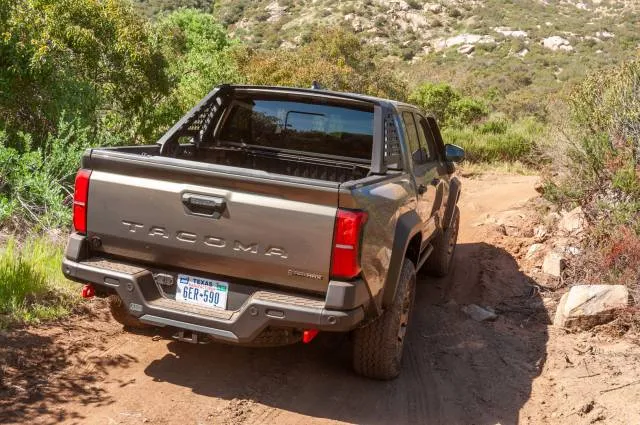
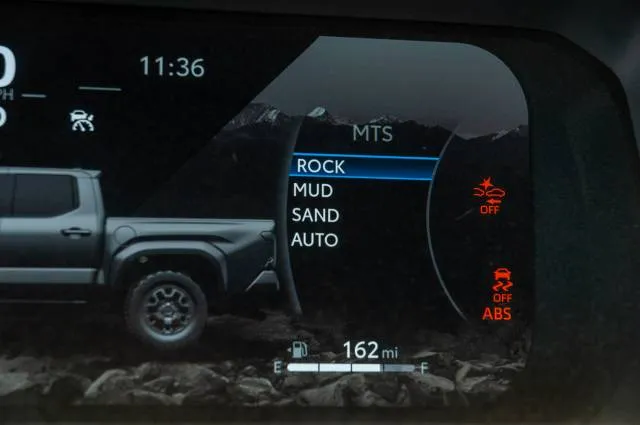
The Tacoma’s off-road lineup is truly its distinguishing feature. Rear-wheel drive is standard, but a part-time four-wheel-drive system with a 2-speed transfer case is widely available. The Limited hybrid model uniquely offers a full-time four-wheel-drive system, providing enhanced traction on varying surfaces without driver input. Beyond the hardware, Toyota equips the Tacoma with a suite of electronic aids, including various off-road modes (Multi-Terrain Select), an electronic locking rear differential, and a sophisticated Crawl Control feature that manages throttle and brakes at low speeds, allowing the driver to focus on steering.
The dedicated off-road trims are where the Tacoma shines brightest:
- TRD Off-Road: Rises 11.0 inches off the ground, rides on 32-inch all-terrain tires, and offers an optional disconnecting front sway bar for improved wheel articulation over obstacles. It’s a highly capable all-rounder for serious trail exploration.
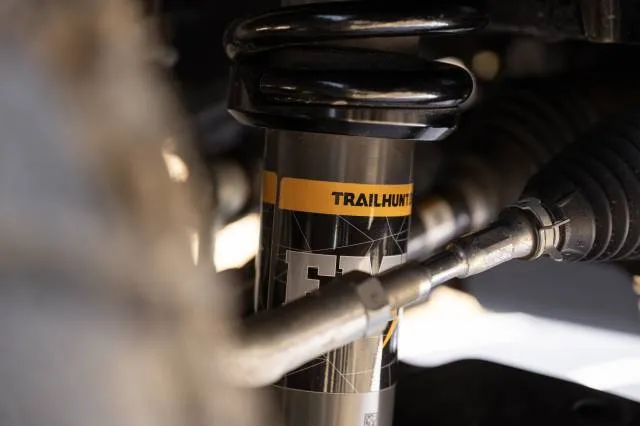
- Trailhunter: Positioned as the ultimate factory-built overlanding vehicle, it’s outfitted for slow rock crawling and extended expeditions. It typically includes specialized Old Man Emu (OME) suspension, higher ground clearance, more robust skid plates, an integrated air compressor, and additional off-road lighting.
- TRD Pro: Designed as a high-speed desert runner, the TRD Pro adds stronger skid plates, premium Fox shocks with internal bypass, and a raised ground clearance, optimized for tackling rough terrain at higher speeds.
This layered approach means there’s a Tacoma for every type of off-road enthusiast, from casual trail-goers to dedicated adventurers.
Nissan Frontier Off-Road:
The Frontier also offers a capable part-time four-wheel-drive system with a 2-speed transfer case, controlled by a user-friendly knob on the center console. While its off-road options are less diverse than the Tacoma’s, the dedicated Pro-4X model is a strong contender. This trim is equipped with a locking rear differential, all-terrain tires, Bilstein off-road shock absorbers, and an improved 9.5-inch ground clearance, up from the 8.9 inches of a rear-drive base model. The Pro-X trim offers the same aggressive styling and upgraded suspension components as the Pro-4X but retains two-wheel drive, catering to those who prefer the look and ride without needing 4×4 capability.
While the Pro-4X is a highly capable off-roader for most recreational uses, it doesn’t offer the same depth of specialized features, electronic aids, or extreme hardware options as the higher-tier Tacomas.
Advantage: Toyota Tacoma for comprehensive capability and diverse options. The Tacoma’s extensive range of off-road trims, advanced electronic aids like Crawl Control, and specialized hardware (disconnecting sway bar, various shock packages) provide a significant edge for serious off-road enthusiasts. The Frontier Pro-4X is very capable, but it’s a single, focused option compared to Toyota’s multi-faceted approach.
Interior Space, Comfort, and Bed Utility
A truck’s practicality extends beyond its performance to how well it accommodates passengers and cargo. Both the Frontier and Tacoma offer various cab and bed configurations, but with subtle differences in interior comfort and overall utility.
How big is the Nissan Frontier?
The Nissan Frontier is available in two main configurations: a four-passenger King Cab (extended cab) paired with a 6-foot bed, or a five-passenger Crew Cab body style, which can be had with either a 5-foot or 6-foot bed. Wheelbases range from 126.0 to 139.8 inches, and overall lengths span 210.2 to 224.1 inches. The bed floor lengths are 59.5 inches (5-foot bed) or 73.3 inches (6-foot bed).
Inside the cabin, the Frontier presents a no-nonsense, utilitarian aesthetic. It features numerous hard-plastic surfaces, reflecting its work-truck roots. While the front seats offer good space and reasonable comfort, the rear-seat space is a notable limitation. The Crew Cab provides 33.2 inches of rear legroom, which is adequate for a pair of adults on shorter journeys but can feel cramped on longer trips. The King Cab is even tighter, with a mere 26.8 inches of legroom, making its rear area best suited for packages or very small children rather than adult passengers.
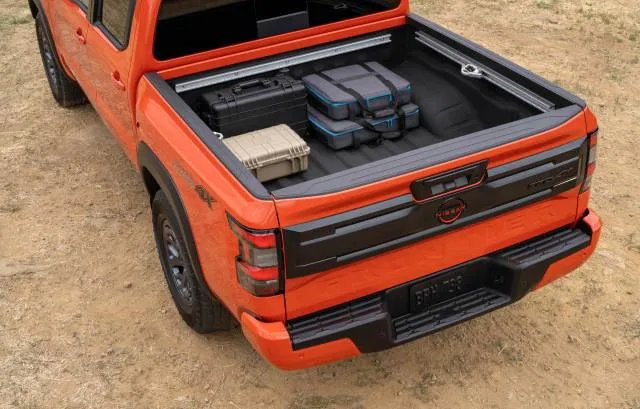
The Frontier’s bed is practical, coming standard with four sturdy tie-down hooks. Available enhancements include a durable spray-in bed liner, a convenient 120-volt power outlet, under-rail LED lighting for visibility, and Nissan’s versatile Utili-track Channel System with two adjustable cleats, allowing for flexible cargo securing.
How big is the Toyota Tacoma?
The 2025 Tacoma also offers similar cab and bed configurations: a two-passenger Xtracab (extended-cab) with a 6-foot bed, or a five-passenger Double Cab (crew cab) with either a 5-foot or 6-foot bed.
Front-seat space in the Tacoma is plentiful, and the bucket seats are generally comfortable, even for extended periods. Toyota has designed the interior with practical small-items storage in mind, including useful Molle pockets on the doors and center console. The Xtracab wisely foregoes rear seats in favor of spacious, lockable storage compartments, acknowledging the limited utility of cramped rear jump seats. The Double Cab, or Crew Cab, offers 33.7 inches of rear legroom, a slight but noticeable improvement over the Frontier’s Crew Cab. While the rear seats in the Tacoma sit somewhat upright, their bottoms can fold up to create additional secure storage space within the cabin.
In terms of bed dimensions, the Tacoma’s long bed measures 73.5 inches, and the short bed is 60.3 inches, both marginally longer than the Frontier’s corresponding beds. The Xtracab body style is 213.0 inches long on a 131.9-inch wheelbase. The Double Cab with the short bed shares these dimensions, but the Double Cab with the long bed stretches to 226.2 inches in length with a 145.1-inch wheelbase. These dimensions generally make the Tacoma a slightly larger truck overall than the Frontier.
Every Tacoma model, except the base SR, comes standard with a versatile deck rail system featuring four adjustable tie-down cleats. Other available bed accessories include LED bed lighting, a lockable bed storage box, and a wide array of official Toyota accessories like bed liners, bed extenders, and additional tie-downs, enhancing its cargo-carrying flexibility.
Advantage: Toyota Tacoma for slightly more passenger space and greater bed versatility. The Tacoma’s marginally larger rear legroom in the Crew Cab and the clever storage solutions in both cab styles, combined with a wider array of factory bed accessories, give it an edge in overall practicality and passenger comfort. The Xtracab’s dedicated storage compartments are also a thoughtful touch for those who don’t need rear seats.
Styling and Design Language
Both the Nissan Frontier and Toyota Tacoma embrace a rugged, utilitarian aesthetic, drawing inspiration from their respective full-size truck counterparts. However, they execute this theme with distinct visual languages that cater to different tastes.
Nissan Frontier Styling:
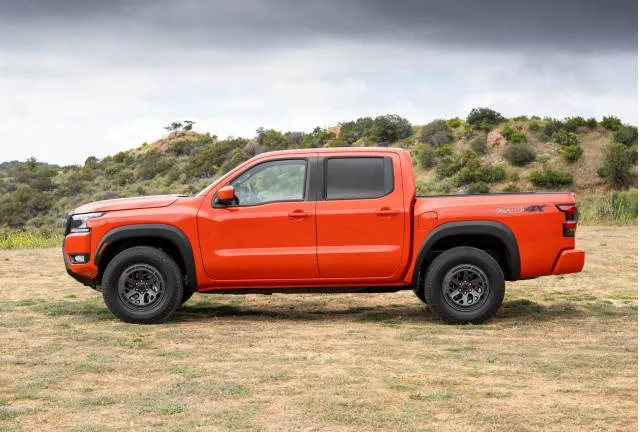
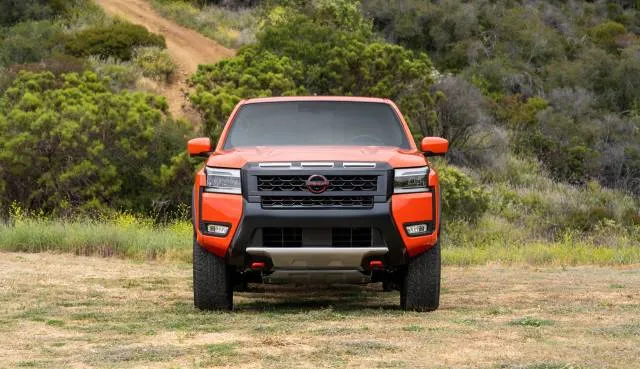
The Frontier presents a slightly blockier, more chiseled appearance. Its design is characterized by pronounced upper character lines that flow seamlessly from the fender flares, creating a sense of muscularity. A lower character line on the doors, combined with the fender flares, subtly suggests a "Coke-bottle" shape, a classic automotive design element. The front fascia is dominated by a high, upright grille that leads into rectangular headlights, which gain additional visual interest from their available flourishing LED light signatures. Pro models further distinguish themselves with unique grilles and a taller stance, emphasizing their off-road readiness. Nissan also offers intriguing exterior packages, including a "Hardbody" look, paying homage to its iconic 1980s pickup.
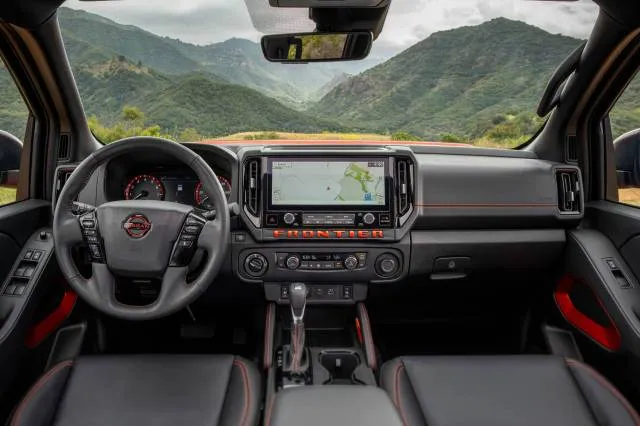
Inside, the Frontier’s cabin is all business. It’s designed for functionality, featuring large, easy-to-reach physical controls that complement the modern convenience of a sizable center touchscreen. The interior palette is predominantly charcoal (black), reinforcing its no-nonsense, durable ethos. While functional, the liberal use of hard plastics underscores its practical, rather than luxurious, intent.
Toyota Tacoma Styling:
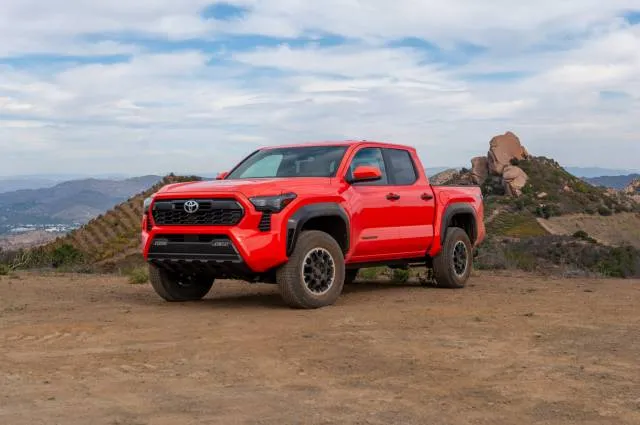
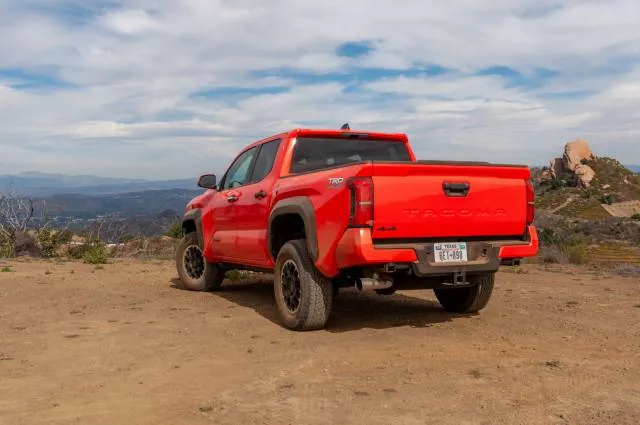
The Tacoma also projects a bold, purposeful stance, though its design has a more angular and aggressive edge. Its grille is similarly prominent but doesn’t rise quite as high into the hood line as the Frontier’s. The flanks feature sharply angular wheel flares that give it a more modern, athletic look. A distinct lower character line originates from each front wheel well and subtly falls towards the rear, adding dynamic tension to the profile. The overall impression is upright and rugged, clearly designed to look capable both on and off the road.
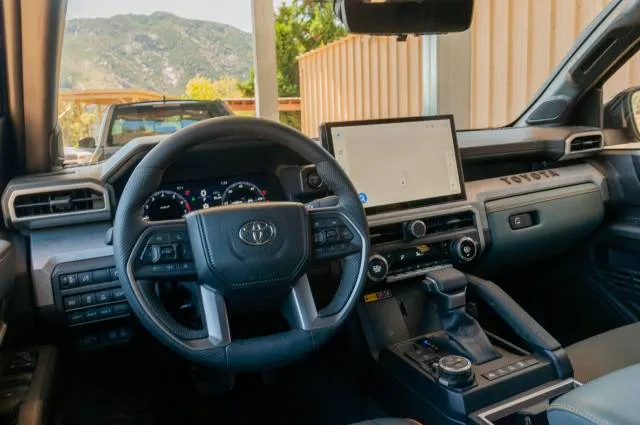
The Tacoma’s interior mirrors its exterior, adopting a chunky, robust aesthetic. It features large, tactile dials and blocky details that convey durability. While primarily black, body-color trim accents are available on certain models to add a touch of personalization. The cabin is dominated by two digital screens: a digital gauge cluster and a prominent center touchscreen that appears to "pop out" from the center stack, rather than being fully integrated. Toyota offers a massive 14.0-inch center screen on higher trims, dwarfing the Frontier’s largest 12.3-inch screen. Similar to the Frontier, plastic surfaces are prevalent, reinforcing the truck’s utilitarian nature, though the design attempts to make them feel more intentional and stylized.
Advantage: Draw. Both trucks successfully execute their rugged design philosophies. The Frontier leans into a more traditional, blocky aesthetic with a hint of retro charm, while the Tacoma embraces a more modern, angular, and aggressive look. The choice between them comes down to individual preference in design language.
Safety and Driver-Assistance Technologies
Safety is paramount, and both Nissan and Toyota equip their midsize trucks with a strong suite of driver-assistance features, though their crash test performance and standard offerings vary.
How safe is the Nissan Frontier?
The 2025 Nissan Frontier has received middling and incomplete crash-test scores. From the National Highway Traffic Safety Administration (NHTSA), it achieved a respectable five out of five stars in the side crash test but only three stars in the rollover test. The Insurance Institute for Highway Safety (IIHS) awarded the Frontier a mix of "Good" and "Acceptable" scores in various tests, which unfortunately was not enough to earn it an award from the organization.
Despite the mixed crash test results, Nissan outfits the Frontier with a generous array of standard safety features. These include automatic emergency braking (front and rear) with pedestrian detection, blind-spot monitors, lane-departure warnings, rear cross-traffic alerts, adaptive cruise control, automatic high beams, and rear parking sensors. A surround-view camera system, which significantly aids in parking and low-speed maneuvering, is available on higher trims. This comprehensive standard safety suite is a strong selling point for the Frontier.
How safe is the Toyota Tacoma?
The 2025 Toyota Tacoma, being a newer generation, has not yet been fully crash tested by the IIHS. In limited testing by the NHTSA, it received three stars for frontal crashes and five stars for side crashes.
Toyota, however, is known for its commitment to standard safety features, and the Tacoma is no exception. It comes standard with the latest iteration of Toyota Safety Sense (TSS 3.0), which includes automatic emergency braking with pedestrian detection, active lane control (lane-keeping assist), adaptive cruise control, and automatic high beams. Higher line models or optional packages offer additional advanced features such as blind-spot monitors, rear cross-traffic alerts, front and rear parking sensors, and a surround-view camera system, matching or exceeding the Frontier’s offerings in these areas.
Advantage: Draw. While the Frontier has more complete, albeit mixed, crash test data available, the Tacoma is expected to perform well once fully tested, given Toyota’s robust safety engineering. Both trucks offer an impressive array of standard and available driver-assistance features, ensuring a high level of active safety for occupants. The standard inclusion of adaptive cruise control on both is a welcome addition for highway driving.
Which is better: Frontier or Tacoma?
The comparison between the 2025 Nissan Frontier and the 2025 Toyota Tacoma reveals two highly capable midsize trucks, each with distinct strengths tailored to different buyer profiles. Ultimately, the Tacoma emerges as the overall winner in this head-to-head, reflected in its TCC Rating of 6.3 out of 10 compared to the Frontier’s 5.5 out of 10. (For more details on how we rate cars, refer to our methodology.) This outcome holds true even with recent discussions around Toyota’s reliability, which, while still strong, has seen some shifts in industry rankings.
The reasons for the Tacoma’s higher score are numerous and multifaceted. As a more modern truck, it benefits from a more advanced and diverse powertrain lineup, including the potent and efficient i-Force Max hybrid option. Its interior boasts superior technology, particularly with the larger available touchscreens and digital gauge cluster, offering a more contemporary user experience. The Tacoma also shines with its available advanced suspension systems, specifically the coil-spring multi-link rear suspension on crew cab models, which delivers a significantly more refined and comfortable ride compared to the Frontier’s traditional leaf springs. Furthermore, Toyota’s expansive and highly specialized lineup, ranging from basic work trucks to extreme off-roaders like the Trailhunter and TRD Pro, offers unparalleled choice and customization for buyers with specific needs.
However, the Frontier remains a compelling alternative for specific buyers. It often appeals for its more accessible price point in certain configurations, particularly when considering the robust V6 engine that comes standard across the lineup. Its higher maximum towing capacity of 7,150 pounds gives it a distinct advantage for those who frequently tow heavy loads. The Frontier embodies a more traditional, no-nonsense truck feel, with a proven powertrain and straightforward utility that many buyers appreciate. Its Pro-4X model is a highly capable off-ro
