
 By Titik Puspa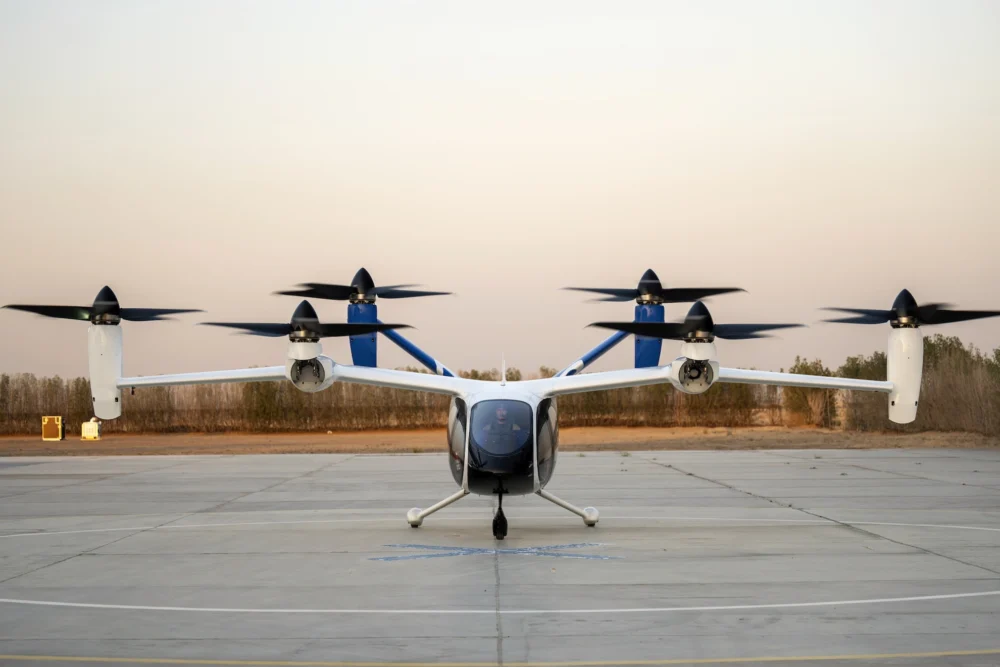
The Federal Aviation Administration (FAA) has officially approved eight groundbreaking pilot programs, paving the way for a select group of pioneering companies, including Archer Aviation, Beta Technologies, Joby Aviation, and Wisk, to commence extensive testing of electric aircraft as early as this summer. This significant regulatory step, part of a comprehensive three-year initiative spanning 26 states, is a strategic move designed to solidify the United States’ leadership in the burgeoning field of next-generation aviation. The program aims to foster innovation across diverse applications such as personal air travel, regional transportation networks, efficient cargo logistics, and critical emergency medical services.
Department of Transportation Secretary Sean Duffy underscored the program’s ambitious scope in remarks made on Monday, emphasizing its role in propelling U.S. companies to the forefront of aviation’s future. The initiative, officially titled the Advanced Air Mobility and Electric Vertical Takeoff and Landing Integration Pilot Program, was first announced last year through an executive order by President Donald Trump. This presidential directive signaled a clear intent to accelerate the development and deployment of these futuristic aircraft, reflecting a national commitment to embracing technological advancements in transportation.
In recent years, the landscape of aviation has been dramatically reshaped by the emergence of numerous electric vertical takeoff and landing (eVTOL) companies. These innovators have consistently presented visions of urban air taxis and other regional electric aircraft, promising to revolutionize how people and goods move. However, the journey from concept to commercial reality for these advanced aircraft is a complex and arduous one, typically requiring years of rigorous development, substantial capital investment, and, critically, the stringent certification process mandated by the FAA. The FAA’s certification of any new aircraft is a multi-year undertaking, involving exhaustive safety reviews and validation of design and performance.
The newly approved pilot program offers a crucial pathway for these eVTOL companies to conduct real-world testing and operational assessments of their aircraft even before they achieve full regulatory certification. This accelerated timeline is expected to provide a significant boost to the development efforts and, consequently, the market valuations of many publicly traded eVTOL companies, including Archer, Beta, and Joby.
Beta Technologies founder and CEO Kyle Clark expressed his enthusiasm for the program’s selection, stating that it will enable his company to initiate aircraft operations a full year ahead of their original projections. This optimistic outlook was reflected in the market, with Beta Technologies’ stock price experiencing a notable surge of nearly 12% on Monday. Archer and Joby, also publicly traded entities, similarly witnessed positive movements in their stock values following the announcement, underscoring the market’s strong confidence in the future of electric aviation.
Archer has drawn parallels between the eVTOL pilot program and the testing phases of autonomous robotaxi services, highlighting the program’s potential to build public trust and establish best practices for the safe and scalable integration of electric air taxis. The company, currently developing its four-passenger piloted eVTOL known as "Midnight," anticipates that this program will be instrumental in preparing for future air taxi operations, including potential services in Los Angeles during the 2028 Olympic Games. The inclusion of Archer’s Midnight eVTOL in such initiatives signifies a concrete step towards realizing the vision of urban air mobility.

FAA Deputy Administrator Chris Rocheleau articulated the agency’s perspective, stating in a prepared statement, "These partnerships will help us better understand how to safely and efficiently integrate these aircraft into the National Airspace System. The program will provide valuable operational experience that will inform the standards needed to enable safe Advanced Air Mobility operations. We appreciate the strong interest reflected in the many proposals we received." The FAA confirmed that it received a substantial 30 proposals for the pilot program, indicating a high level of industry engagement and enthusiasm.
A key requirement of the pilot program is that participating companies must forge collaborations with state, local, tribal, or territorial governments. This mandate ensures a coordinated approach to integrating new aviation technologies into existing infrastructure and regulatory frameworks. The approved projects encompass a wide spectrum of electric aircraft applications, ranging from urban air mobility services to broader regional connectivity.
Illustrative of this collaborative spirit, the Port Authority of New York and New Jersey has partnered with Archer, Beta, Electra, and Joby. This alliance will explore a dozen distinct operational concepts, including ambitious plans for services originating from a Manhattan heliport, aiming to test the feasibility and demand for intra-city electric air transit.
In the Lone Star State, the Texas Department of Transportation is set to collaborate with Archer, Beta, Joby, and Wisk. Their joint efforts will focus on testing regional flight routes connecting major metropolitan areas such as Dallas, Austin, and San Antonio, with plans to eventually extend these networks to Houston. According to the Department of Transportation, this program is envisioned to build robust networks of air taxis that will expand outward from each city, significantly enhancing regional accessibility and economic connectivity.
The scope of these pilot programs extends beyond metropolitan areas, with several projects addressing widespread geographic implications. For instance, a significant initiative led by the state of Utah will examine next-generation aircraft and operational concepts across the diverse landscapes of the Pacific Northwest, the Rocky Mountains, and the Plains of Oklahoma. This project aims to test a broad array of advanced aircraft and operational models in varied environmental and airspace conditions. Concurrently, a project spearheaded by the Pennsylvania Department of Transportation will involve 13 states, focusing on revitalizing regional air travel across the country and addressing underserved routes.
Further demonstrating the multifaceted nature of Advanced Air Mobility, other projects are specifically targeting critical applications such as cargo delivery, emergency medical response, and the advancement of autonomous flight capabilities. Beta, Elroy Air, and other participants will conduct tests involving cargo and personnel transportation flights into the Gulf of America, as well as to remote energy industry locations in Louisiana, Texas, and Mississippi. These operations are crucial for ensuring the efficient delivery of goods and essential services to hard-to-reach areas.
State departments of transportation in Florida, Louisiana, and North Carolina are also at the helm of their own distinct projects, contributing to the national effort to advance electric aviation. In a significant move towards automation, the city of Albuquerque is partnering with Reliable Robotics to rigorously test autonomous flight operations, a critical step in developing the safety cases and regulatory frameworks for unmanned aerial systems.

The FAA’s endorsement of these pilot programs represents a pivotal moment for the advanced air mobility sector. By enabling real-world testing under controlled, yet practical, conditions, the agency is fostering an environment where innovation can flourish while prioritizing safety. The data and operational insights gleaned from these three-year initiatives will be invaluable in shaping the future regulatory landscape for eVTOL aircraft, accelerating their path to widespread commercial adoption. The strategic importance of this program is amplified by the fact that it was initiated under an executive order, signaling a high-level governmental commitment to securing American leadership in this transformative technology.
The selection of eight diverse pilot programs, each with unique objectives and geographic focuses, ensures a comprehensive evaluation of eVTOL capabilities across a broad spectrum of use cases. From the dense urban environments of New York City to the expansive regional networks envisioned in Texas, and from the challenging terrains of the Rocky Mountains to the critical logistical needs of the energy sector, these programs are designed to uncover and address the multifaceted challenges and opportunities presented by electric aviation. The collaborative nature of these projects, requiring partnerships between industry and government entities at various levels, is a testament to the complexity of integrating such novel technologies into the existing transportation ecosystem.
The inclusion of companies like Archer Aviation, known for its focus on air taxi services with its Midnight aircraft, and Beta Technologies, which has made significant strides in cargo and medical transport, highlights the diverse applications being explored. Wisk Aero, a joint venture between Boeing and Kitty Hawk, is also participating, bringing its extensive experience in autonomous flight systems to the table. Joby Aviation, another prominent player in the eVTOL space, further diversifies the technological approaches and operational models being tested.
The FAA’s role in this process is paramount. By providing a structured framework for testing and data collection, the agency is not only supporting the development of these new aircraft but also actively working to build the foundation for their safe and effective integration into the national airspace. The insights gained will inform future rulemaking, certification standards, and operational procedures, ensuring that as eVTOLs become more prevalent, they do so with the highest levels of safety and public confidence. The sheer number of proposals received, 30 in total, demonstrates the intense interest and investment in this sector, as well as the industry’s reliance on regulatory clarity and support to move forward.
The economic implications of these pilot programs are also significant. The successful development and deployment of eVTOL technology have the potential to create new industries, generate high-skilled jobs, and stimulate economic growth. Furthermore, the enhanced mobility and connectivity offered by electric aircraft could unlock new economic opportunities for regions previously underserved by traditional transportation infrastructure. The boost in stock prices for publicly traded eVTOL companies reflects the market’s anticipation of these future economic benefits.
The long-term vision articulated by the Department of Transportation and the FAA extends beyond mere technological advancement; it encompasses the creation of a more sustainable, efficient, and accessible transportation system for the future. Electric aircraft, with their reduced emissions and potential for quieter operation compared to traditional helicopters, are a key component of this vision. The pilot programs are therefore not just about testing aircraft but about testing entire ecosystems, including charging infrastructure, air traffic management integration, and public acceptance.
As these pilot programs commence this summer, the world will be watching closely. The success of these initiatives will be a critical determinant of the pace at which electric aviation transitions from a promising concept to a tangible reality, fundamentally reshaping how we travel, transport goods, and respond to emergencies in the decades to come. The collaborative effort between the FAA, the Department of Transportation, and a diverse group of innovative companies signifies a unified commitment to ushering in a new era of flight.
