
 By Titik Puspa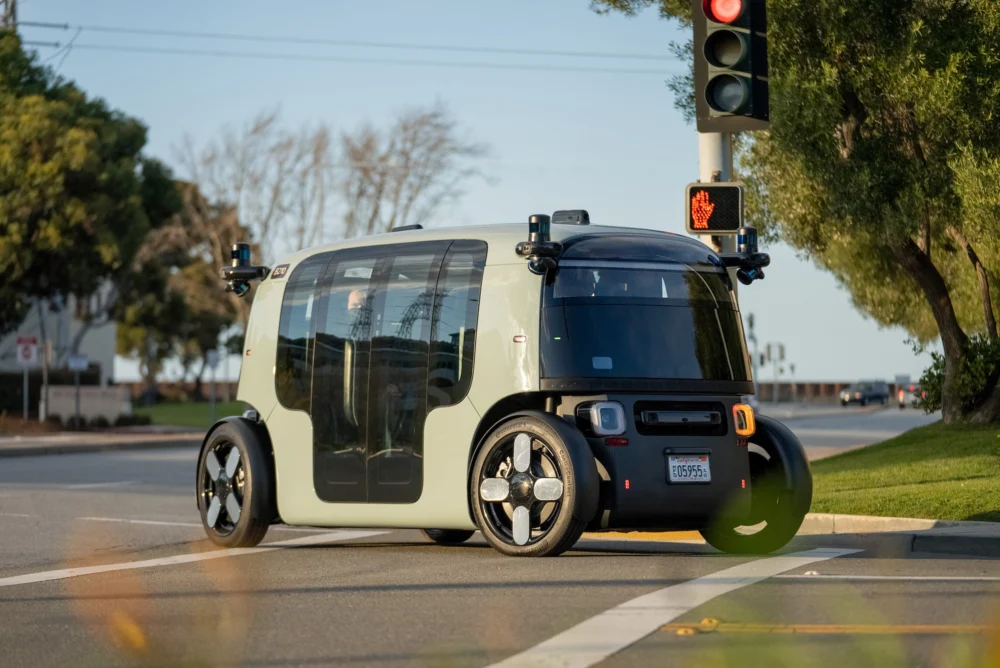
Amazon-owned Zoox is set to revolutionize urban mobility by integrating its autonomous ride-hailing service into the Uber app, with plans to launch in Las Vegas by the end of this year. This landmark collaboration, announced on Wednesday, signifies a major step forward in the widespread adoption of self-driving technology, promising a future where hailing an autonomous vehicle will be as seamless as ordering a traditional ride. However, this ambitious venture hinges on crucial federal regulatory approvals, particularly exemptions from the Federal Motor Vehicle Safety Standards (FMVSS) for Zoox’s unique, steering wheel- and pedal-free robotaxis.
The National Highway Traffic Safety Administration (NHTSA) has initiated a 30-day public comment period on Zoox’s application for these essential exemptions. This regulatory process is a critical hurdle, as Zoox’s vehicles are designed from the ground up for autonomous operation, diverging significantly from traditional vehicle designs that are the basis for current safety standards. While Zoox currently operates under an exemption that permits demonstration rides, commercial deployment requires a more comprehensive endorsement from federal regulators. The NHTSA’s openness to public discourse on this application underscores the evolving landscape of autonomous vehicle regulation, where balancing innovation with safety is paramount.
Should Zoox secure the necessary federal approvals, the company intends to first launch its own commercial robotaxi service in Las Vegas before extending availability to the Uber platform. This phased approach suggests a strategic commitment to refining their operational model and customer experience independently before integrating with a third-party giant. Currently, Zoox offers complimentary rides in both Las Vegas and San Francisco, providing invaluable real-world data and honing their autonomous driving systems in diverse urban environments. Furthermore, the company is actively expanding its footprint, mapping and establishing operational capabilities in eight additional U.S. cities, including Dallas and Phoenix, as announced earlier this week. This expansion signals Zoox’s intent to become a significant player in the burgeoning autonomous mobility market across multiple key metropolitan areas.
The alliance between Zoox and Uber is described as a "multi-year strategic partnership," with immediate plans to roll out services in Los Angeles in 2027, indicating a long-term vision for integrating autonomous fleets into the ride-hailing ecosystem. This marks Zoox’s inaugural third-party partnership with a major ride-sharing platform, a testament to the growing maturity of their technology and their strategic ambitions. For Uber, this collaboration is far from its first foray into the autonomous vehicle space. The company has cultivated relationships with over 25 autonomous vehicle developers globally, recognizing the transformative potential of this technology for its platform.
Uber’s most prominent existing partnership is with Waymo, Google’s sister company, whose robotaxis are already accessible through the Uber app in Austin and Atlanta. These collaborations allow Uber to offer a wider range of mobility solutions to its users while simultaneously gathering data and insights that can inform its own AV development and deployment strategies. Beyond Waymo, Uber has also partnered with Chinese tech giant Baidu, with plans to test Baidu’s self-driving cars in London this year, alongside Waymo. This international collaboration highlights Uber’s global strategy to embrace autonomous vehicle technology from various leading developers.
The company’s commitment to fostering the autonomous vehicle ecosystem is further evidenced by its partnerships with established automotive and mobility companies. Uber has engaged with Volkswagen to explore robotaxi services using self-driving electric microbuses, and with May Mobility, a leader in autonomous shuttle services, to launch robotaxis on its platform in Texas. Additionally, Uber has turned to Chinese companies like Pony AI to secure market share in the robotaxi sector, demonstrating a pragmatic approach to leveraging diverse technological capabilities and regional expertise.
Uber’s proactive efforts to support its autonomous vehicle partners extend beyond mere platform integration. In January, TechCrunch reported on the establishment of Uber’s "AV Labs" division, a specialized unit dedicated to collecting and analyzing real-world driving data. This data is crucial for enhancing the safety and performance of its partners’ autonomous systems, effectively creating a feedback loop that benefits all stakeholders. More recently, in February, Uber announced the formation of "Uber Autonomous Solutions," a division designed to offer comprehensive operational, software, and support services to its AV partners. This integrated approach positions Uber not just as a platform provider but as a strategic enabler of autonomous mobility, aiming to streamline the complexities of fleet management and deployment for its partners.
The specific exemptions Zoox is seeking from NHTSA are significant, as they pertain to fundamental vehicle safety standards. These include requirements for windshield defrosting systems and windshield wipers, features typically considered essential for safe operation in various weather conditions. The agency’s decision-making process, which includes a 30-day public comment period, is being closely watched by the industry. The timeline for a ruling remains uncertain, adding a layer of anticipation to the potential commercial launch.
Adding further context to the regulatory environment, NHTSA chief Jonathan Morrison addressed the complexities of self-driving car oversight at an autonomous vehicle safety hearing on Tuesday. Morrison expressed a clear desire to move beyond the current regulatory ambiguity and establish a more explicit framework for autonomous vehicles. "We think it’s past time to get past the hand-waving and hype, and are finally doing the necessary, hard policy work to provide appropriate and robust oversight over this sector while removing unnecessary and unintended barriers to innovation that currently exists," he stated. His remarks underscored a sense of urgency within the NHTSA to create a regulatory environment that fosters both safety and innovation, acknowledging the challenges but expressing confidence in their ability to achieve a balanced approach. "This will not be easy, but I firmly believe that it is within our grasp, and we at NHTSA are moving with a great sense of urgency to get it done," he concluded, signaling a commitment to addressing the evolving needs of the autonomous vehicle industry.
The partnership between Zoox and Uber represents a pivotal moment in the evolution of transportation. As Zoox navigates the regulatory landscape and Uber leverages its extensive network and technological support, the prospect of widely available, safe, and convenient autonomous ride-hailing moves closer to reality. The success of this venture could serve as a blueprint for future collaborations, accelerating the transition to a future where autonomous vehicles are an integral part of our daily lives, transforming urban mobility and offering new levels of accessibility and efficiency. The integration of Zoox’s innovative, purpose-built autonomous vehicles onto Uber’s established platform signifies a powerful synergy, poised to redefine the ride-sharing experience and pave the way for a more sustainable and technologically advanced transportation future. The public comment period initiated by NHTSA is a critical step in this journey, ensuring that public input is considered as regulators grapple with the complex task of overseeing this transformative technology. The outcome of these regulatory deliberations will undoubtedly shape the trajectory of autonomous vehicle deployment not only in Las Vegas but across the nation.
