
 By Titik Puspa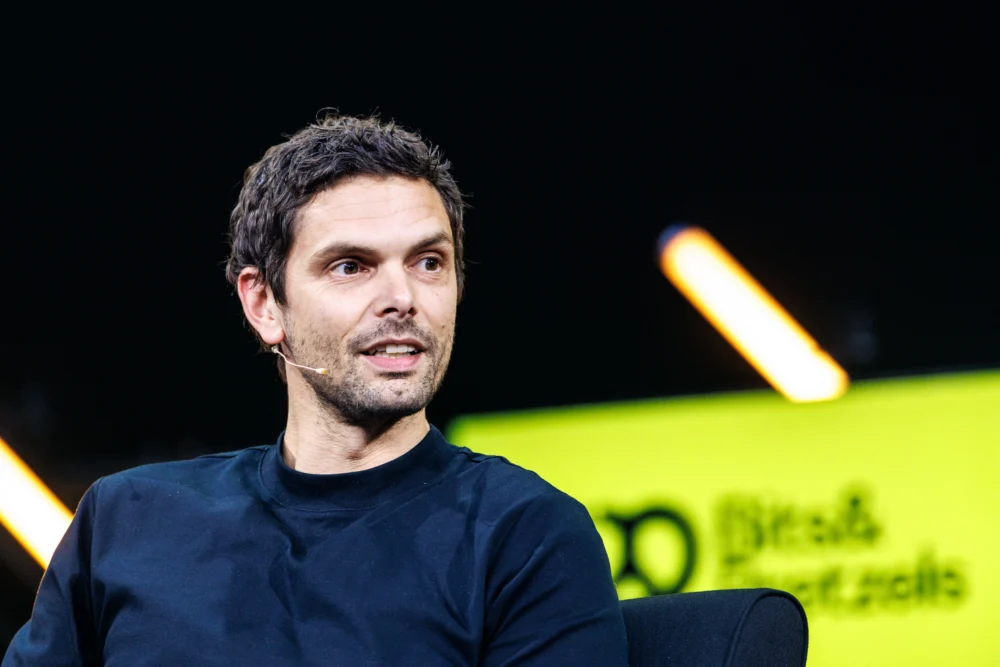
Eighteen months after orchestrating the lucrative $665 million sale of his artificial intelligence startup, Silo AI, to semiconductor giant AMD, Finnish entrepreneur Peter Sarlin has embarked on a new, ambitious venture. He has stepped down from his leadership role as CEO of the unit, now integrated into AMD and known as AMD Silo AI, to focus on two groundbreaking enterprises: NestAI, a physical AI laboratory, and QuTwo, an innovative AI startup poised to guide businesses through the nascent era of quantum computing. Sarlin’s departure from AMD marks a significant personal pivot, underscoring his continued commitment to pushing the boundaries of artificial intelligence and its future integration with emerging computational paradigms.
QuTwo, currently fully funded by Sarlin’s family office, PostScriptum, positions itself as an “AI lab for the quantum era.” The company’s forward-thinking approach eschews a passive waiting game for quantum computing to reach maturity. Instead, QuTwo is actively engaging with enterprise clients, demonstrating a proactive strategy to bridge the gap between current AI capabilities and the potential of quantum computation. A notable early partnership includes European fashion retailer Zalando. Together, they are developing what Zalando has termed "lifestyle agents." These are not merely advanced product search tools but sophisticated AI entities designed to move beyond transactional interactions, proactively suggesting products and entirely new experiences to consumers, hinting at a future of hyper-personalized commerce driven by intelligent systems. This collaboration with Zalando exemplifies QuTwo’s mission to deliver tangible value even as the quantum landscape continues to evolve.
The foundational premise behind QuTwo’s development is the observation that current artificial intelligence systems are approaching an efficiency wall. While quantum computing holds the promise of eventually overcoming these limitations, Sarlin is pragmatic about the timeline. Speaking to TechCrunch, he emphasized that QuTwo is not making a speculative bet on when quantum computing will become widely accessible. Instead, the startup is building QuTwo OS, an intelligent orchestration layer. This innovative operating system is designed to empower companies to seamlessly transition from classical computing architectures to quantum ones, facilitating a hybrid computing environment that leverages the strengths of both. This approach allows businesses to begin preparing for the quantum future without requiring immediate access to full-scale quantum hardware.
Sarlin’s personal investments through PostScriptum further highlight his deep conviction in the potential of quantum technologies. He has strategically invested in prominent Finnish quantum companies, including IQM, a quantum computing hardware developer that has achieved unicorn status and is reportedly eyeing an IPO, and QMill. This proactive investment strategy signals Sarlin’s belief that quantum computers will eventually surpass the capabilities of classical machines across a diverse array of industry applications. Furthermore, he anticipates that quantum computing will play a crucial role in alleviating the substantial energy demands of increasingly complex AI workloads. However, he also acknowledges that the initial practical applications will likely necessitate mixed hardware environments. QuTwo’s strategy is therefore to empower enterprises to focus on their core business challenges, while QuTwo OS handles the intricate routing and management of computational tasks across classical and quantum resources.
This focus on a hybrid approach leads to the exploration of "quantum-inspired" computing. This emerging field offers a compelling middle ground by utilizing classical hardware while simulating quantum behaviors. By doing so, it circumvents the significant hurdles that still plague the development and widespread adoption of actual quantum hardware. QuTwo OS is architected with this flexibility in mind, designed to be a versatile platform capable of supporting both quantum and non-quantum algorithms and chips. This adaptability is crucial for a rapidly evolving technological landscape where the optimal computational approach may shift frequently.
The QuTwo team itself is a testament to this cross-disciplinary vision, bringing together leading experts from both the quantum and AI domains. On the quantum front, the team includes Kuan Yen Tan, a co-founder of IQM, and Antti Vasara, a board member at IQM and also the chair of SemiQon, a Finnish semiconductor startup specializing in quantum chip development. The enterprise side of the business is equally robust, represented by Sarlin himself and Kaj-Mikael Björk, one of his former co-founders at Silo AI. The strategic significance of this blend of expertise is further amplified by the addition of Pekka Lundmark, the former CEO of Finnish telecommunications giant Nokia, to QuTwo’s board of directors. This diverse assembly of talent ensures that QuTwo possesses the deep technical knowledge and strategic foresight required to navigate the complexities of both quantum computing and enterprise AI integration. Across these varied areas of expertise, the QuTwo team comprises over 30 dedicated quantum and AI scientists, reflecting a significant concentration of specialized talent. Sarlin is unequivocal about the company’s strategic direction: "We’re building for the quantum world, but QuTwo is an AI company," he stated. This declaration signifies that QuTwo’s core mission is to facilitate the migration and optimization of AI workloads from classical computing environments to quantum architectures, thereby unlocking new levels of performance and efficiency.
This strategic positioning as a bridge between classical and quantum AI also suggests a broad and diverse customer base for QuTwo. Beyond its high-profile collaboration with Zalando, the company has also initiated a joint quantum AI research initiative with OP Pohjola, a leading financial services provider in Finland. This partnership with a major financial institution underscores the potential applicability of advanced AI and quantum computing solutions across critical sectors like finance, where complex data analysis, risk assessment, and fraud detection are paramount.
From its inception, QuTwo has maintained a strong commercial focus. Sarlin revealed that the company has already secured "large design partnerships which are in the tens of millions." These design partnerships, which involve vendors co-developing products in close collaboration with enterprise customers, serve a dual purpose for QuTwo. Firstly, they provide invaluable real-world feedback, allowing the company to refine its product offerings based on the specific needs and expectations of its clients. Secondly, these partnerships represent a strategic investment by enterprises eager to establish an early foothold in the emerging quantum computing landscape, positioning themselves to capitalize on its eventual widespread adoption. This proactive engagement with commercial realities ensures that QuTwo’s technological advancements are directly aligned with market demands, fostering a sustainable growth trajectory.
The broader implications of QuTwo’s approach extend to the critical issue of energy consumption in AI. As AI models become increasingly complex and data-intensive, their energy footprint is a growing concern. Quantum computing, with its fundamentally different computational approach, holds the potential to offer more energy-efficient solutions for certain types of problems. By enabling the transition of AI workloads to more efficient quantum or quantum-inspired architectures, QuTwo aims to contribute to a more sustainable future for artificial intelligence development. This aligns with a global trend towards environmentally conscious technology solutions and positions QuTwo as a forward-thinking player in the AI ecosystem.
The technical underpinnings of QuTwo’s platform are also noteworthy. The ability to integrate and orchestrate diverse computational resources, from existing classical hardware to future quantum processors, requires a sophisticated software stack. QuTwo OS is designed to be a modular and extensible platform, capable of abstracting away the complexities of underlying hardware. This allows developers and businesses to focus on algorithmic innovation and business logic, rather than getting bogged down in the intricacies of hardware management. The platform’s ability to dynamically route workloads to the most appropriate computational resource, whether it be a CPU, GPU, or a future quantum processing unit (QPU), is a key differentiator. This dynamic routing ensures optimal performance, cost-efficiency, and scalability for AI applications.
The strategic timing of QuTwo’s launch is also significant. While fully fault-tolerant quantum computers are still some years away, the quantum computing industry is experiencing rapid progress. Investments are flowing into hardware development, algorithm research, and software platforms. "Quantum-inspired" solutions are already providing tangible benefits today, demonstrating the immediate value proposition of this emerging field. QuTwo’s focus on bridging the gap between these two realities positions it to capture value throughout the entire transitionary period. By enabling businesses to experiment with and adopt quantum-ready solutions now, QuTwo is effectively future-proofing their AI strategies.
The entrepreneurial journey of Peter Sarlin, from the successful exit of Silo AI to the ambitious launch of QuTwo and NestAI, reflects a visionary approach to technological innovation. His ability to identify nascent trends, build strong teams, and secure strategic partnerships underscores his significant influence in the European tech landscape. The creation of QuTwo, in particular, addresses a critical need in the market for guidance and infrastructure as businesses grapple with the transformative potential of quantum computing. As AI continues its relentless march forward, the integration with quantum capabilities promises to unlock unprecedented opportunities, and QuTwo appears to be strategically positioned to lead this charge. The company’s commitment to practical, commercially viable solutions, even in the face of bleeding-edge technology, suggests a robust business model and a clear path toward realizing the vision of a quantum-enhanced AI future.
