
 By admin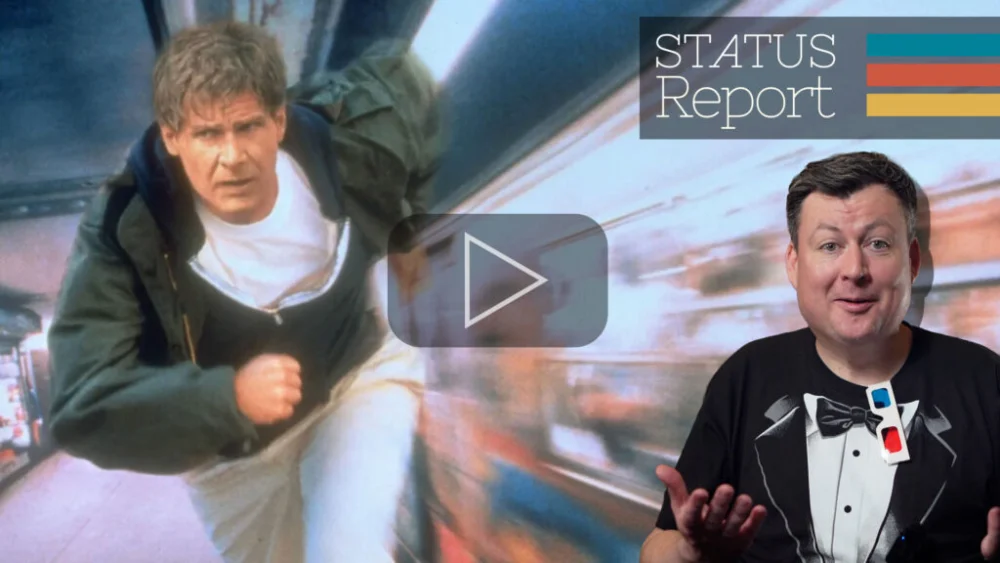
In the landscape of 1990s cinema, few thrillers have maintained the cultural footprint and technical resonance of the 1993 classic "The Fugitive." While most audiences remember the film for its high-octane chase sequences, Harrison Ford’s desperate leap from a dam, and Tommy Lee Jones’s relentless pursuit as U.S. Marshal Samuel Gerard, a deeper layer of the narrative has recently caught the attention of those within the scientific and medical reporting community. For Alex Hogan, host of the STATus Report, a re-examination of the film’s plot reveals a story that is less about a man wrongly accused of murder and more about a high-stakes corporate conspiracy that feels eerily similar to the beats of a modern pharmaceutical scandal. If the fictional events surrounding the drug Provasic were to occur today, they would represent one of the most significant investigative opportunities in the history of health journalism, requiring a multi-disciplinary approach to uncover a web of clinical fraud, regulatory failure, and corporate greed.
At the heart of "The Fugitive" is Dr. Richard Kimble, a respected vascular surgeon who finds himself framed for his wife’s murder. As the mystery unravels, the motive points directly toward a fictional pharmaceutical giant, Devlin MacGregor. The company is on the verge of seeking FDA approval for RDU-90, a drug marketed under the brand name Provasic, designed to treat coronary artery disease. The stakes could not be higher; Provasic is positioned as a "blockbuster" treatment, a term used in the industry for a drug that generates more than $1 billion in annual revenue. However, Kimble discovers a fatal flaw: the drug causes severe liver damage in a significant percentage of patients. To bypass regulatory hurdles and secure the financial future of the company, Devlin MacGregor executives and lead researchers systematically falsified clinical trial data, tampering with tissue samples to hide the evidence of hepatotoxicity.
To understand how a modern newsroom like STAT would cover such a scandal if it broke in 2026, one must first look at the economics of the pharmaceutical industry. The pursuit of a blockbuster drug is the primary driver of innovation, but it also creates immense pressure on executives and scientists. In the case of Provasic, the drug was intended to treat coronary artery disease (CAD), the leading cause of death globally. The market for CAD treatments is worth tens of billions of dollars. If Devlin MacGregor could prove that Provasic was safer or more effective than existing statins or beta-blockers, their stock price would skyrocket, enriching board members and ensuring the company’s dominance for a decade. This financial motive is the "why" that investigative reporters would lead with, analyzing SEC filings, quarterly earnings calls, and the stock-selling patterns of insiders like the fictional Dr. Charles Nichols.
In a real-world scenario, the coverage would begin at the Biotech and Pharma desks. These reporters would be tasked with deconstructing the clinical trial design of RDU-90. In the film, Kimble notices that the pathology reports from the Phase III trials were tampered with. In a modern context, this would involve a deep dive into the "raw data" that companies are increasingly pressured to share with independent researchers. Reporters would look for discrepancies between the internal data held by Devlin MacGregor and the summary data presented to the Food and Drug Administration (FDA). They would consult with independent hepatologists to understand the mechanism of liver damage caused by the drug. Was it a direct toxic effect, or an idiosyncratic reaction? By interviewing former employees of the contract research organizations (CROs) that managed the trials, journalists could uncover a culture of "data scrubbing," where adverse events are minimized or reclassified to keep a drug on the fast track to approval.
The political dimension of the Provasic scandal would fall under the purview of Washington, D.C.-based reporters. The FDA’s role in the approval process is the ultimate safeguard for public health, yet the agency is often under fire for being too cozy with the industries it regulates. Under the Prescription Drug User Fee Act (PDUFA), pharmaceutical companies pay fees to the FDA to fund the review process, leading to criticisms of a "pay-to-play" atmosphere. If Provasic were moving through the pipeline today, STAT’s D.C. reporters would investigate the advisory committee meetings. Who were the experts on the panel? Did any of them have undisclosed financial ties to Devlin MacGregor? They would also scrutinize the use of "Accelerated Approval" pathways, which allow drugs for serious conditions to reach the market based on surrogate endpoints—such as a reduction in arterial plaque—rather than hard clinical outcomes like a reduction in heart attacks or death. If the FDA missed the signs of liver toxicity that Dr. Kimble found in a basement lab, it would point to a systemic failure in the agency’s surveillance of clinical data.
The human element of the story, often the most compelling for readers, would be handled by investigative reporters chasing down the "whistleblowers." In "The Fugitive," Dr. Kimble is the ultimate whistleblower, though he is forced to act from the shadows. In 2026, a real-life Kimble might be a disgruntled research assistant or a clinical trial monitor who noticed that patients in the Provasic arm of the study were showing elevated liver enzymes. These individuals often face immense legal and professional risks when speaking out against a multi-billion-dollar corporation. Journalists would use encrypted communication channels to protect their sources, piecing together a timeline of when Devlin MacGregor first became aware of the liver damage and why they chose to suppress the findings. The investigation would extend to the victims—the patients who participated in the clinical trials thinking they were receiving a life-saving treatment, only to suffer irreversible organ damage. Their stories would provide the moral weight to the technical and financial reporting.
Furthermore, the role of "ghostwriting" and academic influence would be a critical area of analysis. In the film, Dr. Nichols is a respected figure in the medical community, using his prestige to shield the drug from criticism. Modern health journalism frequently exposes how pharmaceutical companies hire medical communications firms to write favorable articles about their drugs, which are then signed by prominent physicians who may have had little involvement in the actual research. STAT would investigate whether Devlin MacGregor had a network of "Key Opinion Leaders" (KOLs) on their payroll, tasked with promoting Provasic at medical conferences and in the pages of prestigious journals like the New England Journal of Medicine or The Lancet.
The technical reality of how Kimble uncovered the fraud also bears modern scrutiny. He examined histopathology slides and realized they were duplicates from a different patient—a classic case of image manipulation. Today, this kind of fraud is often detected using sophisticated AI tools designed to spot "Photoshopped" Western blots or duplicated microscopic images in scientific papers. Reporters would work with "data sleuths"—independent scientists who specialize in finding errors in published research—to see if the Provasic data held up to digital forensics.
The enduring legacy of "The Fugitive" lies in its depiction of the fragility of the medical trust. When a doctor like Richard Kimble realizes that the institutions he serves are corrupted by profit, it shakes the foundation of the healthcare system. For the reporters at STAT, covering the Provasic scandal would not just be about a single drug; it would be about the integrity of the entire scientific enterprise. It would require an all-hands-on-deck approach, blending the fast-paced nature of breaking news with the slow, methodical work of investigative journalism.
As Hogan notes in the special Oscars season episode of STATus Report, the fictional world of Devlin MacGregor provides a perfect simulation for the real-world challenges faced by health reporters. The "Provasic scandal" serves as a reminder that the line between a cinematic thriller and a front-page news story is often thinner than we think. In an era of rapid biotechnological advancement, the vigilance of the press remains the last line of defense against those who would prioritize a blockbuster profit over the safety of the public. If Dr. Richard Kimble were to walk into a modern newsroom today with his evidence of falsified liver biopsies, the chase would not be through the streets of Chicago, but through the balance sheets, regulatory filings, and digital footprints of a corporate giant, ensuring that the truth is caught before the drug ever hits the pharmacy shelves.
