
 By Titik Puspa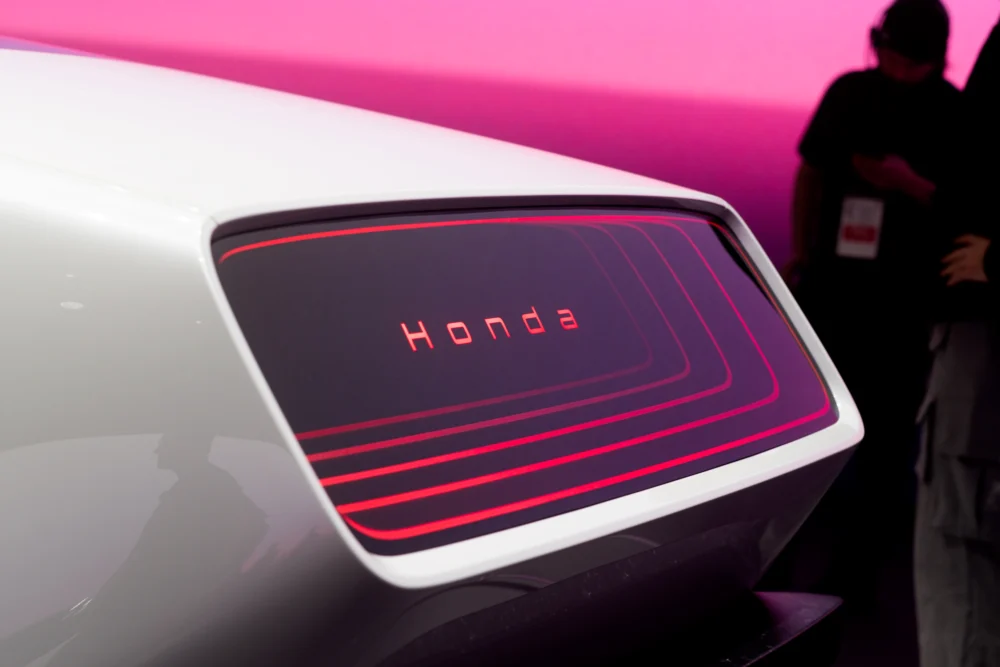
In a move that has sent ripples of concern through the automotive industry, Honda has abruptly halted its nascent electric vehicle (EV) development programs, a decision that analysts and industry observers suggest could have profound and detrimental consequences for the legacy automaker’s future. While acknowledging the challenging landscape of a global auto market grappling with shifting consumer preferences, dwindling incentives, and the aggressive encroachment of Chinese manufacturers, Honda’s radical retreat from its EV ambitions is being characterized as a significant misstep, potentially jeopardizing its ability to navigate the seismic shifts transforming the automotive world.
The company, known for its engineering prowess and reputation for reliability, has publicly cited U.S. tariffs and escalating Chinese competition as primary drivers for its decision. However, this narrative, while offering convenient external scapegoats, fails to address what many believe to be a more fundamental issue: Honda’s historically uninspired and ultimately unviable strategy for electrification. The abrupt cancellations announced this week underscore a deep-seated lack of commitment, signaling a potential surrender to the forces of disruption rather than a determined effort to adapt and thrive.
The cascade of cancellations began on Thursday with the cessation of development for three of Honda’s most anticipated ground-up EV models: the electric Acura RDX, the Honda 0 sedan, and the Honda 0 SUV. These vehicles, shrouded in secrecy with minimal public disclosure regarding their specifications or timelines, represented Honda’s first dedicated attempts at creating purpose-built electric platforms. The following day, Automotive News reported a further blow to Honda’s EV aspirations: the decision to cease production of the Prologue, a model whose development and manufacturing were entirely outsourced to General Motors. This reliance on a partner, rather than the cultivation of in-house expertise, further highlights the tentative and perhaps ill-conceived nature of Honda’s previous EV endeavors.
The implications of this strategic pivot away from electric vehicles are multifaceted and, according to many industry analysts, overwhelmingly negative. Two of the most critical areas where Honda risks falling critically behind are the fundamental shift towards electric drivetrains and the burgeoning revolution of software-defined vehicles (SDVs).
Missed EV Opportunities: A Costly Underestimation of Electrification’s Depth
For many established automakers, including Honda, the prevailing mindset regarding EVs has often been one of simple mechanical substitution: replacing an internal combustion engine with an electric motor and battery. This perspective, which seems to pervade Honda’s executive suite, suggests a belief that the company can afford to wait out the current volatile transition period. The thinking appears to be that once battery technology matures and charging infrastructure becomes ubiquitous, Honda can then seamlessly integrate electric powertrains into its existing vehicle architectures. This "wait and see" approach, however, is a critical miscalculation.
The reality for automakers who have rushed to convert existing internal combustion engine (ICE) platforms into EVs has been a litany of challenges. Such conversions often result in vehicles that are heavier, less energy-efficient, and more expensive to produce. This is because a platform designed for the distinct weight distribution and packaging requirements of a fossil fuel powertrain is fundamentally ill-suited for the unique demands of an EV. The integration of batteries, motors, and associated thermal management systems into an ICE chassis can lead to compromises in structural integrity, aerodynamic efficiency, and overall vehicle dynamics.
Conversely, developing EVs as original products from the ground up offers automakers an unparalleled opportunity to reimagine the automobile entirely. This allows for a holistic approach to design, engineering, and manufacturing, leading to vehicles that are not only more efficient and cost-effective to produce but also offer a superior user experience. Ford’s Mustang Mach-E, while a sales success, serves as a poignant illustration of the pitfalls of relying on modified ICE platforms. Despite its popularity, the Mach-E has been a financial challenge for Ford. According to Ford CEO Jim Farley, legacy engineering decisions, such as an excessively heavy wiring harness compared to competitors like Tesla, have hindered the vehicle’s profitability. These seemingly minor design choices, when compounded across the intricate systems of an automobile, can significantly inflate production costs and compromise efficiency.
Honda’s decision to abandon its EV development means it will forgo invaluable learning opportunities. The process of developing and manufacturing EVs from scratch provides critical "learning by doing" experience, not just in engineering but also in cultivating new supplier relationships and establishing robust supply chains for battery components and other specialized EV parts. Furthermore, by not bringing these vehicles to market, Honda will miss out on essential customer feedback. Understanding what consumers truly value in their electric vehicles – from range and charging speed to infotainment systems and driver-assistance features – is paramount for future product development. This direct engagement with the EV market is a vital feedback loop that Honda is now deliberately cutting off.
Sayonara, Software-Defined Vehicles: Ceding Ground in the Next Automotive Frontier
Honda’s retreat from EVs also signals a significant abdication in the race towards software-defined vehicles (SDVs). The concept of an SDV, where core vehicle capabilities can be continuously upgraded and improved through software updates, represents the next major paradigm shift in the automotive industry. Consumers, particularly those accustomed to the seamless and evolving digital experiences offered by EV leaders like Tesla, Rivian, and increasingly, Chinese automakers such as BYD and Xiaomi, have come to expect frequent over-the-air updates, intuitive infotainment systems, and advanced driver-assistance features. Honda has demonstrably struggled to make substantial progress in these critical software domains.
While an SDV doesn’t necessarily have to be an EV, the two often go hand-in-hand. The large battery pack in an EV provides ample power to support sophisticated computing systems and enables over-the-air updates, even when the vehicle is parked and ostensibly "off." While it’s technically possible to create a software-defined internal combustion engine vehicle, the inherent power limitations and complexities of integrating advanced electronics into traditional powertrains make it a far more challenging and less efficient endeavor. The same reluctance to invest in new technologies that is driving Honda away from EVs likely extends to its commitment to the software-defined future. The perceived ease and immediate profitability of sticking with established ICE technology appear to be outweighing the strategic necessity of embracing the future of automotive computing.
What Does Honda Stand For? An Identity Crisis in the Electric Age
At its core, Honda is an internal combustion engine company. Its legacy is built upon the precision and performance of its engines, a reputation that, while historically strong, is rapidly diminishing in relevance. As the automotive industry pivots towards electrification, Honda faces an existential identity crisis. What does it mean to be a "Honda" when the defining characteristic of its vehicles is no longer its celebrated engine?
Furthermore, other traditional Honda attributes are also being challenged. For decades, Honda has cultivated a reputation for producing "driver’s cars" – vehicles known for their lightweight construction, nimble handling, and engaging driving dynamics. However, in an era increasingly defined by advanced driver-assistance systems and the eventual advent of widespread autonomous driving, the very definition of a "driver’s car" becomes blurred. When the vehicle increasingly takes over the driving task, the emphasis on raw driving engagement may become a niche appeal rather than a mainstream differentiator.
Beyond the allure of spirited driving, Honda’s historical appeal to consumers has largely rested on its reputation for reliability and its competitive pricing. While excellent handling was often seen as a valuable bonus, it was the dependability and affordability that drew in the majority of its customer base. However, this carefully balanced equation is being upended by the EV revolution. EVs, by their nature, have fewer moving parts than ICE vehicles, suggesting a potential for significantly enhanced reliability. Simultaneously, as Chinese automakers demonstrate, the falling cost of battery technology is poised to make EVs more affordable than ever. If Honda can no longer compete on the foundational pillars of reliability and price, its traditional customer base may well look elsewhere.
The stark reality of this competitive shift is already evident in China, Honda’s largest market. In its recent earnings report, Honda candidly admitted, "Honda was unable to deliver products that offer value for money better than that of newer EV manufacturers, resulting in a decline in competitiveness." This admission comes in the wake of significant financial headwinds, with Honda reporting nearly $16 billion in losses last year, a substantial portion of which is attributed to its struggles in the Chinese market. Without a clear and compelling strategy for electric vehicles, the company’s future success in other global markets appears increasingly precarious. Honda’s current trajectory suggests a dangerous complacency, a willingness to cede ground in the most transformative period the automotive industry has ever faced, and a gamble that its legacy alone can carry it through the electric age. The question remains: will this gamble pay off, or will it mark the beginning of the end for one of the automotive world’s most venerable names?
