
 By Lina Irawan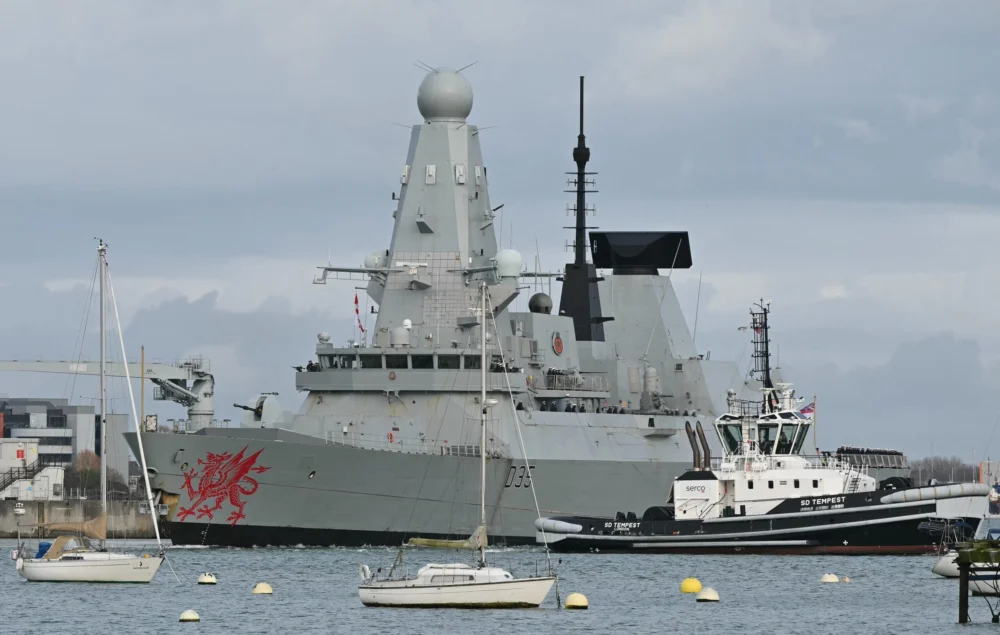
The precision strike on Kharg Island represents a significant turning point in the unfolding hostilities. President Trump asserted that military facilities on the Persian Gulf island had been “obliterated,” a stark claim underscoring the severity of the attack. He notably clarified that he had deliberately chosen to spare Iran’s critical oil infrastructure “for reasons of decency,” a decision that analysts suggest was intended to avoid an immediate, catastrophic disruption to global oil markets and potentially provide Iran with an off-ramp, however narrow. However, this restraint was coupled with a stark warning: any interference by Iran with the “Free and Safe Passage of Ships through the Strait of Hormuz” would immediately trigger attacks on those very oil assets. This ultimatum places immense pressure on Tehran, forcing it to weigh its retaliatory options against the risk of crippling its primary economic lifeline.
Trump’s strategy, as articulated on Truth Social, involves a multinational effort to secure the Strait. “Many Countries, especially those who are affected by Iran’s attempted closure of the Hormuz Strait, will be sending War Ships, in conjunction with the United States of America, to keep the Strait open and safe,” he declared. While specific details were sparse, he expressed hope that key global players such as China, France, Japan, South Korea, and the United Kingdom would contribute naval assets. This call for an international coalition echoes historical precedents for safeguarding vital maritime chokepoints, though the willingness of these nations to commit significant military resources to a conflict of this intensity remains to be seen. China, a major importer of Iranian oil and a rising naval power, could find itself in a particularly complex geopolitical position.
Despite his administration’s aggressive military actions, Trump maintained a defiant posture regarding Iran’s capabilities, claiming that Iran’s military was “already destroyed 100%.” This assessment, however, starkly contrasts with his acknowledgment that Tehran could still “easy” continue threatening ships through asymmetric means, utilizing drones, naval mines, and short-range missiles. To counter these persistent threats, Trump vowed that the U.S. “will be bombing the hell out of” Iran’s shoreline, a threat that signals a broad and potentially indiscriminate campaign against Iranian coastal defenses and launch sites. This rhetoric highlights the challenges of containing a conflict against an adversary employing irregular tactics, even one deemed militarily inferior in conventional terms.
Almost concurrently with Trump’s escalating rhetoric, Iranian Foreign Minister Abbas Araghchi offered a contrasting narrative. He stated that the Strait of Hormuz—a narrow waterway through which approximately a fifth of the world’s oil supplies typically flow—was only shut to ships belonging to “enemies.” This nuanced declaration from Tehran suggests that Iran seeks to selectively disrupt maritime traffic rather than a complete, indiscriminate blockade, potentially aiming to target specific adversarial nations or those perceived to be supporting the U.S.-Israeli campaign, while allowing other commercial vessels to pass, albeit under conditions of extreme tension. Such a tactic would aim to maximize economic pressure on specific adversaries while minimizing a full-blown global economic crisis that could draw in more international condemnation and intervention.
The broader regional conflict continued unabated overnight and into Saturday. Israel and the United States maintained their relentless campaign of strikes against Iranian targets, while Iran, in turn, persisted in its attacks on various Arab Gulf states, further widening the geographical scope of the hostilities. The human toll of this escalating conflict is mounting rapidly. According to data compiled from governments and non-governmental organizations, approximately 3,750 people have been killed across the region since the war erupted on February 28 with a joint U.S. and Israeli bombing campaign against Iran. The U.S.-based Human Rights Activists News Agency (HRANA) reported a particularly grim figure, estimating that over 3,000 people had perished within Iran alone during the initial two weeks of fighting. Lebanon’s government has reported around 700 deaths resulting from Israeli attacks on the country, part of a parallel war targeting Iran-backed Hezbollah. Dozens more have died across other Gulf nations and in Israel, while the U.S. military has tragically lost 13 servicemembers. These casualty figures underscore the devastating human cost of a conflict rapidly spiraling out of control.
Militarily outmatched by the combined might of the U.S. and Israel, Iran has deliberately adopted a strategy of asymmetric warfare, targeting neighboring states, vital shipping lanes, and critical energy infrastructure. This approach aims to sow chaos across the region and in global oil and gas markets, hoping that the ensuing economic instability will generate sufficient international pressure on President Trump to de-escalate or end the fighting. Domestically, Trump is already facing considerable criticism as gasoline pump prices soar, fueling concerns among political opponents that he underestimated both Iran’s capacity for retaliation and its resilience in the face of overwhelming military force. The economic fallout, coupled with the human cost, is rapidly becoming a significant factor in the political calculus of all involved parties.
The persistent uncertainty surrounding the duration and ultimate trajectory of the war is exacerbated by Trump’s often-mixed signals and Iran’s unwavering defiance. On Friday, the President stated that the U.S. would continue its military campaign for “as long as necessary” and suggested that the American navy would soon begin actively escorting commercial vessels through the Strait of Hormuz. This marked a significant shift from earlier remarks where he had claimed that U.S. military objectives were “pretty well complete,” indicating either an evolving strategy, a fluid battlefield situation, or a deliberate attempt to project strength and unpredictability. On Saturday, Israel’s Defense Minister, Israel Katz, lauded the attack on Kharg Island, proclaiming that the war was entering its “victory phase” but also echoing the sentiment that fighting would last “as long as required,” suggesting a prolonged engagement.
Port Attack and Regional Repercussions
The wider regional impact of the conflict became acutely evident on Saturday morning, with operations at the crucial oil port of Fujairah in the United Arab Emirates being suspended following a drone attack and subsequent fire. Fujairah, located on the Gulf of Oman, is strategically significant because it lies just outside the Strait of Hormuz, offering an alternative export outlet for oil from the Gulf that bypasses the chokepoint. The halt in loading crude and refined products was enacted as a precautionary measure while damage assessments were underway. Sources familiar with the situation, who requested anonymity, highlighted the increased importance of Fujairah for both the UAE and global markets as a critical conduit for energy exports.
Adding another layer of complexity to the escalating tensions, Iranian Foreign Minister Araghchi, speaking on MS NOW, explicitly claimed that the missiles that struck Kharg Island overnight had originated from two locations within the UAE. This direct accusation, if substantiated, would represent a severe escalation, potentially drawing the UAE even more deeply into the conflict as a direct combatant, rather than merely a target of Iranian retaliation. The UAE government, for its part, reported detecting nine missiles and 33 drones fired at its territory on Saturday, a figure broadly consistent with the intensity of attacks experienced in previous days.
In Dubai, a major global financial and tourist hub, authorities confirmed that debris from an aerial interception had struck the facade of a building in a central part of the city. While the Dubai Media Office stated that “no fire occurred and no injuries were reported,” the incident underscored the alarming proximity of the conflict to civilian centers. Visual damage to a building in the Dubai International Financial Centre was reported by individuals in the area, though the exact cause remained unclear. Despite the immediate threat, the DMO affirmed that “accessibility and business operations continue, with some organizations adopting remote working,” emphasizing the resilience of the financial ecosystem.
Beyond the Gulf states, the conflict has spread further afield. Jordan, a key U.S. ally that hosts American troops and aircraft, reported intercepting 79 ballistic missiles and drones over the past week. Alarmingly, air defenses failed to stop another six projectiles, resulting in nine injuries during the same period. Meanwhile, Iranian media reported additional attacks on Tehran early Saturday, while Iran’s military claimed to have once again targeted Israel overnight and hit Gulf bases hosting U.S. troops. The Associated Press, citing Iraqi security officials, confirmed that a missile had struck a helipad within the compound of the U.S. embassy in Baghdad, highlighting the direct threat to American personnel in the region.
Global Economic Fallout and Oil Market Volatility
The disruption to the Strait of Hormuz and the broader regional instability have sent shockwaves through global energy markets. Brent crude prices closed above $100 a barrel on Friday, reaching their highest level in almost four years, reflecting profound market anxiety. Major oil producers in the region, including Saudi Arabia, Iraq, the UAE, and Kuwait, have all been forced to curb crude production due to the de facto closure of Hormuz. Furthermore, Qatar, one of the world’s top three suppliers of liquefied natural gas (LNG), has halted its operations, raising concerns about global gas supplies. The economic consequences of a sustained disruption in this critical region are immense, potentially triggering a global recession.
Despite the U.S. attack on Kharg Island’s military facilities, Tankertrackers.com, a firm specializing in tracking ship movements, reported that two oil tankers were berthed at the island just hours after the strikes. Iranian state media also maintained that oil exports were continuing as normal, attempting to project an image of resilience and continuity. However, Iran issued a stark warning that it would target American-linked oil and energy facilities throughout the Middle East if its own petroleum infrastructure were to be attacked. The country’s Fars News Agency, citing the central military command, declared that “All oil, economic, and energy facilities belonging to oil companies in the region that are partly owned by the United States or that cooperate with the United States will be immediately destroyed and reduced to ashes” if Iran’s energy and economic assets are hit. The outlet detailed that more than 15 explosions had rocked Kharg Island, targeting air-defense systems, a naval base, an airport control tower, and a helicopter hangar, though the scale of damage remained unspecified. The U.S. military, for its part, confirmed it had destroyed missile and naval-mine storage infrastructure, focusing on capabilities that could threaten maritime passage.
In the days leading up to the U.S.-Israeli attacks, Iran had reportedly ramped up oil exports from Kharg to nearly record levels of over 3 million barrels per day, almost triple its normal rate of shipments, according to analysts from JPMorgan Chase & Co., including Natasha Kaneva. This surge in exports may have been an attempt by Tehran to maximize revenue before an anticipated escalation. JPMorgan analysts warned that a direct strike on Kharg’s oil sites “would immediately halt the bulk of Iran’s crude exports, likely triggering severe retaliation in the Strait of Hormuz or against regional energy infrastructure,” a scenario that President Trump appears keen to avoid for now, but which remains a constant, looming threat. The accusation by Israel that Iran is firing cluster warheads aimed at civilians further underscores the brutal and indiscriminate nature of parts of this conflict, raising grave concerns about human rights and international law.
The conflict in the Middle East, ignited by a U.S.-Israeli bombing of Iran, has rapidly evolved into a complex and deadly confrontation with widespread implications. The struggle for control and safe passage through the Strait of Hormuz, a critical global chokepoint, has become a central flashpoint, threatening global energy supplies and economic stability. With mixed signals from the U.S. President, defiant rhetoric from Iran, and the escalating human and economic toll, the region finds itself on a precarious precipice, facing a prolonged period of instability, conflict, and potential environmental devastation, as suggested by warnings of "toxic pollution will spread and last for decades." The path forward remains fraught with uncertainty, with no clear diplomatic off-ramp visible amid the rising tide of military escalation.
