
 By admin
While the minivan segment may not command the same market share it once did, its current offerings represent a pinnacle of family-focused automotive engineering, blending practicality, innovative technology, and, increasingly, electrified powertrains. The era of the minivan as a sales powerhouse, peaking at 1.3 million units sold in 2000, is a distant memory, with sales plummeting to a mere 306,000 last year. This significant decline can be attributed to a confluence of factors, primarily the relentless rise of the SUV, which captured the public imagination with its rugged aesthetics and perceived versatility. Many families, seeking to avoid the "soccer mom" stigma, flocked to SUVs, even if they often sacrificed the superior interior space, ease of access, and fuel efficiency that minivans inherently offered.

However, a quiet revolution is underway, breathing new life into this often-underappreciated vehicle class. The four stalwarts currently dominating showrooms – the Honda Odyssey, Toyota Sienna, Kia Carnival (formerly Sedona), and Chrysler Pacifica – have consistently proven their mettle as exceptional family providers. Historically, these vehicles, while champions of space and utility, were often criticized for their middling fuel economy, a significant concern for budget-conscious families. That paradigm is now shifting dramatically, marking a true renaissance for the segment.
After years of anticipation and delays, the 2025 Volkswagen ID.Buzz electric van is poised to be a major disruptor, revitalizing the minivan with its all-electric, battery-powered powertrain. This iconic vehicle’s return is more than just a nod to nostalgia; it’s a bold statement about the future of family transportation. Yet, the ID.Buzz isn’t embarking on this electric journey alone. The minivan landscape has already begun its transformation: today, three other leading minivans – the Toyota Sienna, Chrysler Pacifica, and Kia Carnival – now offer hybrid or plug-in hybrid options, leaving the Honda Odyssey as the sole remaining gas-only model in the immediate future. The ID.Buzz, however, stands unique as the only battery-electric model currently confirmed for the North American market, with no direct BEV competitors on the immediate horizon. It cleverly capitalizes on the burgeoning "retromod" trend, resurrecting a beloved bygone nameplate, but it’s the combination of its zero-emission powertrain and practical sliding side doors that truly makes it a standout.
This new wave of minivans is not merely about electrification; it’s about redefining the segment with enhanced performance, superior safety, and smarter interiors. They are strong performers in their respective niches, but the critical question for today’s discerning families is: which of these minivans are the best to own? Is it the reliable stalwarts or the newfangled electrified offerings? The answer, as always, lies in a comprehensive evaluation.
Our rigorous rankings extend beyond the initial sticker price, delving into the total cost of ownership, which inherently favors hybrid and electric vehicles due to their reduced fuel expenses and potential for tax credits. However, safety remains paramount, with robust crash test ratings and advanced driver-assistance systems playing a crucial role. Interior roominess, a hallmark of the minivan, is also heavily weighted, alongside the ingenious ways these vehicles adapt to family life – from how easily small hands can manipulate large seats for flexible configurations to the overall user-friendliness of connectivity features and infotainment systems. From the convenience of power-sliding side doors to the added traction of all-wheel drive combined with electrified efficiency, these family haulers are making all the right moves. Here’s how they stack up, with all prices including destination charges.

The Minivan Renaissance: More Than Just a Comeback
The narrative of the minivan’s decline is well-trodden, often painting it as a relic of a bygone era. However, for those who truly understand family dynamics and practical transportation needs, the minivan has always been an unsung hero. Its inherent design advantages—low floor for easy entry, expansive and flexible interior space, power-sliding doors that prevent parking lot dings, and comfortable third-row access—remain unmatched by most SUVs. The current market, while smaller, is populated by vehicles that have refined these core strengths to an unprecedented degree.
The shift towards electrification is arguably the most significant catalyst for the minivan’s modern resurgence. As environmental consciousness grows and fuel prices fluctuate, the demand for more efficient vehicles has soared. The introduction of hybrid, plug-in hybrid, and now, all-electric powertrains, directly addresses one of the segment’s historical weaknesses: fuel economy. This not only reduces running costs but also aligns minivans with contemporary automotive trends, appealing to a new generation of buyers who might have previously dismissed them.
Furthermore, minivans are fighting back against the SUV craze by adopting some of their rivals’ best features. Models like the Kia Carnival cleverly blend minivan practicality with SUV-inspired styling cues, featuring a more upright stance and aggressive front fascia. All-wheel drive, once a rarity, is now an option on several models, providing enhanced traction and peace of mind in adverse weather conditions, further blurring the lines between the two segments and giving families fewer reasons to choose an SUV over a minivan. This strategic evolution, combined with a renewed focus on smart technology and premium interiors, ensures that today’s minivans are not just practical, but also desirable.
5. Honda Odyssey
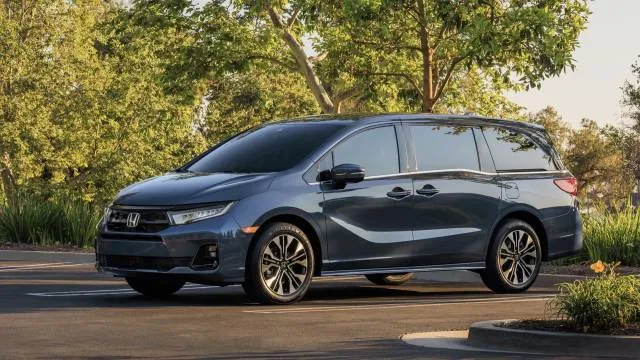
The Honda Odyssey, a venerable nameplate with a nearly 30-year legacy, finds itself at a crossroads. The fifth-generation model, last redesigned in 2018, has remained largely unchanged in recent years, leading to a perception of staleness in an rapidly evolving market. Its most significant drawback in today’s landscape is its exclusive reliance on a traditional V-6 gasoline engine, making it the only minivan in the competitive set to lack any form of hybrid or plug-in hybrid powertrain option. Furthermore, it’s solely available with front-wheel drive, missing out on the all-wheel-drive capability offered by some rivals, which is increasingly sought after by families in diverse climates.
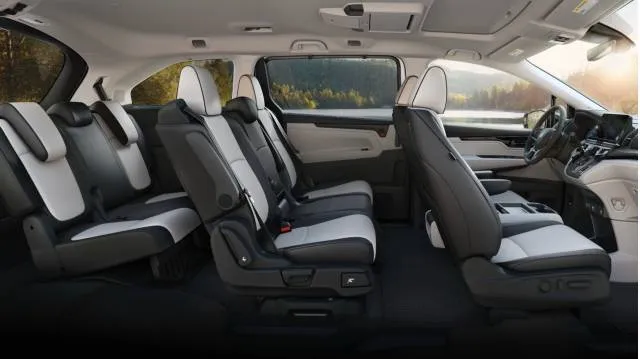
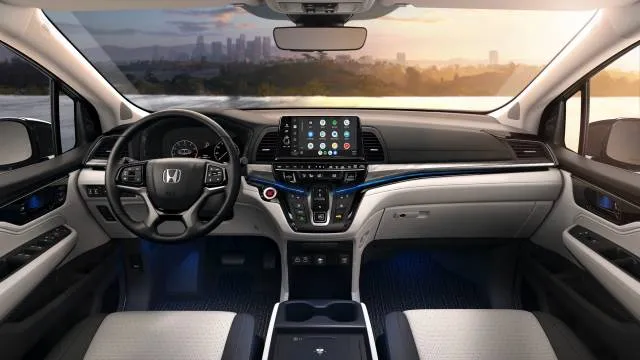
On the upside, the Odyssey still offers a commendably refined driving experience. It’s one of the better-handling minivans, boasting responsive steering that belies its size, making it surprisingly engaging on winding roads. The 3.5-liter V-6 engine, while less fuel-efficient than its hybrid counterparts, delivers a robust 280 horsepower, providing ample acceleration for highway merging and passing. Honda’s reputation for exceptional reliability, often a direct benefit of fewer significant changes over the years, continues to be a strong selling point for the Odyssey. Its interior, while perhaps not cutting-edge in terms of tech, is incredibly spacious and well-thought-out, featuring Honda’s innovative Magic Slide second-row seats that allow for various configurations, including easy access to the third row.
However, the Odyssey’s infotainment system and overall technology package lag behind its more recently updated competitors. The user interface can feel dated, and while it offers essential connectivity, it lacks the seamless integration and large, vibrant displays found in other models. This technological gap, coupled with the absence of an electrified option, fuels ongoing speculation regarding the Odyssey’s future. Industry observers ponder whether Honda will eventually discontinue the model after its impressive run or, more likely, introduce a much-needed hybrid powertrain in the coming years. Honda’s broader strategy clearly indicates a push towards electrification, with the CR-V Hybrid and Accord Hybrid becoming top sellers within their respective lineups, and plans for an electric three-row crossover due in 2027. The question remains whether the Odyssey will join this electrified future, or if its "journey" as Homer referenced, will conclude without a hybrid chapter. For families prioritizing proven reliability, a strong V-6 engine, and engaging driving dynamics over cutting-edge tech and electrification, the Odyssey remains a solid, albeit aging, choice.

3. Chrysler Pacifica (tie)
The Chrysler Pacifica stands as a testament to innovation within the minivan segment, particularly with its pioneering plug-in hybrid (PHEV) variant, launched in 2018, a year after the gas-powered Pacifica replaced the venerable Town & Country. This distinction has effectively created a tale of two minivans within the Pacifica lineup, each with unique strengths and compromises.
The gasoline-powered Pacifica continues to feature Chrysler’s revolutionary Stow ‘N Go seating system, allowing both the second and third rows to fold completely flat into the floor. This unparalleled versatility transforms the minivan into a cavernous cargo hauler in mere moments, a feature unmatched by any competitor. Additionally, the gas Pacifica offers available all-wheel drive (AWD), providing enhanced traction and confidence in challenging weather conditions, a highly desirable trait for many families.

The Pacifica Hybrid, on the other hand, is the segment’s sole PHEV offering, capable of traveling an impressive 32 miles on electric power alone. This electric range is perfect for daily errands, school drop-offs, and short commutes, significantly reducing gasoline consumption and emissions for many families. However, the placement of the battery pack beneath the floor necessitates a critical compromise: the Pacifica Hybrid cannot be had with the second-row Stow ‘N Go seats (though the third row retains it), nor is it available with all-wheel drive. This trade-off requires prospective buyers to carefully weigh their priorities: ultimate seating flexibility and AWD, or significant electric-only driving capability.
Chrysler further complicates the lineup with the reintroduction of the Voyager, now available to individual customers (not just fleets) as a budget-conscious base model. Sporting the Pacifica’s older exterior design, the Voyager still comes equipped with modern amenities, including a standard 10.1-inch touchscreen with wireless smartphone compatibility (Apple CarPlay and Android Auto), and crucially, Stow ‘N Go seating in both rear rows. However, at a starting price approaching $42,000, its value proposition as a "budget" model can be questioned, especially when it lacks the more luxurious options and advanced safety features found in higher Pacifica trims, which can push prices towards the $60,000 mark.

A significant financial incentive for the Pacifica PHEV is its eligibility for the full $7,500 federal EV tax credit. Depending on a buyer’s income and tax situation, this credit can dramatically reduce the effective purchase price, potentially making the PHEV model nearly as affordable as its gasoline-only counterpart, thereby strengthening its overall value proposition for eligible buyers. The Pacifica’s blend of innovative seating, available AWD, and class-exclusive PHEV technology makes it a highly adaptable choice for diverse family needs, provided buyers are clear on which compromises they are willing to make.
3. Toyota Sienna (tie)
The Toyota Sienna distinguishes itself in the minivan segment by offering a standard hybrid powertrain across its entire lineup, a strategic move that addresses the growing demand for fuel efficiency head-on. This commitment to hybridization means every Sienna delivers an impressive 36 mpg combined with front-wheel drive (FWD) and a commendable 35 mpg with all-wheel drive (AWD), making it one of the most economical choices in the class in terms of fuel consumption. Toyota’s renowned hybrid technology ensures both reliability and efficiency, checking a critical box for modern minivan owners.

The Sienna’s powertrain consists of a 2.5-liter inline-4 engine paired with two electric motors (three motors for AWD models), producing a combined output of 245 horsepower. While this setup provides adequate acceleration for most family duties, it does lack the robust grunt and immediate surge of power offered by the V-6 engines found in some rivals, particularly when fully loaded. However, what it might lack in sheer power, it makes up for in refinement and smooth operation. Toyota has also tuned the Sienna’s suspension to be less "wobbly" than some competitors, resulting in a stable and comfortable highway cruiser, ideal for long family road trips.
Despite its many practical advantages, the Sienna does come with a notable compromise regarding interior versatility. Unlike the Chrysler Pacifica’s Stow ‘N Go system, the Sienna’s second-row seats are bolted down. While they slide far back to offer exceptional legroom and feature available ottomans for a lounge-like experience, their inability to fold flat into the floor or be easily removed significantly limits the vehicle’s ultimate cargo capacity and flexibility. This can be a deal-breaker for families who frequently need to haul large items or desire maximum open space.

With six distinct trims and a vast array of options, there is a Sienna configuration to suit most tastes and budgets. From practical base models to luxurious higher trims that can become quite expensive, rivaling the price tags of premium SUVs, the Sienna offers a wide spectrum. These top-tier models can include indulgent features such as a built-in vacuum cleaner, a cooler, and plush footrests, enhancing the comfort and convenience for passengers. However, even with these upscale amenities, the Sienna maintains a strong emphasis on practicality over overt poshness, reflecting Toyota’s core philosophy. For families prioritizing class-leading fuel economy, Toyota’s legendary reliability, available all-weather capability with AWD, and a comfortable ride, the Sienna remains an exceptionally strong contender, provided they can live with the limitations of its second-row seating.
2. Kia Carnival
The Kia Carnival has boldly redefined what a minivan can be, blending the segment’s unparalleled practicality with the stylish, assertive aesthetics typically associated with SUVs. Kia markets it as an "MPV" (Multi-Purpose Vehicle) rather than a minivan, a deliberate strategy to appeal to buyers who might otherwise shy away from the traditional minivan image. This refreshed Carnival recently received a significant upgrade, most notably with the introduction of a new hybrid option, which elevates its appeal considerably.

The addition of the hybrid powertrain is a game-changer for the Carnival, making it far more than just a good-looking family hauler; it infuses the ride with enhanced efficiency and a greater sense of refinement. While specific MPG figures for the new hybrid may vary, it is expected to significantly improve upon the gasoline model’s economy, addressing a key concern for families. This electrification positions the Carnival as a more competitive and forward-thinking option within the segment.
Beyond its powertrain, the Carnival excels in numerous other areas. It comes exceptionally well-equipped across its trim levels, offering a comprehensive suite of features and technologies that belie its competitive pricing. The infotainment interface is notably intuitive and user-friendly, with crisp graphics and seamless smartphone integration (Apple CarPlay and Android Auto), ensuring that connectivity is never a hassle for busy families. Kia’s industry-leading warranty, typically offering 10 years/100,000 miles on the powertrain, provides an exceptional layer of peace of mind, underscoring its long-term value. Despite being a value play in the class, the Carnival’s interior quality, design, and feature set prevent it from ever feeling like a budget car; instead, it offers a premium experience without the premium price tag.

However, the Carnival does have a couple of notable limitations. It currently does not offer all-wheel drive, which might deter buyers in regions with harsh winters or those seeking extra traction. Furthermore, unlike the Chrysler Pacifica, the Carnival’s second-row seats do not fold into the floor, though they are removable, which still provides excellent cargo flexibility but requires more effort. Despite these minor drawbacks, the Kia Carnival’s compelling blend of SUV-inspired styling, comprehensive features, new hybrid efficiency, and outstanding warranty makes it an incredibly strong contender, appealing to families who want a versatile, modern, and stylish vehicle that doesn’t compromise on value or family-friendly functionality.
1. Volkswagen ID. Buzz
The Volkswagen ID. Buzz claims the top spot, not just for its novelty, but for its profound impact on the minivan segment, acting as both a nostalgic nod and a bold leap into the future. Our TCC Rating reflects a preference for innovative, clean-energy vehicles, and the return of the iconic Volkswagen Bus in its electric ID. Buzz form embodies this perfectly. It doesn’t just revitalize the minivan segment; it spearheads its evolution towards sustainable mobility.

In its distinctive two-tone paint scheme and long-wheelbase configuration for the North American market, the ID. Buzz expertly cashes in on the "retromod" trend. It evokes the beloved charm of the original Type 2 Microbus while being a thoroughly modern marvel of engineering. But its appeal goes far beyond aesthetics. The ID. Buzz excels at modern power delivery, featuring a robust 91-kWh battery pack that feeds either a single-motor rear-wheel-drive setup or a more powerful dual-motor all-wheel-drive system. While its estimated range of up to 234 miles might seem modest compared to some long-range EVs, it’s a respectable figure for a vehicle of its size, roominess, and weight, especially considering its primary role as a family hauler. The instant torque characteristic of electric vehicles lends it surprisingly brisk acceleration from a standstill, and the battery pack’s placement low in the floor between the axles contributes to a remarkably planted and stable ride, enhancing both safety and driving dynamics.
The ID. Buzz’s interior design is a masterclass in combining retro flair with modern minimalist practicality. The "cockpit" offers expansive views without the traditional hood, echoing the original Bus’s open feel. Clever storage options abound, including a convenient dash shelf for the passenger, a dedicated smartphone charging recess, and an overall clean, uncluttered aesthetic. The spacious cabin is designed for maximum utility and comfort, making it a joy for both driver and passengers.

However, it’s not without its quirks. In line with other Volkswagen ID. models, much of the vehicle’s functionality, including climate controls, is integrated into a large 12.9-inch touchscreen. The haptic sliders for temperature and volume can be less intuitive and precise than physical buttons, requiring a learning curve and sometimes distracting the driver. Another significant consideration for American buyers is its pricing and tax credit eligibility. As the ID. Buzz is manufactured in Germany, it currently does not qualify for the full $7,500 federal EV tax credit in the United States. This, coupled with its advanced electric powertrain and unique styling, positions it as a relatively expensive option compared to other minivans.
Despite these factors, the Volkswagen ID. Buzz represents a paradigm shift. It’s more than just a new minivan; it’s a statement about the future of family transportation – clean, stylish, and supremely functional. It appeals to early adopters, design enthusiasts, and environmentally conscious families who are willing to pay a premium for a truly unique and forward-thinking vehicle. The ID. Buzz doesn’t just offer transportation; it offers an experience, marrying nostalgic charm with cutting-edge electric technology, making it the clear leader in this revitalized segment.

The Road Ahead for Minivans
The current state of the minivan market unequivocally demonstrates that the segment is far from dead; instead, it is undergoing a profound and exciting evolution. The narrative has shifted from one of decline to one of intelligent adaptation and innovation. The central theme resonating through today’s top models is clear: electrification is not merely an option but a vital force breathing new life, efficiency, and desirability into these family-centric vehicles.
From the traditional, robust power of the Honda Odyssey to the innovative plug-in hybrid versatility of the Chrysler Pacifica, the segment’s commitment to providing diverse solutions is evident. The Toyota Sienna sets a benchmark with its standard hybrid powertrain and available all-wheel drive, while the Kia Carnival masterfully blends SUV-like style with minivan practicality and a newfound hybrid efficiency. Finally, the Volkswagen ID. Buzz heralds a new era, proving that an all-electric minivan can be both iconic and eminently practical, inspiring a new generation of buyers.

This diversity means that today’s consumers have an unprecedented array of choices, allowing them to find a minivan perfectly tailored to their specific needs and priorities. Whether it’s the proven reliability and V6 power of a traditional gas model, the balanced efficiency of a hybrid, the short-range electric capability of a PHEV, or the zero-emission future promised by a full EV, the minivan market has something for everyone.
Looking ahead, the question remains: will other manufacturers follow Volkswagen’s lead and introduce more battery-electric minivans? The success of the ID. Buzz could very well spur further investment in this niche. And critically, will Honda finally electrify the Odyssey, ensuring its continued relevance in an increasingly electrified landscape? The answers will shape the next chapter of the minivan story, but one thing is certain: these versatile family haulers are not just surviving; they are thriving, demonstrating that practicality, innovation, and sustainability can indeed coexist beautifully on the open road.
