
 By Lina Irawan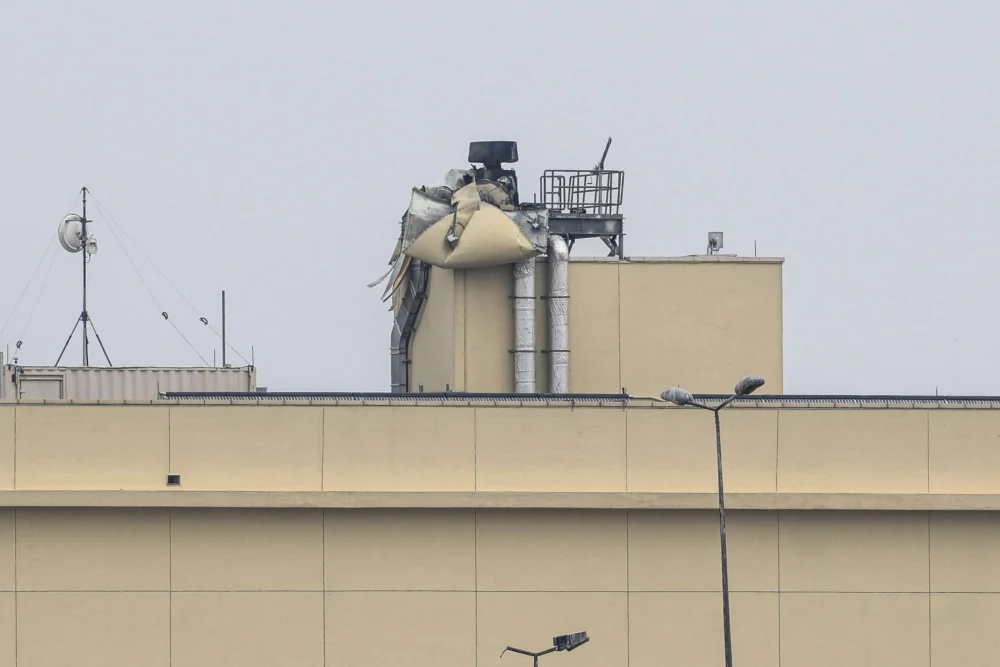
The embassy’s statement did not mince words, strongly encouraging "US citizens choosing to remain in Iraq to reconsider in light of the significant threat." This direct appeal highlights the perceived immediacy and lethality of the risks involved. The advisory follows a sustained and intensifying series of attacks that have systematically targeted locations frequented by or critical to American presence in Iraq.
Specifically, the diplomatic mission detailed persistent assaults on the International Zone in central Baghdad, a heavily fortified area housing government buildings and foreign embassies, including the sprawling U.S. Embassy complex itself. Beyond the capital, the region around Erbil International Airport and the U.S. Consulate General in Erbil, the capital of the semi-autonomous Kurdistan Region of Iraq, have also been subjected to repeated aggression. These attacks, according to the embassy, are in "apparent retaliation for US and Israeli strikes" against Iranian interests, signaling a dangerous tit-for-tat escalation that threatens to engulf Iraq in a broader regional conflict.
The embassy further cautioned against any attempts to seek refuge or assistance at its facilities, stating, "Do not attempt to come to the embassy in Baghdad or the consulate general in Erbil in light of the ongoing risk of missiles, drones, and rockets in Iraqi airspace." This warning not only underscores the direct danger to diplomatic premises but also reveals a critical logistical challenge: the closure of Iraqi airspace. In response to this constraint, the U.S. government has pledged to provide assistance to Americans attempting to leave Iraq via overland routes, an option that itself presents considerable security risks given the prevailing instability.
This critical security alert arrives as what the U.S. Embassy refers to as "the Iran war" enters its third week, a phrase indicative of a profound and ongoing regional crisis rather than a declared conventional conflict. This "war" is characterized by a relentless cycle of retaliatory actions, with Tehran reportedly "continuing to attack neighboring states with drones and missiles in response to US and Israeli strikes." The nature of this conflict is predominantly asymmetric, relying heavily on proxy forces and sophisticated weapon systems like drones and precision-guided missiles, which are difficult to intercept and often evade traditional defenses.
The current escalation is rooted in decades of animosity and a complex interplay of geopolitical interests between the United States, Israel, and Iran. Iraq, strategically positioned at the crossroads of these powers, has unfortunately become a primary arena for their proxy struggles. Following the 2003 U.S. invasion that toppled Saddam Hussein, Iran steadily expanded its influence within Iraq, cultivating a network of powerful Shiite militia groups, many of which are now formally integrated into Iraq’s state-sponsored Popular Mobilization Forces (PMF) but often operate outside direct government control. These groups, including prominent entities like Kata’ib Hezbollah, Asa’ib Ahl al-Haq, and Harakat Hezbollah al-Nujaba, receive funding, training, and logistical support from Iran’s Islamic Revolutionary Guard Corps (IRGC) and its Quds Force. Their stated objectives often include expelling U.S. forces from Iraq and resisting perceived American and Israeli hegemony in the region.
The presence of approximately 2,500 U.S. troops in Iraq, primarily engaged in an advisory and assistance role to counter the resurgence of ISIS, has long been a contentious issue. While the U.S. maintains its mission is solely focused on combating terrorism and stabilizing Iraq, Iran-aligned militias view these forces as an occupation and a legitimate target. This ideological clash has frequently translated into kinetic actions, with rocket and drone attacks on U.S. bases and diplomatic facilities becoming a grim regularity.
The "US and Israeli strikes" mentioned by the embassy refer to a series of operations reportedly targeting Iranian assets, supply lines, or personnel in Syria and occasionally Iraq, as well as suspected Iranian nuclear facilities or proxy operations within Iran itself. These actions are often framed by the U.S. and Israel as defensive measures against Iran’s destabilizing activities, its nuclear program, and its support for groups deemed terrorist organizations. However, from Tehran’s perspective, these are acts of aggression demanding a response, which it frequently orchestrates through its regional proxies, thus perpetuating the cycle of violence.
The Iraqi government finds itself in an unenviable position, caught between its two powerful allies, Washington and Tehran. Successive Iraqi administrations have struggled to assert full sovereignty over the Iran-aligned militias, many of whose leaders hold significant political sway and command substantial military power. Attempts to rein them in have often been met with resistance, and the political will to confront them decisively has been lacking, partly due to fears of civil unrest or further destabilization. This delicate balancing act often leaves Iraq vulnerable to becoming a battlefield for external powers, undermining its own stability and reconstruction efforts.
Regional analysts have been closely monitoring the escalating tensions. Dr. Fatima Al-Samarraie, a Middle East security expert at the Baghdad Policy Institute, commented on the situation, stating, "The current phase of escalation is particularly alarming because it signals a deliberate decision by Iran and its proxies to raise the cost of American presence, not just through sporadic attacks but through a sustained campaign. The closure of airspace and the direct evacuation order suggest the U.S. perceives a fundamental shift in the threat matrix, potentially involving more sophisticated or high-volume attacks." She further elaborated that "the Iraqi government’s capacity to mediate or control these dynamics is severely tested, placing its own sovereignty in jeopardy and making it an unwilling participant in a wider regional confrontation."
The implications of this heightened alert extend beyond immediate security concerns. For American businesses and NGOs operating in Iraq, the advisory introduces immense operational challenges and increased risk. Foreign investment, already wary of Iraq’s volatile political and security environment, is likely to retract further. The humanitarian impact on the Iraqi population, already suffering from years of conflict and economic hardship, could also be significant, as any wider conflict would inevitably exacerbate existing crises.
The international community has largely called for de-escalation, recognizing the inherent dangers of an unchecked regional conflict. United Nations officials and various European diplomatic missions have repeatedly urged all parties to exercise restraint and prioritize dialogue. However, such calls have largely gone unheeded amidst the entrenched positions and strategic imperatives driving the current confrontations.
Looking ahead, the situation remains highly fluid and precarious. The U.S. decision to issue such a strong evacuation order could be a precursor to further defensive or retaliatory actions, or it could signal a strategic withdrawal to minimize American casualties in a potentially unavoidable escalation. The coming days and weeks will be critical in determining whether this "third week" of intensified conflict marks a peak before a return to a more manageable level of tension, or if it represents a deeper descent into a more dangerous and prolonged confrontation across the Middle East. For American citizens in Iraq, the message is clear and urgent: the risks are too great to remain, and departure is imperative.
