
 By admin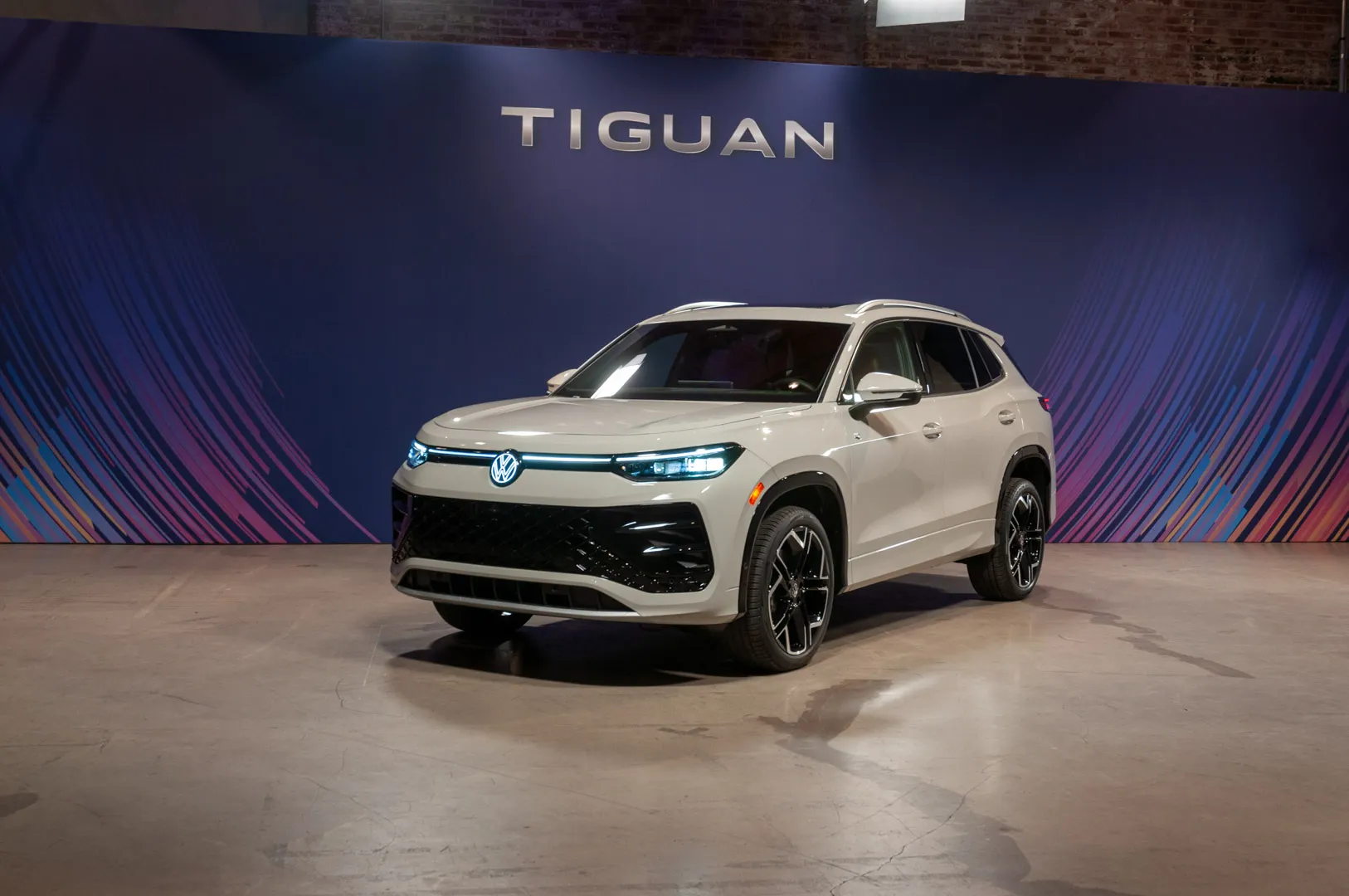
Volkswagen has officially unveiled the comprehensive pricing and specifications for its completely redesigned 2025 Tiguan small crossover, marking a significant evolution for one of its most critical global models. Arriving with a starting price of $30,920 (including a $1,425 destination charge) for the base S grade with front-wheel drive, the new Tiguan is poised to enter the fiercely competitive compact SUV segment this summer with a fresh face, enhanced performance, and a notable strategic shift: the elimination of its previously optional third-row seating. This move positions the Tiguan more squarely as a two-row compact SUV, aligning it with the segment’s dominant players and sharpening its focus on core strengths.
The entry-level 2025 Tiguan S, priced $615 higher than its predecessor, presents a compelling package of standard features designed to attract a broad audience. Drivers will benefit from 17-inch alloy wheels, a sophisticated 10.2-inch digital instrument cluster, and a large 12.9-inch touchscreen infotainment system that seamlessly integrates wireless Apple CarPlay and Android Auto. The interior is finished with durable cloth upholstery, offering a blend of comfort and practicality. This initial offering underscores Volkswagen’s commitment to equipping even its base models with advanced technology and essential conveniences, setting a high standard for the segment.
Stepping up the ladder, the Tiguan SE, starting at $34,420 with destination, builds upon the S trim’s foundation with a suite of desirable upgrades. Exterior enhancements include larger 19-inch wheels and a convenient power tailgate. Inside, the SE elevates the cabin experience with ambient lighting, an auto-dimming rearview mirror, a power-adjustable driver’s seat, and premium leatherette upholstery. These additions cater to buyers seeking a more refined and feature-rich experience without venturing into the top-tier pricing. The SE trim traditionally represents a sweet spot for many consumers, balancing cost with a significant jump in comfort and convenience features.
For those desiring a sportier aesthetic and more distinctive styling, the SEL R-Line Black grade enters the lineup at $36,880. This trim level is characterized by a dynamic body kit, aggressive 20-inch wheels, and a unique combination of dark and chrome exterior and interior trim elements that emphasize its R-Line heritage. A standard sunroof further enhances the premium feel, allowing more light into the cabin. The R-Line Black trim is designed to appeal to buyers who prioritize visual flair and a more assertive road presence, aligning with Volkswagen’s broader strategy of offering distinct design packages across its model range.
At the pinnacle of the 2025 Tiguan lineup sits the SEL R-Line grade, priced at $41,180. This top-tier model encapsulates luxury and advanced technology, building on the R-Line Black’s visual upgrades. Inside, occupants are treated to a massive 15.0-inch touchscreen infotainment system, providing an expansive and highly interactive user interface. A 12-speaker Harman Kardon audio system transforms the cabin into a concert hall, while three-zone climate control ensures optimal comfort for all passengers. The front seats boast memory and massage functions, along with power adjustment for the passenger, all wrapped in sumptuous leather upholstery. Critically, the SEL R-Line comes standard with all-wheel drive, reinforcing its premium positioning and all-weather capability. This trim aims squarely at buyers who demand the utmost in comfort, technology, and performance from their compact SUV, positioning the Tiguan as a near-premium offering within its class.
Under the hood, all 2025 Tiguan models are powered by an updated 2.0-liter turbocharged inline-four engine, a familiar yet refined powertrain from the previous generation. This engine is once again paired with an 8-speed automatic transmission, but its output has been boosted by 17 horsepower, now delivering a robust 201 horsepower. This increase in power is complemented by a significant weight reduction, with Volkswagen claiming the new model is 170 pounds lighter than its predecessor. This combination of increased power and reduced mass is expected to translate into improved acceleration, better fuel efficiency, and more agile handling, enhancing the overall driving experience. The Tiguan’s engineering, likely building on the evolved MQB Evo platform, focuses on delivering a sophisticated ride quality that balances comfort with engaging dynamics.
All-wheel drive remains a crucial option for many compact SUV buyers, and Volkswagen offers it strategically across the Tiguan lineup. It’s available as a $1,500 option on the S and SEL R-Line Black grades, with late availability noted for the latter. For the SE grade, the 4Motion all-wheel-drive system is a $980 option, making it an accessible upgrade for a wide range of buyers. As previously mentioned, the top-tier SEL R-Line grade receives all-wheel drive as standard, reflecting its premium status and comprehensive feature set. This flexible approach ensures that customers can tailor their Tiguan to their specific needs, whether for enhanced traction in adverse weather or simply for added confidence on varied terrain.

The most significant strategic change for the 2025 Tiguan is undoubtedly the decision to drop the third-row seat option. For years, the Tiguan stood out in the compact segment by offering this feature, albeit often acknowledged as cramped and more suited for occasional use or small children. Volkswagen’s move reflects a broader market trend and a strategic realignment. Most direct competitors in the compact SUV segment—such as the Toyota RAV4, Honda CR-V, Subaru Forester, Mazda CX-50, Hyundai Tucson, and Kia Sportage—do not offer a third row. By removing it, Volkswagen likely aims to:
- Optimize Interior Space: Dedicating the entire rear cabin to two rows allows for a more spacious and comfortable second row, with increased legroom and cargo capacity behind it. This directly addresses common criticisms of compact third rows and enhances the primary utility of the vehicle.
- Streamline Manufacturing and Design: Simplifying the interior configuration can lead to efficiencies in production and allow designers to focus on maximizing the quality and functionality of the two-row setup.
- Differentiate from Larger SUVs: Volkswagen already offers the Atlas and Atlas Cross Sport for buyers needing genuine three-row capability. By making the Tiguan a dedicated two-row vehicle, it clearly defines its role in the VW SUV portfolio, preventing internal cannibalization and clarifying its target demographic.
- Weight and Performance Benefits: Eliminating the third-row hardware contributes to the overall weight reduction, further enhancing the vehicle’s dynamics and potentially its fuel economy.
This decision might disappoint a small segment of buyers who valued the occasional flexibility of a third row, but it is expected to resonate positively with the majority of compact SUV purchasers who prioritize second-row comfort and cargo volume. It allows the Tiguan to compete more directly on its merits as a refined, technologically advanced, and well-performing two-row crossover.
The technology suite in the 2025 Tiguan represents a significant leap forward. The standard 12.9-inch and available 15.0-inch touchscreens are at the forefront of automotive infotainment, offering crisp graphics and intuitive interfaces. The integration of wireless Apple CarPlay and Android Auto ensures seamless smartphone connectivity, a must-have feature for modern drivers. Volkswagen’s commitment to digital displays extends to the 10.2-inch digital instrument cluster, which provides customizable information directly in the driver’s line of sight. These large, high-resolution screens contribute to a more modern and premium cabin aesthetic, placing the Tiguan firmly among the tech leaders in its class. Volkswagen has, in recent years, faced some criticism for its reliance on haptic touch controls; it remains to be seen how user-friendly the physical-to-digital control balance is in this new iteration, but the sheer size and capability of the displays are undeniable assets.
Safety, while not explicitly detailed in the provided information, is expected to be a cornerstone of the 2025 Tiguan. Volkswagen’s IQ.DRIVE suite of advanced driver-assistance systems is likely to be standard or widely available, offering features such as adaptive cruise control, lane-keeping assist, blind-spot monitoring, rear cross-traffic alert, and automatic emergency braking with pedestrian detection. In a segment where safety ratings and comprehensive ADAS packages are critical buying factors, the Tiguan will undoubtedly aim for top-tier performance to ensure occupant protection and driver confidence.
As Volkswagen’s entry into a crowded and intensely competitive segment, the 2025 Tiguan faces formidable rivals. The Subaru Forester is lauded for its standard all-wheel drive and robust safety features, while the Toyota RAV4 dominates with its reputation for reliability, fuel efficiency (especially its hybrid variants), and broad appeal. Other strong contenders include the Honda CR-V, known for its practicality and refined driving experience; the Mazda CX-50, which emphasizes a premium feel and engaging dynamics; and the Hyundai Tucson and Kia Sportage, which offer bold styling, extensive features, and competitive pricing.
To stand out, the 2025 Tiguan will lean on several key differentiators: its European driving dynamics, a sophisticated new design, the significant upgrade in interior technology, and a perceived step up in overall quality and refinement. The increased power output and lighter chassis promise a more engaging driving experience, while the larger screens and premium features like massage seats in the top trims aim to elevate the ownership experience. By shedding the less-than-ideal third row, Volkswagen is effectively saying it’s doubling down on what it believes the compact SUV buyer truly wants: a well-appointed, capable, and enjoyable two-row vehicle.
With sales slated to begin early this summer, the 2025 Volkswagen Tiguan is poised for a crucial entry into the market. Its redesigned form, enhanced capabilities, and refined focus represent a deliberate strategy to reclaim and expand its share in a segment that shows no signs of slowing down. The combination of a more powerful engine, a lighter body, advanced technology, and a clear vision for its market position suggests that the new Tiguan is more than "better than good"; it’s a meticulously re-engineered contender ready to make a significant impact.
