
 By Lina Irawan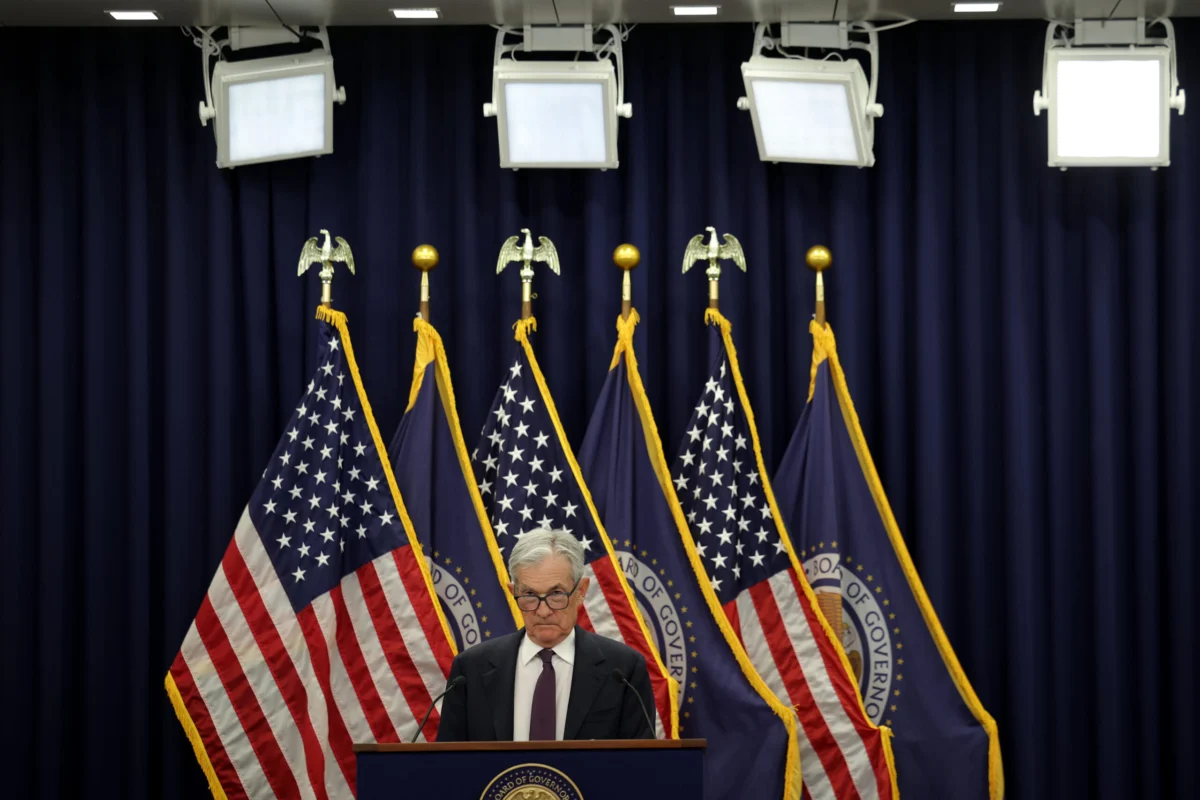
Powell’s term is officially slated to conclude in May 2026, though this timeline is not entirely immutable. A legal back-and-forth arising out of a Department of Justice investigation could, theoretically, delay his departure. While the specifics of this investigation remain largely under wraps, any significant legal entanglement involving a sitting Fed chair would represent an unprecedented level of drama for an institution typically seen as a bastion of stability and independence. Such a scenario would undoubtedly add further layers of complexity to an already delicate succession process, potentially prolonging the period of leadership ambiguity at a critical juncture for the U.S. and global economies.
Before stepping aside, Chairman Powell is set to preside over two more pivotal meetings of the Federal Open Market Committee (FOMC): one this week and another in April. These gatherings will occur against a backdrop of heightened geopolitical tensions and persistent inflation concerns, making each decision meticulously scrutinized by markets and policymakers alike. The anticipation surrounding these final Powell-led FOMC sessions is palpable, not just for their immediate policy outcomes, but for the signals they might send about the future trajectory of the U.S. economy and the challenges awaiting his successor.
Despite the considerable drama surrounding Powell’s final year at the helm of the Fed, Wall Street analysts and investors are largely anticipating a period of continuity, at least in the very near term. No dramatic shifts are expected from the upcoming Powell-led meetings. The FOMC has, in recent months, been visibly split over the crucial question of how quickly and steeply interest rates should be cut—if at all. This internal divergence reflects the complex economic signals currently at play, where robust labor market data often clashes with stubborn inflation metrics and a volatile international environment.
The economic outlook has been further complicated by recent military action in Iran, which has significantly ratcheted up geopolitical tensions. Just 17 days ago, the U.S. and Israel launched strikes in the region, triggering a swift and material response in global commodity markets. Since then, oil prices have surged as traders scramble to assess the potential severity and duration of supply disruptions from one of the world’s most critical oil-producing regions. This immediate impact on energy markets has a direct and often painful knock-on effect for households and businesses globally. Rising oil prices act as a potent inflationary force, directly increasing the cost of transportation, manufacturing, and consumer goods. Consequently, household inflation expectations have soared, with consumers closely monitoring headlines for any indication of de-escalation, which has, regrettably, yet to materialize.
Given the confluence of rising price expectations and the limited availability of contemporary economic data that could fully inform the Fed about the real economy’s current state, analysts are predominantly forecasting that Jerome Powell will announce no rate cut this week. This consensus is robustly supported by market indicators; at the time of writing, CME’s FedWatch Tool, which gauges the probability of various Fed policy actions based on fed funds futures pricing, places an overwhelming probability—more than 99%—on a hold decision at the upcoming meeting. This near-unanimous expectation underscores the market’s belief that the Fed will prioritize stability and caution in the face of ongoing uncertainties.
This week is proving to be a veritable bonanza for central bank watchers globally, with not only the U.S. Federal Reserve but also the European Central Bank (ECB), the Bank of Japan (BoJ), and the Bank of England (BoE) all convening their respective rate-setting committees. Despite this flurry of activity, there’s a pervasive sentiment across financial markets that a "wait-and-see" approach will once again prevail among these major central banks. The global economic landscape is fraught with interconnected risks, and policymakers appear reluctant to make bold moves that could either exacerbate inflation or prematurely stifle growth.
Economists are also largely not anticipating anything groundbreaking from Powell’s accompanying press conference. Jim Reid, a prominent strategist at Deutsche Bank, conveyed to clients this morning that his team "only expect minor statement tweaks, including smoothed language on recent labour data (especially given January and February’s conflicting payrolls) and a nod to geopolitical risks, highlighting uncertainty and near-term upside pressure on inflation." This nuanced assessment suggests that while the Fed will acknowledge the evolving economic environment, it will likely avoid committing to any specific future policy path, opting instead for flexibility and data dependency. The "smoothed language" on labor data is particularly telling, as recent jobs reports have shown a mix of robust hiring alongside some indicators of softening, making a clear interpretation challenging for policymakers.
An Overly Hawkish Picture? Assessing the Broader Outlook
Reid further elaborated on his expectations for Powell’s press conference, stating that the chairman is "likely to stress that recent events mainly transmit through financial conditions—particularly oil prices. For now, however, our economists think he’ll avoid signalling any meaningful shift in the near term policy outlook." This cautious stance underscores the Fed’s reluctance to overreact to volatile, short-term data, particularly when external shocks like geopolitical conflicts introduce an unpredictable element into economic forecasting. The emphasis on financial conditions suggests the Fed views the primary impact of the Iran conflict as an indirect one, filtering through market sentiment, commodity prices, and broader liquidity, rather than a direct, immediate hit to real economic activity that would necessitate an urgent policy response.
Indeed, some analysts have gone further, suggesting it’s entirely plausible that there will be no rate cuts at all throughout 2026. This perspective stems from a view that inflation may prove more persistent than initially hoped, particularly if geopolitical tensions continue to simmer or escalate, keeping commodity prices elevated. Moreover, even with a potentially dovish new chairman like Kevin Warsh, it’s crucial to remember that the Fed’s monetary policy decisions are made by the entire FOMC, not just the chair. The committee comprises 12 voting members—the seven governors of the Federal Reserve System, the president of the Federal Reserve Bank of New York, and presidents of four other Federal Reserve Banks on a rotating basis. A new chair, while influential, is only one vote, and consensus-building within the committee can often lead to more measured and less extreme policy shifts than individual market participants might expect.
However, Antonio Gabriel of Bank of America Global Research offered a counter-perspective this morning, suggesting that perhaps hawkish inflation calls are currently overcrowding the analytical picture when it comes to the Fed’s likely path forward. Gabriel argues that the prevailing assumption of "no cuts" or minimal cuts in 2026 is largely predicated on the belief that current geopolitical tensions are transitory—that the inflationary pressures they generate will be a relatively short to medium-term hiccup that will not fundamentally alter the wider global economic trajectory.
The BofA economist isn’t so convinced by this optimistic read, writing this morning that markets could be significantly underpricing a more protracted conflict and its wider implications. "While a quick resolution to the conflict is certainly a possibility, we view the conflict extending into 2Q as an equally likely outcome, and a more protracted war cannot be ruled out," Gabriel observed. He continued, highlighting the disparity between market pricing and potential risks: "However, markets seem to be pricing a largely transitory shock. The U.S. dollar is stronger, but the S&P 500 is just 4% below its peak, and rates markets have priced out about 35 basis points of Fed cuts by year-end due to inflation concerns. In our view, the more disruptive scenarios for global growth are underpriced."
Gabriel’s analysis introduces a critical dimension to the debate: the duration and intensity of the geopolitical conflict. If the war extends beyond the second quarter of the year, its impact on global supply chains, energy markets, and overall economic confidence could be far more profound and enduring than current market valuations suggest. A prolonged conflict could lead to a sustained period of elevated inflation combined with slower economic growth—a challenging scenario known as stagflation, which would present a formidable dilemma for any central bank, let alone a newly helmed one.
The implications of such a "more disruptive scenario" are vast. It could trigger a sharper downturn in global growth, impacting corporate earnings and potentially leading to a more significant correction in equity markets than currently priced in. Furthermore, a sustained period of higher oil prices and supply chain disruptions could force central banks, including the Fed, to choose between combating inflation (through higher rates, potentially stifling growth further) and supporting growth (through lower rates, potentially fueling inflation). This is a policy tightrope that few central bank chairs would relish walking, and it underscores the immense challenges that will confront Kevin Warsh should he indeed take the reins from Jerome Powell in the coming months. The final decisions of Jerome Powell’s tenure, therefore, will not only shape the immediate economic outlook but also lay the groundwork for the formidable task awaiting his successor in navigating an increasingly uncertain and volatile global economic landscape.
