
 By Lina Irawan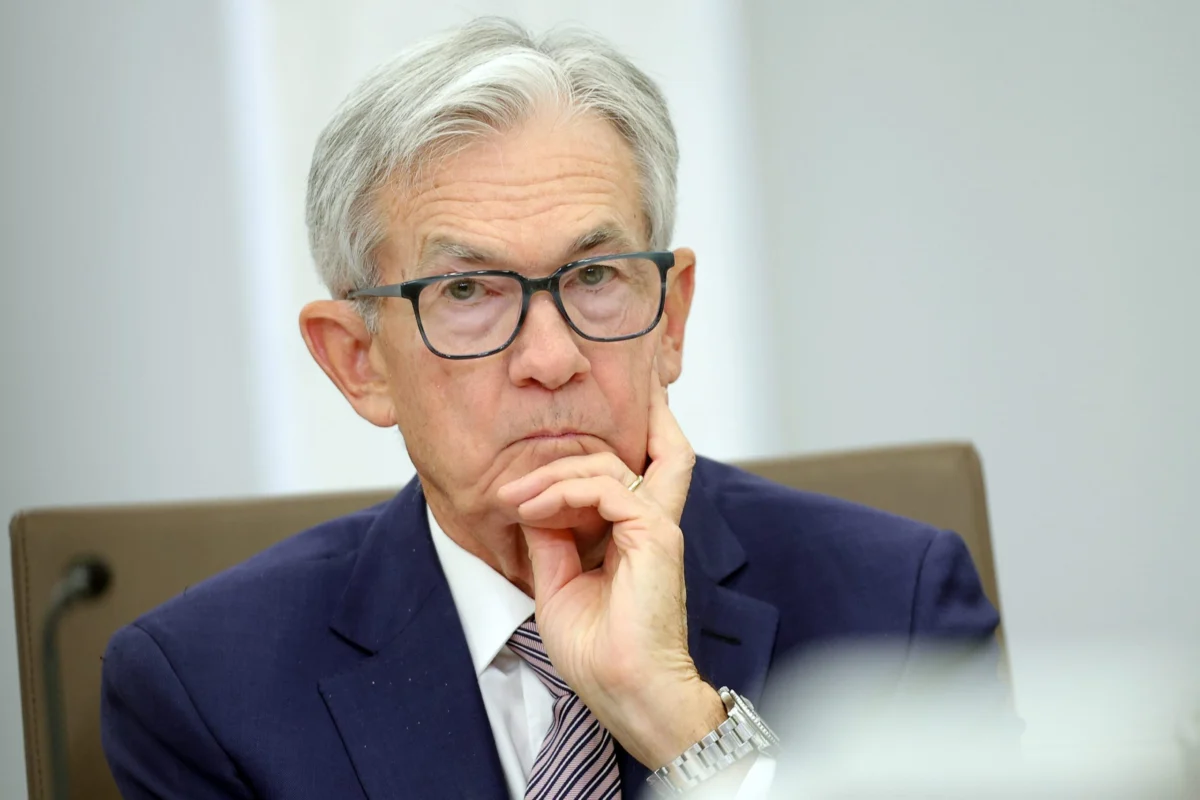
The year 2026 has brought with it an unsettling sense of déjà vu, as the global economy grapples with yet another major supply shock emanating from the Persian Gulf. Just six years after the COVID-19 pandemic first exposed the fragility of interconnected global supply chains and ignited an inflationary spiral, and four years after Russia’s invasion of Ukraine sent shockwaves through energy and food markets, the world finds itself confronting the profound implications of a new conflict. This time, war in the Persian Gulf has brought commerce in the strategically vital Strait of Hormuz to a standstill, triggering an economic script that feels eerily familiar, yet increasingly ominous.
The immediate fallout is stark and widespread. Gasoline prices across the United States have surged by more than 30% in a single month, marking the steepest increase in such a short span since the aftermath of Hurricane Katrina in 2005. This rapid escalation at the pump is a direct consequence of the Hormuz disruption, a chokepoint through which roughly a fifth of the world’s total petroleum liquids and a quarter of its liquefied natural gas pass daily. The mere threat of prolonged closure or attacks on shipping in this narrow waterway sends oil futures skyrocketing, pricing in extreme risk premiums that quickly translate into higher costs for consumers and businesses alike.
Beyond energy, the agricultural sector faces an equally grave threat. Critical fertilizer shipments, often sourced from Middle Eastern export hubs, are now stalled, portending potential disruptions to planting seasons from the fertile farmlands of Iowa to the vast agricultural regions of Africa. This interruption could have devastating consequences, driving up food prices globally and exacerbating food insecurity in vulnerable nations, reminiscent of the 2022 crisis when Ukrainian grain exports were hampered.
Financial markets, ever sensitive to uncertainty, have reacted with predictable alarm. Stock prices are in a freefall, wiping out billions in market capitalization as investors flee risk assets. Economists, who had only recently begun to breathe a sigh of relief as inflation showed nascent signs of easing, are now again talking in hushed tones about the escalating risks of a global recession. The specter of stagflation – a toxic combination of high inflation and stagnant economic growth – looms large, threatening to undo years of recovery efforts.
Perhaps most critically for the real economy, diesel prices have soared by nearly 40%, topping $5 a gallon in many regions. This is not merely an inconvenience; it is a serious systemic problem for an economy powered by logistical networks. Trucks that ferry goods across continents, ships that transport international cargo, trains that move commodities, and farm equipment essential for food production all run on diesel. The exponential rise in its cost translates directly into higher prices for virtually every good and service, from groceries to construction materials, further fueling the inflationary fire.
Four major supply shocks in six years. At some point, the comfortable narrative of "bad luck" or "unforeseen events" collapses under the weight of accumulating evidence. The confluence of the COVID-19 pandemic in 2020, Russia’s war in Ukraine in 2022, the disruptive U.S. tariff policies enacted in 2025, and now the war in the Persian Gulf in 2026 paints a disturbing picture of a new economic reality. It is time to critically assess whether these serial supply shocks are merely uncorrelated, unfortunate coincidences, or if something fundamentally larger is at play, reshaping the global economic landscape for the long term. If the latter holds true, then the very foundations of our economic models, and the policy frameworks built upon them, demand a radical re-evaluation.
A Pattern the Fed Has Missed
The urgent need for this intellectual recalibration begins at the world’s most influential economic institution: The Federal Reserve. When pressed at a recent press conference to contextualize this latest wave of serial supply shocks, U.S. central bank chairman Jerome Powell’s response struck many as a significant miscalculation of the underlying common denominator. "I don’t know that the world has changed in a way that there will be more supply shocks," he remarked, a statement that underscores a dangerous adherence to outdated paradigms.
In the nuanced lexicon of central banking, Powell’s comment suggests that the Fed still harbors the belief that it might be able to "look through" yet another one of these disruptive events, treating them as transient anomalies that will eventually self-correct. This worldview is not only perilous but also deeply reminiscent of past misjudgments. Following the initial eruption of the COVID-19 crisis and its subsequent economic dislocations, the Fed famously characterized the emerging inflation as "transitory," leading to a delayed and ultimately more aggressive response in raising interest rates. That initial misdiagnosis allowed inflation to embed itself more deeply into the economy, inflicting prolonged pain on American households.
Similarly, the disruptive U.S. tariff policies of 2025 – a distinctly man-made form of supply shock explicitly designed to reorder global trade and, by design, raise domestic prices for certain goods – have been largely written off as another one-off political event. This perspective persists despite a clear historical pattern of tariffs being recurrent tools in international economic competition. Now, faced with the severe disruption in the Strait of Hormuz, Powell again held out the possibility that this, too, shall pass, and that inflation might revert to a "norm" that, to many observers, may no longer exist.
If the Fed is wrong again – if these shocks are indeed structural rather than transient – the consequences for American consumers, who have already endured inflation above the central bank’s target for five consecutive years, could be dire. Prolonged elevated inflation erodes purchasing power, disproportionately harms low-income households, distorts investment decisions, and can sow the seeds of social and political instability. The credibility of the institution itself, essential for effective monetary policy, would also be severely undermined.
A Rupture, Not a Run of Bad Luck
The Federal Reserve, like many large, inertial institutions, struggles to rapidly incorporate significant deviations from recent norms into its established models. Officials often prioritize caution, preferring to lean on established economic thinking and historical data rather than venturing into untested theoretical territory. However, the current confluence of crises demands an immediate and fundamental update to its understanding of supply shocks.
The repeated imposition of tariffs, for instance, are not acts of nature but deliberate human choices, driven by geopolitical ambitions, economic nationalism, and strategic competition. Likewise, the wars in Ukraine and Iran are direct consequences of political decisions and geopolitical rivalries, not unpredictable "storms that blew in from nowhere." While the COVID-19 crisis certainly had a large, random element in its initial emergence, its global propagation and the chaotic, fragmented response highlighted a fundamental vulnerability in a global order ill-equipped for the coordinated collaboration and containment required by a viral intruder. The subsequent scramble for PPE, medical supplies, and later vaccines, starkly revealed the brittle nature of "just-in-time" supply chains designed for efficiency, not resilience.
Mark Carney, the former Governor of the Bank of England and now the Prime Minister of Canada, articulated a profoundly important insight during comments at the World Economic Forum in Davos earlier this year. He argued that these escalating crises are not isolated incidents but rather "symptoms of a rupture in the world order." This rupture, he explained, signifies a fundamental breakdown in the global, rules-based cooperation and established norms that, for decades, had facilitated unprecedented global integration and commerce.
For over a generation, multinational businesses meticulously constructed and optimized global supply chains, operating on the implicit assumption of relative peace, stable trade relations, and predictable international norms. This era of hyper-globalization, fostered by institutions like the World Trade Organization and driven by the pursuit of efficiency and cost reduction, saw production fragmented across continents, components sourced from the cheapest global suppliers, and goods flowing freely across borders. However, as Carney noted, when this bedrock of cooperation frays and ultimately breaks down, these finely tuned supply chains become acutely vulnerable. Instead of merely facilitating commerce, they are now acting as conduits, transmitting and amplifying shocks across the global economy. Tariffs, trade wars, and military conflicts are prime examples, as was the chaotic and often self-serving global response to the COVID-19 pandemic and its protracted aftermath.
"A series of crises in finance, health, energy, and geopolitics have laid bare the risks of extreme global integration," Carney stated, building on his long-standing friendship and professional dialogue with Powell. He continued, "More recently, great powers have begun using economic integration as weapons, tariffs as leverage, financial infrastructure as coercion, and supply chains as vulnerabilities to be exploited." This strategic weaponization of interdependence marks a significant departure from the post-Cold War consensus. The insidious result is that nations, in an attempt to protect themselves, increasingly perceive and operate as economic fortresses, inadvertently making them more fragile and susceptible to external economic shocks.
Remarkably, Carney, ever the pragmatist, did not advocate for a return to the old order of unbridled global cooperation that, among its many achievements, demonstrably held down inflation and lifted billions of humans out of poverty over the past quarter-century. A realist, he instead sought to navigate a way through this new era of geopolitical fracture, emphasizing the need for like-minded nations, such as Canada, caught in the crosscurrents of deepening global disorder, to forge new alliances and resilience strategies. This pragmatic acknowledgment of a fragmented world order stands in stark contrast to the Fed’s seemingly unyielding hope for a return to past norms.
An Indefensible Posture
The Federal Reserve’s prevailing economic models and its fundamental way of thinking were meticulously developed and refined during a period characterized by robust global integration, relatively stable supply chains, and a general adherence to cooperative international norms. As that world order demonstrably frays and fractures, the central bank runs an increasingly high risk of making profound policy errors. It is imperative that the Fed develops a coherent, updated, and realistic view of how the global economy is fundamentally changing.
If recurring supply shocks are indeed a defining feature of a new global economic disorder – rather than mere episodic disturbances – then inflation is highly likely to prove far more stubborn and persistent than the Fed’s traditional models currently project. Such a miscalculation could lead the central bank to maintain interest rates at levels lower than warranted, based on an erroneous expectation that inflation will naturally revert to norms that, in this new reality, simply no longer exist. This monetary policy error could not only prolong the current inflationary pressures but also entrench them, making the stubborn economic challenge of inflation even more intractable and costly for society.
The Fed was arguably correct to hold interest rates unchanged at its recent policy meeting, allowing time to assess the full impact of the Hormuz crisis. However, merely pausing without a deeper intellectual shift is insufficient. The posture of expecting each new crisis to be a one-off event is no longer defensible in the face of overwhelming evidence. We are likely discovering that nagging, elevated inflation is not merely a cyclical phenomenon, but a direct function of the profound "rupture" in the world order that Powell’s old friend Mark Carney so presciently described just a few weeks earlier. Embracing this new reality, however uncomfortable, is the first and most crucial step towards formulating effective policy responses for a fundamentally altered global economy.
