
 By Lina Irawan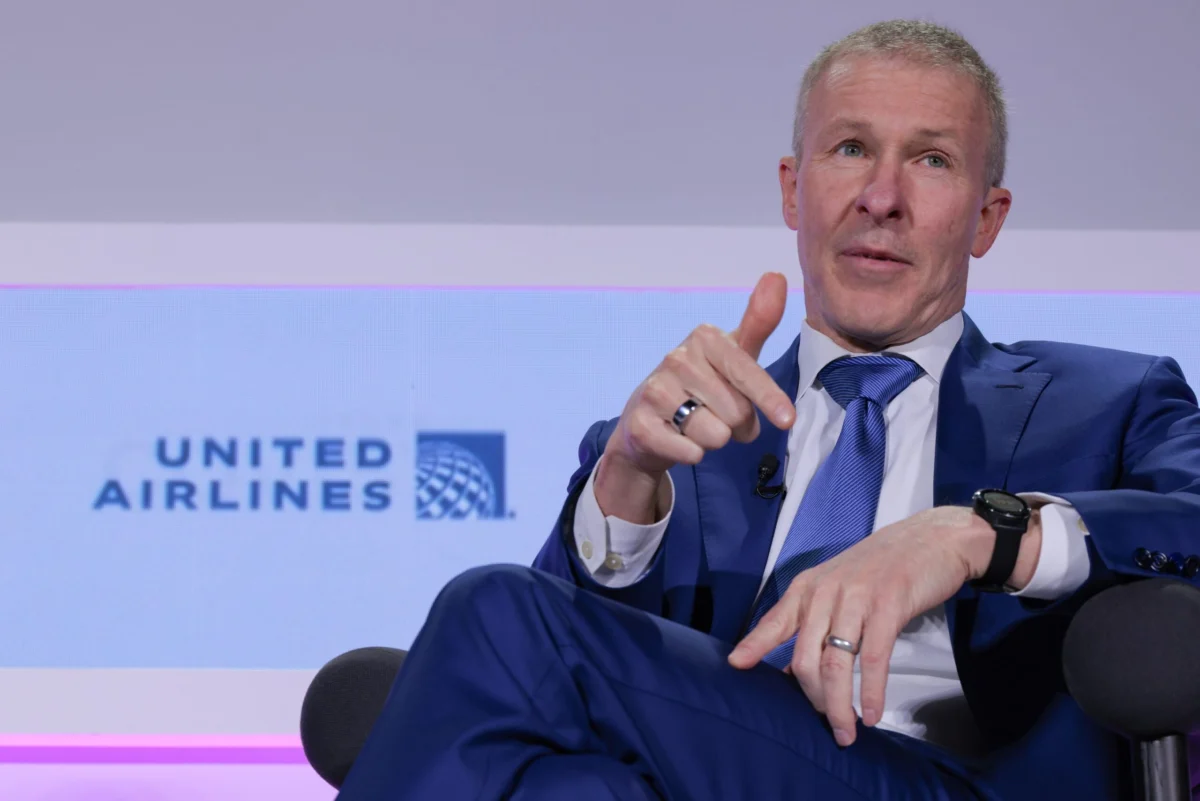
The immediate and most visible consequence of the escalating conflict has been a dramatic surge in crude oil prices, which has, in turn, disproportionately impacted jet fuel costs. In the last three weeks alone, jet fuel prices have more than doubled, a staggering increase that translates into an additional $11 billion in annual operating costs for United Airlines if sustained at current levels. This figure looms large when considering United’s reported adjusted net income of $3.5 billion in 2025 and its historical best-ever earnings of $5 billion. Last year, United spent $11.4 billion on fuel; under the current pricing regime, that expense could balloon past $20 billion this year, effectively erasing a substantial portion, if not all, of its potential profits.
Beyond the soaring costs, the conflict has severely disrupted air traffic to critical Middle East airport hubs. Regions previously serving as vital connectors between Europe, Asia, and Africa are now either active conflict zones or subject to significant airspace restrictions. This forces airlines to reroute flights, often adding hundreds or even thousands of miles to journeys, translating directly into increased fuel consumption and longer flight times. For an industry already operating on tight margins, these operational inefficiencies further exacerbate the financial strain. The implications extend beyond direct costs, impacting crew scheduling, aircraft utilization, and passenger convenience.
United CEO Scott Kirby, in a candid letter to employees on Friday, underscored the gravity of the situation. While acknowledging the airline’s robust financial health – characterized by a strong cash position, healthy profit margins, and a solid balance sheet – he also highlighted the unprecedented nature of the fuel price shock. Indeed, United has enjoyed strong demand in recent months, recording its ten biggest booked revenue weeks in history over the past ten weeks, indicating a robust underlying desire for air travel. However, Kirby conceded that the ability to continuously pass on these escalating fuel costs to consumers is finite, especially if oil prices remain elevated for an extended period. The elasticity of demand for air travel dictates that at a certain price point, consumers will reduce their travel or opt for alternative modes of transportation, making unlimited price hikes unsustainable for airlines.
United’s internal planning, as revealed by Kirby, now operates under a particularly conservative and challenging assumption: that oil prices will hit $175 a barrel and will not recede to below $100 a barrel until the end of 2027. This long-term projection underscores the airline’s view that the current crisis is not a transient blip but a fundamental shift in the geopolitical and economic landscape that will have enduring consequences for energy markets. This scenario, if it materializes, would necessitate profound and sustained adjustments across the airline industry.
The global oil market is already exhibiting signs of extreme volatility and supply constraints. On Friday, Brent crude, the international benchmark, surged 3.26% to close at $112.19 per barrel, while U.S. West Texas Intermediate (WTI) crude gained 2.27% to settle at $98.32. These figures, while high, are still below United’s internal projection of $175, illustrating the potential for further escalation. A major contributing factor to this uncertainty is the status of the Strait of Hormuz. Through this narrow chokepoint, approximately 20% of the world’s total oil supply passes daily. Reports of its closure, or even severe disruption due to military operations in the region, have sent shockwaves through energy markets. Analysts have issued stark warnings, suggesting that if this vital waterway remains largely closed, crude oil prices could realistically soar to $150 or even $200 a barrel. Such a scenario would not only validate United’s dire internal forecasts but could trigger a global economic recession.
Jet fuel prices have outpaced crude oil gains due to additional complexities within the refining sector. Tighter refining constraints, exacerbated by a global shortage of refinery capacity and disruptions to supply chains, mean that converting crude oil into aviation-grade fuel is becoming increasingly expensive and difficult. This is evident in regional pricing: Northwest Europe has seen record highs near $239 a barrel for jet fuel, while Asian jet fuel prices are hovering near $200 a barrel, close to recent peaks. These regional disparities reflect localized supply-demand dynamics and logistical challenges inherent in a fragmented global energy market.
Despite the grim outlook, Kirby maintains a degree of cautious optimism, stating there’s a "good chance" United’s worst-case scenario won’t be fully realized. Nevertheless, proactive measures are being implemented to mitigate the financial impact. United plans to strategically reduce capacity in certain times and places. This includes trimming flights during off-peak periods, such as redeyes and Tuesday, Wednesday, and Saturday trips, primarily during the second and third quarters. Capacity will also be reduced at the airline’s Chicago O’Hare hub. More significantly, United will pull service from Tel Aviv and Dubai, two key Middle Eastern destinations that are currently under heavy bombardment from Iran, highlighting the direct operational impact of the conflict.
The combined effect of these adjustments will result in an approximate 5 percentage point reduction in overall capacity. However, Kirby emphasized that these are temporary measures, with plans to restore the full schedule by the fall. Crucially, he reaffirmed United’s long-term strategic vision, stating, "To be clear, nothing changes about our longer-term plans for aircraft deliveries or total capacity for 2027 and beyond, but there’s no point in burning cash in the near term on flying that just can’t absorb these fuel costs." This indicates a calculated decision to weather the immediate storm without compromising future growth or competitive positioning.
Kirby’s commitment to avoiding traditional cost-cutting measures, such as furloughing employees, deferring aircraft orders, downgrading to regional jets, or delaying investments, is a bold stance. He views such actions as "small dollars at best, they’re distracting, they aren’t necessary for United and they deter us from our mission to build the best airline in the history of aviation." This strategy reflects a conviction that maintaining employee morale, investing in modern, fuel-efficient aircraft (with United still planning to take delivery of about 120 new aircraft this year), and enhancing customer experience through investments in technology and facilities (including airline clubs, new hub infrastructure, and an expansion at Newark airport) are paramount for long-term success. It’s a calculated risk, betting that the current crisis, while severe, will not fundamentally alter the long-term trajectory of air travel demand or United’s ability to compete effectively once the immediate pressures subside.
The ripple effects of this unprecedented situation are being felt across the global airline industry. Scandinavian airline SAS has already announced the cancellation of approximately 1,000 flights in response to soaring fuel prices, underscoring the immediate operational impact. Air France-KLM is also making contingency plans, considering cuts to service in parts of Asia if the cost of fuel for return trips to Europe becomes prohibitive. As Air France-KLM CEO Ben Smith articulated to the Financial Times, "Southeast Asia is much more dependent on fuel coming over the Gulf than Europe is. We can get fuel out of Europe, but when we go to [a] south-east Asian city we’re not going to be able to fly the plane back…If there’s no fuel, you can’t fly." This highlights a critical logistical challenge: securing fuel at foreign airports, especially in regions directly impacted by the conflict or reliant on disrupted supply lines, can become an insurmountable hurdle, forcing flight cancellations regardless of passenger demand.
This geopolitical conflict represents a severe test for an airline industry that had just begun to recover from the devastations of the pandemic. Unlike the demand shock of COVID-19, this crisis combines a supply-side cost shock with complex operational disruptions, forcing airlines to navigate a highly volatile and uncertain environment. The long-term projections of sustained high oil prices suggest that strategic resilience, innovative operational adjustments, and a clear vision for the future will be more critical than ever for airlines like United to not only survive but also emerge stronger from this latest, profound disruption.
