
 By admin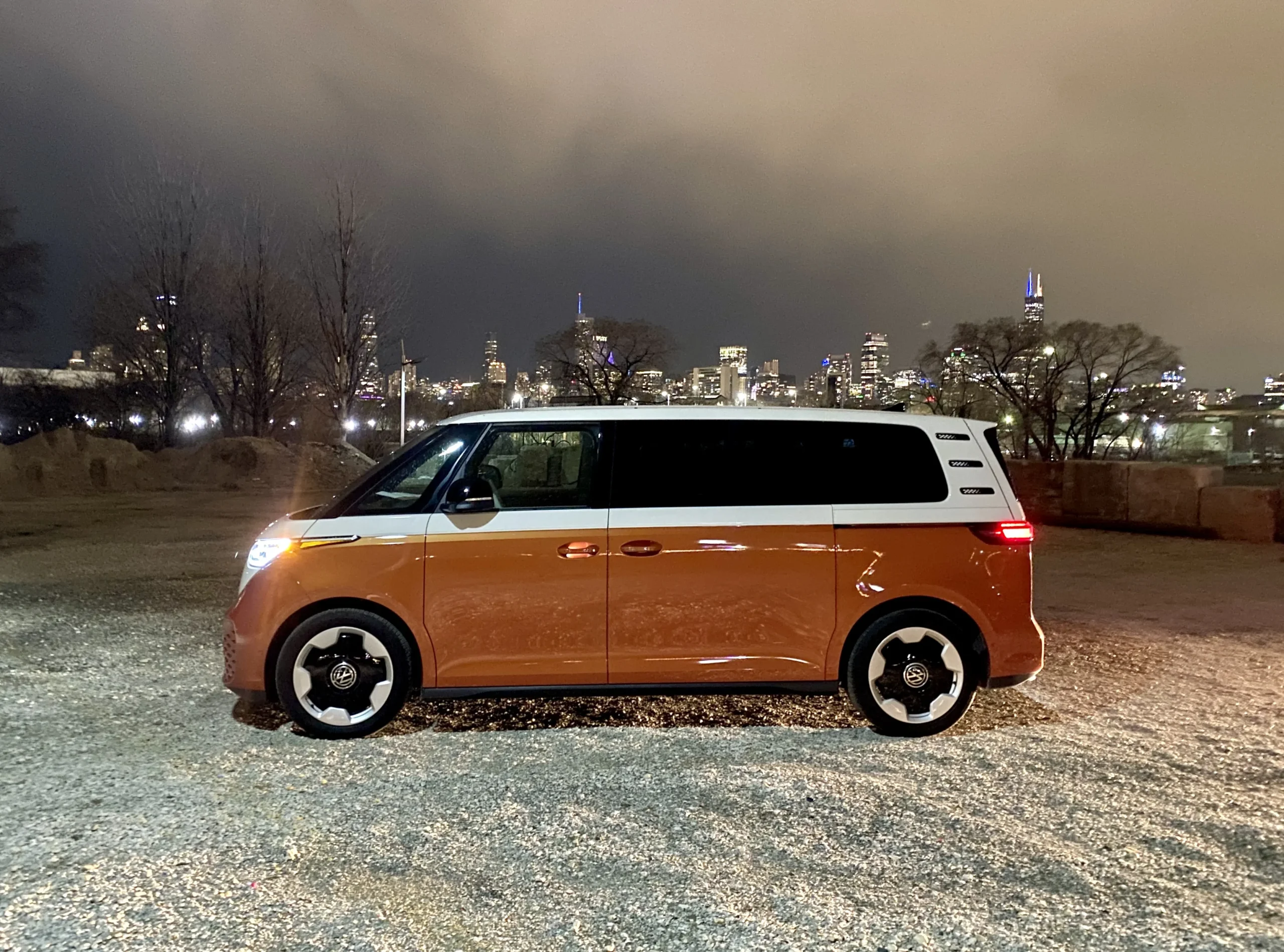
The four primary contenders that currently grace dealership showrooms—the Honda Odyssey, Toyota Sienna, Kia Carnival (formerly Sedona), and Chrysler Pacifica—have consistently served as exceptional family providers. For years, their main drawback was often middling fuel economy, a factor that increasingly influenced purchasing decisions in an era of rising gas prices and environmental awareness. But this particular narrative is rapidly changing.

A seismic shift is underway, spearheaded by the much-anticipated 2025 Volkswagen ID.Buzz electric van. After years of eager anticipation and a few delays, the ID.Buzz is poised to revitalize the minivan segment not just with its iconic retro-modern styling, but more importantly, with pure battery-electric power. Yet, the ID.Buzz isn’t navigating this electric frontier alone. Three other minivans in the current market already offer compelling hybrid or plug-in hybrid options, leaving the venerable Honda Odyssey as the sole holdout in the traditional gas-only era. This widespread embrace of electrification marks a pivotal moment, transforming minivans from gas-guzzling people-movers into highly efficient, environmentally conscious, and cost-effective family haulers.
The ID.Buzz stands out as the only battery-electric model, with no direct competitor on the immediate horizon. Its arrival leverages the powerful "retromod" trend, resurrecting a beloved nameplate—the iconic VW Bus—for a new generation. But beyond its nostalgic appeal, its practical features, like those essential power-sliding side doors, firmly plant it in the functional minivan category, making it a true standout. This blend of heritage and cutting-edge technology positions the ID.Buzz as a potential segment redefiner, challenging preconceived notions about what a minivan can be.
This evolving landscape presents a compelling question for prospective buyers: which of these minivans offers the best ownership experience? Is it the tried-and-true stalwarts with their refined combustion engines, or the newfangled electrified models pushing the boundaries of efficiency and technology? To answer this, our comprehensive rankings delve beyond superficial features, factoring in critical aspects such as the total cost of ownership, including fuel and maintenance, as well as the initial sticker price. This methodology naturally favors the hybrids and plug-in hybrids, given their superior long-term fuel savings. However, our evaluation doesn’t stop there. Crucial considerations like top-tier safety ratings, expansive interior roominess, and the intuitive ease with which even small hands can manipulate large seats—a testament to real-world family usability—play equally vital roles. Furthermore, seamless connectivity and user-friendly features are highly rated, acknowledging their importance in modern family life. From the convenience of power-sliding side doors to the added confidence of all-wheel drive, often paired with an electrified powertrain, these family haulers are making all the right moves. Here’s how they rank, with all prices inclusive of destination charges.
5. Honda Odyssey
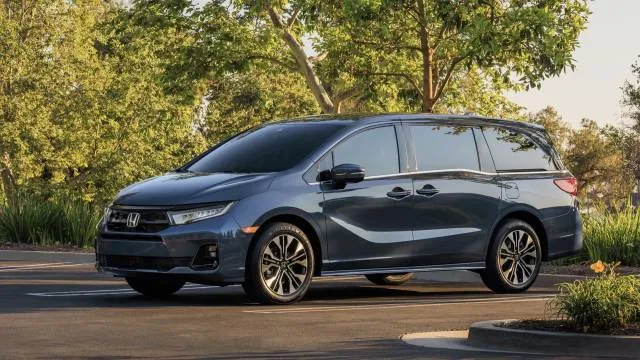
The Honda Odyssey, a long-standing fixture in the minivan market, finds itself at the bottom of our current rankings, primarily due to its resistance to the segment’s rapid evolution. The fifth-generation Odyssey, last redesigned in 2018, feels increasingly stale in a market increasingly dominated by electrified powertrains and advanced technology. It remains the sole minivan in its class to lack any form of hybrid powertrain option, relying exclusively on its traditional V6 engine, and it offers only front-wheel drive, foregoing the all-weather versatility of its AWD-equipped rivals. This adherence to an older formula, while offering a certain appeal to traditionalists, positions it as an outlier.

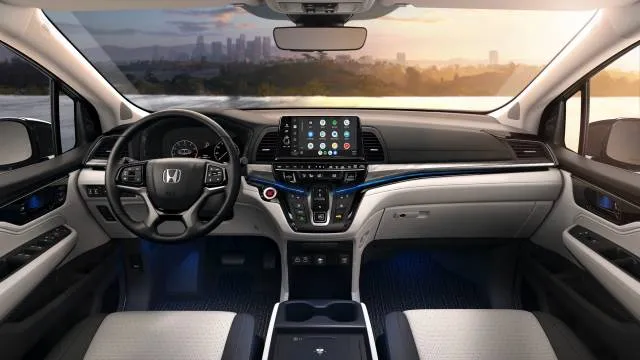
On the positive side, the Odyssey maintains some of its traditional Honda strengths. It remains one of the better-handling minivans in the segment, offering responsive steering and a generally composed ride that drivers appreciate. Its exceptional reliability is another undeniable benefit, a direct result of its mature design and Honda’s proven engineering—a benefit, perhaps, of not changing much over the years. However, these traditional strengths are increasingly overshadowed by its weaknesses. The Odyssey’s infotainment system and overall tech suite lag noticeably behind its more modern competitors, feeling dated in an age where seamless digital integration is expected.
This growing disparity fuels speculation that Honda may either discontinue the Odyssey after a venerable 30-year run or, more likely, introduce a much-needed hybrid powertrain in the next year or two. Honda’s broader, albeit somewhat belated, push towards electrification, evidenced by the CR-V Hybrid and Accord Hybrid becoming top sellers in their respective models and plans for an electric three-row crossover due in 2027, suggests a hybrid Odyssey could be in the cards. The question remains: will the Odyssey’s epic journey continue, or will its reliance on conventional powertrains prove to be its Achilles’ heel? For now, it struggles to compete on efficiency and modern amenities.
3. Chrysler Pacifica (tie)
The Chrysler Pacifica stands as a compelling tale of two minivans, deftly navigating the complexities of modern family transportation with both traditional strengths and innovative electrified options. When the plug-in hybrid (PHEV) Pacifica launched in 2018, a year after Chrysler replaced the long-running Town & Country with the gas-powered Pacifica, it immediately set a new benchmark for efficiency in the segment.
The gas-powered Pacifica continues to feature the revolutionary Stow ‘N Go seats, a Chrysler hallmark that allows both the second and third rows to fold completely flat into the floor, creating an expansive, unobstructed cargo area unmatched by most rivals. This unparalleled versatility, combined with the availability of all-wheel drive (a critical feature for many families in diverse climates), makes the standard Pacifica a highly practical choice.
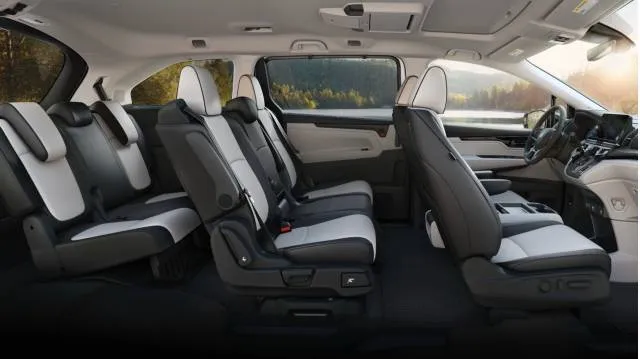
However, the Pacifica Hybrid introduces a unique set of trade-offs. As the only PHEV minivan on the market, it boasts an impressive 32 miles of electric-only range, making it ideal for daily errands, school drop-offs, and short commutes without ever needing to engage the gasoline engine. This significantly reduces running costs and environmental impact. The compromise for this efficiency, however, is the absence of second-row Stow ‘N Go seats (the battery pack occupies the underfloor storage space) and the lack of all-wheel drive. Buyers must weigh the benefits of electric range against maximum cargo flexibility and all-weather traction.
Further adding to the Pacifica’s multifaceted appeal, Chrysler recently reintroduced the Voyager nameplate. Initially conceived as a budget base model primarily for fleets, the Voyager is now available to individual consumers. While priced at nearly $42,000, raising questions about its "budget" value, it essentially wears the Pacifica’s older skin but comes equipped with modern content. This includes a standard 10.1-inch touchscreen with wireless smartphone compatibility and, crucially, Stow ‘N Go seating in both rear rows. It lacks the more luxurious options that push the Pacifica’s price point towards the $60,000 mark, offering a more stripped-down, yet still highly functional, package.

A significant financial incentive for the Pacifica PHEV is its qualification for the full $7,500 federal EV tax credit. Depending on a buyer’s income and tax liability, this credit can substantially reduce the effective purchase price, potentially making the PHEV model cost nearly the same as, or even less than, a similarly equipped gas-only Pacifica. This makes the Pacifica a highly competitive option for families seeking innovation, flexibility, and a smart financial choice in their minivan.
3. Toyota Sienna (tie)
The Toyota Sienna ties with the Chrysler Pacifica, carving out its niche as the segment’s undisputed champion of standard hybridization. Every Sienna model comes equipped with a hybrid powertrain, delivering impressive fuel efficiency figures: 36 mpg combined with front-wheel drive (FWD) and a still-excellent 35 mpg with available all-wheel drive (AWD). This makes the Sienna an automatic choice for minivan owners prioritizing low running costs and a reduced environmental footprint without the need for a plug.

From a practical standpoint, the Sienna continues to check nearly all the boxes for the modern minivan owner. Its hybrid system, combining a 2.5-liter inline-4 engine with two electric motors (or three for AWD models), produces a respectable 245 horsepower. While this powertrain may lack the outright grunt of the V6 options found in some competitors, Toyota has meticulously tuned the Sienna’s suspension to provide a composed and stable ride, making it an exceptionally smooth and comfortable highway cruiser. It avoids the "wobbly" feel that can sometimes plague larger family vehicles, offering a confident driving experience.
However, the Sienna does come with a notable limitation regarding interior versatility: its second-row seats are bolted down and are significantly more difficult to remove than those in any other minivan in the class. This design choice, likely made to accommodate the hybrid battery placement and enhance structural rigidity, restricts the Sienna’s ability to transform into a cavernous cargo hauler when maximum space is needed. For families who frequently need to transport large items or reconfigure their seating layout, this could be a significant drawback.

Despite this, the Sienna offers a vast array of choices, with six distinct trims and heaps of optional features, ensuring there’s a configuration to suit most tastes and budgets. While it can get quite expensive at the top end, offering amenities like a built-in vacuum cleaner and cooler, as well as luxurious footrests and other premium options, the Sienna ultimately remains more practical than overtly posh in any of its myriad configurations. Its strength lies in its unwavering commitment to efficiency, Toyota’s legendary reliability, and a comfortable, dependable ride, making it a stellar choice for families whose priorities align with these core values.
2. Kia Carnival
The Kia Carnival, previously known as the Sedona, has undergone a significant transformation, now presenting itself as a "multi-purpose vehicle" (MPV) that expertly blurs the lines between a traditional minivan and a stylish SUV. This unique positioning, combined with a host of modern features and, crucially, a new hybrid option, has elevated the Carnival to the second spot in our rankings, making it much more than just a good time.

The introduction of the hybrid powertrain for the refreshed Carnival is a game-changer. It significantly enhances the vehicle’s efficiency, providing a compelling alternative to its gas-only predecessor and offering a level of refinement that was previously absent. This electrification brings the Carnival into direct competition with the hybrid-focused Sienna and the PHEV Pacifica, making it a much more attractive proposition for eco-conscious and budget-minded families.
While the refreshed Carnival may not offer certain features found in its rivals, such as all-wheel drive or the innovative fold-into-the-floor second-row seats like Chrysler’s Stow ‘N Go, it compensates by excelling in nearly every other aspect. It comes exceptionally well-equipped across its trim levels, boasting a modern and easy-to-use infotainment interface that integrates seamlessly with contemporary smartphones. Kia’s commitment to quality is underscored by its exceptional warranty—a 10-year/100,000-mile powertrain warranty that provides unparalleled peace of mind to owners.

Moreover, the Carnival strikes an impressive balance as the value play in the class without feeling at all like a budget car. Its interior design is upscale, materials are of high quality, and the overall fit and finish convey a sense of premium craftsmanship. The bold, SUV-inspired exterior styling also helps it stand out from the more traditional minivan aesthetic, appealing to buyers who might otherwise shy away from the segment. Its spacious cabin, comfortable seating, and comprehensive suite of safety features further solidify its position as a top contender. The Kia Carnival proves that efficiency and refinement can coexist with practicality and style, making it a highly desirable choice for modern families.
1. Volkswagen ID. Buzz
Our top ranking for the Volkswagen ID. Buzz might appear to reflect a preference for shiny new things without dirty tailpipe emissions, and indeed, it does embody a forward-thinking ethos. However, our TCC Rating (which meticulously evaluates various aspects of vehicle performance, safety, features, and value) recognizes that the triumphant return of the iconic Volkswagen Bus in its electric ID. Buzz form does more than just cash in on nostalgia; it fundamentally revitalizes the minivan segment while simultaneously pointing it squarely towards the future.

The ID. Buzz is a masterclass in retro-modern design. Its distinctive two-tone paint schemes, long wheelbase, and charmingly snubbed ends instantly evoke the spirit of the original VW Bus, tapping into a powerful "retromod" trend. Yet, beneath this undeniably cool exterior lies a thoroughly modern electric vehicle, excelling in contemporary power delivery and efficiency. It is powered by a substantial 91-kWh battery pack, feeding either a one- or two-motor drivetrain that promises smooth, instant torque—a hallmark of EVs—for decent launch from a stop.
While its estimated range of up to 234 miles might seem on the lower end for a new EV, it’s important to consider that the ID. Buzz is designed to be one of the roomiest and heaviest minivans on sale, tasked with hauling significant passenger and cargo loads. The clever placement of the battery pack in the floor between the axles not only maximizes interior space but also contributes to a low center of gravity, making the ID. Buzz feel remarkably planted and stable on the road.

Inside, the cockpit offers expansive views without the traditional hood, reminiscent of the original Bus, fostering an airy and open feel. VW has integrated clever storage solutions, such as a convenient dash shelf for the passenger and a dedicated smartphone charging recess, all contributing to a clean, minimalist aesthetic. However, not all modern touches are universally applauded. The integration of climate controls primarily within the 12.9-inch touchscreen, along with touch-sensitive temperature sliders, can be less precise and intuitive than traditional physical buttons, a common critique across many modern EVs.
A significant consideration for potential buyers is the ID. Buzz’s origin. Since it’s manufactured in Germany, it unfortunately does not qualify for the current federal EV tax credit in the United States. This means that, despite its innovative spirit and unique appeal, the ID. Buzz is relatively expensive compared to other minivans, especially when considering the effective price of models that do receive tax incentives. But such is often the cost of embracing shiny—and comparatively clean—new things. The ID. Buzz isn’t just a minivan; it’s a statement, offering a unique blend of heritage, cutting-edge electric performance, and unparalleled personality for families ready to embrace the electric future.

In conclusion, the modern minivan segment, though smaller than its former self, is unequivocally better. The current crop of family haulers demonstrates a remarkable evolution, driven primarily by the rapid adoption of electrification and a renewed focus on intelligent design and versatility. From the steadfast reliability of the Honda Odyssey, to the ingenious flexibility of the Chrysler Pacifica with its pioneering PHEV option and Stow ‘N Go seating, to the standard-setting efficiency of the Toyota Sienna’s hybrid powertrain, and the stylish, value-driven Kia Carnival, there is a compelling option for nearly every family’s needs.
Leading the charge, the Volkswagen ID. Buzz embodies the segment’s future, proving that practicality and pioneering spirit can coexist in an all-electric package that’s as charming as it is capable. While the ID. Buzz’s pure EV status and retro appeal mark it as a distinct disruptor, the widespread availability of hybrid and plug-in hybrid options across the board signals a collective shift towards more sustainable and economical family transport. The days of minivans being mere utilitarian boxes are long gone. Today, they are sophisticated, safe, efficient, and technologically advanced vehicles that offer unmatched utility and a compelling argument for their continued relevance. As families continue to seek vehicles that blend spaciousness, safety, and smart solutions, the revitalized minivan segment stands ready to deliver, proving that sometimes, the best way forward is to build upon a beloved past. The future of family transportation, it seems, is quieter, cleaner, and more versatile than ever before.
