
 By Lina Irawan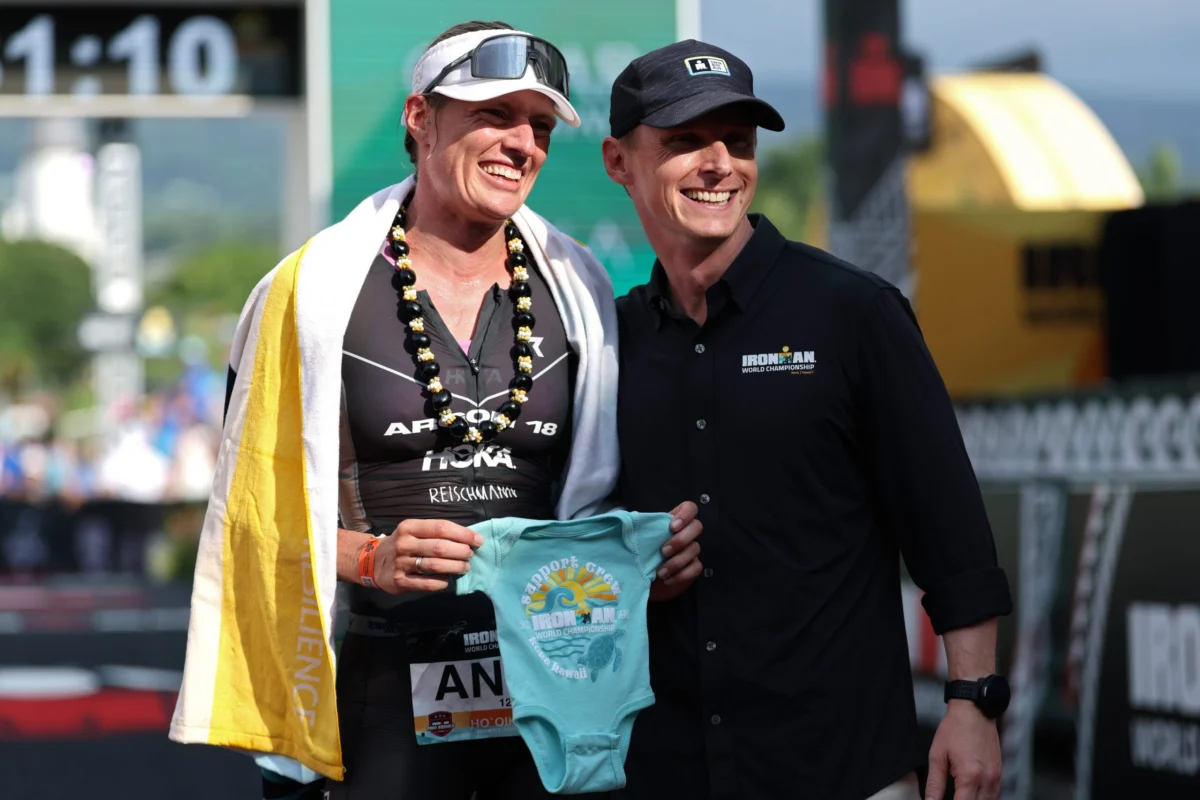
As CEO of The Ironman Group, Scott DeRue navigates a global enterprise that orchestrates nearly 250 endurance events annually, touching the lives of hundreds of thousands of athletes across more than 50 countries. His professional trajectory, however, has been anything but conventional, charting a course through the rarefied air of academia, the competitive landscape of luxury fitness, and the demanding world of global sports leadership. This winding path – spanning roles as a distinguished professor, the transformative dean of the University of Michigan’s prestigious Ross School of Business, and the innovative president of Equinox – is punctuated by an equally remarkable personal feat: conquering the Seven Summits, the highest mountains on each continent, including the formidable Mount Everest and Mount Kilimanjaro. The seemingly disparate threads of these experiences are not woven together by adherence to a single industry or a linear career progression, but by a profound sense of intention and purpose.
"I have my family, The Ironman Group, and my passions of endurance sports and mountaineering," DeRue revealed to Fortune. "Every hour of every day is spent with one of those three things—and nothing else." This declaration underscores a philosophy of hyper-focused dedication, a deliberate curation of his life’s priorities that eliminates extraneous distractions. This intense level of focus has been the crucible in which both his professional ascent and personal ambitions have been forged. Its origins trace back to his formative years, specifically to an indelible experience at the age of 13, unloading semi-trucks laden with upholstery fabric. This early encounter with strenuous labor instilled in him not only the value of hard work and the practicalities of paying taxes but also a foundational lesson that would shape his future: no role has to be permanent. This insight fostered an early understanding of career agility and the power of self-determination, concepts that would become central to his unique leadership style.
As DeRue meticulously worked his way up through various demanding roles, he observed that conventional notions of success often misinterpret the true nature of professional advancement. Specifically, he contends that the widely propagated idea of "networking" is frequently misunderstood and, if approached incorrectly, can even be counterproductive.
"One of the terms that I think is most dangerous is the idea of ‘networking,’" the 48-year-old executive stated, articulating a perspective that challenges established career wisdom. "Because it’s about relationships, not networking. You want to develop relationships built on mutual value and before you need them, and I think that’s an art that is lost on many." DeRue’s critique zeroes in on the transactional, often superficial nature of traditional networking – the hurried exchange of business cards at an event, the perfunctory LinkedIn connection, or the outreach made only when a favor is needed. He argues that such an approach fundamentally misunderstands the organic, reciprocal essence of true professional connections.
DeRue’s advice for aspiring professionals and seasoned executives alike is strikingly simple yet profoundly impactful: abandon the transactional mindset. Instead of viewing connections as one-off exchanges or tools to be leveraged, he champions a philosophy of consistent, genuine engagement. This means actively nurturing relationships through regular check-ins, sharing relevant updates, and, crucially, offering assistance and support without any immediate expectation of return. It’s a long-term investment in people, rather than a short-term pursuit of advantage. This philosophy is rooted in a piece of timeless advice he received early in his career: consider relationships akin to a bank account. "There are debits and credits," he explained, extending the metaphor. "You always want to have a positive balance." This means consistently making deposits – offering value, support, and genuine interest – to ensure that when a withdrawal (a request for help or advice) is necessary, the account is not overdrawn.
This message, emphasizing authenticity and long-term investment in relationships, particularly resonates with Generation Z, many of whom openly struggle with the perceived awkwardness and artificiality of traditional professional connections. A survey conducted by Strand Partners for LinkedIn revealed that approximately 38% of young workers experience anxiety when contemplating networking, with a significant portion opting to avoid it altogether due to uncertainty about where or how to begin. In an age dominated by digital interactions and often curated online personas, the authentic, sustained relationship-building advocated by DeRue offers a refreshing and perhaps more intuitive pathway for a generation seeking genuine connection in their professional lives. His approach implicitly encourages developing the emotional intelligence and interpersonal skills often overshadowed by digital communication, fostering a deeper, more meaningful engagement that transcends the fleeting nature of many online interactions.
Today, DeRue presides over a dynamic and geographically dispersed workforce at The Ironman Group, which swells to approximately 1,000 employees worldwide during the peak race season. The company, globally renowned for its grueling triathlons and diverse portfolio of endurance events, has a complex ownership history. Ironman was acquired by Advance, the parent company of Condé Nast and a diversified global media and technology enterprise, in 2020 for an undisclosed sum. This acquisition marked a significant strategic move, integrating Ironman into a portfolio that values robust brand experiences and global reach. Prior to Advance’s ownership, the company had been sold in 2015 to Chinese conglomerate Dalian Wanda Group for an impressive $650 million, reflecting the substantial value and international appeal of the Ironman brand in the burgeoning global sports market. Each ownership transition brought new strategic imperatives and opportunities, further solidifying Ironman’s position as a titan in the endurance sports industry, demanding adaptive and visionary leadership from its CEO.
Gen Z Wants Purpose in Their Careers. DeRue Once Took a Whole Month Off Work to Try to Find His
The modern workforce, particularly its younger cohorts, is increasingly driven by a desire for more than just financial compensation. For Generation Z, a paycheck, while necessary, is often insufficient to cultivate genuine career satisfaction. Purpose has emerged as a paramount priority. Recent research underscores this seismic shift: more than half of both Gen Zers and millennials report that meaningful work is a critical factor when evaluating potential employers. Furthermore, a compelling 89% of Gen Z specifically identify purpose as essential to their job satisfaction and overall well-being, according to Deloitte’s comprehensive 2025 Gen Z and Millennial Survey. This signals a profound re-evaluation of career priorities, moving beyond traditional metrics of success to embrace a holistic view of personal fulfillment through work.
However, as entry-level roles become increasingly competitive and the economic landscape remains uncertain, finding this elusive balance between financial stability and profound purpose can be a significant challenge for young professionals. This tension is one that Scott DeRue understands intimately, having navigated a similar quest for meaning early in his own career.
After graduating from the University of North Carolina in 1999, DeRue embarked on his professional journey at the esteemed consulting firm Monitor Group, later acquired by Deloitte. While the role provided an intellectually stimulating and robust foundation for a burgeoning career, it gradually became apparent that it lacked the deep sense of direction and personal alignment he was searching for. Faced with this internal dissonance, DeRue made an unconventional and bold decision: he took a full month off from work. This sabbatical was not for leisure but for profound introspection and active exploration. During this period, he engaged in extensive conversations, interviewing numerous individuals in his life about their career paths, motivations, and the underlying principles that guided their professional choices. Through this intensive process of self-reflection and external inquiry, he meticulously identified what he now refers to as his "North Star"—a singular, overarching purpose that would serve as his unwavering compass.
"Since the age of 25, I’ve had one single through-line, North Star purpose: to create experiences for people that help them unlock their potential," he articulated, pinpointing the core principle that has animated his diverse professional endeavors. This clarity, he contends, is not merely a philosophical ideal but a practical imperative that empowers individuals to navigate uncertainty, make principled decisions, and, crucially, construct careers that feel genuinely meaningful and impactful over the long term. This "North Star" can be clearly seen woven through his various roles: as an academic leader, he unlocked the potential of students and faculty; at Equinox, he empowered individuals to achieve their fitness and wellness potential; and at The Ironman Group, he provides platforms for athletes to push their physical and mental limits, often discovering capabilities they never knew they possessed.
Reflecting on his expansive and distinguished resume, DeRue’s most significant piece of advice to his younger self would be to "be bolder." This encouragement speaks to the importance of embracing calculated risks, pursuing ambitious goals, and stepping beyond perceived limitations—a mindset undoubtedly honed through his mountaineering expeditions and demanding executive roles. Complementing this call for boldness is another crucial tenet he advocates: adopting a "no regrets" mindset.
"Even when things don’t work out, did you make a principled decision? Were you thoughtful about it?" DeRue posited, emphasizing the process over the immediate outcome. "You can’t always control the outcome—but you can control how you approach it." This philosophy champions resilience, learning from setbacks, and maintaining integrity throughout the journey. It’s an acknowledgment that while external circumstances are often beyond one’s control, the internal compass of values, intention, and diligent effort remains steadfast. For DeRue, true success is not merely defined by achievements but by the conscious, intentional choices made along the path, regardless of where those choices ultimately lead. This holistic approach to career and life provides a powerful framework for navigating the complexities of the modern professional landscape, offering enduring lessons for current and future generations of leaders alike.
