
 By Lina Irawan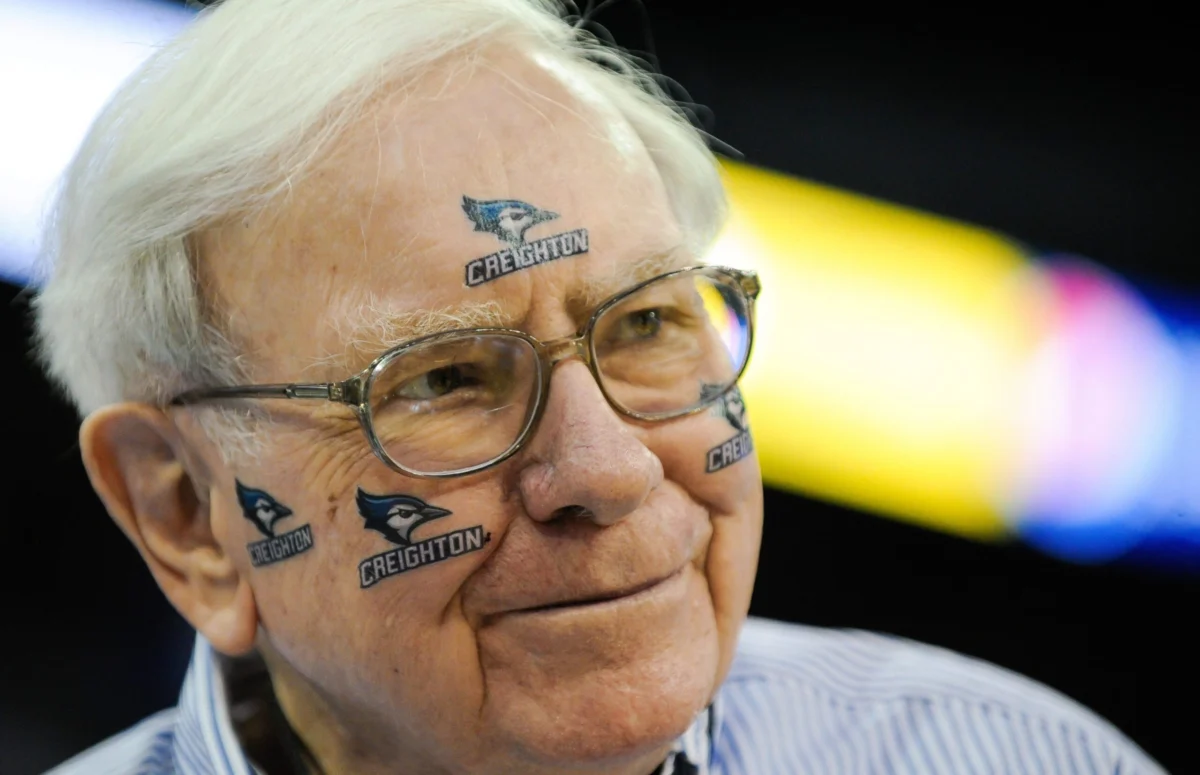
In 2014, Buffett, through his conglomerate Berkshire Hathaway, first dangled a similar $1 billion carrot, albeit exclusively to his employees and those of his subsidiaries. The challenge: correctly predict the winner of all 63 games in the NCAA Men’s Division I Basketball Tournament. Unsurprisingly, no one claimed the colossal sum, underscoring the near-insurmountable difficulty of such an endeavor. Since then, Berkshire Hathaway has modified its payout structure multiple times, acknowledging the astronomical odds against perfection. Kalshi, a platform that allows users to bet on the outcome of future events, is now attempting to replicate this marketing magic on a grander, public scale.
The statistical improbability of a perfect bracket is a central theme in these contests. The National Collegiate Athletic Association (NCAA) itself estimates the chances of correctly picking every single game to be a staggering 1 in 120.2 billion, when taking into account team statistics, historical performance, and general basketball knowledge. For comparison, the odds of winning the Powerball lottery are roughly 1 in 292 million, making a perfect bracket approximately 400 times less likely. Even if one were to make educated guesses, the element of surprise and the unpredictable nature of college basketball—the very essence of "March Madness"—make upsets a common occurrence, derailing brackets within the first few rounds. The longest verified streak of correct picks belongs to an Ohio man who, in 2019, managed to correctly predict 49 consecutive games before his streak was broken, a testament to how quickly even the most informed brackets can falter.
Kalshi readily admits on its contest page that "the odds aren’t in your favor." However, the allure of a billion dollars is a powerful motivator. Should a user defy these astronomical odds and achieve perfection, the winner would receive the prize in annual installments of $100 million over 10 years, as stipulated by the contest rules. The financial muscle behind this ambitious undertaking comes from SIG Parametrics, a division of the Susquehanna International Group of Companies. Susquehanna is a global trading and technology firm renowned for its expertise in options market making, quantitative trading, and risk management. SIG Parametrics specializes in structuring and underwriting large prize promotions, essentially acting as an insurer for such contests. This arrangement mitigates the financial risk for Kalshi, ensuring that the prize would be paid out without jeopardizing the prediction market’s own capital, while simultaneously providing an intriguing, high-profile marketing opportunity for both Kalshi and SIG Parametrics.
Understanding that a perfect bracket is an almost mythical achievement, Kalshi has also implemented a significant consolation prize. If no one manages to pick all 63 games correctly, the participant with the highest score, calculated according to the company’s proprietary point system, will walk away with a substantial $1 million. In the event of a tie for the highest score, the prize money will be equally split among the winners. This tiered prize structure provides a more realistic incentive for participation, acknowledging the long odds while still offering a life-changing sum.
Eligibility for Kalshi’s "Billion Dollar Bracket" contest was open to all U.S. citizens aged 18 and older, with entries closing before the competition’s first game on March 19. However, residents of New York and Florida were conspicuously excluded from participating. Kalshi did not immediately provide Fortune with an explanation for these specific state exclusions, but such restrictions are common in contests and promotions involving prizes of value, particularly when they border on gambling or require specific licensing. Both New York and Florida have complex and stringent regulations regarding online gaming, sweepstakes, and contests, often requiring specific licenses or prohibiting certain types of prize promotions that might be permissible elsewhere. This regulatory labyrinth likely played a role in Kalshi’s decision to exclude residents from these populous states, highlighting the intricate legal landscape companies must navigate when offering national promotions.
Kalshi’s strategic emulation of Buffett’s bracket challenge taps into a phenomenon that has become a beloved tradition at Berkshire Hathaway. Buffett’s contest has consistently drawn massive internal participation, with approximately 65,000 of Berkshire’s nearly 400,000 employees taking part in 2024, according to The Wall Street Journal. This initiative is more than just a promotional stunt; it’s a testament to Buffett’s unique approach to employee engagement and his personal brand of philanthropy, blended with shrewd public relations.
Since its inception in 2014, Buffett’s bracket competition has evolved significantly. After the initial $1 billion perfect bracket offer went unclaimed, he recalibrated the prize in the subsequent years, from 2015 to 2024. During this period, the primary prize shifted to $1 million for anyone who could perfectly guess the Sweet Sixteen, a slightly less daunting, though still incredibly difficult, task. Even this modified goal proved elusive, as no employees managed to hit the target. To keep morale high and acknowledge exceptional performance, a $100,000 consolation prize was introduced for the bracket that remained perfect for the longest duration. Buffett himself is known for personally congratulating the winners, adding a unique, personal touch that reinforces the contest’s value within the company culture.
As Buffett himself told WSJ in 2025, with characteristic wit, "I’m getting older. I want to give away a million dollars to somebody while I’m still around as chairman." His wish finally came true last year when he altered the rules once more, simplifying the challenge to offering $1 million to anyone who correctly guessed at least 30 out of 32 first-round games. This adjustment significantly increased the probability of a winner, and indeed, an employee from FlightSafety International, a pilot training company subsidiary of Berkshire Hathaway, claimed the $1 million prize for correctly predicting 31 out of 32 first-round matchups. This milestone not only fulfilled Buffett’s personal desire but also demonstrated the enduring power of the contest to generate excitement and reward participation. Despite Buffett stepping down as CEO in December, the beloved competition is set to continue this year, as reported by Front Office Sports, cementing its place as a cherished Berkshire Hathaway tradition.
Kalshi’s entry into this arena highlights the increasing sophistication of marketing in the digital age, particularly for platforms operating in nascent and often misunderstood sectors like prediction markets. Kalshi differentiates itself from traditional sports betting sites by being a Commodity Futures Trading Commission (CFTC)-regulated exchange, where users trade on the outcome of future events using "event contracts." This regulatory framework positions Kalshi as a financial market rather than a gambling platform, allowing it to operate in jurisdictions where sports betting might be restricted. However, the line between a "contest" and "gambling" can be blurry, especially when cash prizes are involved, which likely explains the cautious exclusion of New York and Florida residents.
The decision to offer such a colossal, yet statistically improbable, prize is a calculated marketing strategy. The primary objectives are multi-faceted:
- Brand Awareness and Publicity: A $1 billion prize generates immense media attention and public discussion, far exceeding the reach of traditional advertising campaigns. It positions Kalshi as an innovative and bold player in the financial tech space.
- User Acquisition: The allure of a massive payout drives new users to sign up for the platform, even if their initial intent is solely for the bracket contest. Once registered, these users are exposed to Kalshi’s core prediction market offerings, potentially converting them into active traders.
- Engagement and Education: The contest provides a fun, low-barrier entry point for potential users to interact with Kalshi’s platform and understand the concept of predicting outcomes, albeit in a more traditional bracket format.
- Data Collection: Participant data can be valuable for market research and targeted marketing efforts.
From a financial perspective, insuring a $1 billion prize with such astronomical odds is surprisingly cost-effective. The premium paid to SIG Parametrics for this kind of "prize indemnity insurance" is a fraction of the potential payout, especially given the near-zero probability of a perfect bracket. This makes it a highly efficient use of marketing dollars compared to, say, a Super Bowl advertisement that might cost tens of millions for a single 30-second spot. The return on investment in terms of media impressions, brand mentions, and new user sign-ups can be significantly higher.
The cultural phenomenon of March Madness itself provides the perfect backdrop for such a contest. Millions of Americans fill out brackets every year, participating in office pools, friendly wagers, and online challenges. It’s a national obsession fueled by the excitement of unexpected upsets, buzzer-beaters, and the Cinderella stories that define the tournament. By tapping into this widespread engagement, Kalshi is leveraging an existing passion point to amplify its brand message.
In conclusion, Kalshi’s $1 billion March Madness bracket contest is a bold and strategic move, mirroring the successful, high-profile promotions pioneered by Warren Buffett. While the odds of anyone claiming the top prize are infinitesimally small, the publicity generated, the new users attracted, and the conversation sparked are invaluable for a company looking to establish itself in a competitive market. It’s a classic publicity stunt, masterfully executed, demonstrating that even in the complex world of prediction markets, the age-old allure of a seemingly impossible fortune remains an incredibly effective marketing tool. Whether anyone will actually defy the odds and claim the billion dollars remains to be seen, but Kalshi has undoubtedly succeeded in making its name synonymous with ambition and excitement.
