
 By Lina Irawan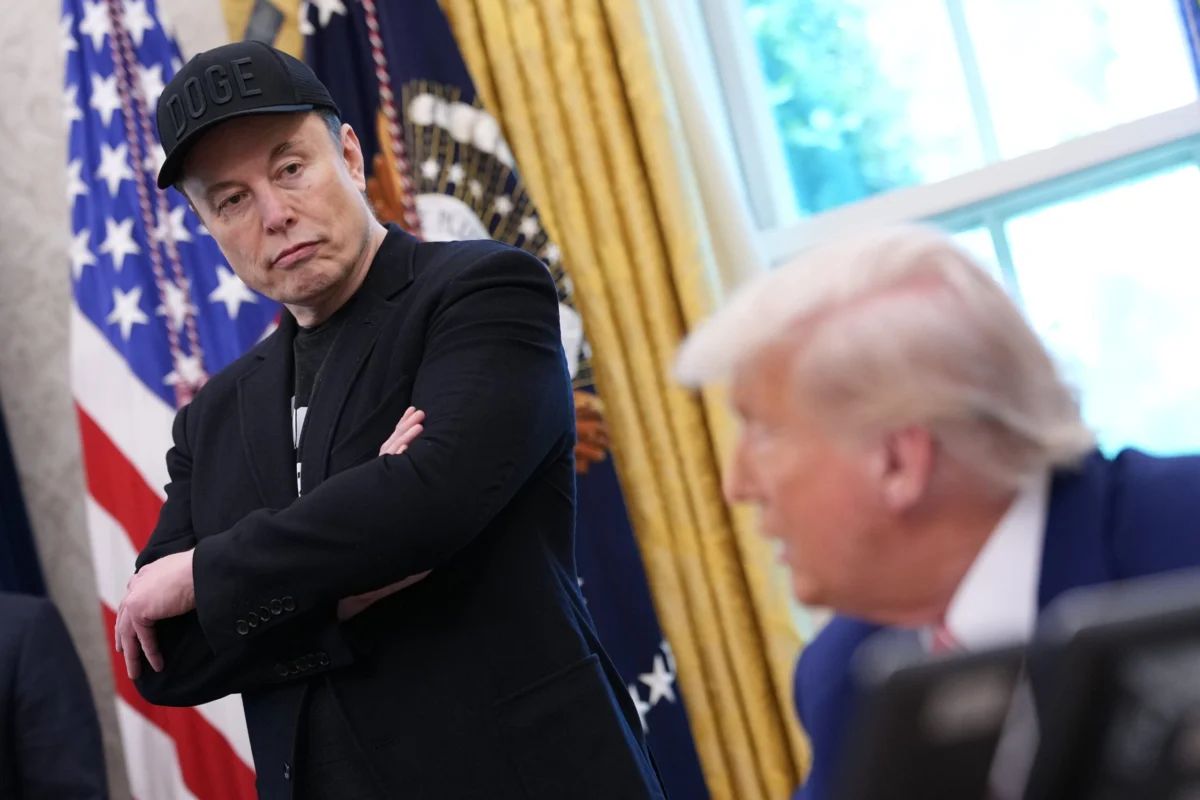
The White House has unequivocally rejected a highly publicized offer from tech magnate Elon Musk to personally fund the salaries of Transportation Security Administration (TSA) workers, whose financial uncertainty has plunged airport security operations nationwide into unprecedented chaos. Abigail Jackson, a spokesperson for the White House, confirmed the rejection to Fortune, citing significant legal and ethical complexities associated with such a proposal. The decision comes as the partial government shutdown continues to wreak havoc on air travel, creating record-long security lines and sparking widespread public frustration.
Musk, known for his unconventional public gestures and direct communication via social media, had floated the proposal publicly on March 21. Taking to his platform X (formerly Twitter), where he commands a vast global audience of over 170 million followers, Musk posted, "I want to offer to pay the salaries of TSA personnel during this funding impasse that is negatively affecting the lives of so many Americans at airports throughout the country." The post quickly went viral, garnering more than 91 million views, thousands of replies, and igniting widespread debate about the role of private citizens in resolving government failures. His offer, while seemingly benevolent, thrust the spotlight onto the dire circumstances of federal employees working without pay and the broader implications of private intervention in public services.
While acknowledging the apparent generosity, the White House spokesperson articulated the administration’s official stance, highlighting the intricate legal framework governing federal operations. "We greatly appreciate Elon’s generous offer," Jackson wrote in an email to Fortune. "However, this would pose great legal challenges due to his involvement with federal government contracts." This statement hints at the complex web of regulations surrounding federal procurement and potential conflicts of interest, especially for an individual whose multi-billion-dollar enterprises, like SpaceX, Tesla, and Starlink, frequently engage with various U.S. government agencies, including NASA, the Department of Defense, and others.
Furthermore, Jackson explicitly reiterated the administration’s preferred and, in their view, only viable path to resolving the crisis: "The fastest way to ensure TSA employees get paid would be for Democrats to fund the Department of Homeland Security." This statement underscores the deep partisan chasm that has paralyzed Washington, with the partial government shutdown now extending well into its second month and specifically impacting the Department of Homeland Security (DHS), which oversees the TSA. The administration’s position is clear: the solution lies in legislative action, not private philanthropy.
The Genesis of the Crisis: A Political Stalemate Over Border Security
This particular government shutdown, which commenced on February 14, stems primarily from an intractable dispute over funding for border security and broader immigration policies. The President and congressional Republicans have insisted on substantial funding, estimated at billions of dollars, for a physical barrier or wall along the U.S.-Mexico border, alongside increased enforcement measures. Democrats, conversely, have staunchly resisted these demands, advocating for alternative security strategies, investing in technology, and pushing for comprehensive reforms to immigration enforcement operations, particularly concerning U.S. Immigration and Customs Enforcement (ICE). As the agency central to these highly charged debates, the Department of Homeland Security has borne the brunt of the funding lapse, leaving hundreds of thousands of its employees, including TSA officers, either furloughed or working without pay.
Historically, government shutdowns in the U.S. have been disruptive, but rarely have they impacted critical security functions to this degree. The Anti-Deficiency Act generally prohibits federal agencies from incurring obligations or expending funds in advance of an appropriation, forcing non-essential government functions to cease and essential personnel to work without immediate compensation. While essential personnel, like TSA officers, are legally required to report for duty to maintain national security, the lack of pay quickly erodes morale, creates severe financial hardship for families, and ultimately leads to the current staffing crisis, threatening the very security they are mandated to provide. The human cost of this political impasse is significant, with reports of federal workers struggling to pay rent, buy groceries, and cover essential expenses.
Airports Descend into Unprecedented Chaos
The consequences of this political deadlock are perhaps most acutely felt by the American traveling public. The Transportation Security Administration itself issued a stark warning on Wednesday, confirming that wait times at airport security checkpoints have "hit the worst levels in the agency’s history." Reports from across the nation indicate some passengers are enduring waits exceeding four and a half hours to clear security, transforming routine domestic and international travel into an ordeal of stress, missed connections, and uncertainty. The economic ripple effect extends beyond passenger frustration, impacting flight schedules, airline operational efficiency, and potentially the broader economy reliant on seamless air travel and tourism.
Acting Administrator Ha Nguyen McNeill, testifying before a House Homeland Security Committee hearing, revealed the alarming toll the shutdown has taken on the agency’s workforce. Since the funding lapse began on February 14, roughly 40 days ago, TSA has lost more than 480 transportation security officers (TSOs). This attrition rate, coupled with a surge in unscheduled absences and "sick-outs" – a form of protest by financially strapped employees – has crippled an already lean operation. The agency, which typically operates with tight margins and relies on a dedicated but often underpaid workforce, is now stretched to its breaking point.
At some of the nation’s busiest airports, the situation is dire. Bloomberg reported that 40% to 50% of officers have called out on certain days, forcing the agency to consolidate screening lanes, close entire checkpoints, and drastically scale back operations. Major hubs like Hartsfield-Jackson Atlanta International Airport (ATL), George Bush Intercontinental Airport in Houston (IAH), and the New York metropolitan airports, including LaGuardia (LGA) and John F. Kennedy (JFK), have been among the hardest hit. Viral videos posted to social media platforms early Wednesday morning depicted chaotic scenes at LaGuardia, showing security lines snaking through terminals, spilling into baggage claim areas, and creating an image of systemic breakdown that has gone global. Airlines have been forced to cancel flights, incurring millions in lost revenue and further frustrating passengers.
TSA’s Critical Role and Mounting Pressures
Established in the immediate aftermath of the devastating September 11, 2001, terrorist attacks, the TSA was created to federalize and standardize airport security across the United States, a mission deemed paramount to national safety and public confidence in air travel. Its officers are on the front lines, tasked with identifying potential threats, screening passengers and baggage, and ensuring the integrity of the entire aviation system. Their work is physically demanding, often monotonous, and requires constant vigilance and adherence to evolving security protocols. Even before the shutdown, TSA officers faced significant challenges, including comparatively lower pay scales than other federal law enforcement agencies, limited career progression opportunities, and high rates of turnover. The current situation exacerbates these long-standing issues, creating a profound crisis of morale and potentially jeopardizing the agency’s ability to maintain its rigorous security standards. The loss of experienced TSOs, who possess specialized training and institutional knowledge critical for detecting sophisticated threats, represents a significant blow that will take considerable time and resources to recover from, even after the shutdown eventually ends.
The Controversial Deployment of ICE Agents
In an attempt to mitigate the critical staffing crisis, the administration deployed personnel from U.S. Immigration and Customs Enforcement (ICE) to airports. While seemingly a pragmatic solution to alleviate some pressure, this move has drawn bipartisan scrutiny and raised questions about the appropriate roles and cross-agency utilization of federal personnel. Acting Administrator McNeill clarified that ICE personnel are handling "non-specialized screening functions," primarily tasks like checking travel documents at initial checkpoints and directing passenger flow, thereby allowing trained TSA officers to focus on core security duties such as operating advanced X-ray machines, conducting physical searches, and identifying prohibited items.
However, the deployment of ICE agents, particularly in roles adjacent to security screening, has been contentious. Democrats, in particular, have been vocal critics of ICE’s operations, pushing for comprehensive reforms following several high-profile incidents that have drawn public ire and, in some cases, resulted in civilian deaths or injuries. Critics argue that using ICE agents, whose primary mandate is immigration enforcement and who are not trained in aviation security protocols, even for "non-specialized" airport roles, blurs jurisdictional lines and could potentially lead to public distrust or even unintended consequences, especially given the agency’s controversial public image. Aviation security experts have also voiced concerns about the efficacy of using personnel not primarily trained in the nuances of TSA protocols, even for seemingly simpler tasks, emphasizing that every touchpoint in the security process is critical.
Legal and Ethical Minefield of Private Funding for Public Services
The White House’s swift rejection of Elon Musk’s offer underscores a crucial, albeit often overlooked, aspect of federal governance: the robust legal and ethical framework designed to protect the integrity of government operations from undue private influence. The "great legal challenges" cited by Abigail Jackson are multifaceted and deeply ingrained in American constitutional principles and statutory law.
Firstly, federal law, specifically the Anti-Deficiency Act (31 U.S.C. § 1342), generally prohibits federal agencies from accepting voluntary services or donations unless explicitly authorized by law. While exceptions exist for emergencies involving "the safety of human life or the protection of property," directly paying the salaries of an entire segment of the federal workforce by a private citizen presents an entirely different and unprecedented scenario. Such a transaction could be construed as an unauthorized augmentation of appropriations, effectively circumventing congressional control over federal spending, which is a fundamental tenet of the U.S. system of checks and balances. Allowing such a precedent could empower private entities to dictate government functions outside the democratic process.
Secondly, and perhaps more significantly, is the issue of conflicts of interest. Elon Musk, through his various ventures (SpaceX, Tesla, Starlink, The Boring Company, Neuralink), holds numerous multi-billion-dollar contracts with the U.S. government across multiple departments and agencies. For instance, SpaceX is a critical partner for NASA and the Department of Defense. Allowing an individual with such extensive and ongoing financial ties to directly fund federal employees could create an appearance, if not an actual instance, of undue influence or quid pro quo. Government ethics watchdogs, such as the Office of Government Ethics (OGE), would likely raise immediate alarms about the potential for a "shadow government" or the erosion of public trust if private citizens could effectively "buy" influence or control over government functions. This concern is not merely theoretical; it strikes at the heart of public confidence in the impartiality of government.
Thirdly, there’s the critical question of equity and precedent. If Musk were allowed to pay TSA salaries, what prevents other wealthy individuals, special interest groups, or corporations from offering to fund other critical government services? This could lead to a fragmented and unequal system where the funding and, by extension, the priorities of government agencies are dictated by private donors rather than democratically elected representatives and established budgetary processes. It also raises profound concerns about accountability – to whom would these privately funded employees ultimately owe their allegiance? To the government they serve, or the individual who signs their checks? Legal scholars and government ethics experts widely contend that while such an offer might be well-intentioned, it sets a dangerous precedent, undermining the constitutional separation of powers and the principle that public services should be funded through public means, i.e., taxpayer dollars appropriated by Congress.
The Unyielding Political Deadlock in Washington
Back in Washington, the political impasse shows no signs of abating. Senate Republicans firmly rejected a Democratic proposal aimed at ending the partial shutdown, underscoring the deep divisions that characterize current U.S. politics. Senate Majority Leader John Thune dismissed the Democratic plan as merely a list of demands, specifically pointing to proposed changes to immigration enforcement operations as a non-starter for his party. Democrats, conversely, have been pushing for significant reforms scaling back ICE’s operations, citing several violent incidents involving the agency that have resulted in civilian fatalities or injuries, and arguing that the current approach to immigration enforcement is both inhumane and ineffective.
The core of the dispute remains the President’s unwavering demand for billions of dollars for a border wall, which Democrats largely view as an inefficient, costly, and symbolic gesture rather than a practical security solution. Both sides appear entrenched, leveraging the shutdown as a high-stakes negotiating tactic, with federal workers and the American public increasingly caught in the economic and logistical crossfire. Public opinion polls indicate growing dissatisfaction with both parties’ handling of the shutdown, with a significant majority blaming political leaders for the crisis.
Broader Economic Ripple Effects
The ongoing shutdown is not just a political and logistical crisis; it carries significant and escalating economic ramifications. Beyond the immediate disruption to air travel and the severe financial hardship faced by hundreds of thousands of federal employees, the shutdown’s longer duration is beginning to inflict broader damage across various sectors. Economists from institutions like the Congressional Budget Office (CBO) estimate that each week of a partial shutdown costs the U.S. economy billions of dollars in lost productivity, deferred government services, and decreased consumer and business confidence. Industries reliant on government data, permits, or inspections face delays, while business travel and tourism suffer substantially from the airport disruptions and general uncertainty. Airlines, hotels, and related services are already feeling the pinch, reporting reduced bookings and increased operational costs due to delayed flights and passenger inconvenience. The uncertainty itself acts as a drag on overall economic activity, making businesses hesitant to invest and consumers cautious about spending, potentially impacting quarterly GDP growth.
Outlook: An Uncertain Path Forward
As the shutdown grinds on, the future remains highly uncertain. Representatives for Elon Musk did not respond to Fortune‘s request for comment following the White House’s rejection, leaving his next moves unclear. While his offer was ultimately rejected, it undeniably highlighted the acute distress faced by federal workers and the public’s overwhelming frustration with political gridlock.
The immediate priority for millions of Americans is a swift and comprehensive resolution to the funding impasse that would allow TSA officers and other federal employees to return to work with full pay and restore stability to critical government functions. However, without a significant shift in negotiation positions from either the White House or Congress, the shutdown, and its cascading effects on national security, public services, and the economy, appears set to continue indefinitely. The entire episode serves as a stark reminder of the fragile nature of essential public services when political will falters, and the complex ethical considerations that arise when private citizens attempt to bridge gaps in public governance. The long-term impact on the federal workforce, particularly the morale and recruitment for agencies like the TSA, will likely be felt long after the current crisis is theoretically resolved, posing enduring challenges to national security and public trust.
