
 By admin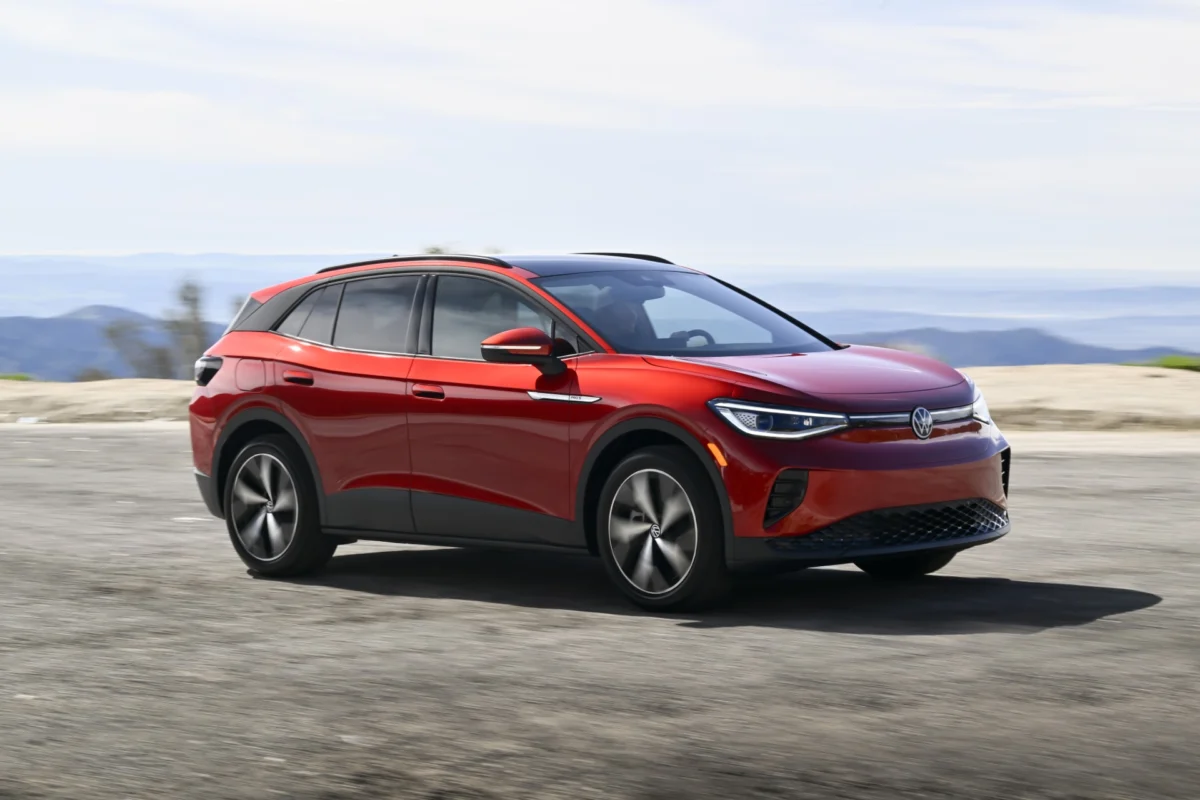
Volkswagen Group of America has initiated a significant recall affecting 13,769 units of its popular electric vehicles, specifically the 2024 Volkswagen ID.4 and 2024-2025 Audi Q4 E-Tron and Q4 E-Tron Sportback models. This action, announced on March 18, 2025, addresses a critical flaw not in the high-voltage battery packs responsible for propulsion, but rather in the charging system for the conventional 12-volt battery, which is nonetheless indispensable for the vehicle’s operation.
The core of the problem lies with the onboard charger designed to replenish the 12-volt battery. A manufacturing defect, characterized by an insufficient protective coating on a printed circuit board within this charger, can render it vulnerable to condensation. Should moisture ingress occur, it can lead to a malfunction, preventing the 12-volt battery from recharging effectively. The ramifications for drivers are severe: potential loss of power to various electronic systems, critical operational issues, or even the complete inability to restart the vehicle once it has been shut off, as detailed by the National Highway Traffic Safety Administration (NHTSA).
Even in the most advanced electric vehicles, a 12-volt battery remains a fundamental component, serving as the backbone for a myriad of essential auxiliary systems. Unlike internal combustion engine (ICE) vehicles where the 12-volt battery primarily provides the initial surge to crank the starter motor, in EVs, its role is equally, if not more, diverse and critical. It powers the vehicle’s infotainment system, exterior and interior lighting, power windows, door locks, the vehicle’s central computer, various sensors, airbags, and crucial safety features such as power steering assist and brake boost. Without a properly functioning 12-volt battery, or a system to recharge it, these vital functions can become compromised, rendering the vehicle inoperable or unsafe. The present recall highlights that even with a fully charged high-voltage battery pack providing hundreds of miles of range, a failure in the 12-volt system can effectively brick an EV.
The NHTSA’s investigation and Volkswagen Group’s internal findings revealed that the specific vulnerability stems from the manufacturing process of the onboard 12-volt battery charger. The inadequate protective coating on the printed circuit board makes it susceptible to environmental factors, particularly humidity and condensation. Over time, moisture penetration can lead to short circuits or component degradation, causing the charger to fail. When such a malfunction is detected, the vehicle is programmed to issue "several, major warnings to the driver," which could manifest as a cascade of dashboard warning lights, audible alerts, and explicit error messages on the central display. Simultaneously, the vehicle will experience "reduced driving functions," a vague but alarming term that could imply anything from loss of power steering and braking assist to a forced limp-home mode, severely limiting the vehicle’s speed and capabilities, or even a complete shutdown while driving.
The proposed remedy for this defect involves the replacement of the entire onboard 12-volt battery charger. This repair will be carried out free of charge by authorized Audi and Volkswagen dealerships. Given that all affected vehicles fall within the 2024-2025 model years, they are still under the manufacturer’s warranty. Consequently, Volkswagen and Audi do not anticipate having to reimburse customers for any related costs, reinforcing their commitment to rectifying safety-related defects without financial burden to the owner.
Owner notification letters are scheduled to be mailed out on April 29, ensuring that all affected customers are formally informed of the recall and the necessary steps to take. For immediate inquiries or further information, Volkswagen owners can contact their brand’s customer service department at 1-800-893-5298 or visit its dedicated recall website at vw.com/en/owners-and-services/about-my-vehicle/recalls.html. Audi owners have similar resources available, with their customer service department reachable at 1-800-253-2834 and a specific recall site at web.audiusa.com/recall/. To streamline the process, Volkswagen has assigned the reference number 93CJ for this recall, while Audi’s corresponding number is 93FR. Owners are strongly encouraged to use their Vehicle Identification Number (VIN) on the respective recall websites to confirm if their specific vehicle is included in this safety campaign.
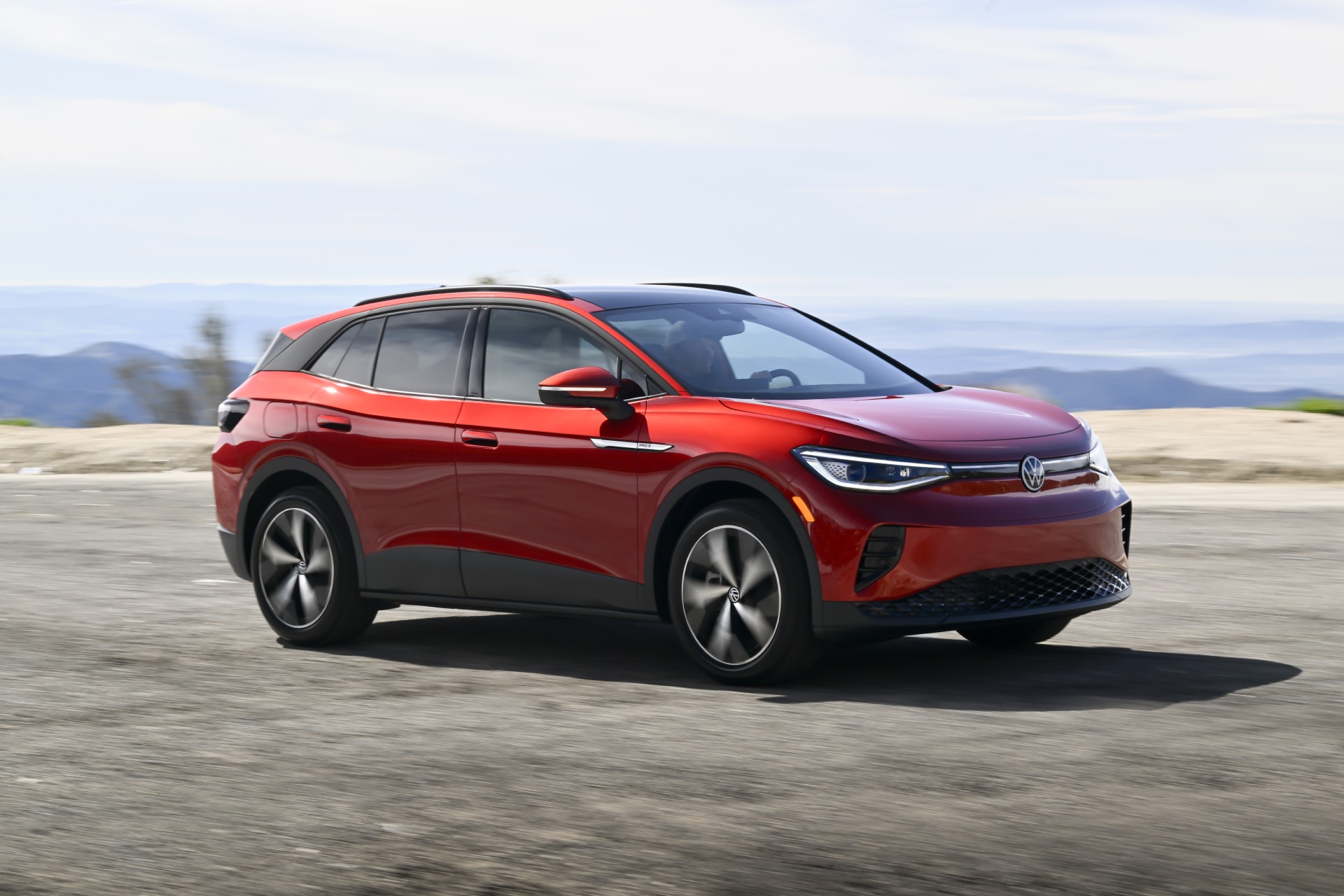
This incident marks a concerning trend for both the Volkswagen ID.4 and Audi Q4 E-Tron, two closely related electric models that are foundational to the Volkswagen Group’s electrification strategy and share the modular electric drive matrix (MEB) platform. The MEB platform is a highly significant architecture for Volkswagen, designed to underpin a wide range of electric vehicles across its brands, from compact cars to SUVs. Its modularity is intended to reduce development costs and accelerate the rollout of EVs. However, as this recall illustrates, sharing components and platforms also means that a single faulty part or design flaw can trigger widespread recalls across multiple models and brands.
Indeed, this is not the first, nor even the second, recent recall to impact both the ID.4 and Q4 E-Tron. Earlier this month, the two brands announced a substantial recall affecting 60,490 vehicles due to a software error. This flaw could prevent mandatory gear indicators from displaying correctly, posing a significant safety risk as drivers might inadvertently select the wrong gear (e.g., reverse instead of drive) or be unaware of the actual gear engagement, potentially leading to unexpected vehicle movement or accidents. Furthermore, the Volkswagen ID.4 has faced its own distinct challenges. Volkswagen only recently restarted sales of the 2025 ID.4 after a prior recall related to faulty door handles. This issue, serious enough to warrant a stop-sale and production halt, meant that the exterior door handles could fail to operate, preventing occupants from opening doors from the outside, which is a critical safety concern, particularly in emergency situations.
The succession of recalls for these key EV models raises questions about quality control, the complexities of new vehicle platforms, and the rapid pace of EV development. Automotive industry analysts suggest that such repeated issues, particularly for core models in a manufacturer’s EV lineup, can erode consumer confidence and complicate the broader transition to electric mobility. While recalls are a standard part of the automotive industry, signaling a manufacturer’s commitment to safety, a pattern of multiple, distinct recalls within a short timeframe for new models can suggest underlying challenges in design, manufacturing processes, or software integration.
Industry experts often point out that modern vehicles, especially EVs, are essentially computers on wheels, with intricate layers of software and electronic hardware managing everything from powertrain control to auxiliary functions. This increased complexity introduces new points of failure that traditional mechanical systems might not have. The 12-volt battery issue, in particular, is not unique to Volkswagen Group EVs; other manufacturers have also encountered challenges with their 12-volt systems in electric vehicles. The transition from a simple starter battery in ICE cars to a sophisticated auxiliary power supply in EVs requires robust design and integration, as its failure can incapacitate the entire vehicle despite the main battery being fully functional. This highlights a crucial design consideration for EVs: while the high-voltage battery grabs headlines, the humble 12-volt system remains a critical, often overlooked, linchpin of reliability.
For Volkswagen Group, a company with ambitious goals for EV market leadership, these recalls represent significant hurdles. Each recall not only incurs substantial financial costs for repairs but also impacts brand reputation and customer perception. The successful and prompt resolution of these issues, coupled with transparent communication, will be crucial in maintaining consumer trust and ensuring the long-term success of their electrification strategy.
In the interim, owners of the affected 2024 Volkswagen ID.4 and 2024-2025 Audi Q4 E-Tron and Q4 E-Tron Sportback vehicles are strongly advised to heed the recall notices once they arrive. It is imperative to schedule the necessary repair with an authorized dealership as soon as possible to ensure the safety and reliability of their vehicles. While the inconvenience of a recall is undeniable, addressing these issues proactively is essential for both driver safety and the longevity of the vehicle. The evolution of electric vehicle technology is a continuous process, and while early adoption may sometimes come with unforeseen challenges, the industry’s commitment to identifying and rectifying these issues underscores the ongoing drive towards safer and more reliable electric transportation.
