
 By admin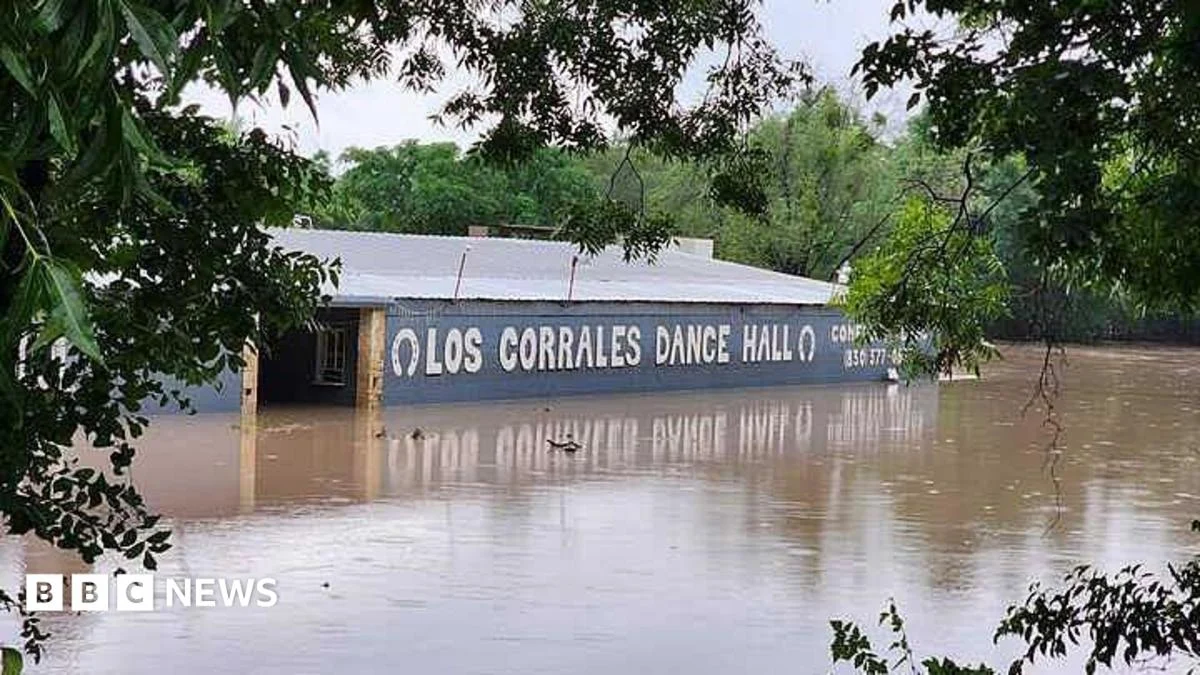
Central Texas is once again grappling with the devastating fury of floodwaters, a grim reality that has claimed at least one life and brought back chilling memories of the catastrophic flash floods that ravaged the same region last summer, resulting in over 130 fatalities. The Guadalupe River, a waterway that was the epicenter of last year’s disaster, is now threatening to unleash "large and deadly" flooding, according to a dire warning issued by the National Weather Service (NWS) in San Antonio. Days of relentless, torrential rainfall have saturated the land, leaving it unable to absorb any more moisture, pushing rivers to their breaking point.
As dawn broke on Thursday, emergency officials were issuing urgent pleas for residents in low-lying areas to evacuate, a stark reminder of the life-saving importance of heeding such warnings. The specter of last summer’s deluge hangs heavy over the current crisis. That devastating event, which saw the Guadalupe River surge beyond its banks, led to the tragic loss of more than 130 lives. Among those lost were 25 children and two counselors at Camp Mystic, an all-girls camp situated near Kerrville, Texas, a community directly along the treacherous river. The memory of those lives cut short, particularly the young campers and their dedicated caretakers, serves as a potent and somber backdrop to the current unfolding emergency.
In a press conference held on Thursday afternoon, Texas Governor Greg Abbott confirmed the tragic news of at least one fatality directly attributed to the ongoing flooding. His statement, disseminated through social media channels, underscored the state’s unwavering commitment to safeguarding its citizens. "We will be doing everything possible to save human life," Governor Abbott declared, his words carrying the weight of responsibility and the urgency of the situation. He further elaborated that approximately 80 successful rescues had already been conducted, a testament to the tireless efforts of first responders. Importantly, he clarified that the individual who lost their life was not a camper, aiming to quell any immediate concerns for the well-being of those at the region’s summer camps.
Governor Abbott painted a stark picture of the escalating threat, emphasizing that the "rapidly rising rivers" were not expected to recede anytime soon and would continue their ascent throughout the day. This continuous rise poses an immense and evolving danger to communities situated in the floodplains. The NWS has been providing a constant stream of updates, meticulously detailing the severity of the threat and reinforcing the critical need for immediate action to ensure personal safety. Their pronouncements have been stark and unequivocal. On X, formerly Twitter, the NWS San Antonio office issued a chilling bulletin: "CATASTROPHIC flooding is occurring. Move to higher ground now! Guadalupe River is rapidly rising and will continue!" This urgent plea, characterized by its all-caps urgency, highlights the extreme danger faced by residents.
The sheer speed and magnitude of the Guadalupe River’s ascent are alarming. According to reports from the Texas Tribune, the river had already surged an astonishing 32 feet (approximately 975 centimeters) within a mere four-hour span. This rapid escalation is a clear indicator of the intense rainfall upstream and the overwhelming volume of water being channeled downstream. The catastrophic flooding is not confined to a single area; it has begun to impact multiple counties across South Texas, including Uvalde, Kerr, and Kendall. These counties, already bearing the scars of last year’s disaster, now face a renewed onslaught of nature’s destructive power.
The geographical context of this recurring crisis is crucial for understanding its severity. Central Texas, characterized by its rolling hills and river valleys, is particularly susceptible to flash floods. The underlying geology, with its limestone formations, can lead to rapid runoff, especially after prolonged periods of rain. The Guadalupe River, a significant waterway in the region, acts as a natural conduit for this water, and when it overflows its banks, the consequences can be devastating. The fact that the same river was the source of last year’s catastrophic floods underscores a systemic vulnerability, perhaps related to development in floodplains, the effectiveness of existing flood control measures, or the sheer intensity of weather events.
Experts in hydrology and meteorology have long warned about the increasing frequency and intensity of extreme weather events due to climate change. While it is premature to definitively link this specific event to broader climate trends without further analysis, the pattern of severe flooding in central Texas is consistent with predictions of a changing climate, which can lead to more unpredictable and intense rainfall patterns. Dr. Sarah Jenkins, a climatologist at the University of Texas, commented on the situation, stating, "We are observing a trend towards more extreme precipitation events globally. Regions that are historically prone to flooding are likely to experience more severe and frequent inundation as atmospheric moisture-holding capacity increases with rising global temperatures." She further elaborated that "understanding and adapting to these new normals is paramount for disaster preparedness and mitigation."
The economic and social ramifications of such recurring disasters are profound. Beyond the immediate loss of life and property, these floods can disrupt local economies, damage critical infrastructure like roads and bridges, and displace communities. The psychological toll on residents, particularly those who have experienced multiple such events, can be immense, leading to increased anxiety and trauma. The rebuilding process after a major flood is often lengthy and costly, placing a significant burden on individuals, local governments, and state resources. The repeated devastation also raises questions about long-term land-use planning and the adequacy of infrastructure designed to withstand such extreme events.
The response to the current crisis involves a multi-agency effort, with state and local emergency management agencies working in tandem with federal resources. The Texas Division of Emergency Management (TDEM) is coordinating rescue operations, providing resources, and establishing shelters for displaced residents. The National Guard has been deployed to assist with rescue efforts and to provide logistical support. The focus remains on immediate life-saving measures, ensuring that those in danger are reached and that essential services are maintained as much as possible.
The NWS’s role in providing timely and accurate forecasts and warnings is absolutely critical in mitigating the impact of these events. Their advanced Doppler radar systems and sophisticated modeling capabilities allow them to track storm systems and predict river levels with increasing precision. However, even the most advanced warnings can only be effective if residents heed them and take appropriate action. The communication of these warnings to vulnerable populations, especially those who may have limited access to technology or be in areas with unreliable communication networks, remains a significant challenge.
The tragic echoes of last summer’s flood are a stark reminder of the persistent threat that natural disasters pose. The loss of life, the destruction of homes and businesses, and the emotional scars left behind are a heavy burden for the communities of central Texas. As the Guadalupe River continues its destructive rise, the focus remains on survival, rescue, and providing immediate relief to those affected. However, the recurring nature of these devastating floods also necessitates a broader conversation about resilience, adaptation, and long-term strategies to protect communities from the intensifying impacts of extreme weather events. The lessons learned from last summer’s tragedy must be applied with renewed urgency to prevent further loss of life and to build a more resilient future for central Texas. The current crisis is not merely an isolated incident but a stark illustration of the growing challenges posed by a changing climate and the imperative to act decisively to safeguard human lives and communities.
