
 By admin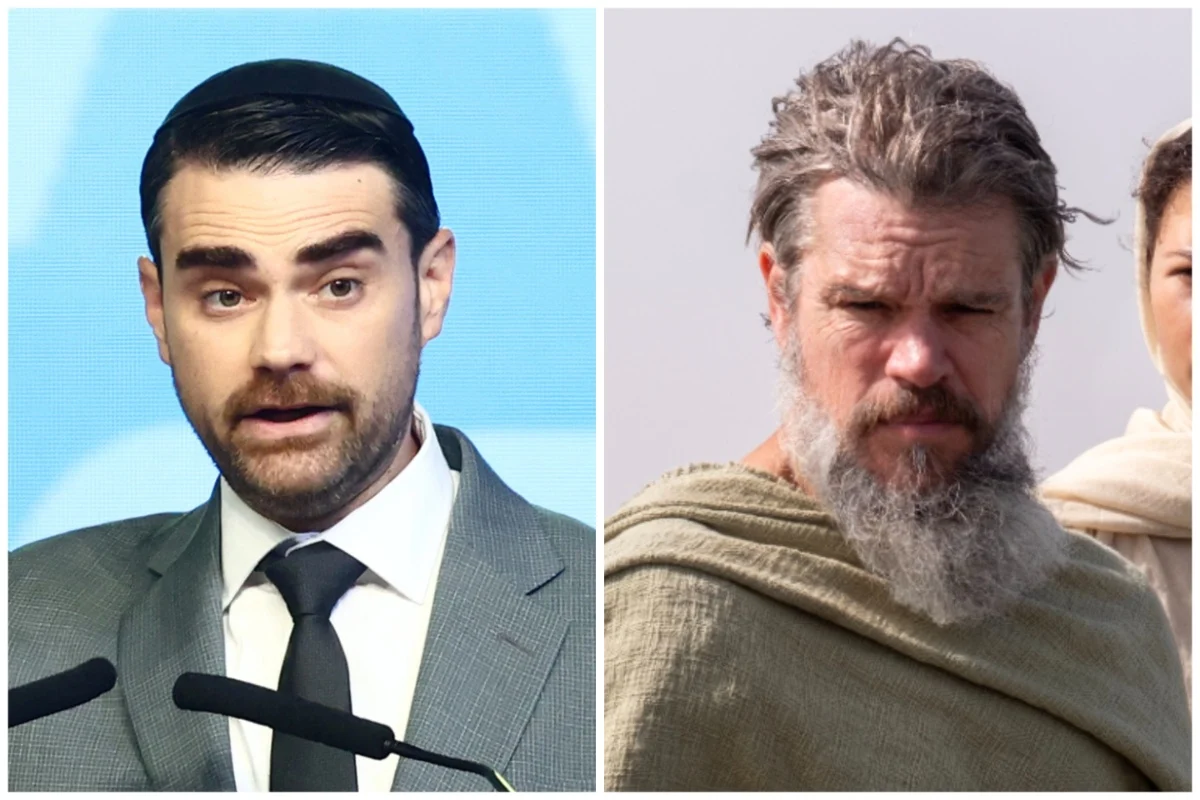
In a move that has surprised many, conservative commentator Ben Shapiro has publicly lauded Christopher Nolan’s latest cinematic endeavor, an ambitious reimagining of Homer’s ancient Greek epic, "The Odyssey." Shapiro, known for his incisive critiques and often staunchly conservative viewpoints, released an 18-minute video review on his YouTube channel Saturday, unequivocally declaring the film a "masterpiece" despite significant outrage from some right-wing circles concerning its casting and perceived deviations from historical accuracy.
Shapiro’s praise for Nolan’s directorial prowess was effusive. "Nolan is unparalleled," he stated unequivocally in his review. "He’s the best director working today, without a doubt. He just creates iconic movie after iconic movie." This sentiment echoes a broader critical consensus that has followed Nolan throughout his career, from his early, mind-bending thrillers like "Memento" and "The Prestige" to his monumental blockbusters such as "The Dark Knight" trilogy and "Inception." Nolan has consistently demonstrated a unique ability to blend complex narratives with spectacular visual artistry, often exploring themes of memory, identity, and the nature of reality. His films frequently challenge audiences, inviting multiple interpretations and fostering deep engagement, a characteristic Shapiro seems to appreciate in this latest work.
The commentator also reserved significant praise for the film’s lead actor, Matt Damon, who portrays the iconic hero Odysseus. "I think he’s great in nearly everything," Shapiro remarked. "He sort of disappears into the part in a way that he doesn’t in a lot of other movies. He’s great as Odysseus." Damon, an established Hollywood veteran with a career spanning decades and numerous acclaimed performances, brings a gravitas and nuanced portrayal to the role of the wily and enduring king of Ithaca. His performance, in Shapiro’s assessment, successfully captures the complex journey of Odysseus, from the battlefields of Troy to his arduous twenty-year struggle to return home, facing mythical beasts, seductive sorceresses, and the wrath of the gods.
The supporting cast also received glowing endorsements from Shapiro. He singled out Robert Pattinson’s turn as Antinous, a prominent suitor vying for Penelope’s hand, describing him as "an excellent antagonist. He’s sleazy and gross." Pattinson, who has steadily built a reputation for his transformative and often unconventional performances, particularly since his acclaimed role as Batman in "The Batman," appears to have delivered a compelling villainous turn that adds significant tension to the narrative. Furthermore, Shapiro found Tom Holland to be "excellent, well cast" as Telemachus, Odysseus’s son, who embarks on his own quest to find his father. Holland, best known for his youthful exuberance as Spider-Man in the Marvel Cinematic Universe, demonstrates his range by portraying the maturation and growing resolve of Telemachus. Anne Hathaway, a celebrated actress with a diverse filmography, was lauded for her "great job as Penelope," Odysseus’s faithful and resourceful wife, who must fend off numerous suitors during her husband’s prolonged absence. Hathaway’s portrayal, as described by Shapiro, likely captures Penelope’s intelligence, resilience, and unwavering devotion.
However, the film’s casting, particularly that of Lupita Nyong’o as Helen of Troy, has ignited a firestorm of controversy among a segment of the online conservative community. Critics have questioned the historical accuracy of casting a Black actress in the role of Helen, a figure traditionally depicted with fair skin in ancient Greek art and literature. Shapiro, however, vociferously defended Nolan’s decision, directly addressing these criticisms. "So, I know a lot of people were like, ‘Oh my god, Lupita Nyong’o is supposed to look like Diane Kruger.’ I don’t know. Diane Krueger doesn’t look very Greek. She’s German," Shapiro retorted, pointing out the perceived hypocrisy and Eurocentric biases underlying some of the objections. He continued, "Lupita Nyong’o is a beautiful woman. But here’s the thing, actually, in the script, Nolan goes out of his way to explain that the war wasn’t really launched over Helen being gorgeous." This explanation suggests that Nolan’s interpretation of "The Odyssey" delves deeper than the surface-level motivations often attributed to the Trojan War, perhaps exploring more complex political or societal underpinnings for the conflict, thereby rendering traditional notions of Helen’s beauty less central to the narrative’s driving force.
The conservative backlash has been particularly vocal, with prominent figures like Elon Musk publicly expressing their disapproval. Musk, the CEO of Tesla and SpaceX, had previously tweeted his criticism of Nyong’o’s casting, suggesting that it was a departure from the source material and potentially driven by modern political agendas rather than artistic merit. This sentiment reflects a broader concern within some conservative circles about what they perceive as the increasing politicization of Hollywood and a departure from established narratives and historical portrayals in favor of progressive ideologies. The debate highlights the perennial tension between artistic interpretation and adherence to perceived historical or literary fidelity, a discussion that has intensified in the age of social media, where opinions can be amplified and disseminated rapidly.
Despite the vocal opposition, Shapiro’s critique indicates that Nolan himself remains unbothered by the online noise. In a recent interview with The Telegraph, Nolan addressed the controversy surrounding his film, stating that such backlash "comes with the territory" when undertaking large-scale, ambitious projects. He drew a parallel to his experience with the "Dark Knight" trilogy, where he faced similar scrutiny and expectations from fans of the beloved Batman character. "Remember, I spent 10 years of my life dealing with Batman," Nolan explained. "When I came on ‘Begins,’ writers and artists had been working on this beloved character for almost 65 years, and a lot of freighted thoughts were out there about what he represents. And what I learnt over my time on that trilogy is you can’t worry about any of that at all. What you have to do is honor the original text by interpreting it in the strongest way you personally can." This philosophy underscores Nolan’s commitment to his artistic vision, prioritizing a powerful and personal interpretation of the source material over appeasing external expectations or anxieties.
Shapiro did, however, express a notable point of contention within the film: the casting of Elliot Page as Sinon, the Greek soldier who engineers the Trojan Horse’s entry into the city. Shapiro described Page’s role as an "absolute puzzler," questioning the suitability of the casting. He elaborated on his reservations, stating, "He is about 5’2 and 105 pounds soaking wet and has the voice of a woman. It doesn’t work." This critique, while framed within an otherwise overwhelmingly positive review, highlights a specific aspect of the casting that Shapiro found problematic, suggesting a disconnect between the actor’s physical presence and the traditional portrayal of Sinon, a character often depicted as a cunning and persuasive spy. It is important to note that Elliot Page, an openly transgender actor, has been a prominent advocate for LGBTQ+ rights, and the inclusion of Page in this role, regardless of Shapiro’s personal critique of its narrative efficacy, is likely to be viewed through a broader social and political lens by some audiences.
The "masterpiece" declaration from Shapiro is particularly significant given his platform and the audience he commands. His endorsement, coming as it does from a figure often associated with traditionalist values, suggests that Nolan’s "The Odyssey" might possess a depth and artistic merit that transcends ideological divides for some viewers. It challenges the notion that a film’s reception is solely dictated by its adherence to pre-conceived notions of identity or historical representation. Instead, Shapiro’s review emphasizes the power of directorial vision, strong performances, and a compelling narrative, even when those elements are presented through a modern and perhaps unconventional lens. The debate surrounding "The Odyssey" is likely to continue, fueled by its ambitious reimagining of a timeless story and the diverse reactions it elicits, underscoring the enduring power of classical literature and its capacity to spark contemporary discourse. The film, as interpreted by Nolan and reviewed by Shapiro, appears to be more than just a retelling; it is a commentary on enduring human struggles, the nature of heroism, and the complexities of war and homecoming, all filtered through the unique perspective of a filmmaker at the height of his powers. The controversy surrounding its casting, while divisive, ultimately serves to highlight the ongoing dialogue about representation and artistic freedom in the modern cinematic landscape, a conversation that "The Odyssey" has undeniably ignited.
