
 By admin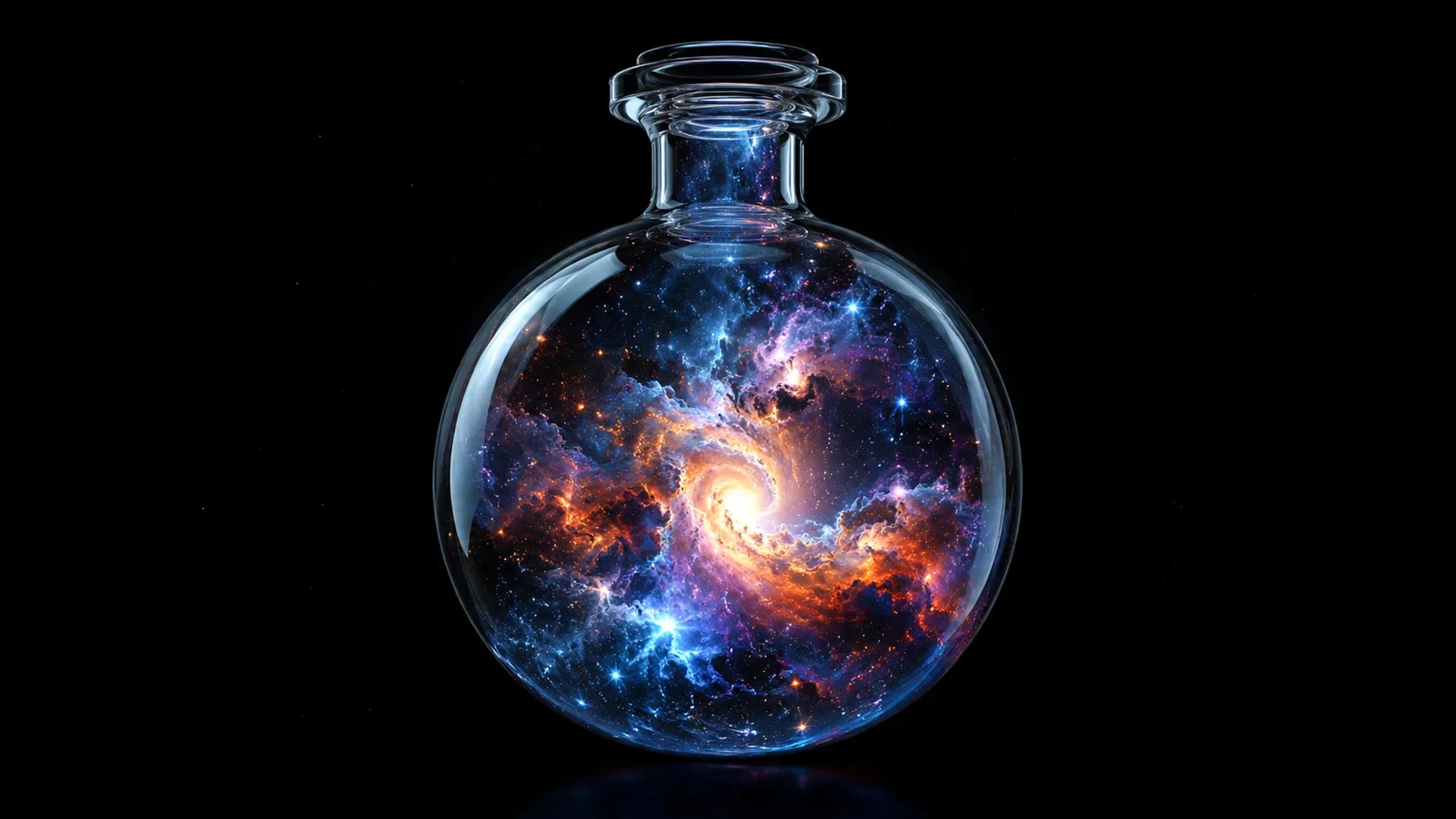
A Sydney PhD student has produced cosmic dust from scratch by recreating a small piece of the universe inside a laboratory bottle, offering new clues about how some of the chemical ingredients associated with life could have developed before Earth even formed. This groundbreaking experiment, conducted by Linda Losurdo at the University of Sydney, represents a significant leap in astrobiology and our understanding of the universe’s chemical factories. By meticulously simulating the extreme conditions of space, Losurdo has not only synthesized materials identical to those found floating between stars but has also opened a new avenue for investigating the deep cosmic origins of life’s fundamental building blocks.
Linda Losurdo, a PhD candidate specializing in materials and plasma physics within the School of Physics, meticulously engineered an environment mirroring the harsh yet chemically active regions near nascent stars and the violent remnants of supernovae. Her approach involved combining a specific cocktail of gases: nitrogen, carbon dioxide, and acetylene. These particular gases were chosen because they are known to be abundant in various interstellar environments, providing the essential carbon, hydrogen, oxygen, and nitrogen (CHON) atoms critical for forming complex organic molecules. The challenge lay not just in selecting the right ingredients but in subjecting them to the immense energy characteristic of cosmic phenomena.
To achieve this, Losurdo exposed the gas mixture to a potent electrical charge, generating a plasma – a superheated, ionized gas state akin to the fourth state of matter. This process effectively mimicked the intense energy inputs from stellar radiation, shock waves from supernova explosions, or energetic particle bombardment that drives chemical reactions in deep space. The outcome was remarkable: the creation of carbon-rich dust, strikingly similar in composition and structure to the primordial material found preserved within comets, asteroids, and meteorites that traverse our solar system. This dust is believed to be the very raw material from which planets, and potentially life, emerge.
The profound implications of these findings were recently published in The Astrophysical Journal of the American Astronomical Society, a prestigious journal in astronomical research, signaling the scientific community’s recognition of this innovative work.
Cosmic Dust: The Seeds of Life
The laboratory-produced dust is not merely a curiosity; it is a complex tapestry of carbon, hydrogen, oxygen, and nitrogen. These elements, collectively known as CHON molecules, are the very foundation of organic chemistry and are indispensable for all known life forms. They constitute the backbone of amino acids (the building blocks of proteins), nucleotides (the units of DNA and RNA), lipids (essential for cell membranes), and carbohydrates (sources of energy and structural components). The discovery of these complex CHON combinations within the synthesized dust suggests a plausible pathway for the abiotic (non-biological) formation of these crucial organic substances in the vastness of space.
"We no longer have to wait for an asteroid or comet to come to Earth to understand their histories," Ms. Losurdo explained, highlighting the transformative power of her laboratory work. "You can build analogue environments in the laboratory and reverse engineer their structure using the infrared fingerprints." This ability to recreate and analyze cosmic material on demand bypasses the inherent limitations and immense costs associated with space missions or the serendipitous arrival of extraterrestrial samples. It offers a controlled environment to explore the intricate chemical dance that occurs under conditions vastly different from Earth’s.
Losurdo further elaborated on the broader significance: "This can give us huge insight into how ‘carbonaceous cosmic dust’ can form in the plasma puffed out by giant, old stars or in cosmic nurseries where stars are being born and distribute these fascinating molecules that could be vital for life." Her words paint a vivid picture of the universe as a grand chemical laboratory, continually synthesizing complex molecules and dispersing them, potentially seeding new planetary systems with the ingredients for life. "It’s like we have recreated a little bit of the Universe in a bottle in our lab," she added, perfectly encapsulating the ambition and achievement of her research.
In the frigid, radiation-soaked vacuum of space, cosmic dust does not form in a gentle, linear fashion. It develops under extreme, chaotic conditions. Molecules are incessantly bombarded by high-energy ions and electrons, leading to a cascade of chemical reactions. These energetic collisions provide the activation energy necessary to break existing molecular bonds and forge new, increasingly complex chemical structures. This continuous process of destruction and creation is fundamental to the chemical evolution of the interstellar medium.
Astronomers traditionally identify different types of cosmic dust by meticulously studying the infrared light they emit or absorb. Each molecule, based on its unique atomic structure and bonding, vibrates at specific frequencies when exposed to infrared radiation, creating a distinctive spectral signature – akin to a molecular fingerprint. These infrared signals allow researchers to deduce the chemical composition and structure of materials light-years away. Crucially, Losurdo’s laboratory samples produced the exact same distinctive infrared signatures observed in deep space. This precise match is a powerful validation, strongly indicating that the experiment faithfully reproduces the complex physical and chemical processes believed to occur in real cosmic environments, from the envelopes of dying stars to the dense clouds where new stars are born.
Tracing the Origins of Life’s Building Blocks
The fundamental question of how life began on Earth remains one of science’s most enduring and captivating mysteries. Researchers are locked in a spirited debate, exploring various hypotheses: did the first organic molecules spontaneously form on the nascent Earth, perhaps in hydrothermal vents or primordial soups? Or were they delivered from space, hitchhiking on comets and meteorites that bombarded the early planet? Was it a combination of both, with extraterrestrial delivery kickstarting or significantly augmenting Earth’s own prebiotic chemistry? Losurdo’s work provides compelling new evidence supporting the extraterrestrial delivery hypothesis by demonstrating a clear pathway for the formation of complex organic molecules in space.
The early history of Earth, approximately 4.56 billion to 3.5 billion years ago, was a period of intense cosmic bombardment. Meteorites, micrometeorites, and interplanetary dust particles, largely originating from asteroids and comets, incessantly struck our planet. Scientists widely believe that these extraterrestrial objects served as crucial delivery vehicles, carrying enormous quantities of water, volatiles, and, significantly, organic material to Earth’s surface. These deliveries could have provided the initial chemical feedstock necessary for life to emerge.
However, the precise origin of this extraterrestrial organic material – where it initially formed and the specific chemical processes that created it – has long remained a significant uncertainty. Losurdo’s research directly addresses this knowledge gap.
"Covalently bonded carbon and hydrogen in comet and asteroid material are believed to have formed in the outer envelopes of stars, in high-energy events like supernovae, and in interstellar environments," Ms. Losurdo explained. This highlights the multi-faceted cosmic origins of these fundamental elements. Her research goes a step further, aiming to unravel the specific chemical pathways. "What we’re trying to understand are the specific chemical pathways and conditions that incorporate all of the CHON elements into the complex organic structures we see in cosmic dust and meteorites," she articulated, outlining the precise goal of her experimental work. By dissecting these pathways in a controlled laboratory setting, scientists can build a more robust and detailed model of astrochemical evolution.
Recreating Space Inside Glass Tubes: The Experimental Setup
The experimental setup designed by Losurdo, in collaboration with her supervisor, Professor David McKenzie, was a testament to ingenious simplicity aimed at replicating cosmic complexity. The initial critical step involved achieving a near-vacuum environment. Researchers employed a vacuum pump to evacuate air from specially designed glass tubes, meticulously creating conditions that closely approximated the extreme emptiness of interstellar space, where particle densities are incredibly low. This vacuum is crucial to prevent contamination and to ensure that the chemical reactions observed are solely between the introduced gases under simulated cosmic conditions.
Once the vacuum was established, the glass tubes were carefully filled with the precise mixture of nitrogen, carbon dioxide, and acetylene. This gas mixture, representing the elemental building blocks prevalent in stellar nurseries and outflows, was then subjected to a powerful electrical potential of approximately 10,000 volts for about an hour. This high voltage generated a specific form of plasma known as a glow discharge. In a glow discharge, the intense electrical energy ionizes the gas, creating a plasma where electrons and ions rapidly accelerate and collide with neutral gas molecules.
This intense energy input acted as the cosmic catalyst, splitting the original, relatively simple gas molecules apart. The constituent atoms and molecular fragments, now highly reactive, then rapidly recombined into larger, more intricate chemical structures. This process mirrors the dynamic chemical evolution occurring in interstellar clouds, where energetic events drive the synthesis of increasingly complex organic compounds.
Over time, as these newly formed, more complex organic molecules grew in size and stability, they settled out of the plasma phase. They deposited onto silicon chips strategically placed inside the glass tubes, gradually forming a thin, dark coating of dust. In some samples, the collected particles were visually striking, resembling sparkling fragments of cosmic material, offering a tangible connection to the distant universe.
Professor McKenzie, a coauthor of the study, emphasized the unparalleled advantage of producing this dust on Earth. "By making cosmic dust in the lab, we can explore the intensity of ion impacts and temperatures involved when dust forms in space," he stated. This control over experimental parameters is something astronomers can only infer from remote observations. "That’s important if you want to understand the environments inside cosmic dust clouds, where life-relevant chemistry is thought to be happening." The ability to manipulate variables like plasma energy, gas composition, and reaction time in the lab provides unprecedented insights into the conditions that favor the formation of prebiotic molecules.
McKenzie further elaborated on the practical utility of this approach: "This also helps us interpret what a meteorite or asteroid fragment has been through over its lifetime. Its chemical signature holds a record of its journey, and experiments like this help us learn how to read that record." Every meteorite that falls to Earth is a cosmic time capsule, preserving a chemical history of its formation and journey. By creating analogues in the lab, scientists can develop a " Rosetta Stone" to decode these ancient messages, providing context to the conditions and events that shaped our solar system.
Building a Fingerprint Library for Astronomers
The implications of Losurdo’s research extend beyond merely clarifying the formation mechanisms of life-related molecules. A key future objective for the team is to assemble a comprehensive and detailed database of infrared fingerprints produced by various types of laboratory-made cosmic dust. This library will be an invaluable resource for the astronomical community.
Astronomers could then compare these precise spectral signatures with observational data gathered from telescopes, particularly those studying star-forming regions, the vast expanses of the interstellar medium, and the remnants of dead stars. A matching signal between a laboratory sample and a distant celestial object could definitively reveal where specific forms of dust are being produced. More importantly, it would enable researchers to reconstruct the intricate physical and chemical processes occurring in those remote cosmic environments with unprecedented accuracy. For example, detecting a specific fingerprint might indicate the presence of strong UV radiation, high-energy particle fluxes, or particular temperature regimes, offering crucial insights into the dynamic conditions shaping the cosmos.
Such a database would also significantly improve scientists’ ability to interpret the complex history preserved within meteorites and asteroid fragments. The chemical composition and structure of these extraterrestrial visitors are a chronicle of their journeys through space. They bear the imprints of the temperatures they experienced, the radiation they were exposed to, and the particle impacts they endured over millions or even billions of years. By cross-referencing these real-world samples with the laboratory-generated "fingerprints" of known formation conditions, researchers can piece together a more complete and accurate narrative of their cosmic past.
By successfully reproducing complex cosmic chemistry in the controlled environment of a laboratory, Losurdo’s study provides researchers with a powerful new tool to investigate fundamental processes occurring deep within stellar environments and throughout the interstellar medium. This innovative approach promises to illuminate some of the most ancient chemical steps that, over billions of years, eventually contributed to the emergence of life on Earth. It offers a tangible bridge between the vast, incomprehensible scales of the cosmos and the microscopic origins of life, allowing us to hold a piece of the universe’s past in our hands.
The significance of Losurdo’s research was recognized late last year when she received the prestigious award for best presentation for this work at the international Annual Meeting of the Meteoritical Society, a gathering of leading experts in the study of meteorites, asteroids, and the early solar system. This accolade underscores the groundbreaking nature and potential impact of her contributions.
The authors reported no competing interests in their publication. They gratefully acknowledged the crucial support from the University of Sydney node of Microscopy Australia, which provided essential analytical capabilities. The pioneering work also received vital funding from the Australian Research Council, demonstrating national investment in fundamental research that pushes the boundaries of human knowledge about our place in the universe.
