
 By admin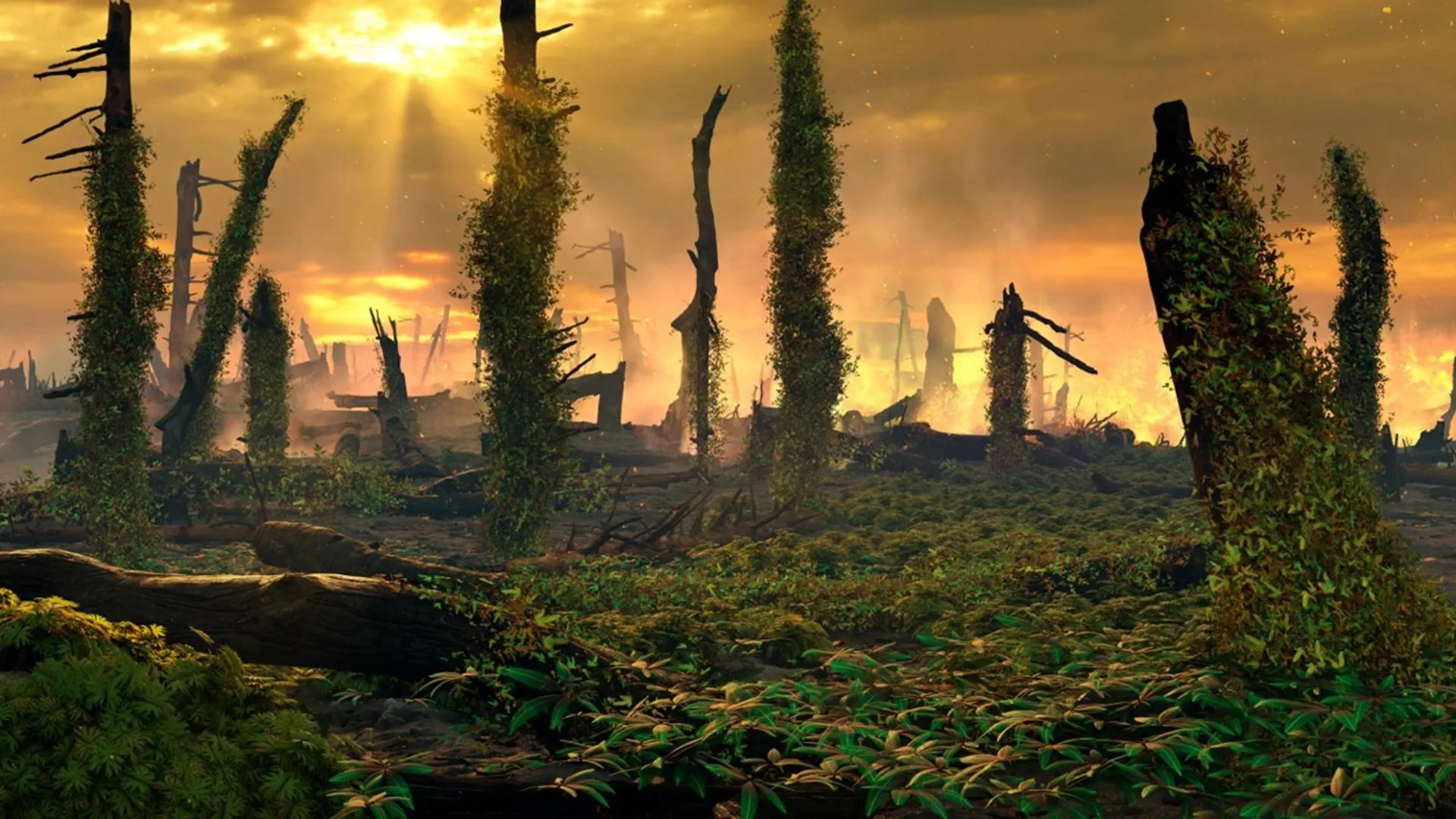
As the planet heated, the lush, diverse forests dominated by ancient trees—such as conifers, cycads, and ginkgos—collapsed across vast continental swathes. The intense heat, coupled with altered precipitation patterns, drought, and potentially increased pest outbreaks, proved too much for these established ecosystems. In the wake of this ecological devastation, an opportunistic group of plants, ferns, quickly moved into the damaged landscapes. These resilient "disaster species" spread across large parts of what is now Northwest Europe, creating broad, verdant yet highly flammable savannah-like environments. New research from an international team led by geologists at Utrecht University suggests that these fern-covered regions were not only a symptom of the crisis but also a critical component of a destructive feedback loop: they were highly vulnerable to fire, and the ferns themselves may have supplied much of the fuel that kept the flames spreading across the Triassic world. The groundbreaking findings, which shed new light on the interplay between volcanism, climate change, and ecosystem response during a pivotal period in Earth’s history, were published in the esteemed journal Nature Geoscience on July 21, 2026.
Reconstructing Ancient Wildfires: Overcoming Challenges with Novel Techniques
To meticulously investigate wildfire activity from this distant and tumultuous period, the researchers undertook an ambitious study involving exceptionally well-preserved sediment samples. Their analysis focused on four critical drill cores, which provide continuous geological archives stretching back millions of years. One particularly significant sample was a recently collected 640-meter-long core from the United Kingdom, offering an unparalleled record of environmental change through the Triassic-Jurassic boundary. The other cores likely originated from other key European basins, providing a regional perspective on the unfolding crisis.
The team initially reconstructed ancient fire activity using established paleobotanical and geochemical proxies. This involved measuring the abundance of fossil charcoal, a direct indicator of biomass burning, and identifying organic compounds produced in wildfire smoke, known as polycyclic aromatic hydrocarbons (PAHs). These microscopic charcoal fragments, preserved in sedimentary layers, act as geological witnesses to past fires, while PAHs, complex organic molecules, serve as molecular fossils of combustion events. When these traditional fire indicators were combined with records of fossil pollen and spores, which provide insights into past vegetation, a stark picture emerged: a sharp and dramatic increase in wildfire activity coincided precisely with the main phase of the extinction. This fiery interval also matched a dramatic and widespread expansion of ferns across the landscape, suggesting a profound ecological shift driven by fire and further fueling it.
However, the researchers recognized that both traditional indicators, while valuable, have inherent limitations. Large pieces of charcoal can fragment into numerous smaller particles during transport and deposition, potentially overestimating the actual amount of biomass burned and thus exaggerating the perceived fire intensity. Conversely, smaller charcoal particles can be difficult to distinguish from other dark organic matter. PAHs, while excellent indicators of combustion, can travel considerable distances from their source fires, making precise spatial attribution challenging. Furthermore, the delicate molecular structure of some PAHs means they may not survive intact in the geological record over hundreds of millions of years, leading to potential underestimations. Recognizing these challenges and the need for a more robust and independent verification method, the researchers ingeniously developed another technique for tracking fires in deep time.
"The true novelty of this study came from the analysis of color changes of organic microfossils," explains Dr. Bas van de Schootbrugge from Utrecht University, a senior author on the paper and a leading expert in paleobotany and palynology. "We employed a simple, yet remarkably effective and very low-cost technique that quantifies the ‘darkness’ of fossil pollen and spores, which we termed the Palynomorph Darkness Index (PDI)."
A Strange Pattern in Fossil Color: Unmasking the "Dark Zone" of Fire
The development of the PDI was prompted by an unusual observation that defied conventional geological understanding. In most sedimentary sequences, organic microfossils—like pollen and spores—become progressively darker after they are buried. This phenomenon, known as thermal maturity, occurs because rising pressure and temperature deep within the Earth’s crust gradually alter and ‘cook’ the organic material. Sediments that sink deeper underground are exposed to more heat over longer periods, causing the organic matter within them to become increasingly carbonized and, consequently, darker. In standard geological contexts, greater burial depth almost invariably corresponds to darker, more thermally mature fossils.
"But here we found a very different pattern, one that initially puzzled us greatly," Van de Schootbrugge recounts. Contrary to expectations, the oldest and deepest pollen and spores in the cores, representing the period before the extinction, remained surprisingly lightly colored, indicating relatively low thermal maturity from burial alone. Yet, fossils collected from the critical extinction interval itself became progressively and dramatically darker, eventually reaching an extremely dark brown hue. Even more strikingly, once the tumultuous extinction period ended and conditions began to stabilize, the fossils abruptly returned to a pale yellow color, indicating a return to less altered conditions.
"We were quite puzzled by this phenomenon, especially because it occurs in all four cores at exactly the same time," Van de Schootbrugge explains, highlighting the widespread nature of the observation. "This global synchronicity was crucial because it strongly indicated that the darkening could not have been related to burial of the sediments, as the four basins experienced very different geological histories and thus distinct thermal gradients over time." The consistent timing pointed unequivocally to a pervasive, short-lived, and superficial environmental factor that affected the organic matter before or at the time of its burial, rather than deep geological processes.
The Ancient Fire "Dark Zone": A Direct Proxy for Pyrogenic Heat
The Palynomorph Darkness Index (PDI) provides a quantitative measure of this intriguing color change. The method involves connecting a high-resolution digital camera to a light microscope to capture images of individual pollen and spore grains. The color information, recorded in the standard RGB (Red, Green, Blue) spectrum, is then converted into an average grayscale value. This objective, numerical approach allows scientists to precisely compare samples from different layers within the same core, as well as to standardize and compare samples taken from cores in entirely separate geographical locations, thereby eliminating subjective interpretations of color.
To validate their hypothesis, the researchers completed an astonishing 15,000 individual measurements of pollen and spores from plants that lived before, during, and after the extinction event. They also conducted a comparative analysis, examining both tree pollen (representing the pre-extinction forests) and fern spores (representing the post-extinction flora) to determine whether the observed darkening might have been caused by intrinsic biological differences between plant groups or variations in their chemical composition. "Crucially, all plant groups analyzed showed the exact same darkening effect during the extinction interval," Van de Schootbrugge confirms. "This homogeneity is a strong indication that it was the result of an outside force, a pervasive environmental stressor that affected all organic matter indiscriminately."
When the team meticulously compared the fossil color changes, as quantified by the PDI, with the independent records of fossil charcoal and PAH levels, the pattern became unmistakably clear and strikingly consistent. The unusual and dramatic "Dark Zone" identified by the PDI appeared to be a direct and unequivocal record of an extended period of severe wildfire activity that precisely overlapped with the "fern spike" – the dramatic proliferation of ferns across the landscape. "The darkening overlaps exactly with the fern spike, the main extinction interval, and elevated abundance of charcoal and PAHs," Van de Schootbrugge states, solidifying the PDI as a reliable, independent, and powerful new proxy for ancient wildfire intensity. This new method offers a robust tool for paleoclimatologists and paleontologists, especially in scenarios where traditional fire proxies might be ambiguous or poorly preserved.
Ferns Spread Across a Warming World: True "Disaster Species"
The rapid and widespread rise of ferns during the main extinction interval was not merely a passive response to environmental change; it was likely driven by a complex interplay of several interconnected forces. These included extensive deforestation, which removed the dominant tree canopy; widespread soil erosion, which created open, disturbed ground; intense greenhouse warming, which favored resilient, fast-growing species; and, crucially, repeated wildfires, which continuously cleared the landscape for fern colonization.
As Van de Schootbrugge emphasizes, "Ferns are truly remarkable plants that have withstood many crises throughout Earth history, and some species can adapt to some of the most extreme environments. They can be considered to be true disaster species." Their ecological strategy makes them ideal pioneers in disturbed habitats. Certain fern species possess an extraordinary ability to spread quickly across damaged ground, especially where other vegetation has been destroyed by fire or other disturbances. Fire, in particular, can accelerate this process. Although the visible fronds of the ferns burn readily, many species possess resilient root systems (rhizomes) that lie protected beneath the soil surface. From these subterranean structures, the plants can rapidly regrow and resprout, often much faster than many competing seed plants. This allows them to quickly recolonize and take over even more territory, effectively outcompeting other flora in the aftermath of a conflagration.
This remarkable resilience and rapid regrowth capability may help explain why the fern spike lasted for such an extended and ecologically significant period. Researchers estimate that this interval of fern dominance continued for at least 40,000 years, and potentially for as long as 300,000 years. This prolonged ecological disruption indicates that the Earth’s ecosystems struggled to recover their pre-extinction complexity and stability for a substantial geological timeframe, trapped in a cycle of disturbance and opportunistic colonization.
Ferns Became Fuel for Repeated Fires: A Hellish Feedback Loop
The research unveils a destructive feedback cycle that characterized this "hellish world." As Van de Schootbrugge explains, "When the ferns dry out, the thick, dense mats they form act as the ideal fuel to trigger massive, widespread wildfires." The sheer biomass accumulated by fast-spreading pioneer and weeding ferns created extensive "fern savannahs" – vast, uniform landscapes of highly flammable vegetation. The architecture of some fern species may have even acted as "fire ladders," facilitating the vertical spread of flames and allowing fires to move more easily and intensely through the landscape. Moreover, their rapid growth enabled them to crowd out and smother any struggling remnants of other, less fire-adapted vegetation, further homogenizing the landscape into a fire-prone monoculture.
"Ferns not only responded to the fires by colonizing the disturbed ground, but they then delivered the abundant fuel that fanned the flames, triggering repeated massive wildfires," Van de Schootbrugge graphically describes. This created a devastating positive feedback loop: global climate warming and the initial loss of forests opened the landscape to opportunistic ferns. These ferns then rapidly proliferated, accumulating vast quantities of dry, combustible biomass. This abundant fuel, in turn, fed new and more intense fires. Following each conflagration, the resilient ferns quickly regrew from their protected rhizomes and spread even further, perpetuating the cycle of fire and fern dominance. This continuous cycle prevented the recovery of more complex forest ecosystems, prolonged the environmental crisis, and reshaped the global landscape for hundreds of millennia.
The implications of this ancient feedback loop resonate deeply with modern environmental challenges. As Van de Schootbrugge concludes, "The lesson we can learn from this is that the combination of rapid climate change, widespread deforestation, and the unchecked spread of opportunistic or invasive species can provide all the ingredients for a perfect storm." The End-Triassic mass extinction serves as a potent geological warning, demonstrating how interconnected environmental stressors can amplify each other, leading to profound and long-lasting ecological transformations. Understanding these ancient feedback mechanisms is crucial for predicting and mitigating the cascading effects of anthropogenic climate change and ecosystem degradation in the present day.
