
 By admin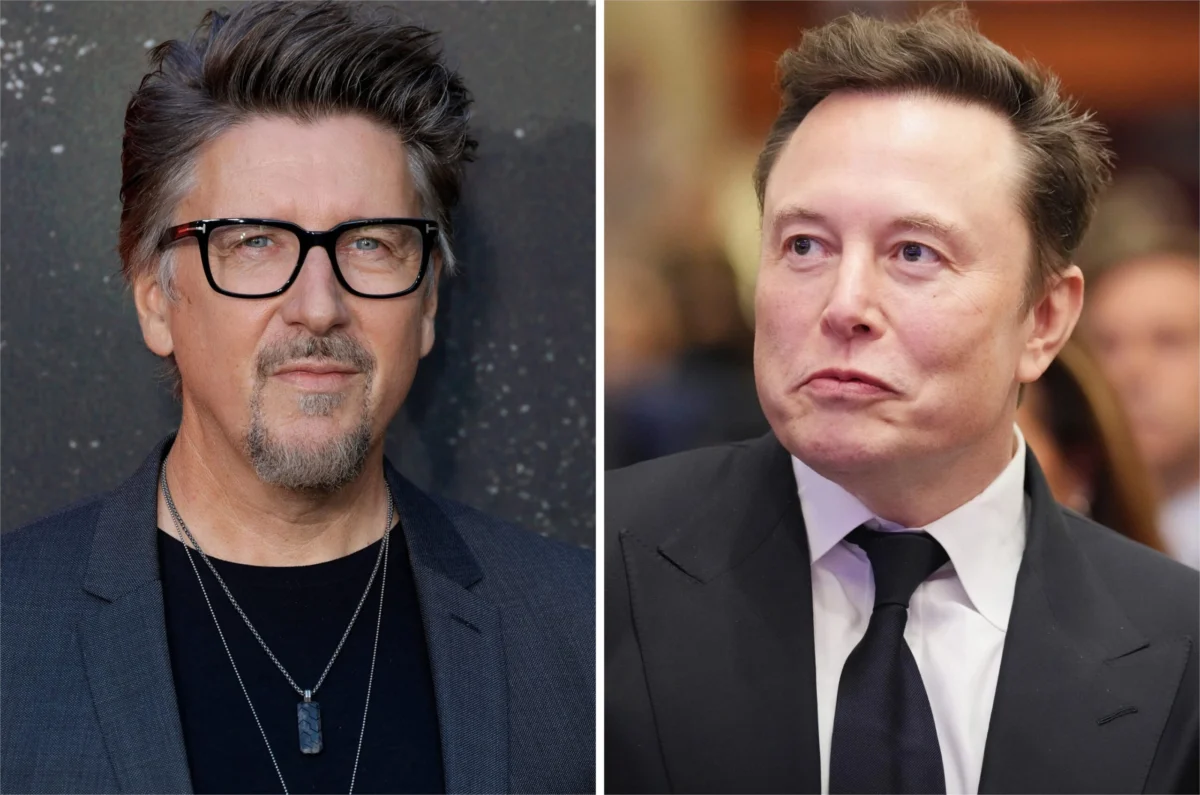
In a move that has sent shockwaves through Hollywood and ignited a firestorm of debate, tech mogul Elon Musk has declared his ambitious plan to leverage artificial intelligence to create a historically accurate and artistically faithful adaptation of Homer’s epic poem, "The Odyssey," before the year’s end. This bold proclamation, made via his AI tool Grok, directly challenges the artistic integrity of contemporary filmmaking and has already drawn sharp criticism from prominent figures in the cinematic world. Musk’s crusade, which has been characterized by a vocal opposition to perceived "woke" casting choices in recent high-profile films, has now escalated to a direct confrontation with the very notion of artistic interpretation in filmmaking.

Musk’s AI, Grok, has been tasked with the monumental undertaking of producing a full-length feature film that purports to be a definitive, historically accurate rendition of "The Odyssey," adhering strictly to Homer’s original intent. This ambitious endeavor goes beyond mere digital reconstruction; it signifies a fundamental challenge to the traditional filmmaking process, suggesting that AI can replicate and even surpass human creativity in historical and artistic contexts. To underscore his commitment, Musk shared a three-minute clip of an AI-generated scene from "The Odyssey," reportedly created by a user on Grok, showcasing the potential capabilities of his AI in visual storytelling. This clip, while a demonstration of AI’s burgeoning visual generation prowess, has been met with skepticism and concern by seasoned filmmakers.
Among the most vocal critics is Scott Derrickson, the acclaimed director behind Marvel’s "Doctor Strange" and the horror hit "The Black Phone." Derrickson did not mince words in his public denouncement of Musk’s venture. Addressing Musk directly on the social media platform X, formerly Twitter, Derrickson stated, "Clearly @elonmusk doesn’t know shit about cinema & he stopped reading in his 20s. His opinions on art are worthless." This scathing assessment directly questions Musk’s qualifications and understanding of the complexities involved in cinematic art, particularly in adapting ancient epics. Derrickson’s perspective is shared by many within the film industry who view the creation of art, especially of the caliber of Homer’s "Odyssey," as a deeply human endeavor requiring nuanced understanding, emotional depth, and cultural context that AI, in its current form, may struggle to replicate.

Musk’s animosity towards director Christopher Nolan’s interpretation of "The Odyssey" predates the film’s release, stemming from his strong objections to what he termed "woke" casting decisions. In March, Musk publicly accused Nolan of being an "anti-White racist" for casting Lupita Nyong’o in the pivotal role of Helen of Troy. He posited that Nolan’s decision was driven by a desire for awards, thereby compromising artistic integrity. Musk further asserted that Nolan had "lost his integrity" and that the casting was an "insult to Homer." His critique extended to Elliott Page, who portrays Sinon in Nolan’s "The Odyssey," with Musk reposting comments that disparaged the transgender actor’s masculinity. This stance has been widely interpreted as a rejection of contemporary efforts towards diversity and inclusion in Hollywood, framing them as politically motivated rather than artistically justified.
This is not the first time Musk has used his platform to publicly criticize films that he perceives as deviating from traditional narratives or promoting progressive themes. He previously expressed disdain for Greta Gerwig’s "Barbie," citing its feminist undertones, and took issue with the casting of Rachel Zegler in Disney’s live-action reboot of "Snow White," echoing similar concerns about perceived ideological agendas influencing creative choices. Despite the vocal anti-"woke" backlash, Nolan’s "The Odyssey," starring Matt Damon in a prominent role, has achieved remarkable commercial success. The film premiered to a global box office of $264 million and continues to draw sell-out crowds months after its release, suggesting that audience reception is not uniformly aligned with Musk’s critical stance.

The debate ignited by Musk’s AI "Odyssey" project transcends a simple disagreement over casting. It touches upon fundamental questions about the nature of creativity, the role of technology in art, and the definition of historical and artistic accuracy. For filmmakers like Derrickson, cinema is an art form deeply rooted in human experience, emotion, and interpretation. They argue that AI, while capable of generating impressive visuals and processing vast amounts of data, lacks the lived experience, cultural understanding, and emotional intelligence necessary to imbue a work of art with genuine soul and profound meaning. The nuance of character development, the subtext of dialogue, and the evocative power of visual storytelling often stem from an artist’s personal journey and their connection to the human condition – elements that are inherently difficult, if not impossible, to program into an algorithm.
Furthermore, the concept of "historical accuracy" in adapting an epic poem like "The Odyssey" is itself a complex issue. Homer’s work is a foundational text of Western literature, steeped in myth, allegory, and cultural beliefs of ancient Greece. A strictly literal, historically accurate rendition, stripped of interpretive layers, might miss the very essence of what makes the poem enduring and resonant. Filmmakers often grapple with how to translate ancient narratives for modern audiences, making choices that balance fidelity to the source material with contemporary storytelling sensibilities and thematic relevance. Musk’s insistence on a singular, "historically accurate" interpretation through AI suggests a belief in objective truth in art, a notion that is often contested in artistic discourse.

The economic implications of Musk’s AI-driven filmmaking also warrant consideration. If AI tools can indeed generate full-length, high-quality films at a fraction of the cost and time of traditional production, it could revolutionize the industry. However, this raises concerns about the future of human employment for writers, actors, directors, and countless other creative professionals. The potential for AI to democratize filmmaking by lowering barriers to entry is undeniable, but it also presents a significant challenge to the established economic structures of Hollywood. The current model relies heavily on human talent, expertise, and collaborative effort. A wholesale shift to AI-generated content could lead to a significant disruption, impacting livelihoods and the very culture of filmmaking as we know it.
The controversy surrounding Musk’s "Odyssey" project also highlights the growing influence of tech billionaires on cultural institutions. With their vast financial resources and technological prowess, individuals like Musk are increasingly venturing into artistic domains, wielding significant influence over cultural narratives. While innovation is often welcomed, there is a palpable concern that such ventures, driven by personal ideologies or technological ambition, could overshadow or even dictate artistic expression, potentially leading to a homogenization of culture or the promotion of specific, narrowly defined viewpoints. The very idea of an AI tool being programmed to adhere to a specific historical and artistic interpretation, as dictated by its creator, raises questions about artistic autonomy and the potential for algorithmic bias.

The artistic community’s response, exemplified by Derrickson’s strong rebuke, underscores a deep-seated belief in the irreplaceable value of human creativity. Many artists argue that the imperfections, the subjective interpretations, and the emotional vulnerabilities that human creators bring to their work are precisely what make art compelling and relatable. An AI, however sophisticated, operates on logic and data. It can mimic styles, generate aesthetics, and assemble narratives, but can it truly understand or convey the profound human emotions that lie at the heart of stories like "The Odyssey" – themes of longing, homecoming, loyalty, and the very nature of humanity?
As Musk’s AI "Odyssey" project moves forward, the industry will be watching closely. The outcome of this endeavor could have far-reaching consequences, shaping the future of filmmaking and our understanding of the boundaries between human and artificial creativity. The debate is far from settled, and the tension between technological advancement and artistic integrity is set to intensify, promising further discourse and likely further confrontations within the ever-evolving landscape of media and entertainment. The question remains: can an algorithm truly capture the soul of an ancient epic, or will it merely produce a technically perfect, yet ultimately hollow, imitation? The answer to this question will undoubtedly redefine our relationship with art, technology, and the very essence of storytelling.
