
 By admin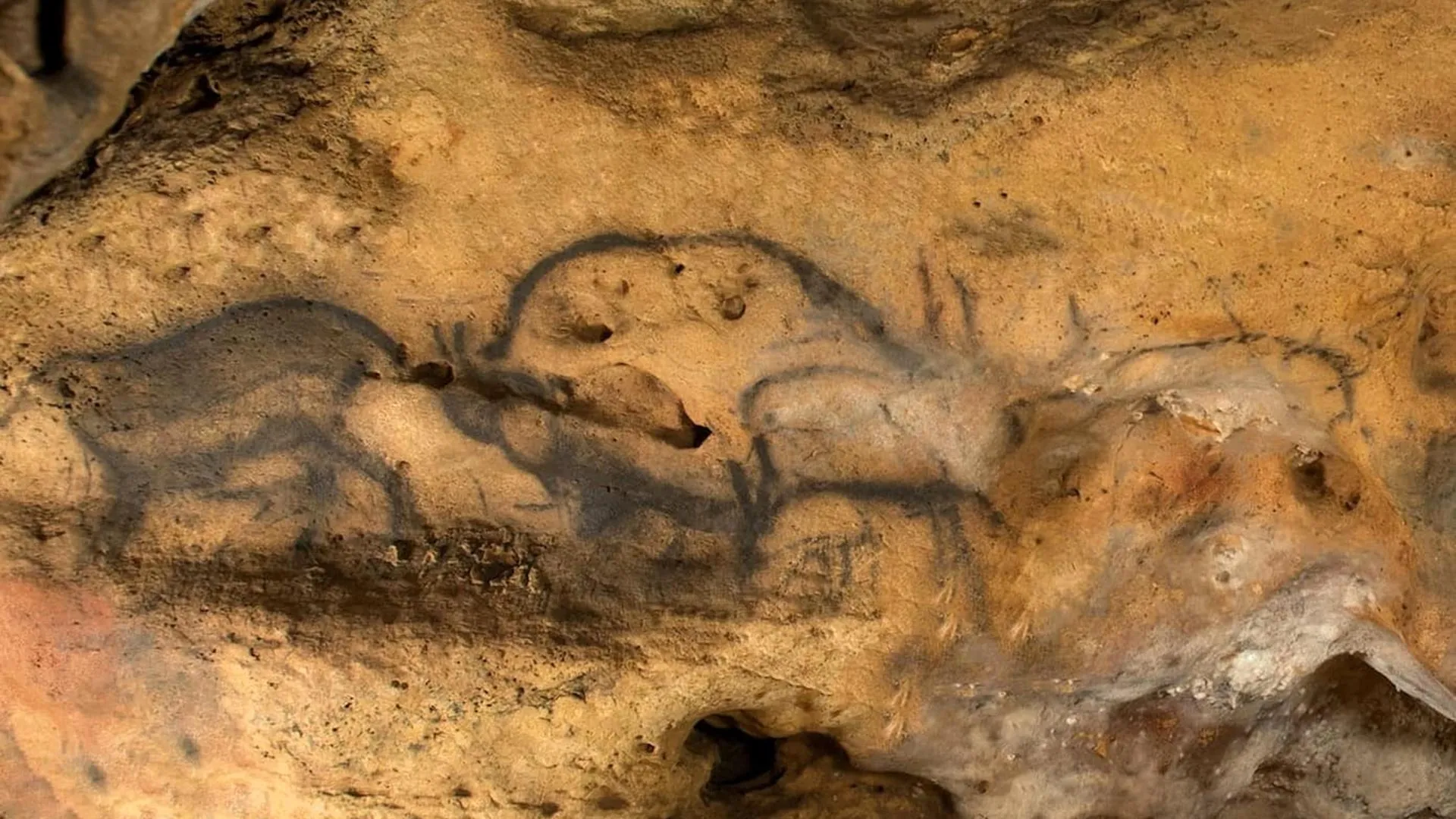
The Dordogne region, often dubbed the "cradle of prehistory," is renowned globally for housing some of Europe’s most spectacular prehistoric art, with sites like Lascaux holding iconic status. Despite this wealth of artistic heritage, determining the exact age of many of these ancient images has remained an enduring challenge for archaeologists and art historians. For decades, researchers have grappled with the inherent difficulties of dating rock art, particularly paintings rendered in mineral pigments.
The Enduring Challenge of Dating Ice Age Cave Paintings
The primary scientific method for dating organic materials, radiocarbon dating (or carbon-14 dating), works by measuring the residual amount of carbon-14, a radioactive isotope of carbon that decays at a known rate after an organism’s death. This technique is highly effective for charcoal, which is derived from burned organic material such as wood, and can thus provide direct dates for paintings made with charcoal. However, the vast majority of black pigments used in prehistoric cave art were long believed to be composed entirely of inorganic mineral oxides, specifically iron and manganese oxides. These naturally occurring minerals can produce deep, durable dark pigments but crucially contain no organic carbon, rendering them seemingly impervious to conventional radiocarbon analysis.
This prevailing belief meant that many black paintings in the region were generally considered impossible to date directly. Archaeologists were forced to rely on indirect dating methods, which, while valuable, offer less precision and certainty. These methods included stylistic analysis, comparing the art to securely dated artifacts or art from other sites; archaeological context, dating sediment layers or associated artifacts found near the paintings; or stratigraphic analysis, examining the superimposition of images. While these approaches provided valuable insights, they often left significant chronological gaps and uncertainties, making it difficult to establish a precise timeline for artistic development or the sequence of human occupation within a single cave. The artwork’s exact place in the Upper Paleolithic timeline, a period spanning from roughly 50,000 to 10,000 years ago when anatomically modern humans created much of Europe’s most famous cave art, often remained a matter of scholarly debate and estimation. The crucial missing piece was direct evidence embedded within the pigment itself.
However, the assumption that these pigments contained no carbon had never been conclusively demonstrated through rigorous scientific investigation. This gap in understanding presented an opportunity for new research, driven by advancements in analytical techniques that could probe the chemical composition of these ancient artworks with unprecedented sensitivity and without causing significant damage.
Unveiling Hidden Charcoal: A Methodological Breakthrough
Driven by the persistent challenge of dating these invaluable artworks, the research team embarked on an investigation into the chemical composition of two prominent black figures within Font-de-Gaume: a majestic bison and a complex, commonly described "mask-like" figure. The objective was to ascertain if, contrary to long-held beliefs, any organic carbon suitable for radiocarbon dating might be present within the black pigments.
To achieve this, the team employed a sophisticated arsenal of non-invasive analytical techniques: Raman microspectrometry and hyperspectral imaging. These methods are at the forefront of cultural heritage science, enabling detailed material identification without noticeably damaging the precious artwork.
Raman microspectrometry is a spectroscopic technique used to observe vibrational, rotational, and other low-frequency modes in a system. It relies on the inelastic scattering of monochromatic light, typically from a laser, by a sample. When light interacts with the molecules in a material, some of it is scattered. A small fraction of this scattered light undergoes a shift in energy, known as the Raman effect. This shift is unique to the molecular structure and chemical bonds of the substance, creating a distinctive "chemical fingerprint" or spectrum. By analyzing these spectral fingerprints, scientists can precisely identify the chemical composition of pigments, binders, and other substances present in the artwork. Its microscopic focus allowed researchers to analyze tiny points on the paintings, ensuring precision and minimizing any potential impact. This technique is invaluable in various fields, from materials science to pharmaceuticals, but has found a critical role in art conservation for its ability to identify pigments, detect alterations, and understand degradation processes without needing to remove samples.
Hyperspectral imaging, on the other hand, is a technique that records and processes information from across the electromagnetic spectrum. Unlike a conventional camera that captures light in three broad bands (red, green, blue), a hyperspectral imager collects light from hundreds of narrow, contiguous spectral bands. For each pixel in an image, it captures a complete spectral signature, essentially creating a "data cube" where each point has a full spectrum of reflected light. These subtle differences in color and reflected light, invisible to the human eye, can reveal the presence of specific compounds, their distribution, and even underlying layers of material. In cultural heritage research, hyperspectral imaging is widely employed to uncover faded texts, identify original color schemes beneath later repaints, detect forgeries, and, in this case, pinpoint specific chemical components within ancient pigments. Its applications extend far beyond art, encompassing biomedical science (e.g., tumor detection), agriculture (e.g., crop health monitoring), environmental monitoring (e.g., pollution detection), and astrophysics (e.g., planetary surface mapping). The non-destructive nature of both Raman and hyperspectral imaging was paramount, allowing for thorough analysis of these irreplaceable cultural treasures without physical alteration.
The meticulous application of both these methods yielded a pivotal discovery: traces of charcoal were indeed present within the black pigment of both the bison and the mask figures. This finding directly contradicted the long-standing assumption that these black pigments were purely inorganic. Furthermore, the charcoal was not haphazardly distributed but consistently woven throughout the black lines of the figures. This consistent pattern was critically important, as it strongly indicated that the carbon was an intrinsic component of the original pigment mixture prepared by the prehistoric artists, rather than later contamination from natural sources, modern graffiti, dust, or tourist activity within the cave. This crucial detail solidified the confidence that any subsequent radiocarbon dates would genuinely reflect the age of the artistic creation itself.
Minute Samples, Monumental Chronologies
With the undeniable confirmation of charcoal within the pigment, the research team faced the next formidable hurdle: obtaining samples for carbon-14 dating. Given the immense archaeological and cultural value of the Font-de-Gaume paintings, obtaining authorization to remove even microscopic samples was an exceptional privilege, granted only after rigorous peer review and ethical considerations. The process underscored the delicate balance between scientific inquiry and the imperative of preservation.
Analyzing such limited material is a formidable technical challenge. Modern radiocarbon dating often relies on Accelerator Mass Spectrometry (AMS), a highly sensitive technique capable of dating samples as small as a few milligrams of carbon. Even with AMS, scientists must collect just enough carbon atoms to obtain a statistically reliable measurement while ensuring that the impact on the ancient image is virtually imperceptible. This requires painstaking precision, specialized micro-sampling tools, and an almost surgical approach to extraction.
The results of the radiocarbon dating provided astonishing clarity, rewriting parts of the chronological understanding of Font-de-Gaume. The bison, a magnificent example of Upper Paleolithic art, was precisely dated to between 13,461 and 13,162 calBP. "CalBP" stands for Calibrated Before Present, where "Present" is conventionally defined as the year 1950. Radiocarbon measurements must be calibrated because the concentration of atmospheric carbon-14 has not been constant over time. Variations can be influenced by natural phenomena such as fluctuations in solar activity, changes in Earth’s magnetic field, and oceanic carbon reservoirs. Calibration curves, derived from tree rings, ice cores, and other archives, are used to convert raw radiocarbon ages into calendar years, providing a more accurate chronological placement. This new date places the bison slightly later than some previous estimates based purely on stylistic comparisons, refining our understanding of the Magdalenian period, a highly sophisticated cultural phase within the Upper Paleolithic known for its prolific and refined artistic output. This date firmly establishes the bison as a product of a period when human artistic expression reached remarkable heights in Western Europe.
The Enigmatic Mask: A Tapestry of Time
While the bison’s date provided crucial clarity, the "mask-like" figure yielded an even more complex and intriguing revelation. Samples taken from distinct sections of this single image produced not one, but three widely separated date ranges, suggesting a multi-layered history of creation:
- One section was dated to between 8,993 and 8,590 calBP. This date places it firmly in the early Mesolithic period, thousands of years after the traditional Upper Paleolithic period of most major cave art.
- Another section was dated to between 15,981 and 15,121 calBP. This falls squarely within the Magdalenian, a period concurrent with much of the cave’s other art, including the bison.
- A third section was placed between 15,297 and 14,246 calBP, also within the Magdalenian but slightly distinct from the second Magdalenian date.
These disparate results are revolutionary. They profoundly challenge the long-held assumption that a single prehistoric image was typically the work of one artist or a group of artists during a single visit to the cave. Instead, the mask figure emerges as a palimpsest, a visual record preserving multiple episodes of artistic activity separated by not just decades or centuries, but by thousands of years.
This possibility offers a far more dynamic and layered picture of prehistoric cave art and the relationship between ancient communities and their decorated underground spaces. It suggests that Font-de-Gaume, and potentially many other decorated caves, were not merely completed and abandoned after a single burst of creative activity. Instead, they may have remained meaningful and potent places for successive generations and different cultures. Later communities, perhaps thousands of years removed from the original artists, may have revisited these sites, added new elements, modified existing images, or reinterpreted their meanings, effectively creating a continuous dialogue with the past through art. This concept of "re-visitation" transforms our understanding of these caves from static galleries to living, evolving canvases that accumulated meaning and artistic contributions across vast stretches of human history. It opens new avenues for exploring the cultural continuity, spiritual significance, and social functions these deep, dark spaces held for different groups of people over immense timescales.
A New Tool for a Deeper Understanding of Prehistoric Art
This groundbreaking research was led by a scientist from the Laboratoire de développement instrumental et de méthodologies innovantes pour les biens culturels (Chimie ParisTech-PSL/CNRS/Ministère de la Culture), underscoring the interdisciplinary nature of modern archaeological science. The study’s findings, published in the prestigious journal PNAS (Proceedings of the National Academy of Sciences of the United States of America), signify a major methodological breakthrough.
The collaborative effort brought together a diverse consortium of specialists from several leading French scientific and cultural institutions. Contributors included experts from the Laboratoire de mesure du carbone 14 (CEA/CNRS/IRD/ASNR/Ministère de la Culture), a national platform affiliated with the Laboratoire des sciences du climat et de l’environnement (CEA/CNRS/Université de Versailles Saint-Quentin-en-Yvelines), responsible for the meticulous radiocarbon dating. Researchers from the Histoire naturelle des Humanités préhistoriques laboratory (CNRS/MNHN/Université de Perpignan Via Domitia), which contributes expertise in prehistoric anthropology and human evolution, also participated. Further involvement came from the Centre des monuments nationaux, which manages and preserves many of France’s historic sites, and the Centre de recherche et de restauration des musées de France, specializing in the conservation and scientific analysis of cultural heritage. This multidisciplinary collaboration, spanning chemistry, physics, archaeology, and conservation science, was essential to the success of such a complex and delicate investigation.
By ingeniously combining advanced chemical imaging techniques with highly sensitive radiocarbon measurements of minute samples, the team has not only dated specific artworks but has also developed a robust methodology. This method could now be systematically applied to other prehistoric figures and sites that were previously considered undatable due to the presumed inorganic nature of their pigments. This unlocks a vast potential for new discoveries across Europe and potentially other regions of the world with ancient rock art.
The implications for future research are immense. More precise and direct dates for prehistoric art could revolutionize several areas of inquiry:
- Refining Chronologies: Researchers can now establish more accurate chronologies for artistic styles, allowing for a clearer understanding of how art evolved and diffused across different regions and time periods.
- Understanding Artistic Sequences: It will be possible to determine the precise order in which paintings were created within a single cave, revealing internal artistic programs or successive additions.
- Investigating Human Mobility and Interaction: Direct dating can shed light on whether specific generations or cultural groups repeatedly returned to particular caves, offering insights into their territoriality, ritual practices, or educational traditions.
- Linking Art to Climate and Environment: With precise dates, archaeologists can correlate artistic phases with known environmental changes, climatic shifts, or major faunal migrations, potentially revealing how these factors influenced human artistic expression and resource exploitation.
- Deciphering Cultural Meanings: By understanding the sequence and duration of artistic activity, researchers can delve deeper into the symbolic and cultural importance these underground spaces held for the communities that created and revisited them over thousands of years. This allows for a more nuanced interpretation of the art’s purpose, whether for ritual, storytelling, teaching, or marking territory.
In essence, this research has provided a new set of keys to unlock the secrets held within the ancient canvases of our ancestors. It promises to rewrite sections of the prehistory books, offering an unprecedented level of detail about the creativity, cultural practices, and enduring human connection to sacred landscapes that characterized the Ice Age world. The Font-de-Gaume study stands as a testament to the power of interdisciplinary science in revealing the profound depths of our shared human heritage.
