
 By admin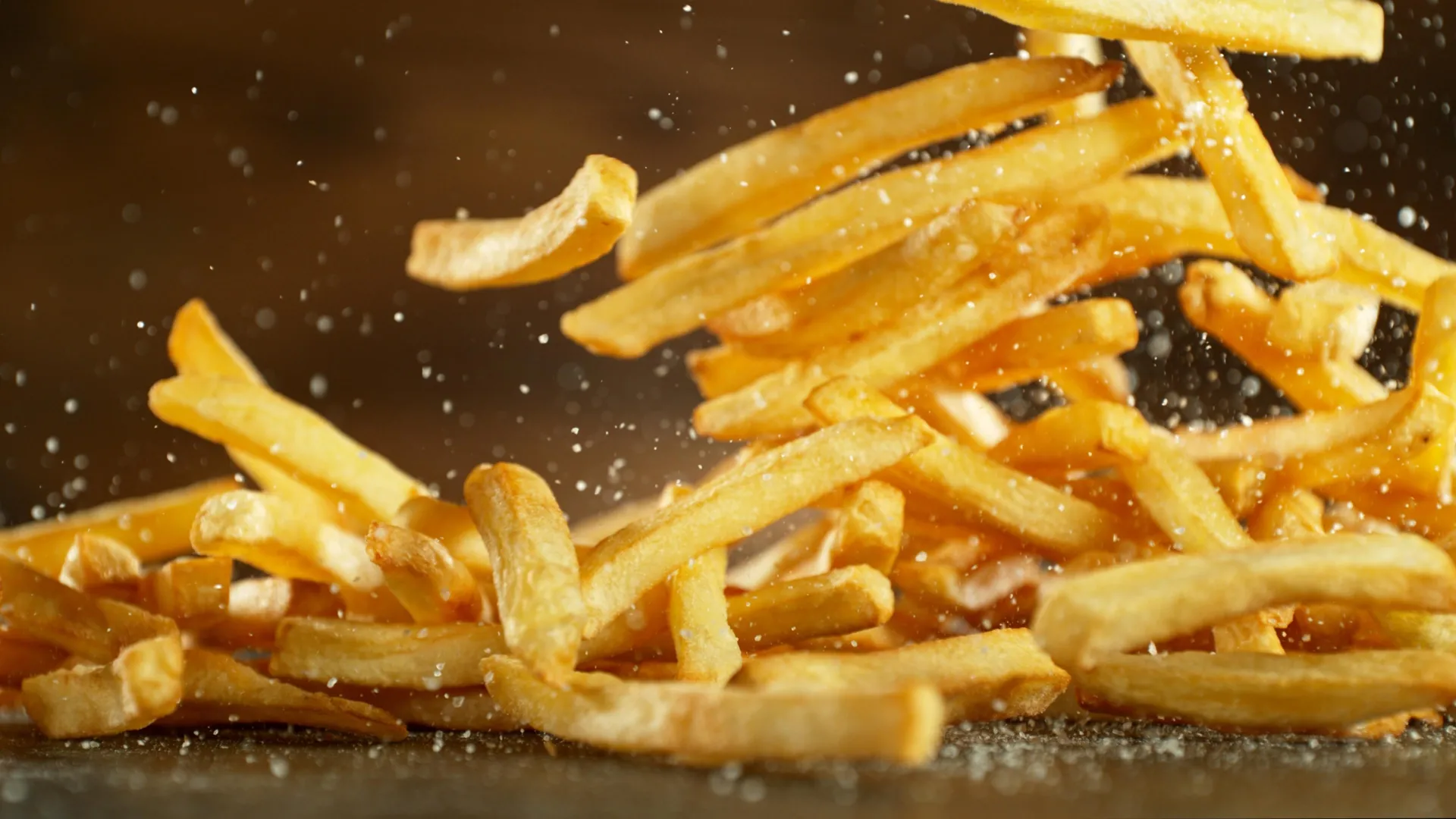
Addressing this critical challenge, researchers at the University of Illinois Urbana-Champaign (UIUC) are pioneering innovative approaches, specifically investigating whether microwave energy could offer a viable solution. Their work focuses on developing methods to produce French fries that absorb significantly less oil without compromising the beloved crisp texture and rich flavor that consumers expect. The preliminary findings from this groundbreaking research are highly promising, suggesting that a hybrid cooking method – combining microwave frying with conventional frying – could revolutionize the production of fried foods. This dual-approach system has the potential to shorten overall cooking time, drastically limit oil uptake, and still deliver the coveted crisp exterior and satisfying texture traditionally associated with perfectly fried potatoes.
Creating Healthier Fries Without Sacrificing Flavor: A Food Engineering Quest
The drive behind this research is rooted in a fundamental understanding of consumer behavior and nutritional science. As principal investigator Pawan Singh Takhar, a distinguished professor of food engineering in the Department of Food Science and Human Nutrition (FSHN) within the College of Agricultural, Consumer and Environmental Sciences (ACES) at U of I, succinctly puts it, "Consumers want healthy foods, but at the time of purchase, their cravings often take over. High oil content adds flavor, but it also contains a lot of energy and calories. My research team studies frying with the aim of obtaining lower fat content without significant differences in taste and texture." This statement encapsulates the core paradox that food scientists like Takhar are striving to resolve: the inherent conflict between the desire for healthful eating and the powerful sensory allure of indulgent foods. The goal is not to eliminate fat entirely, as fat plays a crucial role in flavor perception and mouthfeel, but rather to optimize its presence to achieve a healthier profile without perceived compromise in quality.
Professor Takhar and doctoral student Yash Shah, also from FSHN, have meticulously documented their results in two recent publications. These studies delve deeply into the intricate physical and chemical changes that occur within French fries when they are subjected to microwave energy during the cooking process. Their work provides a scientific foundation for understanding how microwave technology can be harnessed to redefine the frying paradigm.
For the initial phase of their research, the Illinois team collaborated with scientists at Washington State University (WSU), who had engineered a specialized microwave fryer. This sophisticated device was designed with the capability to operate at two distinct frequencies: 2.45 gigahertz (GHz), which is the standard frequency utilized in most household microwave ovens, and 5.8 gigahertz. Gigahertz, as a unit, quantifies the frequency of electromagnetic waves. The choice of different microwave frequencies is critical because it directly influences how electromagnetic energy propagates through a food material and, consequently, how efficiently and rapidly water molecules within the food respond to and absorb this energy, impacting the cooking process. Higher frequencies often lead to more superficial heating, while lower frequencies can offer deeper penetration, though other factors like dielectric properties of the food also play a significant role. Understanding these nuances is key to optimizing microwave frying for different food types.
Tracking What Happens Inside a French Fry: A Microscopic View of Frying Dynamics
The experimental protocol began with meticulous preparation of the raw material: potatoes. The researchers carefully rinsed and peeled the potatoes before uniformly cutting them into strips, mimicking the standard shape of commercial French fries. These strips then underwent a crucial pre-treatment step: blanching. Blanching involves briefly exposing food to hot water or steam, typically just below boiling point. For potatoes, this step serves multiple purposes: it begins the process of softening the potato tissue, inactivating enzymes that could cause undesirable browning or flavor changes, and partially gelatinizing the starch on the surface, which can aid in achieving a desirable crust during subsequent frying. Following blanching, the potato strips were lightly salted to enhance flavor and then immersed in soybean oil, which had been precisely heated to a temperature of 180 degrees Celsius – a common temperature for conventional deep-fat frying.
Throughout the cooking process and immediately afterward, the research team employed an array of advanced measurement techniques to monitor and quantify critical parameters. These included temperature profiles within the fries, internal pressure dynamics, changes in volume, textural properties (such as crispness and tenderness), moisture content, and, crucially, the amount of oil absorbed. By tracking these variables in real-time and post-frying, the scientists could construct a detailed picture of the complex interplay between heat, water migration, and oil penetration. This allowed them to precisely map how water transformed into vapor and escaped from the potato’s cellular structure, and conversely, how oil subsequently infiltrated the newly created empty spaces.
According to Professor Takhar, one of the most significant and persistent challenges in conventional frying technology is effectively preventing oil from migrating into the food matrix, not just during the active cooking phase but also critically during the brief period immediately following removal from the hot oil, as the food cools.
At the commencement of the frying process, the microscopic pores and cellular spaces within a raw potato are predominantly filled with water. This leaves very little volumetric capacity for oil to enter. As the potato is exposed to the intense heat of the frying oil, this internal water rapidly heats up, transitioning into steam (water vapor). As steam forms, it exerts pressure and seeks to escape, creating channels and empty spaces within the potato’s structure. It is these newly formed voids that become potential reservoirs for oil. Moreover, as the steam escapes, particularly during the cooling phase, a phenomenon known as negative pressure or vacuum effect can develop, drawing oil into the potato.
Takhar elucidates this mechanism with a simple yet effective analogy: "Think about a straw in a drink. If you push air into the straw, it creates positive pressure and any liquid will be pushed out. But if you suck on the straw, the liquid moves upward. Now imagine food materials have lots of tiny straws. When there is positive pressure, the oil stays out. But if there is negative pressure, the oil starts moving in." This analogy vividly illustrates the critical role of pressure gradients in determining the extent of oil absorption. When the internal pressure of the food is higher than the surrounding pressure (positive pressure), it acts as a barrier, expelling moisture and resisting oil entry. Conversely, when the internal pressure drops below the external pressure (negative pressure), it creates a suction force, actively pulling oil into the food’s porous matrix.
Why Pressure Determines Oil Absorption: The Capillary Effect and Beyond
The researchers’ detailed observations revealed a startling insight: a significant portion, as much as 90%, of the entire frying process occurs while the food material is under negative internal pressure. This prolonged state of negative pressure effectively creates an extended suction effect, allowing copious amounts of oil to be drawn into the numerous newly opened pores and capillaries left behind by the escaping steam. This explains why conventionally fried foods, despite their initial water content, can become so saturated with oil.
Therefore, a more efficient and health-conscious frying process would fundamentally aim to manipulate these pressure dynamics. The objective would be to sustain a positive pressure inside the potato for a longer duration during cooking and, crucially, to minimize or drastically reduce the period during which the food experiences negative pressure. Achieving this could substantially limit the volume of oil drawn into the food material, directly addressing the health concerns associated with fried products.
This is precisely where microwave energy emerges as a potential game-changer. Unlike conventional frying, which relies on heat transfer primarily from the surface inward through conduction and convection, microwave energy has the unique ability to heat water molecules throughout the entire volume of the potato almost simultaneously. As water molecules absorb microwave energy, they oscillate rapidly, generating internal heat and, consequently, additional water vapor. This rapid and uniform internal vapor generation significantly raises the internal pressure within the food material. By creating and maintaining a higher internal positive pressure, microwave heating fundamentally alters the pressure profile, making it considerably more difficult for external oil to penetrate the food matrix.
As Takhar explains, "When we heat something in a conventional oven, the heat moves from outside to inside, but a microwave oven heats from the inside out, because the microwaves penetrate everywhere in the material. The microwaves oscillate water molecules, causing more vapor formation and thus shifting the pressure profile towards the positive side. The higher pressure in microwaves helps reduce oil penetration." This distinction is paramount. Conventional heating creates a "drying front" that moves inward, leaving a dry, porous, negative-pressure zone behind it, ripe for oil infiltration. Microwave heating, by creating internal steam pressure, effectively pushes outward, resisting oil entry.
Microwave Frying Cuts Cooking Time and Oil Uptake: A Double Benefit
In parallel with their laboratory experiments, the researchers employed sophisticated mathematical modeling to scrutinize the frying process with even greater precision. These computer models provided a powerful tool, allowing them to simulate and explore how various processing variables interacted and to predict complex changes that would be exceedingly difficult, if not impossible, to measure directly in every physical experiment. This computational approach augmented their empirical findings, offering deeper insights into the underlying physics.
The team systematically compared critical quality indicators—temperature evolution, internal pressure profiles, volumetric changes, textural attributes, moisture content reduction, and, most importantly, oil absorption—under three distinct frying conditions: 2.45 GHz microwave frying, 5.8 GHz microwave frying, and traditional conventional frying.
Across both the rigorous laboratory experiments and the detailed simulations, a consistent and significant pattern emerged: microwave frying consistently led to moisture leaving the potatoes at a much faster rate compared to conventional methods. This accelerated moisture removal translated directly into a reduced total cooking time, making the process more efficient. Crucially, and as hypothesized, microwave frying also resulted in a significantly lower amount of oil being absorbed by the fries. This demonstrated the clear advantage of microwave energy in mitigating the primary health concern associated with fried foods.
However, the research also revealed a limitation of relying solely on microwave frying. While effective at reducing oil and cooking time, microwave energy alone did not consistently produce the desired textural qualities. Fries cooked exclusively with microwave energy tended to remain somewhat soft or "soggy" rather than developing the characteristic crisp, crunchy surface that consumers overwhelmingly associate with and expect from well-fried potatoes. This is because conventional frying’s intense surface heat is critical for driving the Maillard reaction (responsible for browning and savory flavors) and creating the dehydrated, brittle crust.
This observation led to the elegant solution proposed by the research team. "However, if you just use microwave frying, you get soggy food. To obtain a crispy texture and taste, you need conventional heating. Therefore, we propose combining the two approaches in the same unit. Conventional heating maintains the crispiness, while microwave heating lowers the oil intake," Takhar concluded. This realization underscored the synergistic potential of a hybrid approach.
A Hybrid Fryer Could Offer the Best of Both Methods: The Future of Frying
The proposed hybrid frying system represents a sophisticated integration of two distinct heating mechanisms, each leveraging its strengths to compensate for the other’s weaknesses. In this innovative setup, conventional frying would be employed primarily to achieve the desirable surface browning, develop the characteristic savory flavors through the Maillard reaction, and create the quintessential crisp, crunchy exterior that defines a great French fry. Simultaneously, microwave energy would be utilized to rapidly and uniformly remove moisture from the potato’s interior, significantly speed up the cooking process, and, most importantly, maintain a positive internal pressure that actively helps to prevent the excessive absorption of oil.
This combined approach holds immense promise for the food manufacturing industry. It could enable producers to consistently deliver French fries and potentially other fried products with a substantially reduced oil content – thus offering a "healthier" indulgence – while meticulously preserving the flavor, texture, and overall sensory appeal that make fried foods so desirable. Furthermore, the advantage of faster cooking times could translate into tangible operational benefits for manufacturers, including improved production efficiency, higher throughput, and potentially reduced energy costs per unit of product.
The researchers also thoughtfully considered the commercial viability and scalability of their proposed system. They noted that continuous fryers, which are standard equipment in large-scale food processing facilities globally, could be readily modified to incorporate microwave generators. The fact that these microwave components are widely available on the market and are relatively inexpensive compared to other advanced food processing technologies suggests that the hybrid system may be economically practical and feasible for widespread commercial production. This accessibility could pave the way for a rapid adoption of this technology, bringing healthier fried options to a broader consumer base.
The foundational research supporting these findings is detailed in two key publications. The first paper, titled "The Effect of Conventional and Microwave Frying on the Quality Characteristics of French Fries," provides a comprehensive comparison of the two methods and was published in the prestigious Journal of Food Science. The second paper, "Predicting the quality changes during microwave frying of food biopolymers by solving the hybrid mixture theory-based unsaturated transport, and electromagnetics equations," delves into the advanced mathematical modeling aspects and was featured in Current Research in Food Science.
This pioneering work was made possible through crucial financial support from the USDA National Institute of Food and Agriculture, under Awards 2020-67017-31194, ILLU-698-308, and ILLU-698-926, underscoring the significance of public funding in driving innovation that addresses critical public health and food industry challenges. The University of Illinois Urbana-Champaign’s research represents a significant leap forward in the quest to reconcile consumer cravings with health imperatives, offering a tantalizing glimpse into a future where indulgent foods can also be responsibly prepared.
