
 By admin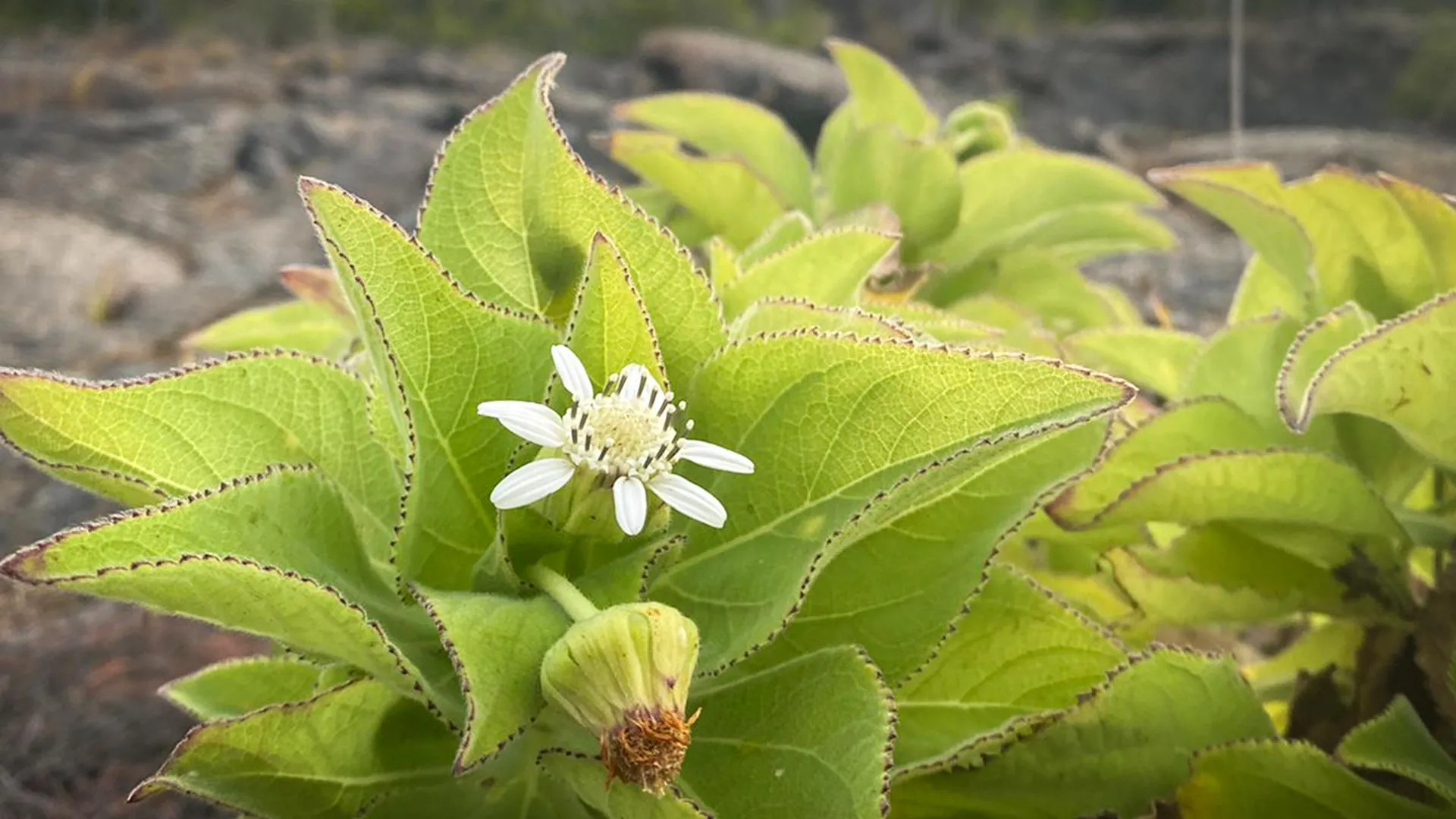
During his five-week sojourn, Darwin meticulously collected an array of specimens, including various birds. Upon his return to England, his initial assessment, a reflection of the prevailing scientific understanding of the time, led him to classify these avian treasures as a disparate group: sparrows, woodpeckers, finches, and even a single tit. However, a closer examination by ornithologists, particularly John Gould, revealed a profound and unexpected truth: these seemingly distinct birds were, in fact, all closely related finches. Their remarkable diversity lay not in their species classification as much as in the extraordinary variations of their beaks, each exquisitely shaped to exploit different food sources available across the islands. This realization was a pivotal moment, providing tangible, observable evidence of adaptation in action.
The Galápagos finches, subsequently immortalized as "Darwin’s finches," became a cornerstone of his seminal work, On the Origin of Species, published in 1859. They served as powerful, empirical proof for his theory of evolution by natural selection, a concept that elucidates how populations gradually transform over generations. The theory posits that individuals possessing traits better suited to their immediate environment are more likely to survive, thrive, and, critically, reproduce, passing these advantageous traits to their offspring. Over vast stretches of time, this differential success in survival and reproduction leads to the accumulation of beneficial traits within a population, ultimately resulting in adaptation and, eventually, the emergence of new species. The finches, having diversified from a common ancestral species into numerous forms adapted to specific ecological niches—some with stout beaks for cracking seeds, others with slender beaks for gleaning insects, and still others with probing beaks for cactus fruits—perfectly illustrated this process of adaptive radiation.
Beyond natural selection, the evolutionary journey of the Galápagos finches, and indeed many other organisms on the islands, also demonstrates a fascinating phenomenon known as parallel evolution. This process occurs when unrelated or distantly related organisms independently evolve similar solutions to comparable environmental challenges. While the underlying genetic pathways that drive these convergent adaptations may differ, the resulting physical traits, or phenotypes, bear striking resemblances. It is a testament to the power of natural selection to channel evolutionary trajectories towards optimal fitness, often leading to similar outcomes under similar selective pressures.
The Galápagos Islands, however, are far from being a mere historical relic of Darwin’s era. As Professor Michael D. Martin at the Norwegian University of Science and Technology’s (NTNU) University Museum aptly states, "More than 150 years after Darwin’s work on the Galápagos transformed our understanding of life on Earth, these islands continue to reveal new biology." This sentiment underscores the enduring scientific vitality of the archipelago, a place where evolutionary processes continue to unfold and offer unprecedented insights into life’s intricate tapestry.
Martin is a key member of a sprawling international research consortium, a testament to the collaborative nature of modern science, involving esteemed institutions such as the Royal Botanic Gardens, Kew; the University of California, Davis; the University of Copenhagen; the Charles Darwin Foundation, Galápagos; the University of Georgia, Athens; and the University of British Columbia, among others. This formidable team recently turned its investigative lens towards another iconic Galápagos lineage: Scalesia, a genus of plants colloquially known as the Galápagos giant daisies. Their groundbreaking findings, shedding new light on rapid plant evolution and the genetic underpinnings of parallel adaptation, were recently published in the prestigious scientific journal Nature Communications.
The study focused on understanding the evolutionary trajectory of Scalesia, a genus endemic to the Galápagos, comprising 15 recognized species. These plants, like their avian counterparts, provide compelling evidence of rapid evolutionary diversification. Vanessa Bieker, a researcher at the Royal Botanic Gardens, Kew, and the lead author of the new publication, explains, "Just like Darwin’s famous finches, these plants evolved rapidly after arriving on the Galápagos from mainland South America." The geological isolation of the Galápagos, coupled with its diverse microclimates and ecological opportunities, created a perfect storm for rapid speciation.
Scalesia is a relatively nascent plant genus in evolutionary terms, with every extant species having emerged within the last one million years. This relatively short timeframe, particularly when contrasted with the much older geological age of the islands themselves, highlights an astonishing rate of evolutionary change. Despite its brief evolutionary history, Scalesia has demonstrated an extraordinary capacity for adaptation, colonizing and thriving in a remarkably diverse array of habitats across the archipelago. These range from the perpetually humid, mist-shrouded highland forests, often bathed in garúa (a fine drizzle), to the scorching, arid lowlands near the coast, characterized by intense sunlight and sparse rainfall.
The morphological plasticity of Scalesia is equally striking. "The appearance of different species varies dramatically, from low shrubs to tall trees. Most striking are the leaves, which range from large and entire to small and deeply lobed," Martin observes. This variation in growth forms and leaf morphology is a classic signature of adaptive radiation, where a single ancestral lineage diversifies to fill a multitude of ecological niches. The most captivating of these adaptations are the deeply lobed leaves, often exhibiting intricate, serrated edges. Scientists have long hypothesized that this complex leaf architecture confers significant adaptive advantages, particularly in the challenging, water-stressed environments prevalent on many of the islands. Such shapes may help plants survive dry and hot conditions by reducing the surface area exposed to direct sunlight, thereby limiting water loss through transpiration, and by promoting more efficient heat dissipation. However, until this recent study, the precise genetic mechanisms driving this particular adaptation remained largely elusive.
To unravel these genetic mysteries, the research team undertook an ambitious endeavor: they analyzed the complete genomes of every known Scalesia species. This comprehensive genomic approach allowed them to reconstruct the evolutionary history of the genus with unprecedented detail and to pinpoint the genetic changes associated with specific adaptations. Their meticulous analysis yielded a fascinating and significant discovery: the deeply lobed leaf morphology, a key adaptive trait, did not evolve once but independently emerged multiple times within separate branches of the Scalesia family tree. This finding is a powerful demonstration of recurrent evolution, where similar environmental pressures drive the evolution of similar traits.
Even more surprising than the repeated evolution of the lobed leaf trait was the revelation concerning its genetic basis. "Even more surprising was that each time this trait evolved, it did so through different genes—even though all of them belong to the same biological system controlling leaf development," Bieker explains. This is a quintessential example of parallel evolution at the molecular level: nature arriving at the same adaptive solution, the deeply lobed leaf, through distinct genetic pathways. Instead of relying on a single "master gene" to dictate leaf shape, the evolutionary process appears to draw upon an entire network of interacting genes, tweaking different components within this network to produce remarkably similar phenotypic outcomes. This implies a redundancy and flexibility in genetic systems, allowing multiple routes to achieve a beneficial adaptation. It moves beyond a simplistic "gene for X" model to a more nuanced understanding of complex trait development governed by gene regulatory networks.
This discovery significantly enriches scientists’ understanding of how complex features can repeatedly emerge, not only in unrelated populations but also in different branches of the same evolutionary lineage. It highlights the dynamic and often circuitous routes that evolution can take, demonstrating that adaptation is not always a linear process but a highly opportunistic and flexible one, capable of utilizing different genetic tools to achieve similar ends.
The genetic evidence also strongly suggests that the evolutionary narrative of Scalesia is far from concluded; it is an ongoing saga. "Populations within the same species show large genetic differences and have been isolated from one another for long periods. This means new species may be in the process of forming. Many Scalesia populations may represent distinct evolutionary lineages that have not yet been formally described," Martin reveals. This concept of incipient speciation, where populations are diverging genetically but have not yet fully separated into distinct species, is a crucial area of evolutionary research. The Galápagos, with its fragmented habitats and isolating forces, provides an ideal natural laboratory to observe these processes in real-time, or at least in relatively recent evolutionary time.
The implications of these findings extend beyond theoretical evolutionary biology, reaching directly into the critical realm of conservation. Because these isolated Scalesia populations are demonstrably following separate evolutionary trajectories, accumulating unique genetic variations, the researchers strongly advocate for a revised conservation strategy. They argue that each genetically distinct population should be managed as an individual conservation unit. This approach would dramatically alter how conservationists protect these distinctive plants and, by extension, the fragile, interconnected ecosystems of the Galápagos. Treating them as separate units would ensure the preservation of their unique genetic diversity and evolutionary potential, safeguarding the future adaptability of the genus in the face of environmental change. Failure to do so could lead to the silent loss of nascent species and invaluable genetic resources.
Furthermore, the study provides an unusually detailed and compelling view of adaptive radiation, complementing the iconic finch story with a botanical narrative. Adaptive radiation, the process by which a single ancestral species rapidly diversifies into numerous forms, each adapted to a different ecological niche, is a hallmark of island biogeography and a powerful driver of biodiversity. The Scalesia genus, with its rapid diversification into shrubs and trees with varied leaf forms across distinct habitats, offers a vivid illustration of this fundamental evolutionary process in plants.
"Our findings highlight the flexibility and creativity of evolution," Bieker concludes, encapsulating the profound insights gleaned from this research. The Galápagos Islands continue to surprise and educate, proving that their evolutionary lessons are far from exhausted. It is a fitting full circle that Darwin’s famous bird collections were not his sole important discoveries on the islands. During his 1835 visit, he also meticulously gathered numerous plant specimens. A remarkable seventy-eight of these botanical treasures were later utilized to identify species entirely new to science—among them, four previously undescribed species of Scalesia. This latest research, building upon Darwin’s foundational work, reinforces the enduring legacy of the Galápagos as an active, dynamic stage where the grand drama of evolution continues to unfold, constantly offering new revelations about life’s incredible adaptability and the intricate mechanisms that drive its diversification.
