
 By admin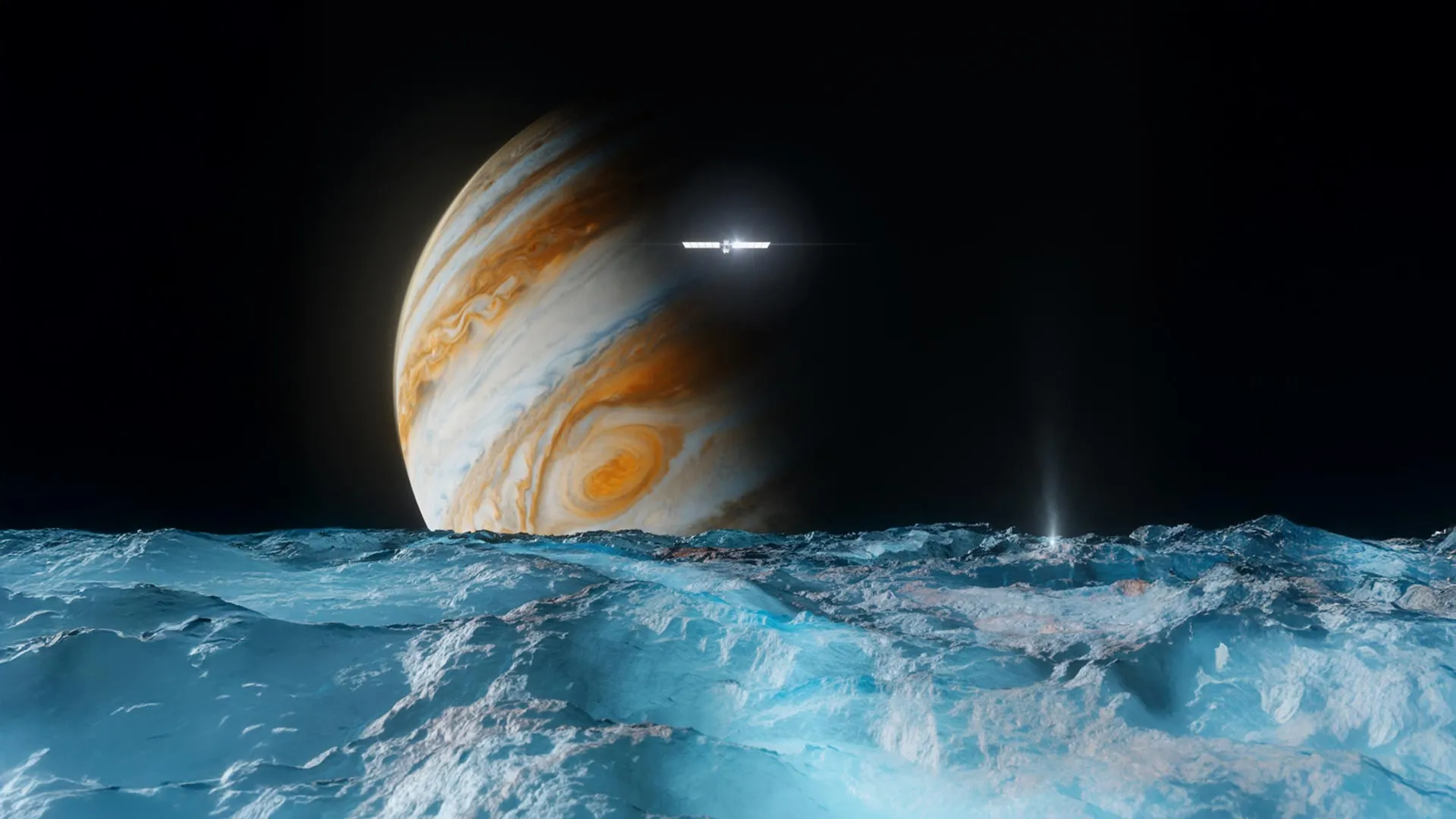
For decades, the tantalizing prospect of a subsurface ocean on Europa has fueled scientific curiosity and exploration efforts. Discovered through data from NASA’s Voyager and Galileo missions, this ocean is believed to be in direct contact with a rocky seafloor, a critical interface where water-rock interactions could provide essential chemical nutrients and energy sources – a combination often referred to as the "habitability triad" of liquid water, energy, and chemistry. This triad makes Europa a prime candidate for hosting extant life, perhaps even simple microbial ecosystems akin to those found around hydrothermal vents on Earth’s ocean floor.
Challenging Assumptions About Europa’s Ice Shell Dynamics
Scientists have long hypothesized that water from this deep ocean could make its way to shallower depths or even erupt onto the surface through a process called cryovolcanism. This idea was bolstered by observations of Europa’s dynamic surface, which features complex "chaos terrain" – areas of jumbled blocks, ridges, and cracks that appear to be regions where the ice shell has fractured, melted, and refrozen. The potential detection of water vapor plumes by the Hubble Space Telescope, though still debated, further fueled speculation that the deep ocean might be actively communicating with the surface. If such pathways existed, future spacecraft could potentially detect or sample these shallow pockets of liquid, or even the plumes themselves, offering a less arduous route to investigate the deep ocean’s composition and potential for life.
"The mystery we wanted to solve was whether this journey is actually possible," explained Ojha, an associate professor in the Department of Earth and Planetary Sciences at the Rutgers School of Arts and Sciences. "Can liquid water rise from Europa’s deep ocean toward the surface without freezing along the way?" To address this fundamental question, Ojha and his team employed sophisticated computer simulations, a powerful tool for modeling complex physical processes that are impossible to replicate in a laboratory or directly observe in Europa’s extreme environment.
The simulations focused on dikes, which are narrow, sheet-like fractures that could theoretically serve as conduits for ocean water migrating upward through the thick ice shell. On Earth, similar dikes facilitate the movement of molten rock (magma) through the crust, leading to volcanic eruptions. On icy worlds like Europa, the analogous process involving water and ice is termed cryovolcanism. Previous models often assumed that water would rise through these fractures in a relatively smooth, laminar flow, allowing it to retain enough heat to reach shallower depths.
However, the results of Ojha’s research paint a different, more challenging picture. The study suggests that the upward journey from Europa’s deep ocean into the upper layers of ice is far less likely than many scientists had previously assumed. "There’s an icy shell, there’s water underneath, and there’s all this speculation about how that water can come from deep underground and make its way all the way up without freezing en route," Ojha elaborated. "That’s really what we think we disproved."
The Critical Role of Turbulence and Frazil Ice
A key factor that previous models may have significantly underestimated, according to Ojha’s team, is turbulence. Earlier simulations often simplified the fluid dynamics, assuming that water would ascend through Europa’s ice in a relatively organized and gentle manner. The Rutgers-led research, however, introduced more realistic physics, indicating that the water would move rapidly and chaotically through the dikes. This turbulent flow would cause the liquid water to repeatedly mix against the bitterly cold walls of the fracture, leading to an extremely efficient and rapid transfer of its internal heat into the surrounding ice.
"This water that’s going to come up, it’s going to be turbulent," Ojha stated, emphasizing the dynamic nature of the process. "It’s going to be left and right, it’s going to be up and down, it’s going to have a swirling motion. And when that happens, that liquid water is going to cool very, very fast as it approaches the surface." This rapid heat loss is detrimental to the water’s ability to remain liquid.
As the rising water loses heat, it can become "supercooled"—meaning its temperature drops below its normal freezing point (0 degrees Celsius for pure water) but it remains liquid due to a lack of nucleation sites for ice crystals to form. However, in the turbulent environment within a dike, the constant mixing and interaction with the cold ice walls would provide ample opportunities for small ice crystals, known as frazil ice, to begin forming. These microscopic, needle-like crystals can accumulate quickly. Over time, as more and more frazil ice forms and aggregates, it can effectively clog and seal off the fracture, acting like a frozen plug that prevents further upward migration of liquid water.
The simulations revealed that narrow cracks, common in brittle ice, could freeze closed in a matter of hours. Even larger fractures, while theoretically capable of transporting more water under ideal, non-turbulent conditions, are significantly hampered by the chaotic flow. The team found that moving enough water to account for some of Europa’s visible surface features, which have been interpreted as evidence of cryovolcanic activity, would require an unrealistic density of fractures or dikes that are implausibly long and wide. This suggests that the energy required to melt and transport water against the relentless cooling effect of the ice shell is far greater than previously calculated.
Implications for Astrobiology and Future Missions
This conclusion carries profound implications for how scientists will interpret future discoveries on Europa. If spacecraft detect shallow pockets of liquid water beneath the surface, these reservoirs may not contain water that originated in the moon’s vast, deep global ocean. Instead, they could have formed from localized melting of the ice shell itself, perhaps driven by radiogenic heating within the ice, friction from tidal stresses, or other localized thermal anomalies.
The distinction is crucial for astrobiology. Scientists are drawn to Europa by the unique combination of a potentially stable, long-lived liquid water ocean, a source of energy (tidal heating from Jupiter), and the potential for complex chemistry at the ocean-rock interface. Shallow, isolated water pockets, formed locally within the ice shell, might represent a very different environment. They could be less stable, potentially transient, and might not have the same access to the deep ocean’s chemical richness or the energy provided by hydrothermal activity. While easier to investigate, such reservoirs might offer little information about Europa’s most scientifically compelling and potentially habitable environment: the deep global ocean. Understanding the origin of any detected subsurface water is paramount to assessing its habitability potential.
The findings arrive at a pivotal moment, as two major missions are currently en route to the Jupiter system. NASA’s Europa Clipper mission, launched in October 2024, is expected to reach Jupiter in April 2030. It will conduct 49 close flybys of Europa, meticulously studying its ocean, ice shell, and potential plumes. The European Space Agency’s Jupiter Icy Moons Explorer (JUICE) mission, which launched in April 2023, is scheduled to arrive at Jupiter in July 2031 and will also perform several flybys of Europa before eventually orbiting Ganymede.
Together, these sophisticated spacecraft are poised to provide an unprecedentedly detailed picture of Europa’s frozen shell, surface chemistry, and potential subsurface water. Instruments like Europa Clipper’s REASON (Radar for Europa Assessment and Sounding: Ocean to Near-surface) radar will be instrumental in mapping the ice shell’s structure and searching for shallow reservoirs. Similarly, JUICE’s RIME (Radar for Icy Moons Exploration) will probe the subsurface. Ojha’s research will help mission scientists contextualize the radar data: if shallow liquid water is detected, this study suggests it is more likely a local phenomenon than a direct conduit to the deep ocean. This insight could help refine targeting strategies for potential future landers or melt probes, guiding them to areas where the ice shell might be thinner or where other evidence points to more direct interaction with the deep ocean, if such locations exist.
Far below Europa’s brutally cold exterior, where surface temperatures can plummet to -170 degrees Celsius (-274 degrees Fahrenheit), the global ocean is believed to remain liquid due to the immense gravitational pull of Jupiter. This powerful tidal force repeatedly stretches and compresses Europa, generating significant internal friction and heat. This "tidal heating" is trapped beneath the moon’s thick ice shell, preventing the entire ocean from freezing solid. The new research, however, indicates that this heat source, while sufficient to maintain the global ocean, may not be potent enough to drive significant upward transport of water through the ice.
"Ice and liquid water are fundamentally different than lava and the volcanoes that we see here on Earth," Ojha cautioned, highlighting the limitations of direct analogies. "I think there’s some fundamental physics that’s missing here, and so I wanted to explore that." By incorporating more realistic fluid dynamics and heat transfer processes, the study has unveiled a more complex and robust barrier between Europa’s ocean and its surface.
In essence, the findings point to a version of Europa in which any shallow liquid water detected may have formed entirely separately from the global ocean. Rather than traveling upward from great depths, it would have been produced when localized heat sources within the ice shell caused portions of the ice to melt. This distinction is vital for future astrobiological investigations, directing scientists to temper expectations about readily accessible ocean material.
"Our work suggests that Europa’s ice shell may be a stronger barrier between the ocean and the surface than previously assumed," Ojha concluded. "This helps future missions interpret what they find and better understand where to look for signs of habitability." The challenge of exploring Europa remains immense, but this new understanding refines the scientific roadmap, pushing researchers to consider alternative mechanisms for interaction between the deep ocean and the surface, and perhaps to develop even more sophisticated strategies for directly probing Europa’s most enigmatic and potentially life-sustaining environment. The ultimate quest for life beyond Earth continues, now armed with a more nuanced appreciation of Europa’s icy complexities.
