
 By admin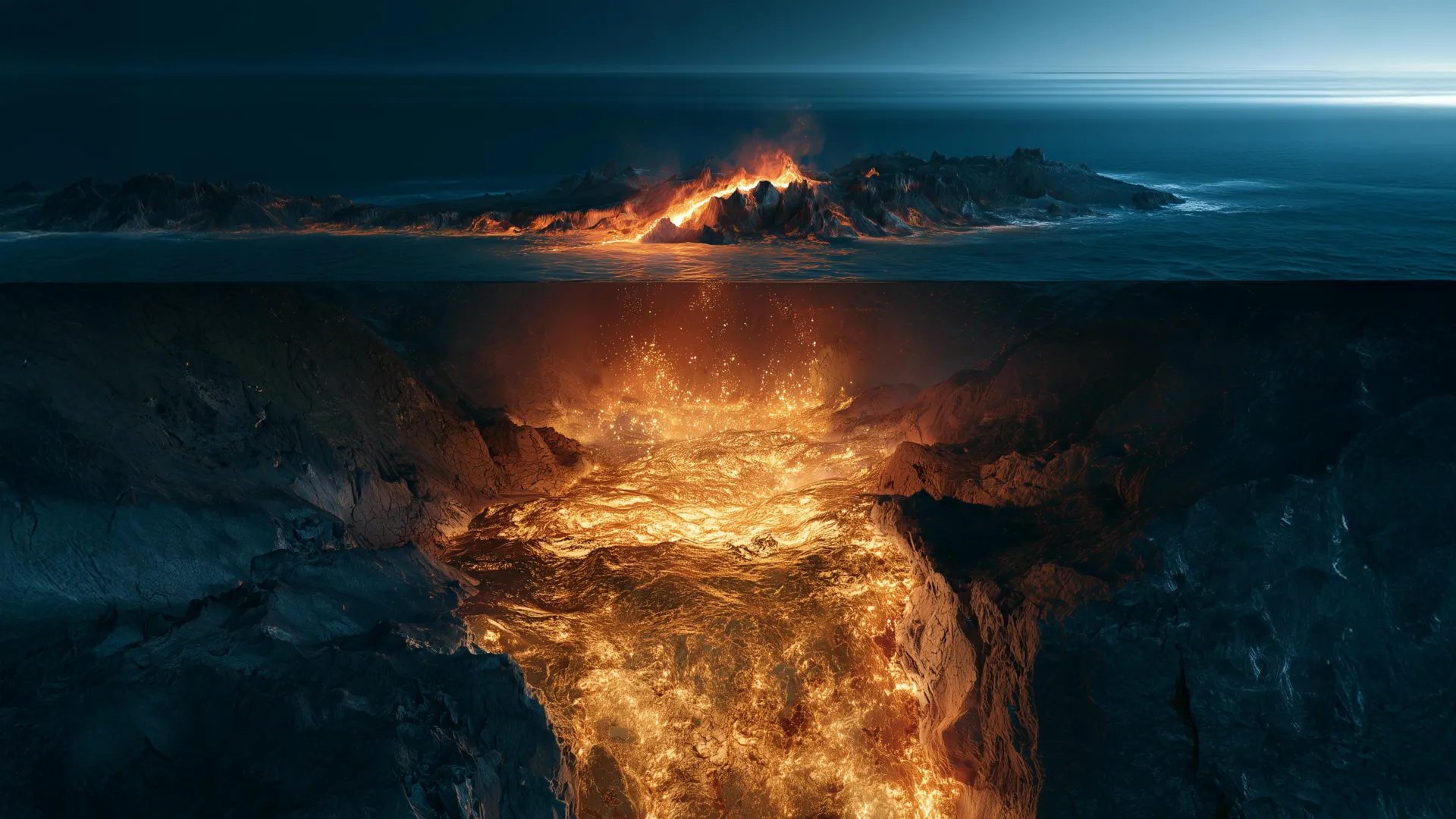
New groundbreaking research, spearheaded by Dr. Christian Timm, a marine geologist at the GEOMAR Helmholtz Centre for Ocean Research Kiel, is now shedding light on this profound mystery. His team’s findings offer a deeper, more intricate explanation for the remarkable gold enrichment observed in these dynamic regions, tracing the metal’s journey from the deep mantle to the surface. The study suggests that the Earth’s interior operates a sophisticated, multi-stage "kitchen" where gold is progressively concentrated through a series of melting events facilitated by water.
"Our research shows that hydrous mantle melting beneath island arcs is a key driver of gold enrichment," Dr. Timm explains, providing a concise summary of the team’s central discovery. "In these settings, the mantle behaves like a multi-stage melting system that progressively concentrates gold, much like a sophisticated refining process occurring deep within the planet." This revelation shifts the focus from simple, direct fluid transport to a more complex, magmatic process rooted in the fundamental mechanisms of plate tectonics.
Volcanic Glass Preserves Ancient Magma: A Window to the Deep Earth
To meticulously investigate how gold and other noble metals behave during mantle melting beneath submarine subduction zones, the researchers embarked on a scientific quest, analyzing 66 volcanic glass samples. These precious geological archives were carefully collected from the seafloor along the Kermadec island arc and the neighboring Havre Trough, an active back-arc basin situated north of New Zealand. The Kermadec Arc, a remote and seismically active chain of submarine and emergent volcanoes, represents an ideal natural laboratory for studying subduction zone processes due to its relatively pristine state and ongoing magmatic activity.
Volcanic glass is an extraordinary geological medium. It forms when molten lava, erupted onto the seafloor, cools with astonishing speed upon contact with frigid ocean water. This rapid quenching prevents the formation of mineral crystals, effectively "freezing" the magma’s original chemical composition in time. This chemical snapshot provides scientists with an invaluable, unaltered record of the conditions and processes occurring deep below the seafloor, offering direct insights into the mantle’s chemistry before subsequent alteration or differentiation.
Among the 66 samples, the most revealing were the so-called "primitive glasses." These are particularly significant because they represent magma that has undergone minimal differentiation or crystallization since its formation in the mantle. By studying these primitive compositions, researchers can reconstruct the chemistry of the original melt before it was modified by shallower crustal processes, thus offering the most direct link to the mantle source.
"When we analyzed these samples, we found that their gold concentrations are often several times higher than those of comparable magmas from mid-ocean ridges," Dr. Timm stated, highlighting the stark contrast. Mid-ocean ridge basalts (MORB) are typically used as a global benchmark for uncontaminated mantle-derived melts, representing the "average" mantle composition. The significant enrichment in island arc magmas immediately flagged a unique underlying process. "This raised the key question: which processes are responsible for this enrichment?"
To unravel this enigma, the researchers employed highly sensitive analytical techniques to measure gold at extremely low, trace concentrations. They then compared these gold values with those of other "chalcophile" or "sulfur-loving" elements, including silver, copper, selenium, and platinum. Chalcophile elements share a chemical affinity for sulfur and tend to partition into sulfide minerals or sulfide-rich melts. Because these elements respond in similar ways during melting, their distinctive chemical patterns can serve as powerful geochemical fingerprints, revealing critical information about the physical and chemical conditions prevailing inside the Earth’s mantle during magma generation.
Chemical Clues Point to Repeated Melting: The Mantle’s Golden Recipe
The detailed analysis of the chemical patterns yielded compelling results. The data indicated that the mantle beneath the Kermadec island arc melts under specific, crucial conditions: in the persistent presence of water and at relatively high temperatures, specifically above the sulfide liquidus. The "sulfide liquidus" is the temperature at which sulfide minerals begin to melt or completely break down. When temperatures exceed this threshold, solid sulfide minerals, which are primary hosts for gold in the mantle, destabilize and release their constituent elements, including gold, into the silicate melt. Under these precise conditions, the rising magma retains silver-to-copper ratios that closely resemble those found in the bulk mantle, suggesting a specific melting regime that efficiently extracts these elements.
The team detected original gold concentrations of up to six nanograms per gram of rock within these primitive glass samples. While this amount may sound infinitesimally tiny in everyday terms, it is remarkably high and highly anomalous for magma directly derived from the Earth’s mantle. To put this into perspective, even a few nanograms per gram represent a significant enrichment in geological terms, especially when considering the vast volumes of magma involved. Furthermore, the samples also contained gold-to-copper ratios that were well above those measured in "fertile" mantle (mantle that has not yet undergone significant melting) and primitive mid-ocean ridge basalts, underscoring the unique enrichment process occurring beneath the island arc.
According to the researchers, these distinctive chemical signals are best explained not by a single, simple melting event, but by a more complex scenario: a mantle source that had already been partially depleted by earlier melting, and was subsequently melted again. This "re-melting" or "multi-stage melting" of an already processed mantle reservoir appears to be the main process enriching these magmas with gold. The key drivers are identified as high-degree, multi-stage melting of a water-rich and oxidized mantle. An oxidized mantle environment can also play a role by destabilizing sulfide minerals, thereby making gold more available for partitioning into the silicate melt.
It is important to note, however, that despite these elevated values, the rocks studied do not contain enough gold to be commercially mined. Economically useful deposits would require concentrations several orders of magnitude higher, typically in the range of grams per tonne rather than nanograms per gram. The research focuses on the fundamental, deep-seated processes that initiate gold enrichment, setting the stage for subsequent, shallower geological processes that might concentrate it further into mineable ore bodies.
Water Helps the Mantle Melt: The Catalyst for Gold Mobilization
Initially, researchers had suspected that water released from the descending oceanic plate might directly control how much gold entered the magma, perhaps by acting as a solvent or transport agent. However, the new data suggest a more nuanced and intricate process.
"We initially assumed that water released from the subduction zone directly controlled gold enrichment," Dr. Timm clarifies. "However, our data show that water mainly facilitates mantle melting. The key factor for high gold concentrations is the high – and in part repeated – degree of melting."
Water, therefore, appears to act primarily as a catalyst or trigger. As the oceanic plate descends into the mantle, hydrated minerals within the subducting slab (such as serpentine and amphibole) undergo dehydration reactions due to increasing temperature and pressure. This process releases vast quantities of water, which then migrates upwards into the overlying mantle wedge. Water significantly lowers the melting point of mantle rock, allowing it to melt more extensively and at shallower depths than it would otherwise. The stronger and more repeated this water-assisted melting becomes, the more effectively gold can be transferred from the solid mantle rock into the nascent magma.
The chemical location of gold inside the mantle is also of paramount importance to this process. "Gold in the mantle is commonly bound in sulfide minerals," Dr. Timm explains. These tiny sulfide grains act like microscopic traps, holding gold securely within their crystal structures. "At high degrees of melting, these minerals break down, releasing their gold completely into the melt." This means that during limited or low-degree melting, much of the gold might remain trapped within the residual sulfide minerals in the solid mantle. However, once melting becomes intense enough to destroy these sulfide minerals, the stored gold is liberated and readily enters the rising magma.
"Our results demonstrate that gold enrichment is not the result of a single melting event, but of multiple stages," Dr. Timm adds, emphasizing the complexity of the "gold kitchen." "Only repeated melting, driven by the persistent influx of water, allows gold to become strongly concentrated in the magma, creating the foundation for future gold deposits."
The Beginning of Gold’s Geological Journey: From Deep Earth to Surface Riches
These seminal findings significantly advance scientists’ understanding of the formation of gold-rich deposits associated with intra-oceanic island arcs, such as the Kermadec Arc. They unequivocally demonstrate that repeated, water-assisted mantle melting profoundly influences how much gold is initially carried upward by magma from the deep Earth. This process establishes the crucial starting conditions for the journey of gold.
The results effectively move a significant part of the explanation for gold deposits deeper into the planet’s interior. While processes near the surface, such as hydrothermal circulation, faulting, and fluid-rock interaction, still ultimately determine whether concentrated, economically viable deposits eventually form, this research highlights that the fundamental chemical history of the mantle beneath subduction zones plays a critical, foundational role. It pre-conditions the magma with elevated gold content long before it ever rises into the crust.
Furthermore, the same mechanism identified in this study could help explain why hydrothermal sulfide deposits along submarine island arcs often contain unusually large amounts of gold. These fascinating deposits form when hot, mineral-rich fluids, often derived from magmatic sources, circulate through volcanic regions beneath the ocean, leaching metals from the surrounding rock and precipitating them on the seafloor. If the underlying magma is already enriched in gold due to deep mantle processes, it logically follows that the hydrothermal fluids interacting with this magma and its volcanic products would also carry higher gold concentrations.
"The mechanism we identify could contribute to the elevated gold contents observed in hydrothermal systems in subduction zones," says Dr. Timm, acknowledging this potential link. "However, this specific connection still needs to be investigated further through dedicated research focusing on the interplay between magmatic and hydrothermal processes."
"We are effectively looking at the first step in the life cycle of gold," Dr. Timm concludes, providing a compelling summary of the research’s broader implications. "It begins with the transfer of gold from the mantle into a melt that eventually forms volcanoes. The alchemy starts long before the metal reaches the surface, deep within Earth’s hidden ‘gold kitchen,’ where water and repeated melting conspire to concentrate this most precious of elements." This research not only unravels a geological mystery but also offers a profound glimpse into the dynamic, internal workings of our planet, constantly shaping the world beneath our feet and the resources we seek.
