
 By admin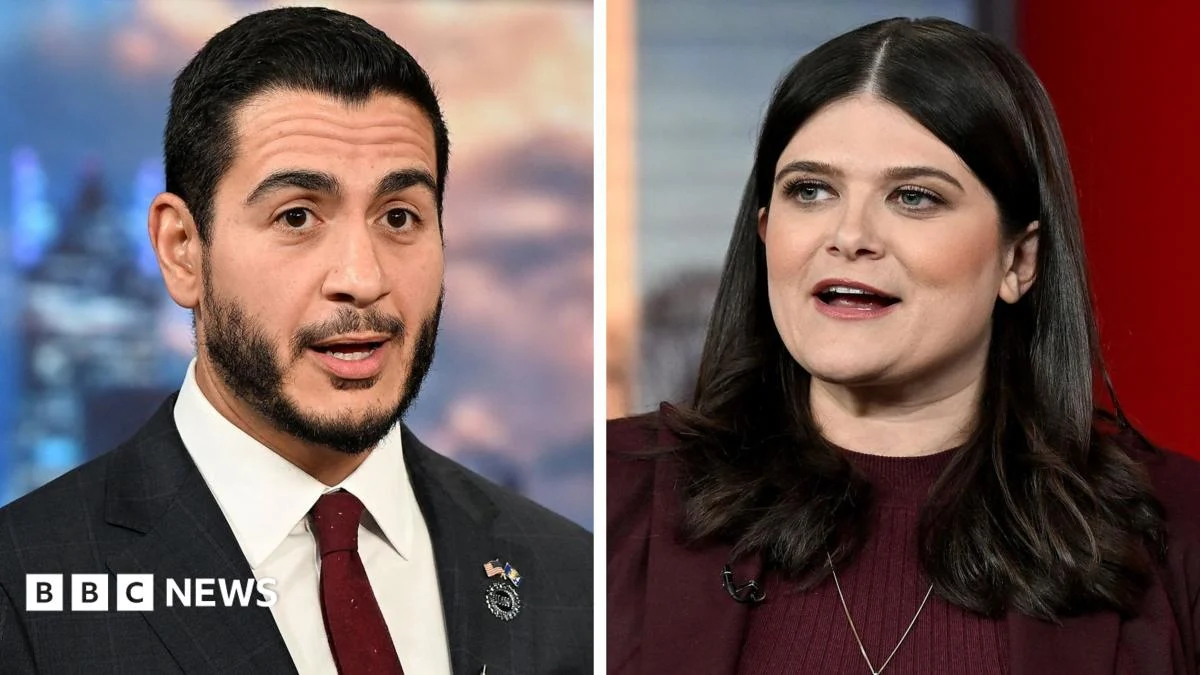
In a dramatic conclusion to a fiercely contested primary, left-wing political outsider Dr. Abdul El-Sayed has been projected to win Michigan’s Democratic Senate nomination, a victory that underscores deep ideological rifts within the party and sets a progressive agenda for the crucial November midterm elections. The former public health official, a charismatic figure endorsed by prominent national progressive leaders, is narrowly edging out moderate Democratic Congresswoman Haley Stevens, a result that reverberated through the political landscape. El-Sayed, channeling the iconic spirit of Muhammad Ali, declared, "In the words of Mohammad Ali, ‘We shook up the world,’" referencing the legendary boxer’s improbable upset victory over Sonny Liston in 1964, a sentiment that encapsulated the underdog narrative of his campaign.
His projected win propels him into a general election showdown against Republican Mike Rogers, a staunch ally of former President Donald Trump. If El-Sayed prevails in November, he would make history as the first Muslim to serve in the United States Senate, a milestone that carries significant symbolic weight in an increasingly diverse America. The final tally, however, proved to be far tighter than El-Sayed’s campaign might have anticipated. As of late Wednesday morning, with over 1.5 million ballots counted, the margin separating El-Sayed and Stevens was less than 15,000 votes, a razor-thin difference of just under one percentage point, highlighting the close race and the intensity of the intra-party debate.
El-Sayed, speaking to his supporters on Wednesday, reiterated his core campaign themes, framing his victory as a mandate for a broader movement. "The movement to get money out of politics, put money in your pocket, and pass Medicare for All is a big movement," he stated, a familiar refrain that resonated with his base and articulated a vision for systemic change. His message of economic populism and expanded social programs resonated deeply with a segment of the Democratic electorate seeking a departure from more centrist approaches.
Congresswoman Stevens, in a magnanimous concession statement, offered her congratulations to El-Sayed. "I want to congratulate Abdul El-Sayed on winning the Democratic nomination for US Senate," she said. "He is a doctor, a community health official, a Rhodes Scholar, and a dedicated Michigander. I am proud to offer my support as he takes on Mike Rogers in the general election." Stevens’s graceful acknowledgement of the primary’s outcome and her commitment to supporting the nominee signal a potential, albeit perhaps challenging, path toward party unity as Michigan Democrats look ahead to the critical general election.
The November midterm elections are poised to be a pivotal moment in American politics, determining the balance of power in Washington for the final two years of President Trump’s term, should he be re-elected in 2024 or if Republicans maintain control of Congress. The stakes are exceptionally high for both parties, with control of the Senate being a key battleground. Former President Trump wasted no time in reacting to the Michigan results, declaring on his Truth Social platform, "Great news for the Republican Party." He launched into a characteristic attack on the Democratic Party, referring to them as the "Dumocrats" and asserting that their "crazy policies will only get worse!" This rhetoric underscores the deep partisan animosity that El-Sayed will have to navigate in the general election.
Following a campaign that was at times acrimonious and deeply divisive, El-Sayed, in his address to supporters on Tuesday night, before the full results were known, hinted at a desire for reconciliation and unity within the party. "Whatever happens tonight, we have a responsibility to ensure that we unite, unite to make sure that [Republican] Mike Rogers never sees the inside of the US Senate," he declared, signaling his understanding of the broader challenge ahead. This call for unity is crucial for a party seeking to overcome internal divisions and present a cohesive front against the Republican challenger.
El-Sayed’s campaign was heavily bolstered by endorsements from prominent national progressive figures, including Vermont Senator Bernie Sanders and New York City Congresswoman Alexandria Ocasio-Cortez. These endorsements aligned him firmly with the left wing of the Democratic Party, advocating for ambitious progressive policies such as universal healthcare and the abolition of U.S. Immigration and Customs Enforcement (ICE). His platform, characterized by a bold vision for systemic reform, appealed to voters eager for fundamental change and a departure from incremental policy approaches.
In contrast, Stevens, 43, positioned herself as a more moderate voice, emphasizing her ability to appeal to a broader spectrum of voters, including those who might be undecided or seeking a centrist candidate. She campaigned on a platform focused on practical solutions, particularly highlighting her commitment to preserving and creating manufacturing jobs in Michigan, a state with a rich industrial heritage. Her campaign strategy aimed to bridge the ideological divide within the Democratic Party and attract voters who might be wary of more progressive policies. Stevens also secured the endorsement of Michigan Governor Gretchen Whitmer, a key figure in the state’s Democratic Party, and outgoing Senator Gary Peters, signaling a level of establishment backing.
One of the most significant points of divergence between the two candidates, and a key area of contention within the broader electorate, was their stance on Israel and the ongoing conflict in the Middle East. El-Sayed has been a vocal critic of U.S. involvement in the Middle East, including the provision of aid to Israel. He has advocated for a reevaluation of U.S. foreign policy in the region, raising concerns about the humanitarian impact of the conflict. Stevens, on the other hand, maintained a staunchly pro-Israel position, expressing her support for continued, unconditional U.S. aid to Israel. This policy difference resonated strongly within Michigan’s diverse Jewish community, drawing both support and opposition for El-Sayed’s candidacy.
El-Sayed has vehemently rejected allegations of anti-Semitism, criticisms that were amplified by former President Trump in his Truth Social post. Addressing these concerns directly on Wednesday, El-Sayed stated, "I stand in solidarity with my Jewish sisters and brothers. We can condemn anti-Semitism and at the same time, we can be talking about how we bring people together, and we can be talking about everybody’s pain." His response reflects a delicate balancing act, aiming to address concerns while maintaining his progressive foreign policy stance and fostering interfaith dialogue.
The Senate seat El-Sayed is vying for is currently held by a retiring Democrat, creating an open contest. Michigan has a history of being a closely watched swing state in presidential elections; it voted for Democrat Joe Biden in 2020, but previously supported Republican Donald Trump in 2016. The last time Michigan elected a Republican senator was in 1994, underscoring the state’s tendency to lean Democratic in Senate races in recent decades, though presidential election results show its competitive nature.
Beyond Michigan, Tuesday night also saw other significant primary contests across the nation, setting the stage for key partisan battles in November. In Kansas, Democratic State Senator Cindy Holsher and Trump-backed Republican legislator Ty Masterson advanced in their respective races for governor, indicating a continued ideological tug-of-war in that state. In Ohio, Congressman Wesley Bell defeated former Congresswoman Cory Bush in a Democratic primary that also featured differing perspectives on the U.S.-Israel relationship, echoing the themes seen in Michigan. Meanwhile, Missouri voters rejected a Republican-backed amendment that would have made it significantly more difficult to amend the state’s constitution, a decision that could have implications for future ballot initiatives and citizen-led reforms.
The outcome in Michigan is more than just a primary victory; it represents a significant moment in the ongoing evolution of the Democratic Party. El-Sayed’s success suggests a growing appetite among a segment of the electorate for a more progressive platform, challenging the traditional moderate wing of the party. As he transitions to the general election, El-Sayed will face the considerable task of unifying the Democratic base while also attempting to persuade undecided voters in a state that remains a critical battleground in national elections. The clash with Mike Rogers promises to be a high-profile contest, offering a stark choice for Michigan voters and reflecting the broader national debate about the future direction of American politics.
