
 By admin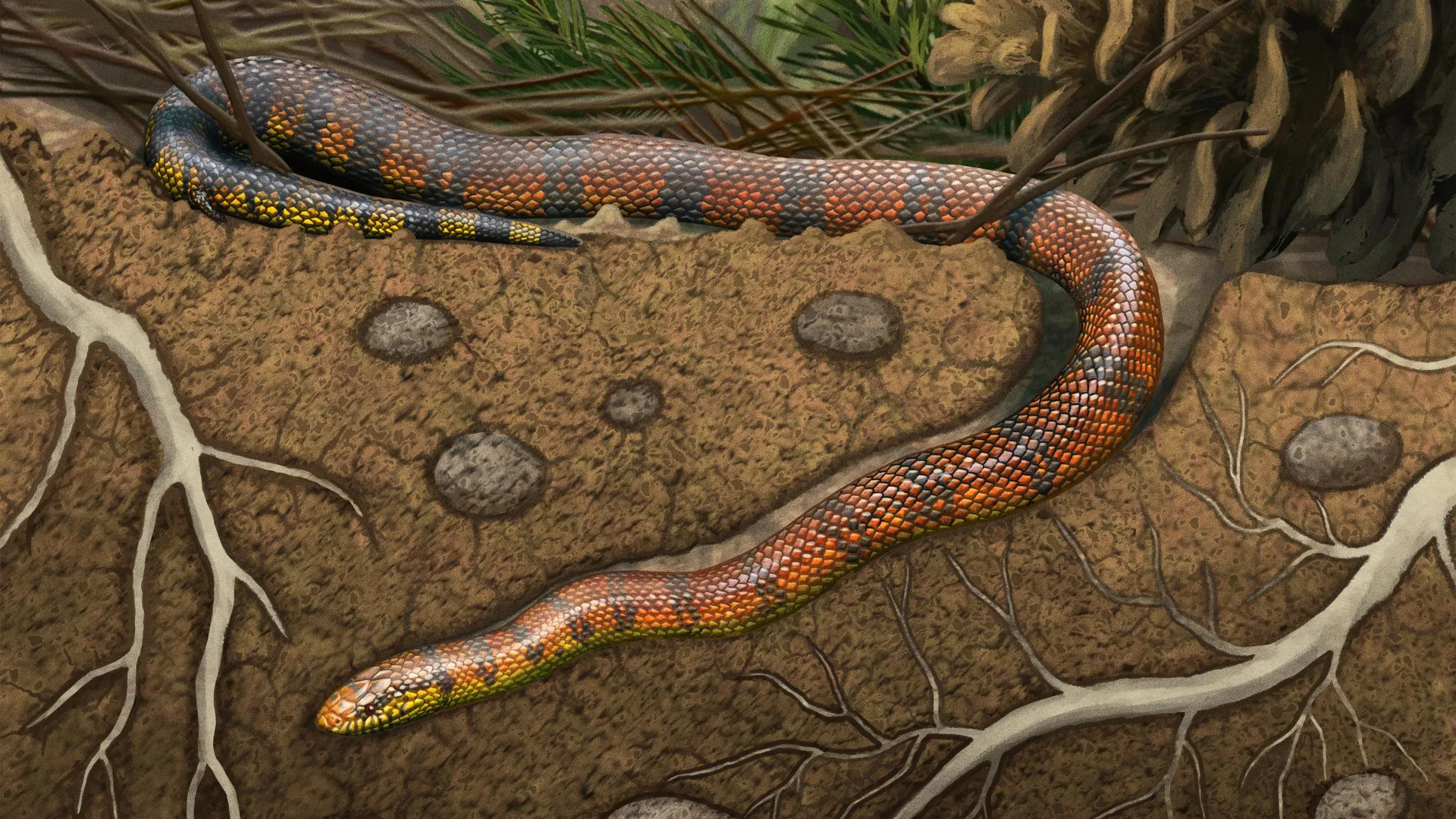
The fundamental question of how snakes, with their iconic elongated, limbless forms, came to be has fascinated scientists for centuries. Their lineage traces back to a group of heavily modified lizard ancestors, a transformation that involved profound anatomical changes, most notably the near-complete loss of limbs and the dramatic increase in vertebral count. This evolutionary pathway, known as limb reduction or loss, is not unique to snakes; it has occurred convergently in various other lizard lineages, amphibians, and even some mammals, often as an adaptation to burrowing or swimming. Yet, the sheer scale and evolutionary success of snakes, which now inhabit nearly every terrestrial and aquatic ecosystem on Earth, make their specific journey particularly intriguing. The scarcity of well-preserved early snake fossils, especially those capturing the transitional stages of limb loss, has historically hampered efforts to definitively pinpoint the selective pressures that drove these dramatic anatomical shifts.
For many years, the debate surrounding snake origins coalesced around two primary ecological models. The "aquatic hypothesis" proposed that the elongated, streamlined body plan of snakes evolved as an adaptation for swimming in marine environments. Proponents of this theory often pointed to fossil discoveries like Pachyrhachis problematicus, Haasiophis terrasanctus, and Eupodophis descouensi, mid-Cretaceous snakes found in marine deposits that possessed small, vestigial hind limbs. These fossils offered tantalizing evidence of a transitional stage, suggesting an aquatic ancestry where limbs might have become redundant for propulsion. The streamlined body, efficient for undulating through water, was seen as a key feature supporting this view.
Conversely, the "burrowing hypothesis" argued that the snakelike form first emerged as an adaptation for life underground. In this scenario, limbs would have become an impediment to navigating confined spaces, while an elongated, flexible body would have facilitated movement through soil and crevices. Features like a robust skull for pushing through substrate, a highly flexible vertebral column, and sensory adaptations geared towards detecting prey or navigating in darkness (such as enhanced olfaction and vibration sensitivity) were cited as evidence for a subterranean origin. The well-known fossil snake Dinilysia patagonica, a Late Cretaceous snake from Argentina, often featured prominently in this argument, as its robust skull and other anatomical characteristics were interpreted as adaptations for a fossorial (burrowing) lifestyle. The challenge for researchers lay in reconciling these seemingly contradictory lines of evidence and determining which environmental pressures were truly foundational to snake evolution.
The new research, spearheaded by lead author Tiago Simões, an Assistant Professor at Princeton University, alongside a prominent international team, provides a critical re-evaluation of this long-standing debate. "Our findings show that early snakes had already achieved remarkable ecological and morphological diversity by the Late Cretaceous, around 80 million years ago," Simões explains. This statement alone signals a profound shift, suggesting that the initial phases of snake evolution were not a linear progression towards a single optimal form, but rather a period of significant adaptive radiation, with different lineages exploring varied environmental niches simultaneously. The Late Cretaceous period, approximately 100 to 66 million years ago, was a time of immense global change, characterized by high sea levels, dynamic tectonics, and the diversification of many modern animal groups, including the rapid evolution of squamates (lizards and snakes). It was within this vibrant and changing world that early snakes appear to have truly come into their own.
Central to this revised understanding is the examination of a newly identified snake species, Tametara mirim, discovered in Late Cretaceous deposits in southeastern Brazil. Dating back approximately 80 million years, this fossil represents one of the most complete ancient snake skeletons ever unearthed. The exceptional preservation of Tametara mirim is itself a monumental discovery, as complete vertebrate fossils from this period, especially for groups undergoing rapid evolutionary change, are exceedingly rare. The completeness of the skeleton provides an unprecedented wealth of anatomical information, allowing researchers to move beyond speculative inferences based on fragmentary remains.
To unlock the secrets held within Tametara mirim, the research team employed cutting-edge paleontological techniques. Using high-resolution computed tomography (CT) scanning, a non-destructive method that utilizes X-rays to create detailed cross-sectional images, the researchers generated a comprehensive digital dataset of the specimen. These scans allowed them to visualize internal structures that would be impossible to study from the exposed bones alone, revealing intricate details of the skull, individual vertebrae, and critically, the "brain endocast." An endocast is essentially a natural or artificial mold of the internal cavity of the braincase, which provides a detailed impression of the external surface of the brain itself. While it doesn’t preserve soft brain tissue, it accurately reflects the size, shape, and relative proportions of different brain regions, offering invaluable insights into an animal’s sensory capabilities and cognitive functions.
The digital data from the CT scans were then used to create cinematic 3D renderings, allowing for detailed virtual reconstructions of the ancient snake’s anatomy. This process enabled the team to manipulate, section, and analyze the fossil’s internal structures with unparalleled precision, facilitating a deep dive into its morphology without physically damaging the irreplaceable specimen. Postdoctoral researcher Simone Macrì and Research Director Nicolas Di-Poï, both from the University of Helsinki’s HiLIFE Helsinki Institute of Life Science, played pivotal roles in directing the reconstruction and comparative study of the brain anatomy. Their specialized expertise connected the neuroanatomy of these early snakes directly with their inferred sensory abilities, preferred habitats, and broader evolutionary trajectory. This interdisciplinary approach, merging advanced imaging with neurobiological interpretation, proved crucial for the study’s novel conclusions.
The true power of this research emerged from the comparative analysis of Tametara mirim with Dinilysia patagonica, another significant fossil snake discovered in Argentina. While both are Late Cretaceous snakes, the comparison revealed strikingly different brain structures, a divergence that strongly suggests they were adapted to distinct ways of life. "The two had strikingly different brain shapes, both from each other and from most other snakes studied," states Research Director Nicolas Di-Poï. This neuroanatomical disparity was a key indicator of their divergent ecological roles.
The brain of Tametara mirim, as revealed by its endocast, exhibited features consistent with a burrowing lifestyle. This would include specific proportions of brain regions associated with olfaction (sense of smell) and somatosensation (sense of touch and vibration), potentially at the expense of vision. A robust skull, also observed in Tametara, would further support its ability to push through soil. In contrast, the brain shape of Dinilysia patagonica, while previously considered a prime example of a burrowing snake, showed adaptations more indicative of a terrestrial, surface-dwelling existence. This might imply a different balance of sensory input, potentially greater reliance on vision or a broader range of auditory cues compared to a strictly subterranean creature.
Di-Poï elaborates on these findings: "Brain shape and bone microstructure pointed to the same conclusion: Tametara was adapted to burrowing, Dinilysia to life on the ground. Together with evidence from marine sediments, the findings reveal several shifts between burrowing, terrestrial and marine lifestyles in early snake evolution. Different lineages explored different habitats much earlier than previously thought." This conclusion fundamentally reconfigures the traditional understanding of snake origins. Instead of a single "first" environment (either aquatic or burrowing) from which all other snakes diversified, the evidence suggests that early snake evolution was characterized by repeated and independent movements between underground, terrestrial, and even marine environments. This dynamic pattern of ecological exploration meant that separate snake lineages developed a range of adaptations suited to various ecological settings, rather than converging on one standard body form or sensory system.
Researcher Simone Macrì further emphasizes the significance of this neuroanatomical approach: "The brain tells a much richer story than the skeleton alone. By combining computed tomography-based brain reconstructions with data from living snakes, we could show that early snakes were not simply progressing toward one modern condition but experimenting with different sensory and ecological strategies. This means that early snakes did not follow a single evolutionary pathway." This statement underscores a crucial concept in evolutionary biology: adaptive radiation. Rather than a singular, linear progression, early snakes diversified rapidly, filling multiple ecological niches through a process of trial and error, leading to a rich tapestry of forms and functions from their initial stages. The varying brain structures are direct evidence of this "experimentation" with different sensory priorities and survival strategies.
The study’s implications extend beyond merely resolving an old debate; it offers a broader, more nuanced view of snake evolution as a whole. It highlights that the remarkable diversity seen in modern snakes—from the arboreal pythons to the fossorial blind snakes, the aquatic sea snakes, and the terrestrial vipers—has deep roots in this early, multifaceted adaptive radiation. The research demonstrates that the evolutionary success of snakes likely stemmed from this early ecological flexibility and willingness to adapt to varied environments. This capacity for rapid diversification and adaptation to new niches, driven by selection pressures on sensory systems and body plans, laid the groundwork for the extraordinary range of snake species we observe today.
The comprehensive study was a collaborative effort, led by Tiago Simões of Princeton University, with crucial contributions from senior authors Nicolas Di-Poï of the University of Helsinki and Annie Hsiou of the University of São Paulo, along with an extensive international team of collaborators. Their combined expertise in paleontology, neuroanatomy, and evolutionary biology was essential to integrating the diverse lines of evidence and drawing such profound conclusions. This research not only redefines our understanding of one of the planet’s most enigmatic groups of reptiles but also provides a powerful example of how advanced imaging technologies and comparative anatomy can unlock long-held secrets from the fossil record, pushing the boundaries of evolutionary science. The story of snake evolution, once seen as a simple fork in the road, is now revealed to be a sprawling, branching tree, continuously adapting and experimenting with life’s possibilities. Future discoveries and continued application of these advanced techniques promise to further enrich this already fascinating narrative, potentially uncovering even more surprising twists in the journey of these limbless masters of adaptation.
