
 By admin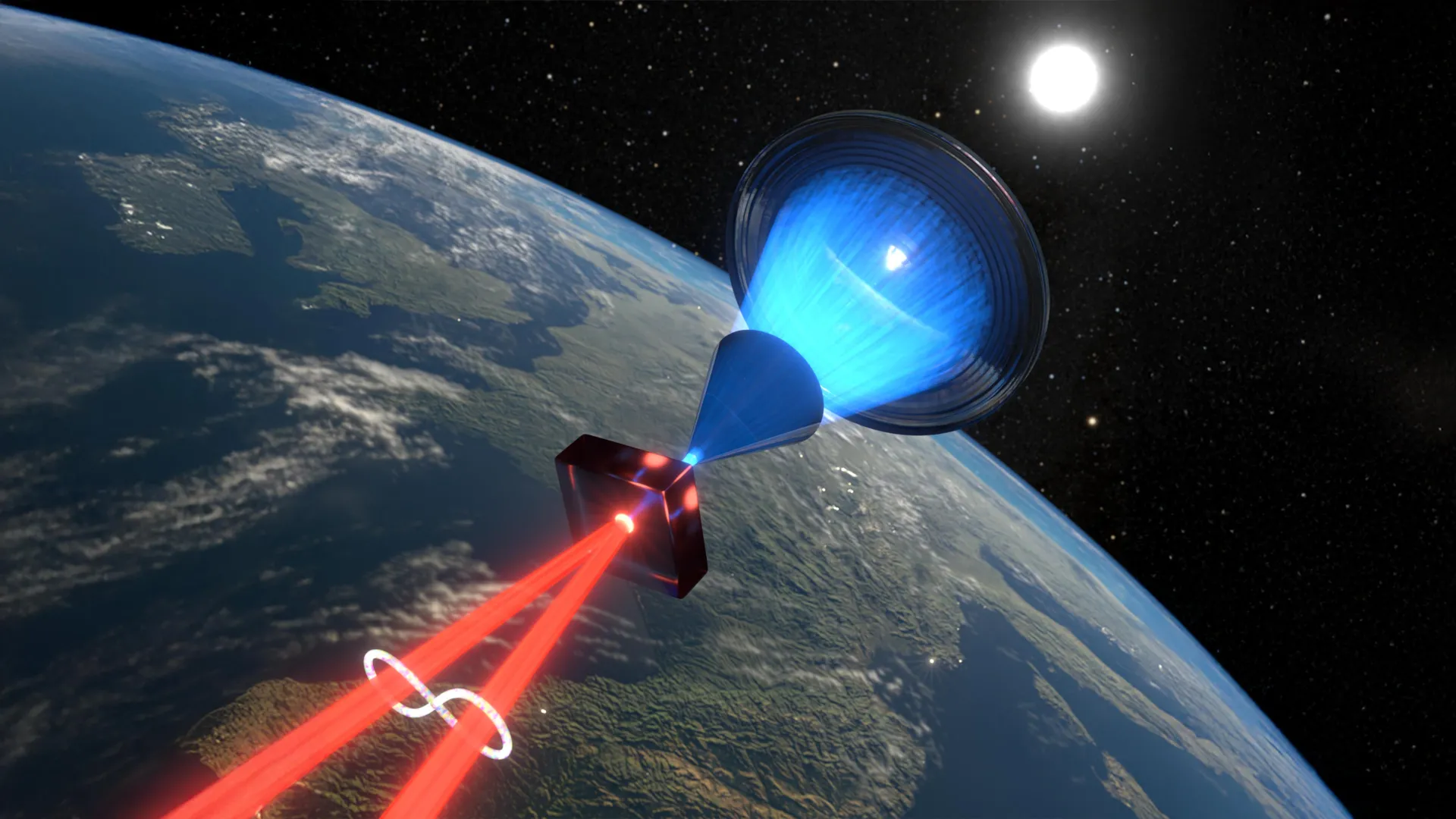
The burgeoning field of quantum technologies, promising revolutionary advancements in secure communication, ultra-precise sensing, and high-performance computation, currently relies heavily on powerful, energy-intensive lasers. As these sophisticated systems move from laboratories into widespread deployment, their escalating electricity demands present a significant sustainability challenge. However, a groundbreaking demonstration by an international research team offers a striking alternative: the ability to harness sunlight itself to generate quantum entanglement between photons, potentially ushering in an era of "green quantum" innovation.
Quantum entanglement, a phenomenon famously dubbed "spooky action at a distance" by Albert Einstein, is the bedrock of most quantum applications. It describes a unique connection between two or more particles, such as photons, where their quantum states become intertwined, regardless of the physical distance separating them. A measurement performed on one entangled particle instantaneously influences the state of the other, even if they are light-years apart. This profound correlation is what enables the extraordinary capabilities of quantum technologies.
For instance, in quantum key distribution (QKD), entanglement guarantees ultra-secure communication. If an eavesdropper attempts to intercept the entangled photons used to generate an encryption key, the quantum state collapses, instantly alerting the legitimate parties to the breach. This makes QKD theoretically unhackable, a stark contrast to classical encryption methods vulnerable to increasingly powerful computational attacks. The prospect of using sunlight to power these secure links, particularly for satellite-based QKD systems, is transformative.
In quantum sensing and metrology, entanglement allows for measurements with unprecedented precision, surpassing the classical limits imposed by noise. Entangled particles can detect minute changes in gravitational fields, magnetic fields, or time itself, leading to improvements in medical imaging, navigation systems, and fundamental physics research. Imagine medical sensors powered by ambient light, or autonomous vehicles navigating with entanglement-enhanced precision, all without a significant energy footprint.
For quantum computing, entanglement is crucial for creating and manipulating qubits, the basic units of quantum information. Entangled qubits can perform complex calculations far beyond the reach of classical supercomputers. Scaling up quantum computers, however, requires generating and maintaining vast numbers of entangled qubits, a process currently demanding immense energy for laser control, cooling, and error correction. Finding an energy-efficient method for entanglement generation could be a game-changer for realizing truly scalable quantum computers.
"Quantum entanglement is crucial for applications such as secure communication, ultra-precise sensing and high-performance computation," explained Cheng Li, a recent graduate of the University of Ottawa in Canada and the lead author of the study. "Our work shows that abundant natural light sources can be used for quantum entanglement, opening the possibility of more energy-efficient and accessible quantum technologies."
The pioneering findings, detailed in Optica, the Optica Publishing Group’s prestigious journal for high-impact research, reveal that sunlight can produce entanglement comparable in quality to traditional laser-based techniques, especially when the inherent differences in the bandwidth of the incoming light are properly accounted for. This scientific triumph was the result of a synergistic collaboration, marrying the theoretical insights from Professor Robert Boyd’s group at the University of Ottawa with a novel solar concentrator developed by Dr. Hanieh Fattahi’s team at the Max Planck Institute for the Science of Light (MPL) in Germany.
The implications of this research are far-reaching. "This technology could one day enable satellites to create secure encryption keys using the sunlight already abundant in space, reducing the need for onboard lasers and much of the supporting hardware," Li elaborated. This would not only cut down on the weight and power requirements for quantum satellite missions, thereby extending their operational lifespan and reducing launch costs, but also make quantum-enabled space communication more robust and accessible. Furthermore, Li noted, "Sunlight-driven entanglement generation could also provide the crucial ingredient needed to scale up quantum computing without adding to the energy burden," addressing one of the most pressing challenges facing the quantum computing industry.
Challenging Assumptions About Quantum Light: Beyond Coherence
For decades, the scientific community largely held the belief that generating the strong correlations necessary for photon entanglement unequivocally required coherent light. Coherent light is characterized by its waves remaining synchronized, with their peaks and valleys following a highly predictable and consistent pattern. Lasers are the quintessential example of coherent light sources, renowned for producing highly monochromatic (single-color) and directional beams. This coherence was long considered indispensable for driving the nonlinear optical processes that create entangled photon pairs.
However, earlier groundbreaking research from Professor Boyd’s team began to systematically dismantle this deeply entrenched assumption. Their initial theoretical predictions, subsequently validated through rigorous experimental demonstrations, revealed that even incoherent light sources could generate quantum entanglement. In those seminal experiments, they successfully employed a light-emitting diode (LED), a fundamentally incoherent light source, to produce polarization-entangled photons.
These initial results established a profoundly important principle: light can exhibit disorder in one characteristic, such as the diverse directions in which its photons travel, while still successfully producing photons that are entangled through another characteristic, such as their polarization state. This nuanced understanding opened the door to exploring less conventional light sources for quantum applications.
The new work pushes this concept to its ultimate extreme by replacing the relatively structured incoherence of an LED with the much more formidable challenge of raw sunlight. Sunlight, by its very nature, is profoundly incoherent across multiple dimensions: it spreads out in countless directions (high spatial incoherence) and encompasses an extraordinarily broad spectrum of colors (high temporal incoherence). Harnessing such a diffuse and chaotic source for the precise demands of quantum entanglement was considered a monumental, if not impossible, task by many.
Creating Entangled Photons With Sunlight: A Masterclass in Optical Engineering
To achieve the generation of entangled photons from sunlight, the researchers leveraged a well-established quantum optical process known as spontaneous parametric down-conversion (SPDC). In this process, a high-energy "pump" photon, typically from a laser, enters a specially engineered nonlinear crystal. Within the crystal, there’s a small probability that the pump photon will spontaneously split into a pair of lower-energy photons, known as the "signal" and "idler" photons. These daughter photons are often quantum entangled, typically in their polarization, momentum, or energy.
The critical innovation in this research was the audacious replacement of the conventional laser pump with sunlight. The team meticulously prepared the incoming sunlight, primarily by strongly polarizing it. While the sunlight remained highly incoherent across both space and time – meaning it contained photons of different colors traveling along myriad different paths – its overall light field was made to oscillate predominantly in a single, well-defined direction.
This specific preparation was key to the experiment’s success, as Cheng Li elaborated: "We designed our experimental setup so that differences introduced by the different colors and propagation directions didn’t influence the photons’ polarization." This insight was critical because it allowed the researchers to isolate the specific characteristic of the sunlight (its polarization orderliness) that was relevant for generating polarization entanglement, effectively filtering out the "noise" from its spatial and temporal incoherence. "As our theory predicts, if the entanglement lives only in polarization, then it should only depend on the pump’s orderliness in its oscillation direction and not on its direction or color. This allowed us to produce high-quality polarization entanglement from highly spatially and temporally incoherent sunlight," Li added. This demonstrates a sophisticated understanding of how to extract order from disorder within quantum processes.
However, the diffuse nature of sunlight presented another formidable engineering hurdle: efficiently collecting and focusing enough light onto the extremely small nonlinear crystal, which measured only about a millimeter in size. Ordinary methods of collecting sunlight, such as standard mirrors or lenses, are simply impractical for concentrating light to such a high intensity over such a minuscule area.
This challenge was ingeniously overcome by Dr. Hanieh Fattahi’s team at MPL, who designed and fabricated an innovative all-glass solar concentrator. This remarkable, cone-shaped system acts as a highly efficient light funnel. It begins by collecting sunlight over a relatively large area, using a Fresnel lens approximately the size of a household window. This collected light is then precisely channeled and concentrated into an optical fiber, an incredibly thin strand of glass about as wide as a human hair. This concentrated, high-intensity sunlight can then be precisely directed onto the tiny nonlinear crystal, providing the necessary "pump" power to initiate the SPDC process and produce the coveted entangled photons. The sophisticated optical design of this concentrator was paramount to achieving the required power density from a distributed source like sunlight.
Sunlight Produces Strong Quantum Entanglement: Validation and Proof
With the experimental setup in place, the researchers moved to validate both their theoretical predictions and the performance of the new solar concentrator through a series of outdoor experiments conducted at the MPL facility. To rigorously analyze the quantum state of the photons produced, they employed a technique called quantum state tomography. This advanced method involves making a series of specific measurements on the generated photon pairs to reconstruct their complete quantum state, allowing for a precise characterization of the entanglement’s quality and fidelity.
The results were unequivocally positive: the entanglement produced using sunlight was found to be approximately 94% similar to a perfectly entangled state. This high fidelity is a crucial metric, indicating that the sunlight-generated entanglement is robust and comparable to what can be achieved with conventional, laser-based methods. Such a high degree of similarity underscores the practical viability of this novel approach.
Even more importantly, the team definitively demonstrated that the photons displayed correlations that unambiguously violate Bell’s inequality. Bell’s inequality is a fundamental theorem in quantum mechanics that sets a limit on the correlations that can exist between particles described by classical physics. A violation of this inequality provides irrefutable evidence that the observed correlations cannot be explained by any classical local-realistic theory and instead arise from genuine quantum entanglement. This result serves as the gold standard for proving the quantum nature of the generated photon pairs, silencing any lingering doubts about the efficacy of sunlight as an entanglement source.
From Skepticism to a Working Experiment: A Triumph of Scientific Perseverance
The journey to this significant breakthrough was not without its formidable challenges, including considerable skepticism from within the broader scientific community. Cheng Li openly acknowledged the hurdles: "Since the inception of this project, our idea has met with repeated doubt and pushback." The concept of using a diffuse, incoherent source like sunlight for a highly delicate quantum process like entanglement generation was, to many, counterintuitive, if not outright improbable. "Some world-renowned researchers in the field even questioned whether it would be possible to detect any photons — not to mention entangled photons — from sunlight-driven nonlinear optical processes," Li recounted.
This narrative highlights the scientific rigor and unwavering determination required to pursue unconventional ideas. "However, we trusted our calculations, continued improving the experimental setup, and eventually showed that it was possible," Li stated, emphasizing the crucial interplay between theoretical predictions and meticulous experimental execution. This success story serves as a powerful reminder of how challenging established paradigms can lead to profound discoveries.
With the proof-of-principle experiment successfully completed, the researchers are now focused on refining their system to transition it from a laboratory curiosity to a practical, deployable technology. Their immediate efforts are concentrated on two key areas: significantly increasing the brightness of the entangled photon source and further improving the already high quality of the entanglement. Brighter sources mean more entangled pairs per second, which is critical for many applications, while even higher fidelity entanglement can enhance the performance of quantum communication and computation protocols.
While the initial experiment relied on SPDC, the researchers are optimistic that the underlying approach – leveraging specific forms of incoherence in light – could be successfully applied to other nonlinear optical techniques, such as four-wave mixing. Expanding the concept to additional methods could unlock an even broader spectrum of possibilities across the entire field of quantum photonics, further diversifying the toolkit for quantum engineers and scientists.
In conclusion, this pioneering research marks a pivotal moment in quantum technology, challenging long-held assumptions and opening a viable pathway toward a more sustainable and accessible quantum future. By demonstrating that sunlight can serve as a powerful and practical source for generating quantum entanglement, the international team has illuminated a path away from energy-intensive lasers and towards a new generation of "green quantum" devices. This breakthrough not only promises to reduce the energy footprint of future quantum systems but also expands the horizons for quantum innovation, particularly in space-based applications and scalable quantum computing, ushering in the dawn of a new era where quantum technologies are powered by the most abundant energy source on Earth.
