
 By admin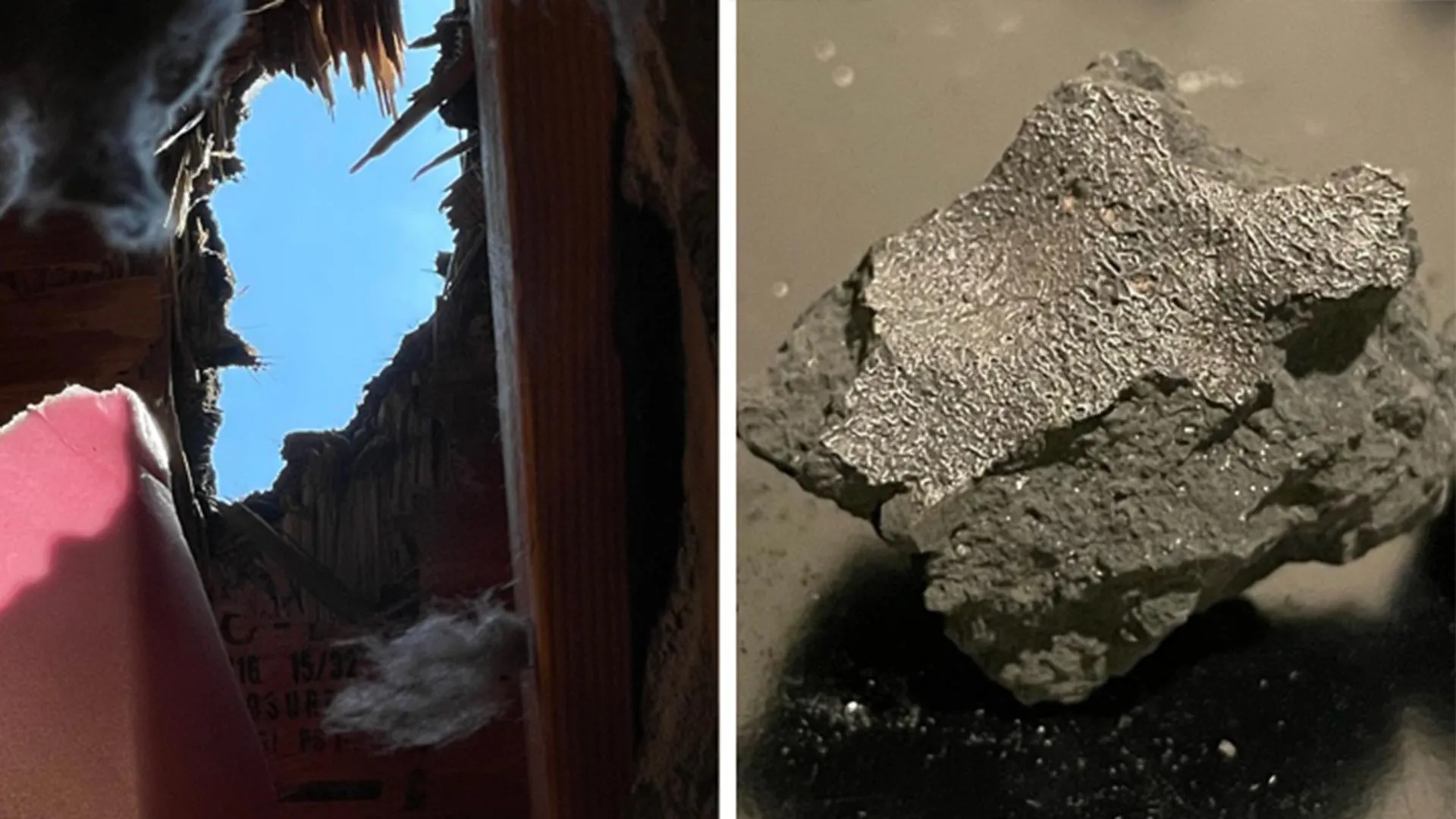
The morning of July 16, 2024, began like any other for residents across the New York City metropolitan area, until a spectacular celestial event pierced the routine. A brilliant meteor, a fiery streak against the broad daylight sky, blazed across the region, culminating in a powerful sonic boom that rattled windows and nerves as it passed just south of the iconic Statue of Liberty. This dramatic entrance heralded the arrival of an exceptionally rare visitor from space: a meteorite weighing over two pounds that, minutes later, punched through the roof of a home in Hillsborough, New Jersey. This unprecedented, witnessed fall provided scientists with an invaluable, pristine sample of extraterrestrial material. Now, an international consortium of researchers has meticulously analyzed the recovered fragments, publishing their groundbreaking findings in the esteemed journal Science Advances, shedding new light on the early solar system and the potential origins of life.
"A forensic study of the fragments revealed that they contained preserved bits from near the surface of a primitive asteroid where it experienced concentrated salty fluids — a process not previously known from this type of proto-planet world," stated lead author and meteor astronomer Peter Jenniskens of the SETI Institute and NASA’s Ames Research Center in California’s Silicon Valley. This discovery marks a significant leap in understanding the hydrological processes on early asteroids and their implications for prebiotic chemistry.
A Meteor Tracked Across the Northeast
The cosmic object, initially estimated to be roughly the size of a heavy airline bag, embarked on its terminal journey into Earth’s atmosphere traveling at an astounding velocity of 32,000 miles per hour (14.4 kilometers per second). Its entry ignited a breathtaking fireball visible across a vast swath of the northeastern United States. Sixty individuals from New York, New Jersey, Connecticut, Rhode Island, and Pennsylvania promptly reported their sightings to the American Meteor Society (AMS), describing a brilliant, fast-moving light accompanied by a prolonged rumbling sound. Adding to the palpable excitement, sixteen people in New York and New Jersey also reported feeling the concussive force of the accompanying shockwave – a testament to the meteor’s significant atmospheric interaction.
The American Meteor Society, a crucial organization for tracking such events, rapidly mobilized its resources. "Our cameras in Northford, Connecticut, and Douglassville, Pennsylvania, as well as a doorbell camera in Wayne, New Jersey, captured the meteor, and from that we measured its trajectory," explained Mike Hankey, operations manager for the American Meteor Society. These precise observations allowed scientists to trace the object’s origin with remarkable accuracy. "The path traced back to low in the asteroid belt," Hankey confirmed, pinpointing its probable birthplace between Mars and Jupiter. This immediate and accurate trajectory analysis was critical, offering scientists a direct link between the meteor’s atmospheric behavior and its original orbital path.
As the fragile extraterrestrial rock plunged deeper into the atmosphere, the immense pressure and heat caused it to fragment rapidly. It ultimately disappeared from view at an altitude of approximately 22 miles (35 kilometers). This fragmentation event was not only visually spectacular but also scientifically significant. Shortly after, Doppler weather radar at Newark Airport, a sophisticated system primarily used for detecting precipitation, briefly picked up an unusual, elongated cloud of falling pebbles extending from Staten Island into New Jersey. This radar signature, characteristic of meteoritic debris, provided a strong indication that fragments had survived atmospheric entry and were falling to the ground. Hillsborough, New Jersey, sat near the far end of this projected debris path, precisely where the largest surviving pieces were expected to land. The chances of recovering a meteorite from such an event are notoriously low, making the subsequent discovery all the more extraordinary.
The Unforeseen Impact in Hillsborough
Indeed, only one meteorite was recovered from this rare event, largely because it announced its arrival in an utterly unmistakable fashion: by striking a house. The homeowner, whose identity has been protected for privacy, vividly recounted the startling incident. "I was at home at the time, heard a loud crash and found a hole in the ceiling of the master bedroom. I smelled a strong sulfur-like odor and saw many black fragments along with debris and black dust that covered my bed, carpet and surrounding areas." The distinct sulfurous scent, a common characteristic of fresh carbonaceous chondrite meteorites, was a clear indicator of its extraterrestrial origin and minimal terrestrial weathering.
Crucially, the homeowner’s immediate and thoughtful response proved invaluable for scientific analysis. Recognizing the unusual nature of the event, he quickly documented the scene with photographs and took proactive measures to protect the precious material from contamination. Wearing disposable gloves, a standard protocol for handling potentially sensitive scientific samples, he meticulously used aluminum foil to collect the meteorite fragments, carefully placing them into glass jars. This diligent preservation ensured that the meteorite remained as pristine as possible, free from oils, dirt, or other environmental contaminants that could compromise subsequent laboratory analyses.
An Exceptionally Rare Primitive Meteorite
Initial laboratory analysis of the recovered rock swiftly confirmed its classification as a primitive meteorite belonging to the CM-type carbonaceous chondrite family. The "CM" designation is significant: "C" stands for carbonaceous, indicating its high carbon content, while "M" refers to the Mighei meteorite, a benchmark CM chondrite that fell in Ukraine in 1889. Carbonaceous chondrites are among the oldest and most primitive materials in our solar system, having formed largely unchanged since the solar nebula condensed 4.5 billion years ago. They are rich in water, organic compounds, and minerals that provide a chemical snapshot of the early solar system.
Further detailed examination by paper coauthor Mike Zolensky, a distinguished meteoriticist at NASA’s Johnson Space Center in Houston, revealed an intriguing anomaly. Certain parts of the Hillsborough meteorite exhibited more extensive alteration by water on its parent asteroid than scientists typically observe in CM2 carbonaceous chondrites. This finding led to its classification as a CM1/2 carbonaceous chondrite, positioning it uniquely between the petrographic CM1 and CM2 categories. CM1 chondrites are generally considered to have experienced the most aqueous alteration, while CM2s have undergone moderate alteration. The Hillsborough meteorite’s intermediate classification highlights a previously under-represented stage in the aqueous alteration continuum of primitive asteroids.
The Hillsborough event stands out not only for its dramatic arrival but also for its statistical rarity. It is only the 22nd observed fall involving a CM-type meteorite in recorded history. More remarkably, it is just the second witnessed fall of a CM1/2 carbonaceous chondrite. The first such event was the Kolang meteorite, which fell in North Sumatra, Indonesia, in 2020. Every other witnessed CM fall has exclusively involved CM2 material, and no CM1 meteorite fall has ever been observed. Witnessed falls are goldmines for science because their trajectory is known, allowing for precise origin tracing, and the material is collected quickly, minimizing terrestrial contamination. "Thanks to the homeowner’s quick reaction, these are the most pristine CM1/2 meteorites we know of," Jenniskens emphasized, underscoring the extraordinary value of the Hillsborough sample.
Evidence of Ancient Asteroid Brines
Scientists harbor a particular interest in understanding how water influenced the chemistry of primitive asteroids, as this process is directly relevant to the potential for life’s precursors to form. Another major group of primitive carbonaceous chondrites, known as CI-type, with "I" referring to the Ivuna meteorite that fell in Tanzania in 1938, has long provided insights into water-rich asteroids. The study of pristine samples related to this type has been revolutionized by direct returns from space missions. JAXA’s Hayabusa2 mission successfully brought material back from asteroid Ryugu, while NASA’s OSIRIS-REx mission returned samples from asteroid Bennu. Both sets of samples contain substantial evidence that briny fluids, essentially salty water, once existed just beneath the surfaces of their parent asteroids, driving complex chemical reactions.
It was within the Hillsborough meteorite that Zolensky and his colleague JangMi Han made a pivotal discovery: small CM1 fragments rich in salt. Their meticulous analysis strongly suggests that this material originated from a region near the surface of its parent asteroid, where liquid water underwent evaporation, leaving behind increasingly concentrated salts. This process, analogous to the formation of salt flats on Earth, indicates a dynamic hydrological system on the ancient asteroid, where water migrated, interacted with minerals, and then evaporated, concentrating dissolved solids.
The researchers are now engaged in the critical task of identifying the specific salt minerals present in the Hillsborough meteorite. This identification will allow for direct comparisons with similar materials found in the invaluable samples returned from Ryugu and Bennu. Such comparative studies will provide a richer, more nuanced understanding of the ubiquity and diversity of briny environments across primitive asteroid bodies.
This "salty chemistry" holds profound implications for understanding the chemical conditions that could have facilitated the production of molecules relevant to the emergence of life. Highly concentrated brines are known to play a crucial role in terrestrial biochemical processes. They can, for instance, keep phosphate dissolved in solution, a vital nutrient often insoluble in pure water, and can promote chemical reactions involving organic compounds and minerals that precipitate from these solutions. This suggests that briny asteroid environments could have been "chemical reactors" for prebiotic synthesis.
Organic Molecules and Ingredients for Life
The journey from space to our labs reveals more than just minerals; it also uncovers the very building blocks of life. "Isotope studies of carbon and nitrogen suggest that primitive carbonaceous chondrites, including CM-types, delivered organic matter to the early Earth," explained cosmochemist Queenie Chan of Royal Holloway University of London, England, and biogeochemist Nana Ogawa of the Biogeochemistry Research Center at the Japan Agency for Marine-Earth Science and Technology. Their analysis of the Hillsborough meteorite confirmed its significant organic inventory: it contained 1.8% by weight of carbon and 0.07% of nitrogen, with carbon and nitrogen isotopic ratios typical for CM-type meteorites, reinforcing their role as cosmic couriers of life’s essential elements.
Beyond bulk composition, researchers also detected a broad and diverse range of soluble organic compounds within the meteorite. The sheer variety and complexity of these compounds provided further compelling evidence that the Hillsborough material experienced more extensive alteration by water than most other CM-type meteorites. This aqueous processing likely facilitated the formation and modification of these organic molecules.
"A high fraction of compounds were the product of organic chemistry with minerals," observed organic mass spectrometry specialist Phil Schmitt-Kopplin of Technical University Munich. He added a crucial nuance: "We do not know if these magnesium organic compounds were contributed by brine chemistry or were simply left over from earlier impact shock processes." This highlights the ongoing scientific detective work required to fully disentangle the various processes that shaped the meteorite’s chemical inventory. Organometallic compounds, such as those found, play immensely important roles in living systems on Earth, including in processes like blood oxygen transport (e.g., in hemoglobin) and photosynthesis (e.g., in chlorophyll), underscoring their fundamental biochemical significance.
Remarkably, scientists found numerous amino acids among the soluble organic compounds in the Hillsborough meteorite. These were similar to amino acids previously detected in CM2 chondrites that had experienced more moderate water alteration, suggesting a commonality in the chemical pathways leading to their formation across these bodies.
Astrobiologist Danny Glavin of NASA’s Goddard Space Flight Center in Greenbelt, Maryland, and researchers in Goddard’s Astrobiology Analytical Lab concluded that CM-type bodies could have supplied the early Earth with a rich endowment of amino acids, carboxylic acids, and other soluble organic molecules. This delivery mechanism may have significantly contributed to the collection of prebiotic organic material that existed on Earth before life emerged, providing the raw ingredients for abiogenesis. Their analysis also strongly indicates that the meteorite’s complex assortment of amino acids formed internally within its parent body, rather than being solely derived from interstellar sources. Critically, the presence of briny fluids likely played a key role, helping to drive at least some of that complex organic chemistry.
A Rare Asteroid Sample Preserved for Science
The Hillsborough meteorite, a piece of cosmic history delivered to our doorstep, is more than just a scientific curiosity; it is a precious resource for future generations of researchers. Some fragments of this unique material will eventually be curated by the American Museum of Natural History in New York City, ensuring its preservation and accessibility for ongoing and future scientific investigations. This meticulous curation will allow scientists to apply new analytical techniques as they develop, unlocking further secrets held within this ancient rock.
"We are thrilled that nature delivered such a precious asteroid sample on our doorstep," exclaimed curator Denton Ebel. This sentiment resonates across the scientific community, highlighting the profound excitement and gratitude for this extraordinary gift from the cosmos. The Hillsborough meteorite is not merely a rock from space; it is a time capsule, offering unparalleled insights into the chemical evolution of the early solar system, the pervasive role of water on primitive asteroids, and the potential origins of life itself.
