
 By admin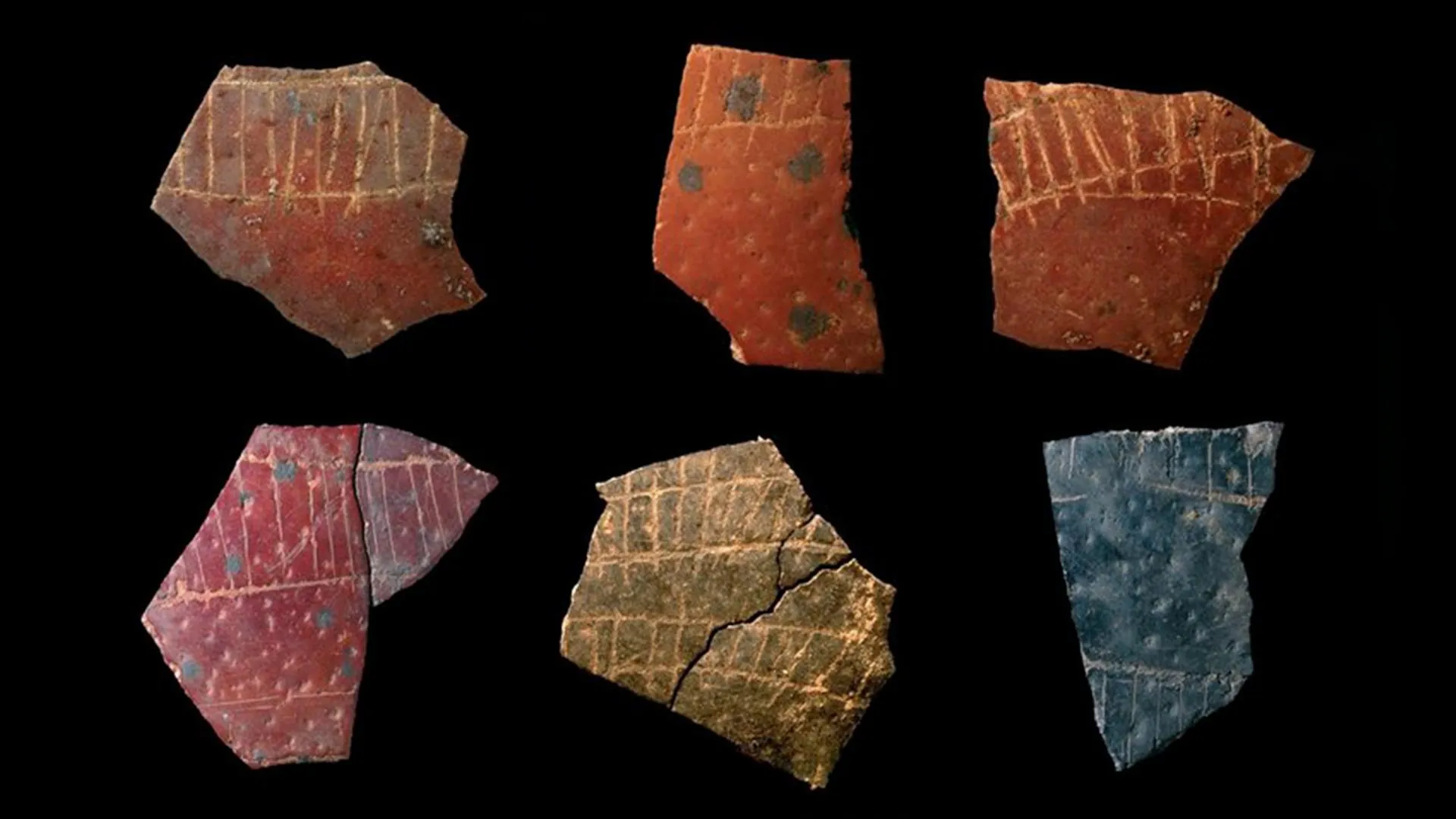
A new investigation, spearheaded by researchers at the University of Bologna and published in the peer-reviewed journal PLOS One, meticulously analyzes these prehistoric engravings. The study suggests that the markings were far more organized and deliberate than previously understood, adhering to recurring geometric principles involving parallel lines, precise right-angle relationships, and systematically repeated patterns. This discovery pushes back the timeline for the emergence of sophisticated cognitive abilities, indicating that early Homo sapiens possessed a remarkable capacity for abstract thought and visuo-spatial planning tens of thousands of years earlier than some theories propose.
"These signs reveal a surprisingly structured, geometric way of thinking," explains Silvia Ferrara, Professor at the University of Bologna’s Department of Classical Philology and Italian Studies, who coordinated the study and is a leading expert in the origins of writing systems. "We are talking about people who did not simply draw lines, but organized them according to recurring principles — parallelisms, grids, rotations and systematic repetitions: a visual grammar in embryo." Ferrara’s emphasis on "visual grammar" highlights the potential for these patterns to represent a foundational step towards more complex symbolic systems, including, ultimately, writing itself. This perspective challenges the notion that early human markings were merely spontaneous expressions, instead positing a deliberate, rule-based approach to visual communication and design.
The ostrich eggshells, recovered from archaeological contexts, were likely not merely artistic canvases but served a practical and essential function: as containers for carrying or storing vital resources like water. The durable nature of ostrich eggshell, combined with its relatively large size, would have made it an ideal vessel for nomadic or semi-nomadic groups traversing arid landscapes. The act of engraving these functional objects suggests an added layer of cultural significance, transforming a utilitarian item into a canvas for symbolic expression or group identity.
To meticulously examine the engravings, the researchers embarked on a systematic quantitative analysis of 112 fragments. These precious artifacts were recovered from three pivotal archaeological sites in southern Africa: Diepkloof Rock Shelter and Klipdrift Shelter in South Africa, and Apollo 11 Cave in Namibia. These sites are renowned for yielding significant evidence of Middle Stone Age (MSA) human occupation and innovative behaviors, placing these eggshells within a rich archaeological context of early human ingenuity.
The methodological innovation of the study lies in its application of advanced geometric and statistical techniques, methodologies not traditionally applied to the detailed analysis of such ancient artifacts. The interdisciplinary team meticulously reconstructed the directions, angles, and pathways of the engraved lines, employing digital imaging and analytical software to capture the subtle nuances of each mark. This rigorous approach allowed them to move beyond subjective interpretations and establish quantifiable evidence for the underlying geometric structure.
The results of their painstaking analysis were compelling. A striking finding was that more than 80% of the configurations analyzed contained consistent spatial patterns, indicating a high degree of intentionality and adherence to specific design rules. Angles consistently approximating 90 degrees appeared repeatedly, suggesting a deliberate use of orthogonal relationships, a fundamental concept in geometry. Similarly, sets of parallel lines were a recurring motif, executed with remarkable precision for tools available at the time.
Beyond these basic elements, the study revealed more elaborate designs, including intricate hatched bands, complex grids, and sophisticated diamond-shaped motifs. Crucially, the analysis of these more complex patterns showed undeniable evidence of geometric transformations such as rotation, translation (sliding or moving a pattern without changing its orientation), repetition (duplication of elements), and "embedding." Embedding, in this context, refers to the ability to construct hierarchical levels of signs within the same surface – for instance, a pattern contained within a larger pattern, or a sequence of motifs arranged according to a superordinate rule. This hierarchical organization points to a truly advanced cognitive capacity for planning and design.
"These engravings are organized and consistent, and show mastery of geometric relationships," Ferrara further explains, underscoring the premeditated nature of the work. "There is not only a process of repeating signs: there is real visuo-spatial planning, as if the authors already had an overall image of the figure in mind before engraving it." This insight is profound, suggesting that the creators possessed a mental blueprint, an internal representation of the final design, before applying tools to the eggshell surface. Such foresight and planning are hallmarks of advanced cognition, distinguishing these markings from spontaneous doodling.
The researchers emphasize that the importance of these engravings extends far beyond any specific meaning the individual markings may once have carried, though deciphering such meaning remains a fascinating future pursuit. Their broader significance lies squarely in the mental abilities required to conceive and create visual designs according to consistent, abstract rules. The capacity to arrange shapes and lines in organized configurations, to adhere to a "visual grammar," represents an important sign of emerging abstract thought – a major developmental leap in the evolution of human cognition.
Abstract thought is the ability to understand and manipulate concepts that are not tied to immediate sensory experience. It’s the foundation for language, mathematics, symbolic systems, and complex problem-solving. The precise, rule-based nature of these eggshell engravings provides tangible evidence that Homo sapiens in southern Africa, 60,000 years ago, were already engaging in this type of higher-order thinking. This finding aligns with a growing body of evidence from the Middle Stone Age (MSA) in Africa, which consistently points to the development of complex cognitive and symbolic behaviors.
For instance, sites like Blombos Cave, also in South Africa, have yielded shell beads, engraved ochre pieces, and sophisticated bone tools dating back 70,000 to 100,000 years. These discoveries, along with the ostrich eggshell engravings, challenge the long-held "human revolution" hypothesis, which traditionally placed the sudden emergence of complex symbolic thought much later, typically with the Upper Paleolithic cave art in Europe around 40,000 years ago. Instead, the evidence from Africa suggests a more gradual, earlier, and geographically widespread development of these critical human traits. The Diepkloof eggshells, in particular, fit seamlessly into this narrative, providing another robust data point for the early origins of abstract thought.
"Our analysis shows that Homo sapiens 60,000 years ago already possessed a remarkable ability to organize visual space according to abstract principles," notes Valentina Decembrini, PhD student at the University of Bologna’s Department of Classical Philology and Italian Studies and first author of the study. Her statement encapsulates the study’s core message: these ancient individuals were not just surviving; they were thinking, planning, and creating in ways that fundamentally define our species. "Transforming simple forms into complex systems by following defined rules is a deeply human trait that has characterized our history over millennia, from the creation of decorations to the development of symbolic systems and, ultimately, writing." This continuum, from geometric patterns on eggshells to the invention of alphabets, underscores the profound evolutionary trajectory of human intelligence.
The cultural context of these engravings is also vital. While the precise meaning or purpose of the patterns remains elusive – whether they represented group identity, ownership, ritualistic symbols, or even early forms of teaching aids – their systematic nature implies cultural transmission. For such consistent patterns to appear across different sites and over extended periods, there must have been a shared understanding of the rules and aesthetics within these communities. This suggests not only individual cognitive capacity but also a robust social learning environment where these "visual grammars" were taught, learned, and reproduced across generations. This social dimension elevates the significance of the findings, painting a picture of culturally rich and cognitively advanced societies.
The study, titled "Earliest Geometries. A Cognitive Investigation of Howiesons Poort Engraved Ostrich Eggshells," was published in PLOS One. The contributing authors are Valentina Decembrini, Ludovica Ottaviano, Mattia Cartolano, Enza Elena Spinapolice, and Silvia Ferrara. The research was conducted as a key component of the FIS Advanced project SAPIENCE – Symbols, Preliteracy and Code Evolution, a visionary initiative directed by Professor Silvia Ferrara, dedicated to unraveling the complex origins of symbolic communication and pre-literacy. This project also benefited from a crucial collaboration with Professor Enza Spinapolice of Sapienza University of Rome, bringing together diverse expertise to illuminate a pivotal moment in human history.
In conclusion, these 60,000-year-old engraved ostrich eggshells are more than just archaeological curiosities; they are profound windows into the minds of our ancient ancestors. They stand as compelling testament to the sophisticated cognitive capabilities of early Homo sapiens, revealing a deep-seated human propensity for abstract thought, geometric reasoning, and the creation of structured visual systems. This discovery not only enriches our understanding of the Middle Stone Age but also offers invaluable insights into the very foundations of human intelligence, symbolic behavior, and the long, intricate journey towards the development of language and writing. The silent patterns on these fragile fragments speak volumes about the ingenuity and enduring legacy of our earliest geometric thinkers.
