
 By admin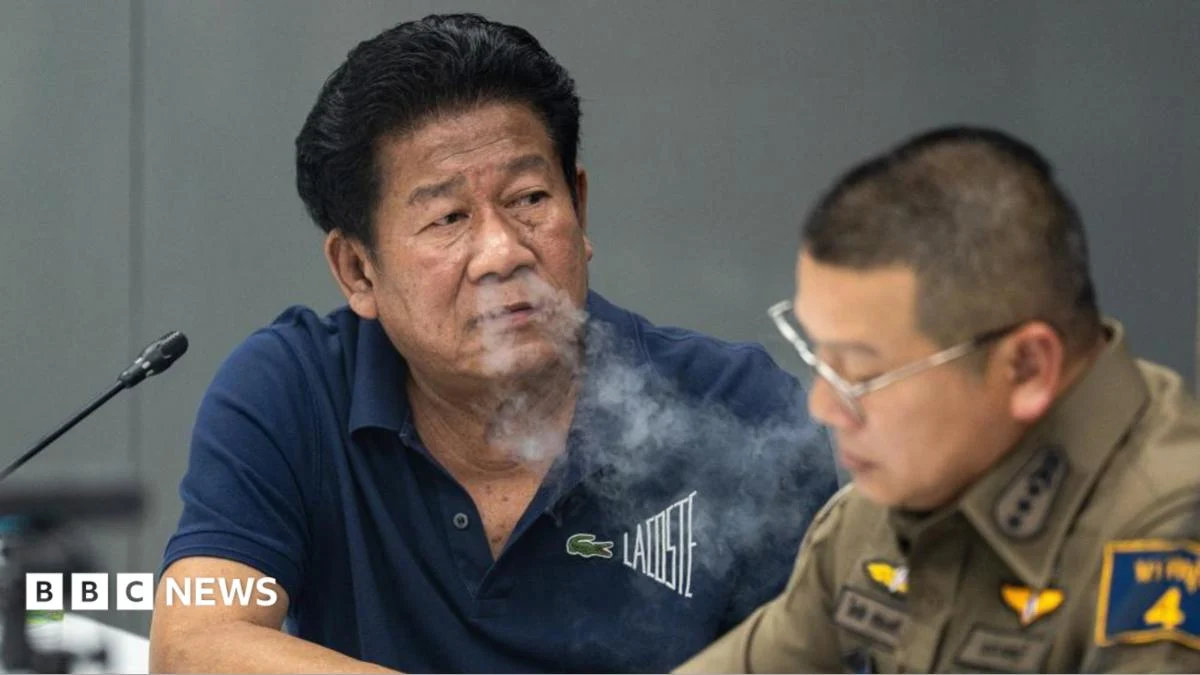
In a shocking turn of events that has sent ripples through Thailand’s political and social landscape, a former Member of Parliament (MP) from Nonthaburi province, Chalong Reawraeng, is alleged to have fatally shot a local official, Thongchai Yenprasert, before making a bizarre confession to a political pundit during a live YouTube broadcast. The incident, which unfolded outside Thongchai’s office, has not only brought to light a potential personal dispute but has also reignited a crucial national conversation on gun control in a country grappling with rising gun violence.
The alleged perpetrator, Chalong Reawraeng, a former MP for Nonthaburi, reportedly contacted Anchalee Paireerak, a well-known political commentator, while she was in the midst of her YouTube livestream. Paireerak, visibly taken aback, described the exchange with the former MP, who confessed to shooting Thongchai Yenprasert, a retired police official and the president of the Nonthaburi Provincial Administrative Organisation (PAO). According to Paireerak’s account, Chalong claimed to have shot Thongchai in the neck. Tragically, Thongchai succumbed to his injuries in hospital, while his driver sustained gunshot wounds to the arm and hand during the altercation.
Following his alleged confession, Chalong Reawraeng was apprehended by authorities. However, in a scene that has drawn considerable attention, he was subsequently permitted to hold a press conference at a police station, where, with a cigarette in hand, he attempted to provide his version of events. He asserted that Thongchai had been "angry" with him, although he refrained from elaborating on the specific reasons behind this alleged animosity. Chalong also maintained that he had no intention of shooting Thongchai, whom he described as a "good friend." He recounted that he had approached Thongchai expressing a desire to talk, but was met with resistance. According to local media reports, the two men were indeed embroiled in a personal dispute.
"He [Thongchai] then pushed me, saying ‘I don’t want to talk, I don’t want to talk,’" Chalong stated during the press conference, detailing the escalation of the confrontation. He further claimed that he followed Thongchai towards his car. It was at this juncture that Chalong alleged the situation took a violent turn. "When I pulled the gun out, I didn’t intend to shoot him. But then [Thongchai’s driver] pulled his gun out and pointed it at me, so I fired," he explained, providing a narrative that places the driver’s actions as a catalyst for his own.
Thongchai Yenprasert, the victim, was a respected figure in local governance, having served as the president of the Nonthaburi PAO, a key administrative body responsible for local development and services. His role as a retired police colonel also added to his standing within the community.
The live YouTube confession to Anchalee Paireerak adds an unprecedented layer to this unfolding drama. During her broadcast, Paireerak was captured on video answering a call midway through her programme. Her initial response, "I’ll call you back… Oh, something big [happened]? Go ahead, what’s that?" signals the unexpected nature of the conversation. While viewers could not audibly discern Chalong’s words, Paireerak’s reaction was unmistakable. Her stunned exclamations, "Did he die? Did he die? You shot him in the head? You need to wait there for the cops," as reported by the BBC, painted a vivid picture of the gravity of the confession. She implored the caller, "Don’t go anywhere."
This latest act of gun violence in Thailand occurs in the immediate aftermath of a deeply tragic mass shooting. Just three days prior to this incident, a 14-year-old boy perpetrated a horrific attack, killing eight people at his home and school before taking his own life. This devastating event marked Thailand’s deadliest mass shooting since 2022. It is crucial to note that the two incidents are unrelated, yet their proximity has amplified national concern over firearms.
The recurrence of gun violence, particularly in such close succession, is expected to intensify the already fervent debate surrounding gun control in Thailand. The country possesses the highest rate of gun ownership in Southeast Asia by a significant margin, a statistic that has long been a point of contention for public safety advocates. Following the school massacre, Thai Prime Minister Anutin Charnvirakul took decisive action, ordering a more stringent enforcement of existing gun laws. He announced that police would be implementing checkpoints as part of a broader crackdown on illegal firearms. Additional measures are also slated to include tightening controls on the possession, carrying, and overall use of firearms across the nation.
The current legal framework governing firearms in Thailand is complex. While civilian ownership of firearms is permitted under strict regulations, the process of obtaining a license can be lengthy and requires thorough background checks. However, concerns persist regarding the accessibility of illegal firearms and the loopholes that may exist in the current system. The high rates of gun ownership, coupled with instances of impulsive violence, highlight the ongoing challenge of ensuring public safety.
The socio-economic factors contributing to gun violence in Thailand are multifaceted. While not directly linked to this specific incident, broader societal issues such as mental health, economic disparities, and the proliferation of online content glorifying violence can play a role in the broader context of gun-related incidents. Experts in criminology and public policy have long pointed to the need for a comprehensive approach that addresses not only the supply of firearms but also the underlying social determinants of violence.
The case of Chalong Reawraeng, a former elected official, adds another layer of complexity. His alleged actions raise questions about the accountability of public figures and the potential for personal disputes to escalate into extreme violence. The fact that he chose to confess via a public livestream, even if to a political pundit, suggests a desire for immediate attention or perhaps a desperate attempt to control the narrative surrounding his alleged crime.
The role of media, particularly social media platforms like YouTube, in such events is also a subject of growing discussion. While providing a platform for public discourse and commentary, these platforms can also become unintended stages for criminal confessions or the dissemination of sensationalized content. The immediate virality of such events, as seen with Paireerak’s livestream, underscores the power and potential pitfalls of real-time digital communication.
As investigations into the shooting continue, the focus will undoubtedly remain on the legal proceedings against Chalong Reawraeng and the ongoing efforts to address gun violence in Thailand. The Nonthaburi incident, juxtaposed with the recent school massacre, serves as a stark reminder of the urgent need for effective policy interventions and societal introspection to curb the tide of gun-related tragedies. The nation awaits further developments in this case, which has captured public attention and underscored the persistent challenges in ensuring the safety and security of its citizens. The coming weeks and months will likely see increased pressure on the government to implement robust measures that go beyond superficial enforcement and address the deep-seated issues contributing to gun violence in Thailand. The international community will also be watching closely, as Thailand navigates this critical juncture in its struggle for public safety.
