
 By admin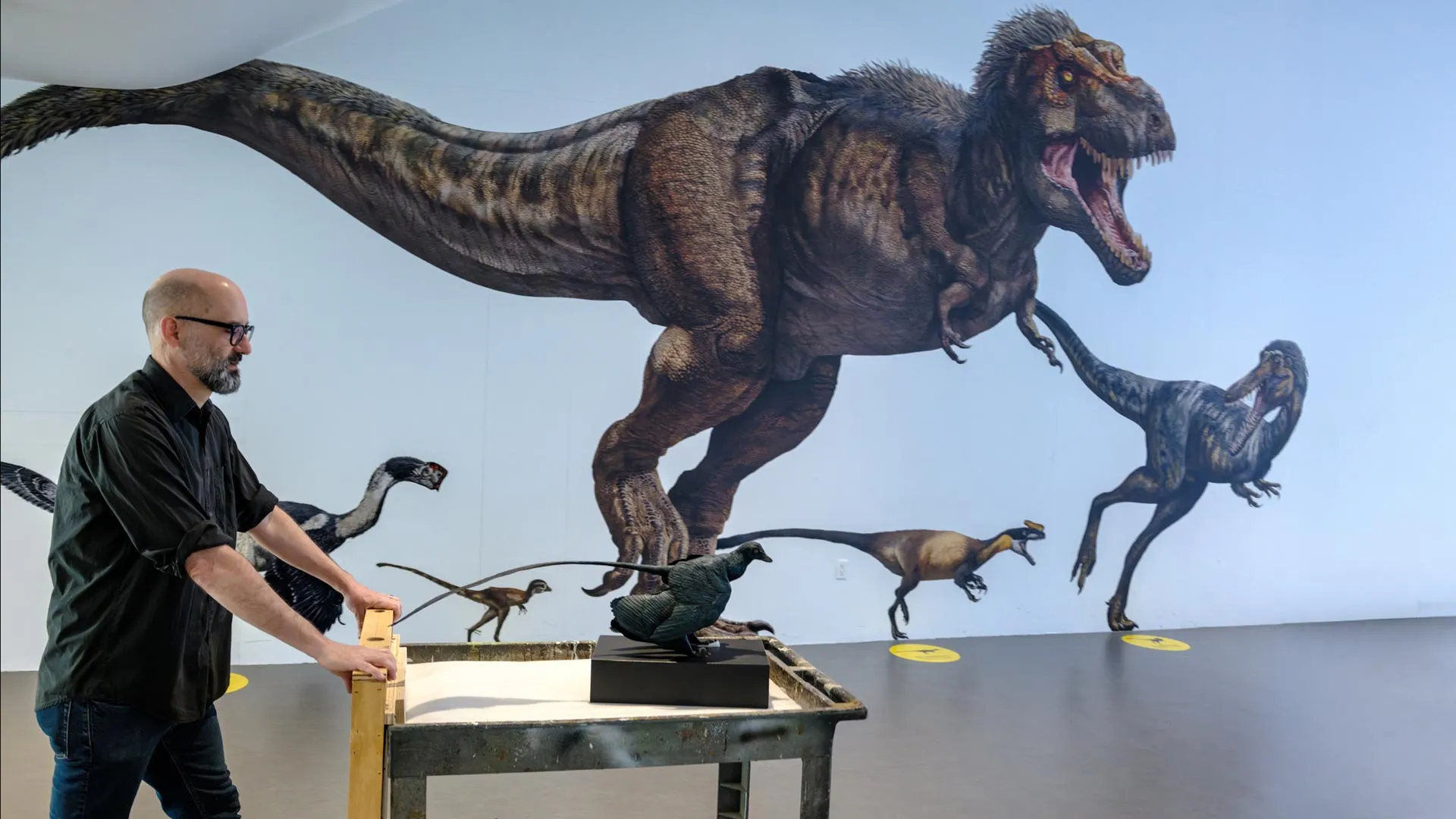
In a groundbreaking study published in the journal Evolution, researchers from the American Museum of Natural History and Princeton University delved into this evolutionary enigma. They employed sophisticated mathematical models to meticulously examine how body size has evolved across various vertebrate groups over millions of years. Their findings, while illuminating for many animal lineages, revealed a persistent puzzle when applied to dinosaurs. The models demonstrated that factors such as energy use and fundamental physiological constraints could effectively account for the wide range of body sizes observed in modern mammals, birds, and even ancient turtles. These physiological principles, encompassing metabolic rates, thermoregulation, and resource allocation for growth and reproduction, typically set upper and lower bounds for an animal’s viable size. However, when these same principles were applied to non-avian dinosaurs, they failed to explain why even the smallest known members of this dominant group remained relatively large, far exceeding the miniature forms common in other vertebrate classes.
This discrepancy led the researchers to propose an alternative hypothesis: ecology, rather than pure physiology, likely imposed a critical lower size limit on non-avian dinosaurs. Specifically, they suggest that intense and prolonged competition with the burgeoning populations of early small mammals may have prevented dinosaurs from occupying the tiny, often cryptic, niches that are now abundantly filled by countless small vertebrates today. For over 100 million years, dinosaurs reigned supreme in many terrestrial ecosystems, evolving into a spectacular array of forms and sizes. Yet, throughout this lengthy period, the smallest non-avian dinosaurs remained stubbornly above a certain threshold, a phenomenon that has long puzzled paleontologists.
"Everyone loves a giant dinosaur," remarked study co-author Roger Benson, the Macaulay Curator of Dinosaur Paleobiology at the American Museum of Natural History. "But we decided to look at the other end of the scale. The absence of tiny dinosaurs may be just as interesting as the existence of giant ones. We already knew that dinosaurs prevented mammals from evolving to large sizes before the end-Cretaceous mass extinction. Here we suggest that mammals in turn prevented dinosaurs from evolving to small sizes." This statement underscores a fascinating aspect of Mesozoic ecology: a bilateral ecological "blockade" where each group effectively constrained the other’s evolutionary reach into certain size classes. While dinosaurs occupied the large and gigantic niches, mammals carved out a persistent existence in the small-bodied realm, a strategy that ultimately paid dividends after the K-Pg extinction event.
Dinosaurs Had a Surprising Lower Size Limit
The stark contrast between the size distribution of dinosaurs and that of many modern animals is indeed striking. The largest dinosaurs, such as sauropods, could easily exceed 80 tons, a mass unparalleled by any land animal since. Yet, when considering the other extreme, the smallest known non-avian dinosaurs weighed in at approximately one pound (around 450 grams). This is roughly comparable to the size of a large domestic rabbit or a small chicken, a respectable size by human standards, but decidedly not "tiny" in the grand scheme of vertebrate life. For example, the smallest known non-avian dinosaur, Parvicursor remotus, was a relatively slender, bipedal theropod from Mongolia, estimated to be around 39 cm (15 inches) long and weighing about 160 grams (0.35 pounds), though estimates vary. Even at this scale, it remains considerably larger than numerous modern vertebrates.
To truly grasp the significance of this lower size limit, one must compare it to the miniature marvels that thrive in today’s ecosystems. The bee hummingbird (Mellisuga helenae), native to Cuba, holds the title of the smallest bird in the world, tipping the scales at a mere 1.75 grams – over 200 times lighter than the smallest non-avian dinosaur. Among mammals, the Etruscan shrew (Suncus etruscus) claims the prize, weighing in at approximately 1.8 grams, a creature so diminutive it can fit on a human thumbnail. Even more extreme examples come from the reptilian world, such as the dwarf gecko (Sphaerodactylus ariasae), which weighs a minuscule 0.15 grams, demonstrating the physiological and ecological feasibility of truly minute body plans. These modern examples highlight that the biological machinery to create and sustain such small forms exists and is highly successful.
Beyond individual examples, the overall distribution of body sizes in modern ecosystems paints a compelling picture. Approximately 75 percent of all living mammal species and a staggering 90 percent of all living bird species are smaller than the smallest known non-avian dinosaurs. This prevalence of small-bodied animals is not accidental; they play crucial roles in nutrient cycling, pest control, and as primary consumers, forming the base of many food webs. Their high reproductive rates, rapid generation times, and ability to exploit diverse microhabitats contribute significantly to the planet’s biodiversity.
"Small animals dominate modern ecosystems," emphasized Stephanie Lechki, the lead author of the study and a postdoctoral fellow at Princeton University. "If we want to understand how today’s biodiversity evolved, we need to understand why tiny dinosaurs appear to have been missing." The question is not just a paleontological curiosity; it touches upon fundamental principles of ecological partitioning and the long-term impacts of evolutionary competition.
Could Tiny Dinosaur Fossils Simply Be Missing?
One obvious and initially compelling possibility for the absence of tiny non-avian dinosaur fossils is the inherent bias of the fossil record itself. It is a well-established fact in paleontology that small animals are generally more difficult to find and preserve. Their delicate, often cartilaginous bones are less likely to survive the harsh processes of decomposition, scavenging, and diagenesis (the physical and chemical changes undergone by sediments during their lithification into rock). This taphonomic bias is a constant challenge for paleontologists, leading to an incomplete understanding of ancient ecosystems, particularly concerning their smaller inhabitants.
However, Benson and Lechki contend that this explanation, while valid for some taxa, does not fully account for the observed pattern in dinosaurs. They argue that if genuinely tiny dinosaurs (e.g., mouse- or sparrow-sized) had been widespread and ecologically significant, at least some fossil evidence of their existence should have emerged by now. This argument is strengthened by the fact that many well-studied fossil sites, particularly those from the Mesozoic Era known for dinosaur remains, frequently preserve an astonishing array of much smaller vertebrates. These sites often yield exquisitely preserved fossils of early mammals, lizards, snakes, amphibians, and other tiny creatures, some of which are far more delicate than what one might expect from a miniature dinosaur.
For instance, sites like the Morrison Formation in North America or the Jehol Biota in China are renowned not just for their dinosaurs but also for their microvertebrate fossils. These include tiny mammals (like multituberculates), small lizards, frogs, salamanders, and even delicate insect remains. If dinosaurs as small as mice had been common inhabitants of these ecosystems, researchers would logically expect to uncover at least some of their skeletal remains alongside these other minute animals. The complete absence, or extreme rarity, of such fossils, despite extensive prospecting and advanced fossil recovery techniques (like screen washing for microfossils), strongly suggests that tiny non-avian dinosaurs were either exceptionally rare or simply did not exist.
Instead, the cumulative fossil evidence, gathered over more than a century of intensive paleontological exploration across multiple continents, indicates that genuinely tiny dinosaurs outside the bird lineage were either extremely uncommon ecological outliers or, more likely, were ecologically constrained from evolving such diminutive sizes altogether. This persistent gap in the fossil record, when contrasted with the rich diversity of small forms in other coexisting groups, transforms a potential taphonomic problem into a significant evolutionary question.
Mathematical Models Reveal a Dinosaur Puzzle
To move beyond anecdotal evidence and test their hypotheses rigorously, the researchers turned to the power of mathematical models. These models, designed to predict how natural selection influences body size, are powerful tools in evolutionary biology. They incorporate various aspects of animal physiology directly related to energy intake, metabolic expenditure, and reproductive strategies. The fundamental premise behind these models is that evolution tends to favor body sizes that allow animals to efficiently convert available energy from their environment into viable offspring, thereby maximizing their fitness and ensuring the perpetuation of their genes.
When the researchers applied this sophisticated theoretical framework to different vertebrate groups, the models proved remarkably successful in reproducing observed body size patterns. For example, they accurately predicted the range of sizes seen in modern mammals, which are endothermic and have high metabolic rates, and birds, which share similar physiological characteristics. The models also performed well for turtles, a group known for its diverse sizes and varied ecological strategies, though they are ectothermic. This success validated the models’ ability to capture the physiological drivers of body size evolution in these groups.
However, the models were less successful when applied to other ectothermic reptiles like snakes, lizards, and crocodilians, suggesting that for these groups, physiological constraints might interact with ecological factors in more complex ways. But dinosaurs presented an even greater and more persistent problem. Even after testing a wide variety of possible physiological conditions – encompassing different metabolic rates (from ectothermic to fully endothermic, reflecting ongoing debates about dinosaur metabolism), growth rates, and reproductive strategies – the mathematical models consistently failed to account for why most non-avian dinosaurs were considerably larger than expected. The models, based purely on physiological efficiency, suggested that smaller dinosaur body plans should have been evolutionarily viable and even advantageous in many scenarios, yet they simply don’t appear in the fossil record.
This significant mismatch between physiological predictions and paleontological reality strongly suggests that dinosaur body size was not controlled by physiology alone. Instead, it points to the overwhelming influence of external ecological pressures. These pressures likely included intense competition for resources with other small-bodied vertebrates, predation risks that might disproportionately affect very small dinosaur juveniles, and the restricted access to certain ecological niches that were already saturated by other groups. Such ecological forces, operating over vast geological timescales, probably played a critical role in determining the lower size limit for non-avian dinosaurs.
How Birds Escaped the Dinosaur Size Constraint
The findings of this study also offer a compelling explanation for one of the most pivotal turning points in vertebrate evolution: the spectacular rise and diversification of birds. Birds, as is now widely accepted, are direct descendants of small, feathered theropod dinosaurs. Yet, modern birds can achieve body sizes far below those ever recorded for their non-avian dinosaur relatives. Soon after the earliest birds first appeared during the Early Cretaceous period, they underwent a rapid evolutionary trajectory, quickly developing body plans that were significantly smaller than those attained by any other dinosaur group. This dramatic reduction in size, especially in the context of the dinosaurian size constraint, demands an explanation.
According to the researchers, physiology by itself cannot adequately account for this rapid and widespread evolutionary move toward miniature bodies in early birds. While some physiological changes undoubtedly occurred, the models indicate that these alone were insufficient to explain the sudden departure from the established dinosaurian size floor.
Instead, the study proposes that the acquisition of powered flight represented a profound evolutionary innovation that fundamentally transformed the ecological possibilities available to early birds. Once birds evolved the ability to fly, they gained access to entirely new habitats and ways of life that were simply unavailable to their terrestrial dinosaur relatives. Flight allowed them to exploit aerial insect resources, forage in the canopies of towering trees, navigate complex three-dimensional environments, and escape terrestrial predators with unprecedented efficiency. This radical shift in ecological access may have allowed early birds to effectively escape the very ecological forces—most notably, competition with small mammals—that had previously prevented their dinosaurian ancestors from evolving much smaller body sizes.
"The ability to fly may have opened entirely new ways of life," Lechki elaborated. "Once birds entered those new ecological niches, they were free to evolve body sizes that had simply not been possible for other dinosaurs." Flight essentially provided an "ecological release," allowing birds to occupy a vast array of previously untapped microhabitats and resource opportunities, thereby circumventing the competitive pressures that had bottlenecked the size evolution of their terrestrial cousins. This transition marked a crucial divergence, leading to the incredible diversity of avian forms we see today, many of which are astonishingly small.
A Small Mystery With Big Implications
The question of why dinosaurs never became extremely small, initially appearing as a niche paleontological query, carries profound implications for our broader understanding of evolutionary biology, ecological competition, and the constraints that shape life’s diversity. Further research will undoubtedly aim to clarify the precise ecological pressures that favored certain body sizes while effectively excluding others during the Mesozoic Era. This could involve more detailed reconstructions of ancient food webs, refined analyses of niche partitioning between coexisting groups, and perhaps even the discovery of exceptionally rare, smaller dinosaur fossils that could challenge current assumptions.
Understanding these intricate forces could ultimately reveal why dinosaurs were able to evolve into some of the most colossal and awe-inspiring animals ever to walk the planet, dominating the terrestrial realm for over 150 million years, while simultaneously being seemingly unable to occupy the smallest size classes that are so common and ecologically vital among animals today. The "missing tiny dinosaurs" are not merely an absence; they are a powerful testament to the subtle but relentless power of ecological interactions in shaping the trajectory of evolution.
"We have this unusual situation where the ancestors of dinosaurs could be tiny. The living descendants of dinosaurs – birds – they can be tiny. But dinosaurs themselves seemed to be forbidden from being tiny," Benson concluded, encapsulating the enduring enigma. "And we don’t really understand that yet, but it’s a question we should continue to explore if we really want to understand dinosaurs and their fascinating biology." This ongoing exploration promises to yield deeper insights not only into the world of dinosaurs but also into the fundamental principles that govern the evolution of size, shape, and diversity across all life.
