
 By admin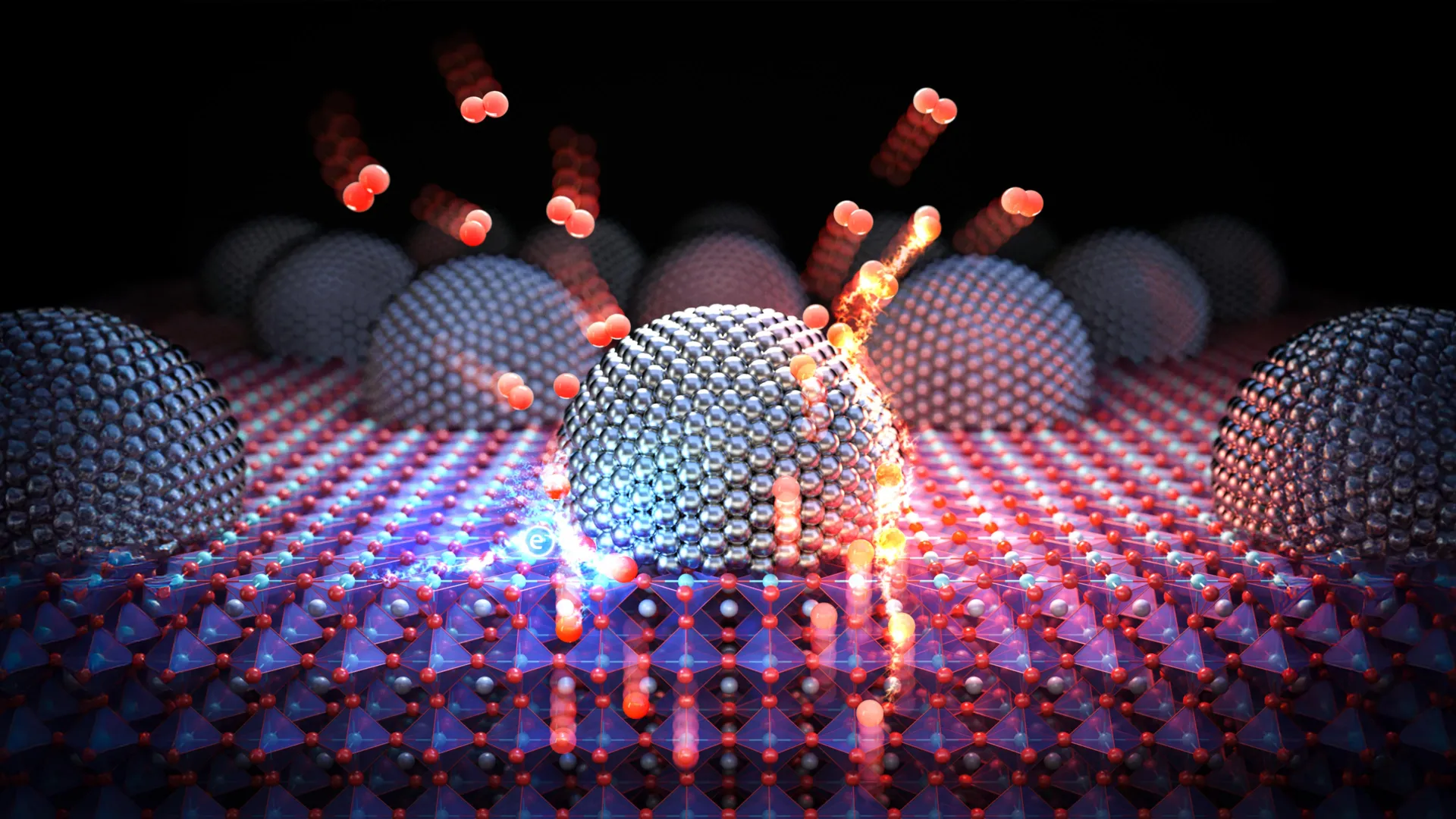
The research was spearheaded by a collaborative team of experts, including Professors WooChul Jung and Jeong Woo Han from the Department of Materials Science and Engineering at Seoul National University (SNU), Professor Sang Ouk Kim’s team at KAIST, and Dr. Beomgyun Jeong’s team at the Korea Basic Science Institute (KBSI). Their collective efforts have not only clarified how silver nanocatalysts enhance solid oxide cell performance but have also definitively shown that both the location and the atomic-level mechanism of crucial oxygen reactions dynamically shift based on the cell’s operational mode – whether it’s generating power or producing hydrogen.
Solid oxide cells (SOCs) are a cornerstone technology in the global push for sustainable energy, renowned for their exceptional versatility and high efficiency. These devices operate by facilitating the movement of oxygen ions through a dense, solid ceramic electrolyte at elevated temperatures, typically ranging from 500°C to 1000°C. This unique ionic conductivity allows them to perform two distinct yet equally vital functions: they can electrochemically combine fuel (like hydrogen or natural gas) with oxygen to generate electricity, acting as a fuel cell (SOFC mode), or they can reversibly split water (or CO2) into hydrogen (or CO) and oxygen using electricity, functioning as an electrolyzer (SOEC mode). This dual capability positions SOCs as a critical option for expanding both clean electricity generation and the production of green hydrogen, a key decarbonization vector for hard-to-abate sectors.
Potential applications for this technology are vast and transformative. In SOFC mode, they can power distributed combined heat and power (CHP) systems in buildings, industrial facilities, and even data centers. These systems not only generate highly efficient electricity but also harness the high-temperature waste heat produced during operation for heating or industrial processes, significantly improving overall energy utilization efficiency. In SOEC mode, coupled with intermittent renewable energy sources like solar and wind, solid oxide electrolyzers can produce "green hydrogen" from water, offering a scalable solution for energy storage and the decarbonization of transportation, industrial processes (e.g., steel, ammonia production), and power generation. The ability to switch between these modes in a single device, known as a reversible solid oxide cell (RSOC), offers unprecedented flexibility for grid balancing and energy management.
Despite their immense promise, the widespread adoption of SOCs faces several challenges, including high manufacturing costs, material degradation at elevated temperatures, and optimizing the kinetics of electrochemical reactions at the electrodes. Among these, the performance and long-term durability of solid oxide cells are profoundly influenced by the speed and efficiency of oxygen reactions occurring at the air electrode, often referred to as the cathode in SOFC mode and the anode in SOEC mode. These reactions, involving the reduction of oxygen molecules into oxygen ions (O2 + 4e- → 2O2-) during electricity generation and the evolution of oxygen gas from oxygen ions (2O2- → O2 + 4e-) during hydrogen production, are kinetically sluggish and often rate-limiting.
Historically, improving these reaction rates has been a major focus of research. While earlier studies had demonstrated that incorporating metal nanocatalysts into the air electrodes could significantly boost cell performance, the precise mechanisms and locations of their activity remained largely enigmatic. Conventional electrodes possess complex, porous microstructures, making it incredibly difficult for researchers to pinpoint exactly where these nanocatalysts exert their influence – whether the catalytic activity predominantly occurs directly on the catalyst’s surface, at the interface where the catalyst meets the electrode material (the triple phase boundary, or TPB), or through some synergistic combination. Furthermore, it was unclear if the same catalytic mechanism was responsible for accelerating both electricity generation and hydrogen production, or if the catalyst adapted its role.
To untangle these complexities, the research team employed an ingenious strategy: they meticulously fabricated a model electrode with a precisely controlled structure and composition, rather than relying on the intricate, often unpredictable architecture of conventional electrodes. This innovative approach involved arranging metal nanoparticles of uniform sizes and spacing in highly ordered patterns on a thin film perovskite oxide electrode. This level of structural control was paramount, as it allowed the researchers to systematically vary parameters like nanoparticle size, spacing, and the total length of the catalyst-electrode interface, thereby enabling a much more precise examination of their catalytic roles.
The initial phase of their investigation involved a comparative study of several promising metal nanocatalysts, including silver (Ag), cobalt (Co), palladium (Pd), and platinum (Pt). Each metal was deposited onto the model perovskite oxide electrode and rigorously tested for its ability to accelerate oxygen reactions. The results were compelling: among all the metals evaluated, silver produced the most significant and robust catalytic improvement, making it the prime candidate for deeper mechanistic study. Silver is particularly attractive due to its relatively lower cost compared to noble metals like platinum and palladium, and its known activity towards oxygen reactions, although its precise role in SOCs had been debated.
The pivotal discovery emerged when the researchers systematically manipulated the size and arrangement of the silver nanoparticles to discern the primary locations of the most critical reactions. What they found was a remarkable adaptability:
During the oxygen reduction reaction (ORR), which is the electrochemical process fundamental to electricity generation in SOFC mode, reaction rates were observed to increase proportionally with the total length of the boundary where the silver nanoparticles directly interfaced with the perovskite oxide electrode. This quantitative correlation unequivocally demonstrated that the interface between the silver nanocatalyst and the electrode material serves as the main reaction site when the cell is generating electricity. At this interface, the silver likely facilitates the transfer of electrons to incoming oxygen molecules, while the electrode provides pathways for oxygen ion incorporation into the electrolyte.
However, the situation dramatically changed during the oxygen evolution reaction (OER), the process central to hydrogen production in SOEC mode. In this operational mode, the reaction rates showed a strong correlation with the total surface area of the silver nanoparticles themselves. This result conclusively indicated that the surface of the silver particles becomes the primary reaction site during hydrogen production. Here, the silver surface likely acts as a favorable platform for the adsorption of oxygen species, their recombination into oxygen molecules, and their subsequent desorption from the electrode surface.
In essence, the research revealed that the very same silver nanocatalyst possesses the extraordinary ability to perform its most important chemistry in two entirely different physical locations, depending on the operational direction of the energy device. This is akin to a multi-tool that intelligently reconfigures its primary functional component based on the task at hand.
To further elucidate these operational differences, the researchers conducted additional experiments, meticulously adjusting parameters such as the applied voltage and the oxygen concentration. They discovered that during oxygen reduction (electricity generation), the silver nanocatalysts primarily aid in the efficient transfer of electrons to oxygen molecules, initiating the reduction process. Conversely, during oxygen evolution (hydrogen production), the silver’s role shifts to facilitating the recombination of oxygen atoms into stable oxygen molecules and subsequently supporting their release from the electrode surface. This nuanced understanding of function provides a critical basis for targeted catalyst design.
To gain an atomic-scale understanding of these mechanisms, the team employed sophisticated operando synchrotron-based analysis, specifically Ambient Pressure X-ray Photoelectron Spectroscopy (AP-XPS). This advanced technique allowed them to observe dynamic changes occurring on the electrode surface in real-time under realistic operating conditions, providing invaluable information about the chemical states and electronic structure of the surface species. These experimental observations were then rigorously complemented and validated by atomic-scale theoretical calculations, such as Density Functional Theory (DFT).
The combined results from these advanced techniques provided unprecedented clarity. They demonstrated that during oxygen reduction, silver nanocatalysts subtly alter the electronic structure of the electrode surface in a way that creates more energetically favorable sites for oxygen adsorption and electron transfer. During oxygen evolution, the silver catalyst creates specific surface conditions that significantly lower the energy barrier for the combination of individual oxygen atoms into molecular oxygen, thereby accelerating the release of O2 gas. These precise atomic-level insights provide a comprehensive explanation for why the catalyst behaves so distinctly depending on whether the cell is generating electricity or producing hydrogen.
These findings introduce a revolutionary paradigm shift in the design philosophy for catalysts in electrochemical energy systems. The research unequivocally suggests that nanocatalysts should no longer be viewed merely as passive additives that uniformly speed up chemical reactions. Instead, their active locations and fundamental operating mechanisms are dynamic, changing adaptively with the specific operating mode of the energy system.
This profound insight directly translates into a novel design strategy for solid oxide cells. Rather than pursuing a single "universal" catalyst optimization for all modes, researchers now have the opportunity to engineer the catalyst with unprecedented precision. For example, when developing air electrodes for solid oxide fuel cells (SOFCs), the focus could be on optimizing the catalyst-electrode interface, perhaps by enhancing epitaxial growth, promoting specific crystallographic orientations, or modifying interfacial electronic coupling to maximize electron and ion transfer pathways. Conversely, for solid oxide electrolysis cells (SOECs), the emphasis could shift to engineering the surface morphology of the silver nanoparticles, introducing specific surface defects, or controlling surface facets to create more active sites for oxygen adsorption, recombination, and desorption.
The potential ramifications of successfully incorporating this principle into practical devices are immense. For distributed energy systems used in buildings and factories, it could lead to significant improvements in electricity generation efficiency, translating into lower operational costs and reduced carbon footprints. For the burgeoning green hydrogen economy, it could dramatically lower the amount of electricity required for renewable energy-powered water electrolysis, making green hydrogen production more economically viable and accelerating its global adoption.
Furthermore, this approach holds particular promise for advancing reversible solid oxide cells (RSOCs). By understanding and optimizing the catalyst for both fuel cell and electrolyzer modes, researchers can design more efficient and durable RSOCs, which are crucial for grid-scale energy storage, balancing intermittent renewable energy sources, and providing flexible energy solutions for homes and industrial facilities. This discovery could be the key to unlocking the full potential of RSOC technology, enabling devices that seamlessly switch between power generation and hydrogen production to meet dynamic energy demands.
Beyond solid oxide cells, the precisely controlled nanoparticle array-based model electrode developed by the researchers itself represents a significant scientific advancement. This versatile platform provides an unparalleled tool for fundamentally investigating where catalysts operate and how they function in a variety of complex electrochemical and catalytic systems. This methodology could be invaluable for accelerating research and development in other critical energy technologies, including dedicated hydrogen production devices, various other electrochemical energy conversion technologies (such as CO2 reduction cells or chemical reactors), and advanced oxygen separation systems.
Professor WooChul Jung, who led this transformative study, underscored its significance: "This research is particularly impactful because it not only quantitatively evaluates the performance enhancements provided by nanocatalysts but, crucially, also definitively identifies their actual reaction sites and operating mechanisms under different conditions. This level of fundamental understanding is what drives true innovation." He further articulated the team’s future vision, stating, "We plan to further establish this as a new design principle that can be broadly applied to various energy conversion materials and catalytic systems, paving the way for more efficient and sustainable technologies."
Dr. Jinwook Kim, a key researcher in this study, is currently a postdoctoral researcher at Northwestern University and is poised to join the University of Seoul as an assistant professor in the Department of Materials Science and Engineering. He expressed his commitment to continuing this vital line of inquiry, stating his goal is "to extend this work toward the development of even higher-efficiency energy conversion materials and devices by further unraveling the complexities of nanocatalysis in solid oxide cells and related technologies."
This pioneering research was made possible through the generous support of the Ministry of Science and ICT and the National Research Foundation of Korea (RS-2024-00452853, RS-2025-00521316). The critical synchrotron-based AP-XPS research, which provided invaluable operando insights, was conducted at the KBSI-PAL 8A2 AP-XPS beamline, with support from the Pohang Accelerator Laboratory/POSTECH and the Korea Basic Science Institute. The collaborative nature and interdisciplinary expertise brought to bear on this challenge exemplify the innovative spirit required to tackle the most pressing energy issues of our time.
