
 By admin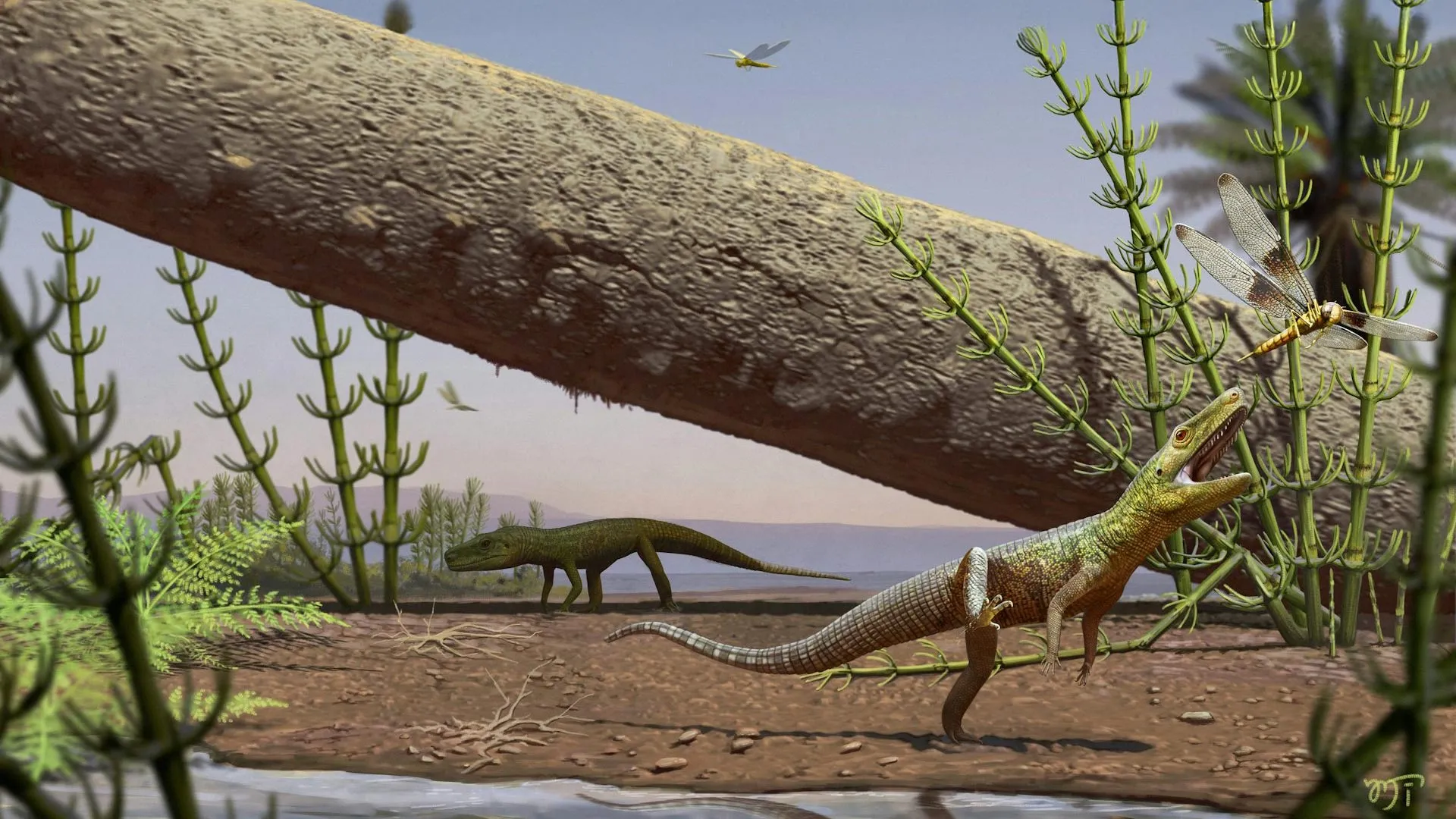
A groundbreaking discovery in the heart of Rio Grande do Sul, Brazil, has unveiled a new species of ancient reptile, Silescelida acristata, dating back approximately 240 million years to the Middle Triassic Period. This fossil, unearthed in Dona Francisca within the boundaries of the UNESCO Quarta Colônia Geopark, provides crucial insights into the evolutionary lineage of archosauriformes – the foundational group that eventually diversified into the mighty archosaurs, including the ancestors of crocodiles and dinosaurs, and by extension, birds. The finding, a collaborative effort by researchers from the Quarta Colônia Center for Paleontological Research (CAPPA/UFSM) at the Federal University of Santa Maria, the Federal University of Rio Grande do Sul (UFRGS), and the Pontifical Catholic University of Rio Grande do Sul (PUCRS), has been published in the prestigious scientific journal Scientific Reports, underscoring its significant impact on our understanding of early reptile evolution.
The Middle Triassic epoch, approximately 247 to 237 million years ago, was a pivotal time in Earth’s history, marked by the planet’s slow but steady recovery from the most catastrophic mass extinction event ever recorded: the Permian-Triassic extinction, often dubbed "The Great Dying," which occurred roughly 252 million years ago. This cataclysmic event, likely triggered by massive volcanic eruptions in the Siberian Traps, wiped out an estimated 96% of all marine species and 70% of terrestrial vertebrate species, fundamentally reshaping life on Earth. Against this backdrop of ecological devastation and subsequent recovery, new forms of life began to emerge and diversify, filling the vast ecological niches left vacant. Reptiles, with their adaptable biology, were particularly successful in this post-extinction world, and among them, the archosauriforms were poised for an extraordinary evolutionary radiation.
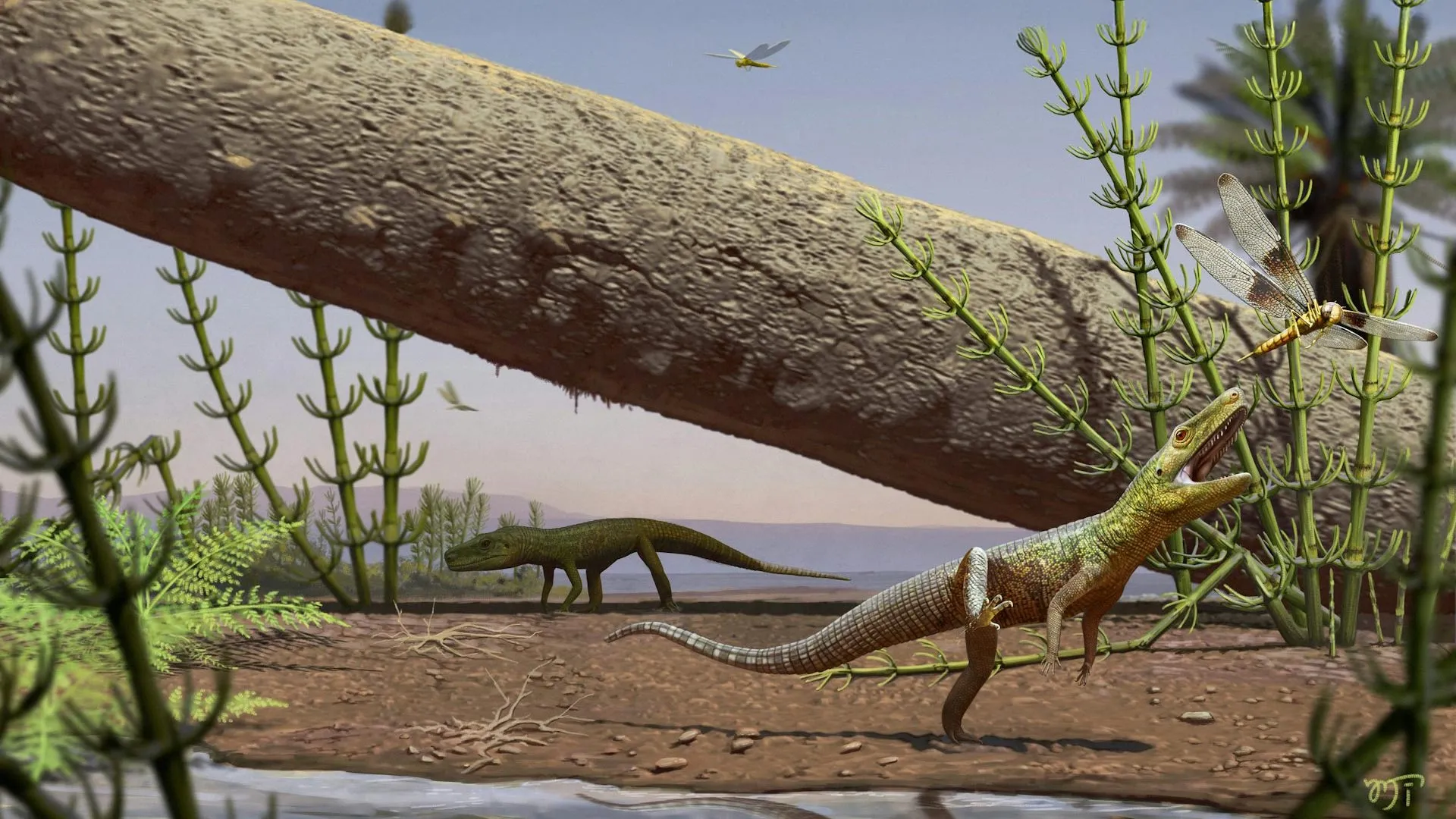
Silescelida acristata emerged into this nascent world as a relatively small, agile creature. Paleontologists estimate its size to be comparable to that of a modern small alligator, suggesting a slender build and a lifestyle that involved navigating the recovering terrestrial environments on all four limbs. While not a direct ancestor of dinosaurs or crocodiles, it belonged to a crucial collateral lineage, positioned close to the very forms that would give rise to these iconic groups. Its dentition and morphology suggest that Silescelida acristata likely occupied the ecological niche of a small predator, feeding on smaller animals that were also proliferating in the Triassic ecosystems of what is now southern Brazil. This role as a meso-predator would have been vital in the restructuring food webs, contributing to the overall ecological balance of the era.
The significance of this fossil, despite its fragmentary nature, is profound. Primarily preserving parts of the limbs, this material might initially seem limited, yet it harbors invaluable information regarding the animal’s locomotion, posture, and, crucially, its evolutionary relationships. One of the most revealing features of Silescelida acristata is found in its femur, the thigh bone. This bone exhibits characteristics that indicate a more semi-erect limb posture, distinct from the sprawling gait typical of many earlier reptiles and modern lizards. In a semi-erect posture, the legs are positioned more directly underneath the body rather than splayed out to the sides. This anatomical shift represents a significant evolutionary innovation, allowing for more efficient locomotion. By reducing the drag caused by a body closer to the ground and enabling a more upright stance, this posture would have facilitated faster movement, better endurance, and potentially improved agility, all critical advantages in the competitive Triassic landscape. This transformation in limb mechanics is a key evolutionary step, directly foreshadowing the fully erect posture that would become a hallmark of later archosaurs, including dinosaurs, which greatly contributed to their eventual dominance of terrestrial ecosystems. Thus, Silescelida acristata offers a tangible glimpse into a critical experimental phase of body plans and locomotion strategies among the close relatives of dinosaurs and crocodiles, predating their eventual ascendance.
Phylogenetic analyses, which map evolutionary relationships based on shared anatomical features, indicate that Silescelida acristata likely shares a close affinity with the Euparkeriidae. This group of archosauriforms is notoriously rare and remains poorly understood by the scientific community. Prior to this discovery, fossils attributed to the Euparkeriidae were known primarily from isolated localities across Africa, Asia, and Europe. The identification of a related form in South America dramatically expands the known geographic distribution of these enigmatic animals, suggesting that Euparkeriidae or their close kin were far more widespread across the supercontinent of Pangea during the Triassic than the existing fossil record had previously indicated. This finding not only fills a geographical gap but also reinforces the critical importance of South America, particularly regions like Rio Grande do Sul, as a treasure trove for studying the origin and early diversification of major terrestrial vertebrate groups. The presence of such a rare and globally distributed lineage in Brazil further solidifies the continent’s role as a key region for understanding ancient biogeography and the dispersal patterns of early reptiles.
The discovery of Silescelida acristata is also intertwined with an unusual and captivating "rediscovery" story. A crucial part of the fossil, precisely the fragment that held essential information about its original provenance and context, was accidentally misplaced for more than two decades. This unfortunate loss rendered the remaining fossil material less informative, as its origin could not be definitively established. It was not until 2022, during a routine technical visit to the scientific collection at the Pontifical Catholic University of Rio Grande do Sul (PUCRS), that researchers serendipitously located the long-lost fragment. This remarkable rediscovery proved to be the missing piece of the puzzle, enabling scientists to confirm the specimen’s precise origin, fully contextualize its significance, and formally describe it as a new species.
The animal’s very name, Silescelida acristata, pays homage to this extraordinary journey. "Silescelida" is a compound word derived from terms associated with "silence" and "leg." "Silence" refers to the long period during which the crucial part of the fossil lay forgotten and unstudied, its story unheard. "Leg" directly references the type of preserved material, which consists predominantly of limb bones – the very parts that unlocked so much evolutionary information. The specific epithet "acristata," meaning "without a crest," highlights another distinctive anatomical feature. This refers to the absence of a particular crest or raised bony protrusion on its femur, known as a trochanter, which in many related species serves as an attachment point for certain tail muscles. This unique absence further differentiates Silescelida acristata from nearly all its close evolutionary relatives, making it a truly distinct and invaluable specimen.
The presence of Silescelida acristata in the Middle Triassic strata of Brazil fundamentally alters our perspective on the early evolutionary history of archosauriforms. It demonstrates that the diversification of these crucial reptile lineages was far broader and more intricate than previously conceived. The fossil unequivocally indicates that lineages closely related to the Euparkeriidae were indeed present in South America, reinforcing the continent’s pivotal role in the early and widespread diversification of the ancestors of dinosaurs and crocodiles. This expanded understanding of their distribution and morphology contributes to a more complete picture of the Triassic faunal landscape.
Furthermore, this discovery emphatically reinforces Rio Grande do Sul’s well-established status as one of the world’s most vital regions for the study of Triassic fauna. The sedimentary rocks of this region are a veritable paleontological archive, preserving an astonishing array of fossils from different stages in the evolution of terrestrial vertebrates. This includes some of the earliest known dinosaurs, as well as an impressive assemblage of large predators that roamed the Earth before the true "Age of Dinosaurs" began. Each new fossil unearthed in this rich geological context contributes significantly to the grand tapestry of life, helping scientists reconstruct how terrestrial ecosystems reorganized themselves in the aftermath of the Permian-Triassic extinction and how the foundational groups that would eventually dominate the continents first emerged and diversified.
The story of Silescelida acristata also serves as a powerful testament to the enduring value of all fossil discoveries, even those that are incomplete. Fragmentary fossils are sometimes perceived as less informative than complete skeletons. However, paleontological reality dictates that the vast majority of fossils recovered during excavations are, by their very nature, incomplete. Discoveries like Silescelida acristata profoundly illustrate that even isolated skeletal elements can yield fundamental, transformative information about evolution. In this specific case, a collection of limb bones, initially fragmented and even partially lost, enabled researchers to identify and formally describe a new species. These bones provided critical clues about its locomotion, allowed for robust investigations into its phylogenetic relationships, and significantly expanded the known geographic distribution of a rare and important group of Triassic reptiles.
More than just the description of a new ancient animal, this study powerfully demonstrates how Brazilian paleontology continues to make invaluable contributions to our global understanding of central chapters in the history of life on Earth. Deep within the ancient rocks of the interior of Rio Grande do Sul, 240-million-year-old fossils like Silescelida acristata still hold crucial clues about the origin and early evolution of the animal groups that would go on to permanently transform terrestrial ecosystems and shape the course of vertebrate evolution for millions of years to come.
