
 By admin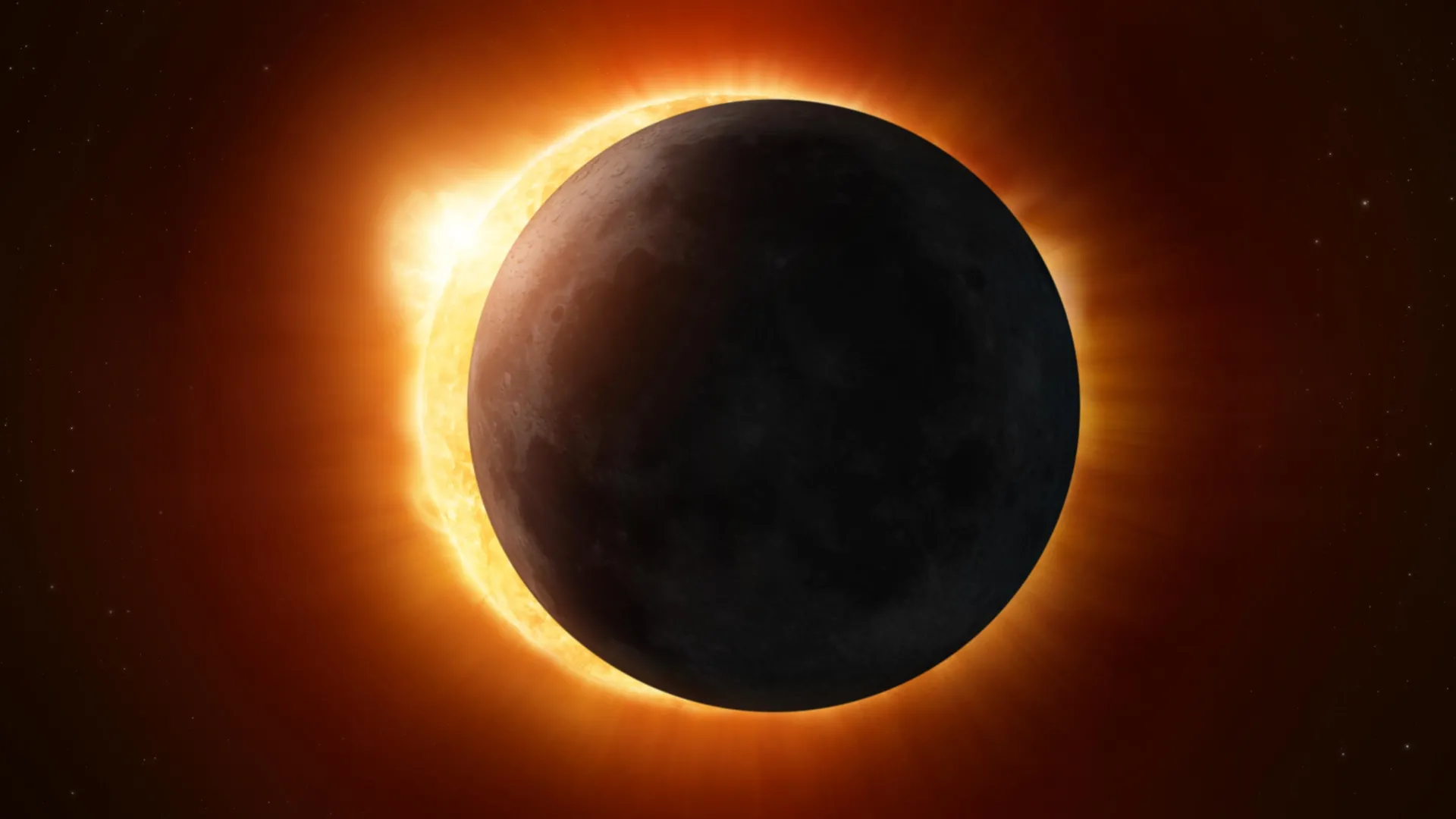
Understanding the Grand Spectacle: What Happens During a Total Solar Eclipse
A total solar eclipse is one of nature’s most breathtaking and awe-inspiring events, a profound celestial alignment where the Moon, in its orbit around Earth, passes directly between our planet and the Sun. This precise cosmic ballet results in the Moon completely obscuring the Sun’s brilliant disk, casting a narrow, fleeting shadow across a specific region of Earth. This rare moment, known as totality, transforms daylight into a deep twilight, allowing phenomena typically hidden by the Sun’s glare to become visible.
During totality, the Sun’s blinding photosphere is entirely covered, revealing its ethereal outer atmosphere, the corona. This pearly white, wispy crown of plasma, extending millions of kilometers into space, is usually invisible to the naked eye due to the Sun’s overwhelming brightness. Scientists study the corona intensely during eclipses, as it offers a unique window into understanding the Sun’s magnetic fields, solar flares, and coronal mass ejections—events that can significantly impact space weather and technological infrastructure on Earth. The sudden dimming of the sky can also cause bright stars and planets to emerge, creating a surreal daytime constellation. Temperatures can noticeably drop, and localized winds may shift or strengthen. Perhaps most fascinating are the biological responses: birds may cease singing and roost as if night has fallen, and insects might begin their nocturnal chirping, demonstrating the profound impact of this astronomical event on terrestrial life.
The August 12, 2026, eclipse is particularly significant for Europe, as a substantial portion of the continent will experience at least a partial solar eclipse. However, the true spectacle—the narrow path of totality—will sweep across a more limited geographical band. This path will begin over the remote, icy landscapes of Greenland, then arc southeastward across the volcanic terrains of Iceland, offering spectacular views against dramatic backdrops. After traversing the North Atlantic, the shadow will make landfall in Europe, grazing a small, northeastern corner of Portugal before slicing directly across Spain from west to east. Major Spanish cities such as Oviedo, León, Valladolid, and Zaragoza are positioned within this coveted path, promising their inhabitants the full, immersive experience of totality.
For those outside this narrow corridor of totality but still within Europe, the event will manifest as a partial solar eclipse. In these locations, the Moon will only cover a portion of the Sun, making it appear as if a "bite" has been taken out of its disk. While still a captivating sight, the sky will merely dim slightly, and the spectacular phenomena of the corona, stars, and dramatic temperature drops will not be observed. Nevertheless, it serves as a powerful reminder of the dynamic mechanics governing our solar system.
ESA’s Unprecedented Live Broadcast from Spain
To commemorate and scientifically document this momentous occasion, the European Space Agency (ESA) is organizing a comprehensive live broadcast directly from the Observatorio Astrofísico de Javalambre in Teruel, Spain. This location has been meticulously chosen for its exceptional viewing conditions, as the eclipse is projected to traverse Spain under what are typically clear, cloudless skies, moving efficiently from the western coast to the eastern regions of the Iberian Peninsula.
The live stream will commence at 1:30 p.m. EDT (19:30 CEST) on August 12, accessible globally via ESA Web TV and ESA’s official YouTube channel. This initiative reflects ESA’s commitment to public engagement and scientific dissemination, allowing millions worldwide to partake in an event that, for many, would otherwise be geographically inaccessible.
The broadcast will be helmed by the esteemed award-winning space scientist and renowned science communicator, Dame Dr. Maggie Aderin-Pocock. Known for her engaging style and ability to demystify complex scientific concepts, Dr. Aderin-Pocock will guide viewers through the various stages of the eclipse, offering real-time explanations and insights. She will be joined by an impressive lineup of expert guests, ensuring a rich and multi-faceted discussion. These include Professor Carole Mundell, ESA’s Director of Science, who brings an executive scientific perspective; ESA scientists Andy To, Miho Janvier, and Martin Hewitson, each contributing their specialized knowledge in solar physics and space weather; and Javier Cenarro, the distinguished director of the Observatorio Astrofísico de Javalambre, who will provide unique insights into the observatory’s operations and its role in astronomical research.
The live program is designed to be highly informative and visually stunning, featuring live interviews, in-depth scientific explanations, and striking imagery captured during the event. The discussions will delve into several critical aspects of eclipse science, starting with a detailed exploration of the Sun and its enigmatic corona. Experts will explain why the corona, the Sun’s outermost atmosphere, is hundreds of times hotter than its surface and how its structure provides clues about solar activity and the solar wind. A significant segment will also be dedicated to the famous 1919 eclipse that provided crucial observational evidence supporting Albert Einstein’s General Theory of Relativity. Arthur Eddington’s expedition to measure the deflection of starlight by the Sun’s gravity during totality famously confirmed Einstein’s predictions, revolutionizing our understanding of gravity and the universe. Furthermore, the broadcast will highlight ESA’s ongoing work to create "artificial solar eclipses" in space using advanced coronagraphs aboard missions like Solar Orbiter and SOHO, enabling continuous study of the corona without waiting for rare natural eclipses.
The Climax: 81 Seconds of Total Darkness
The pinnacle of the event for those at Javalambre and for global viewers will occur at precisely 2:31 p.m. EDT (11:31 a.m. PDT). At this moment, the Observatorio Astrofísico de Javalambre will be plunged into 1 minute and 21 seconds of profound twilight as the Moon achieves perfect alignment, completely obscuring the Sun. This brief but powerful period of totality promises an unforgettable experience for those on site and a captivating visual for the broadcast audience.
During these precious 81 seconds, the Sun’s spectacular corona will become fully visible, appearing as a shimmering, ethereal halo around the Moon’s dark silhouette. The broadcast will capture this phenomenon with unparalleled clarity, utilizing sophisticated telescope views to bring the intricate details of the corona to viewers worldwide. Additionally, drone footage will provide breathtaking aerial perspectives of the observatory and its surroundings as darkness descends, offering a unique contextual view of the eclipse’s impact on the landscape. A core component of the live stream will be the real-time reactions of Dame Dr. Maggie Aderin-Pocock and Professor Carole Mundell as they witness this extraordinary celestial event firsthand, sharing their awe and scientific insights with the global audience. The broadcast, presented entirely in English to ensure broad accessibility, is scheduled to conclude around 2:45 p.m. EDT (11:45 a.m. PDT), providing ample time to cover the key moments and expert analysis.
Javalambre: A World-Class Site for Celestial Observation
The Observatorio Astrofísico de Javalambre stands as an exceptional choice for hosting this live broadcast, not only due to its prime location within the path of totality but also because of its inherent scientific capabilities. Situated at an altitude of approximately 1,957 meters (6,421 feet) in the Sierra de Javalambre mountain range in Teruel, Spain, the observatory benefits from remarkably dark skies and excellent atmospheric conditions, making it a world-class facility for astronomical research. Its two principal professional telescopes, the JST/T250 and the JAST/T80, are dedicated to carrying out extensive wide-sky astronomical surveys. These surveys generate vast amounts of data that enable scientists to investigate fundamental questions about the universe, including the distribution and evolution of galaxies, the mysterious nature of dark energy, and the large-scale structure of the cosmos. The Javalambre Physics of the Accelerating Universe Astrophysical Survey (J-PAS) and the Javalambre Photometric Local Universe Survey (J-PLUS) are examples of ambitious projects conducted here, utilizing unique photometric systems to map the universe in unprecedented detail.
Beyond its cutting-edge research, Javalambre is exceptionally well-suited for eclipse viewing. The region boasts a high number of clear nights and low incidence of cloud cover, significantly improving the chances of an unobstructed view of the eclipse. The remote location also ensures minimal light pollution, which, while crucial for deep-sky astronomy, also enhances the visual impact of the darkened sky during totality. Crucially for this particular eclipse, the site offers an especially clear and unobstructed view toward the western horizon. This is vital because the Sun will be relatively low in the sky, approaching sunset, as the Moon passes in front of it. A clear western horizon ensures that the entire eclipse sequence, from partial phases to totality and then back to partial, can be observed without terrestrial obstructions.
To maximize the visual experience for the broadcast, several additional small telescopes will be deployed at the observatory specifically for the eclipse. These instruments will provide continuous, high-magnification close-up views of the Sun as the Moon gradually traverses its disk, showcasing the intricate details of sunspots, solar flares (if present), and the developing crescent phases. During the broadcast, Javier Cenarro, the Director of the observatory, will offer detailed insights into Javalambre’s operations, its ongoing research, and its broader significance for future ESA space science missions. His discussion might hint at potential collaborations or specific roles Javalambre could play in supporting ESA’s ambitious scientific endeavors, leveraging its unique observational capabilities.
Ensuring Comprehensive Coverage: Multiple Live Feeds Tracking the Eclipse
Recognizing the unpredictable nature of localized weather and the desire to provide the most robust and high-quality coverage possible, ESA will not rely solely on observations from Javalambre. The agency has strategically arranged for two additional live feeds from other key locations situated within the path of totality. This multi-site approach significantly improves the probability that the broadcast will capture clear, continuous, and visually stunning views of the eclipse, even if localized cloud formations were to temporarily obscure the view from one site.
One crucial additional feed will originate from ESA’s public event in León, another major Spanish city lying directly in the path of totality. This feed will not only provide alternative astronomical views but also offer a dynamic glimpse into the atmosphere and excitement of a large public gathering experiencing the eclipse. It will showcase the collective awe and wonder of thousands of people witnessing this rare event together, adding a vital human element to the scientific broadcast.
The third live feed will come from Frómista, a municipality in the province of Palencia, also within the totality path. This feed will be facilitated by collaborator Alejandro Sánchez de Miguel, an esteemed researcher affiliated with the Institute of Astrophysics of Andalusia, the Complutense University of Madrid, and the Stars4All Foundation. Sánchez de Miguel’s involvement underscores the collaborative spirit of scientific research and public engagement. His observations from Frómista will likely provide unique perspectives, potentially focusing on specific scientific measurements or visual aspects that complement the primary Javalambre feed. This redundancy and geographical spread ensure that the global audience receives the most complete and captivating experience of the August 12, 2026, total solar eclipse, cementing its place as a landmark event in both astronomical observation and public science communication.
