
 By admin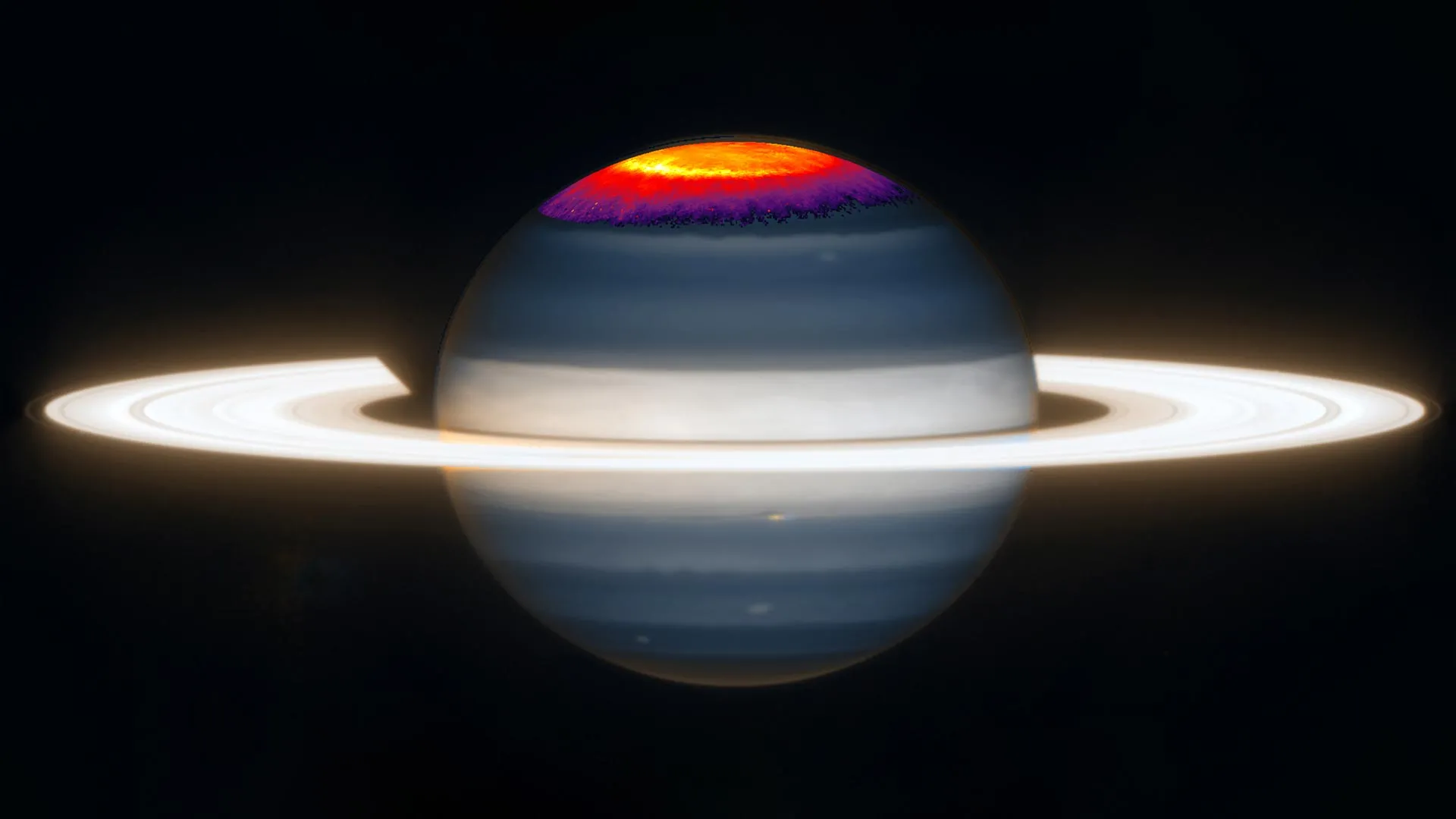
The research, meticulously compiled and analyzed, was published in the prestigious journal Nature Communications. Key contributors to this pivotal study include Dr. Licia Ray and Dr. Sarah Badman of Lancaster University, alongside Dr. Chris Arridge, who was formerly associated with Lancaster University. Their collective expertise in space plasma physics and planetary magnetospheres was instrumental in deciphering the subtle yet profound deviations observed in Saturn’s magnetic field.
The Cassini-Huygens mission, a monumental endeavor of international collaboration, was designed with the ambitious goal of conducting a comprehensive investigation of Saturn and its intricate system. This included its iconic rings, the diverse array of natural satellites, and the vast, dynamic space environment surrounding the gas giant. A partnership involving NASA, the European Space Agency (ESA), and the Italian space agency (ASI), Cassini orbited Saturn for an impressive thirteen years, from 2004 until its dramatic "Grand Finale" plunge into Saturn’s atmosphere in 2017. Throughout its operational lifetime, Cassini gathered an unprecedented wealth of data, which continues to yield transformative scientific discoveries years after the mission’s conclusion.
Saturn’s Rapid Rotation and Internal Dynamics Reshape the Magnetic Picture
The new findings provide compelling support for a longstanding theoretical framework suggesting that the rapid rotation inherent to massive planets like Saturn can become a more dominant factor than the external solar wind in shaping their magnetospheres. This paradigm shift highlights a fundamental difference between terrestrial planets and gas giants.
To fully appreciate the significance of this discovery, it’s essential to understand the basic concepts involved. A magnetosphere is the extensive region of space around a planet where its magnetic field holds sway, providing a crucial shield against the relentless onslaught of the solar wind. The solar wind is a continuous stream of energetic, charged particles—primarily electrons and protons—ejected from the Sun’s upper atmosphere, traveling at immense speeds throughout the solar system. Without a magnetosphere, a planet’s atmosphere could be gradually stripped away, and its surface exposed to harmful radiation.
However, this protective magnetic bubble is not entirely impenetrable. Near a planet’s magnetic poles, there exist funnel-shaped openings known as "magnetospheric cusps." These are regions where the magnetic field lines diverge significantly, allowing charged solar particles to penetrate the magnetosphere more directly and, in some cases, precipitate into the planet’s upper atmosphere, leading to phenomena like auroras.
Researchers meticulously analyzed Cassini observations collected between 2004 and 2010 to precisely map the location of Saturn’s magnetospheric cusp. The instruments on board Cassini, such as the Cassini Plasma Spectrometer (CAPS) and the Magnetospheric Imaging Instrument (MIMI), were crucial in detecting the energetic particles that define these regions. When these precise measurements of Saturn’s cusp location were compared with similar, well-established observations of Earth’s magnetosphere, a striking and major difference emerged.
On Earth, which rotates relatively slowly (a day lasts 24 hours), the magnetosphere’s shape is predominantly dictated by the equilibrium between the pressure exerted by the solar wind and the pressure from Earth’s internal magnetic field. This balance typically positions Earth’s magnetospheric cusp close to local high noon, where the solar wind directly impacts the planet’s sunward side.
Saturn, however, presented a dramatically different scenario. Its powerful and incredibly rapid rotation appears to "drag" the cusp significantly away from the expected noon position. On average, the cusp at Saturn is shifted well into the afternoon sector, typically observed between 13:00 and 15:00 local time. In some remarkable instances, this displacement was so pronounced that the cusp extended considerably toward 20:00 local time, approaching the dusk terminator. This significant displacement towards the evening sector provides irrefutable evidence that a planet’s internal rotation rate can fundamentally reshape its immediate space environment, altering the very geometry of its protective magnetic field.
A Shift With Profound Implications for Saturn’s Auroras and Space Weather
This unusually displaced cusp location at Saturn carries profound consequences for several key astrophysical processes, most notably for models of magnetic reconnection, the acceleration of high-energy particles, and the generation of Saturn’s intense and spectacular auroral activity.
Magnetic reconnection is a fundamental plasma process where magnetic field lines break and reconfigure, releasing enormous amounts of energy that can accelerate charged particles to very high velocities and energies. On Earth, reconnection events in the magnetotail (the nightside extension of the magnetosphere) and at the dayside magnetopause are well-studied drivers of space weather phenomena. If Saturn’s cusp is consistently shifted, it implies that the regions where reconnection is most likely to occur are also displaced, requiring a complete recalibration of existing models.
Dr. Licia Ray of Lancaster University emphasized the transformative potential of this discovery: "This result allows us to move forward with new and improved theories on how planetary magnetospheres interact with the solar wind. It’s not just about the external solar wind pressure; the internal dynamics of a rapidly rotating giant planet are equally, if not more, crucial in shaping its magnetic environment."
The stark contrast with Earth further illuminates the uniqueness of Saturn. As mentioned, Earth’s slower rotation means its magnetosphere’s configuration is largely a direct response to the solar wind’s pressure. This balance ensures Earth’s cusp remains predictably close to local high noon.
Saturn, by contrast, operates under a completely different set of conditions. A day on Saturn lasts approximately 10.7 hours, making it one of the fastest-rotating planets in our solar system. Furthermore, its magnetosphere is not just shaped by its rapid spin but also by a significant and continuous supply of ionized material originating from its moon, Enceladus. Enceladus is famous for its cryovolcanic plumes, which erupt water ice and gas into space. A substantial portion of this material becomes ionized and trapped within Saturn’s magnetosphere, forming a massive, rapidly co-rotating plasma disk.
Together, Saturn’s incredibly rapid rotation and this abundance of internally generated ionized material create a unique dynamic. The internal pressure from the planet’s magnetic field and its rapidly rotating disk of charged material must balance the external pressure of the solar wind. These powerful internal forces combine to exert a significant "corotational drag" on the magnetospheric field lines, effectively pulling and twisting them. This powerful combination of rapid rotation and internal plasma pressure is what fundamentally explains why Saturn’s cusp appears so dramatically shifted toward the afternoon and evening sectors, a stark departure from the equivalent region at Earth.
Cassini Data Continues to Reveal New Science
The far-reaching implications of this discovery extend to improving scientists’ understanding of Saturn’s extraordinarily bright auroras and the energetic processes taking place within its vast magnetosphere. Saturn’s auroras, observed in ultraviolet, visible, and infrared light, are among the most powerful in the solar system, often exhibiting dynamic and complex structures.
Dr. Ray further elaborated on these implications: "In particular, the afternoon cusp locations have significant implications for how we interpret Saturn’s bright aurora and where we expect magnetic reconnection—an explosive process that accelerates particles to very high energies of keV and more—to occur. If the entry points for solar wind particles are shifted, the pathways for precipitating auroral particles will also change, affecting auroral morphology and intensity. This discovery also powerfully highlights the rich science that can still be done with Cassini data more than eight years after the end of the mission. The sheer volume and quality of the data continue to provide new insights into the Saturnian system."
The sustained scientific productivity from Cassini’s archived data serves as a testament to the foresight of its mission planners and the meticulous work of its instrument teams. The mission’s "Grand Finale" phase, where Cassini executed a series of daring dives between Saturn and its innermost ring, provided unprecedented close-up observations that further enriched the dataset, offering unique perspectives on the planet’s magnetic field and atmosphere.
Beyond Saturn, this research holds significant implications for comparative planetology. Scientists can now apply these refined models to other rapidly rotating giant planets in our solar system, such as Jupiter, which also possesses a powerful magnetic field and a significant internal plasma source from its moon Io. The understanding gained from Saturn will undoubtedly influence future missions and observations targeting the magnetospheres of Uranus and Neptune, which remain less explored. Furthermore, as the study of exoplanets progresses, particularly gas giants orbiting other stars, this research provides crucial theoretical underpinnings for predicting the magnetic environments of these distant worlds, influencing our understanding of their potential habitability and atmospheric evolution. The intricate interplay between a planet’s internal dynamics and its external space environment is proving to be far more complex and diverse than once imagined, with Cassini’s legacy continuing to unravel its profound secrets.
