
 By admin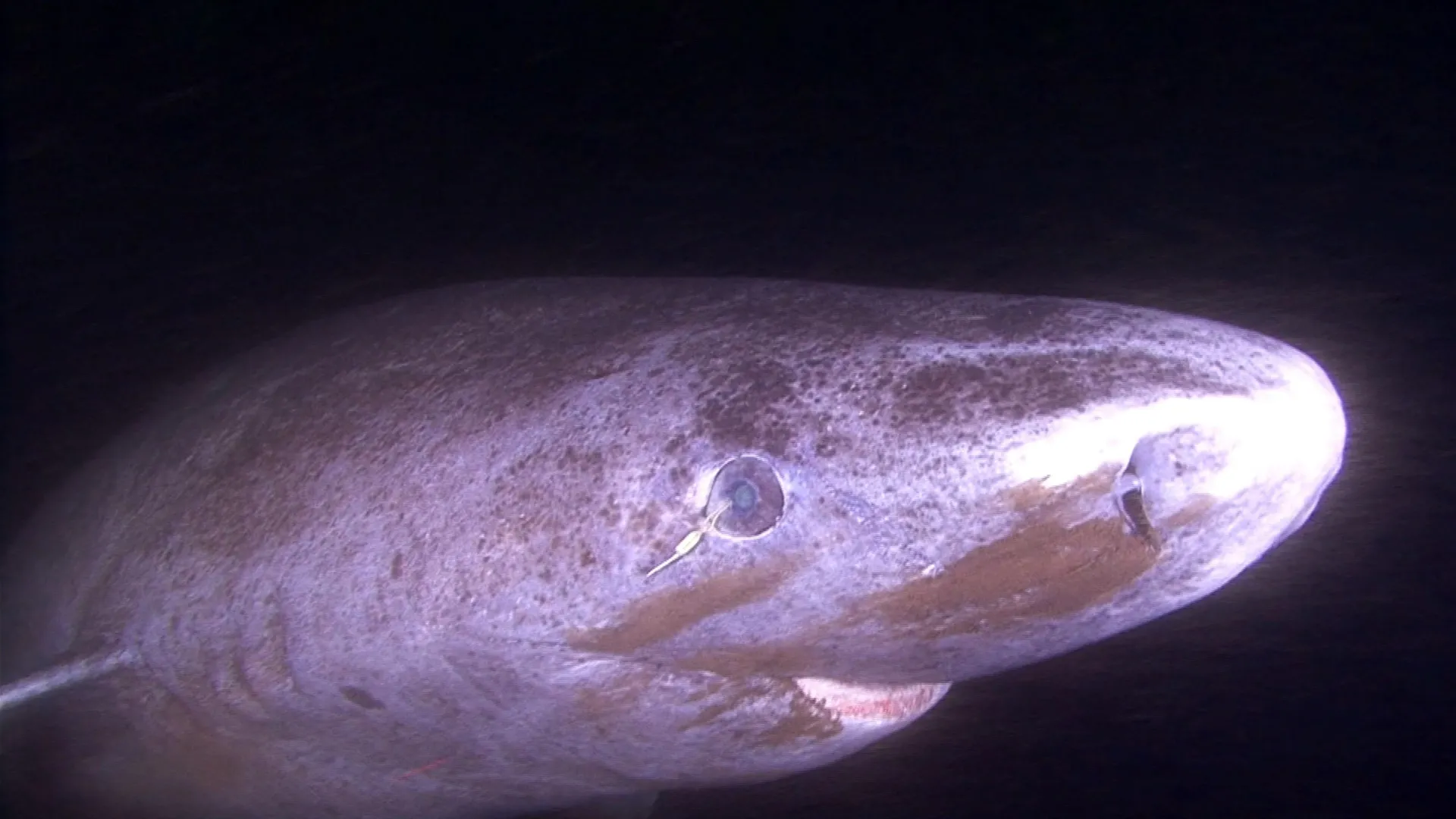
In the hushed glow of her computer screen, Dr. Dorota Skowronska-Krawczyk, an associate professor of physiology and biophysics at the University of California, Irvine, meticulously observes the slow, deliberate movement of a Greenland shark. The creature, a denizen of the Arctic’s abyssal depths, glides through the dark, frigid waters, its ancient existence unfolding in digital frames. "You see it move its eye," Dr. Skowronska-Krawczyk remarks, her finger tracing the outline on the monitor. "The shark is tracking the light — it’s fascinating." This simple observation, seemingly minor, holds profound implications, challenging long-held scientific assumptions about one of Earth’s most enigmatic and enduring creatures.
Greenland sharks (scientific name: Somniosus microcephalus) are not merely long-lived; they are the longest-living vertebrates known to science, with some individuals estimated to have roamed the Arctic seas for an astonishing 400 years. Their longevity, often four times that of the bowhead whale, makes them living relics, witnesses to centuries of oceanic history. These apex predators are characterized by their imposing, thick gray bodies, which can reach lengths of up to 24 feet, making them comparable in size to great white sharks. They possess small heads and short, rounded snouts, perfectly adapted for their slow, stealthy hunting style in the deep.
However, it is their eyes that have historically captivated and confounded scientists. Often described as cloudy or milky, their appearance can seem almost lifeless, further obscured by a unique, symbiotic relationship with a parasitic copepod, Ommatokoita elongata. This yellowish-white crustacean, typically 2-3 centimeters long, embeds itself directly into the shark’s cornea, often on both eyes, appearing like a bizarre biological attachment. For decades, the presence of these parasites, combined with the extreme darkness and murkiness of their deep Arctic habitat – where sunlight barely penetrates beyond a few hundred feet – led scientists to a prevailing hypothesis: Greenland sharks might be functionally blind. The conventional wisdom suggested that an animal living in perpetual twilight, burdened by ocular parasites, would have little evolutionary incentive to maintain functional vision.
Yet, new, groundbreaking research led by Dr. Skowronska-Krawczyk, in collaboration with an international team, suggests a strikingly different and far more complex picture. This interdisciplinary study, published in the prestigious journal Nature Communications, is not just challenging assumptions about Greenland shark vision; it is also offering unprecedented clues into the fundamental processes of aging and longevity itself. Co-authored by researchers from the University of Basel, Switzerland, Walter Salzburger and Lily G. Fogg, who contributed critical insights into the evolutionary aspects of the work, the findings represent a significant leap forward in understanding deep-sea biology and the mechanics of extreme lifespan.
The study’s revelations are manifold. Perhaps most astonishingly, the research indicates that a sophisticated DNA repair mechanism may enable Greenland sharks to preserve their eyesight for centuries, defying the retinal degeneration typically associated with extreme old age in most species. Furthermore, their visual systems appear to be exquisitely adapted to the extraordinarily low light levels characteristic of their Arctic domain, operating with an efficiency previously underestimated.
Dr. Skowronska-Krawczyk’s primary research focus typically lies in the molecular processes underlying age-related eye diseases, seeking to unravel how aging impacts vision in humans. Her foray into the world of Greenland sharks began serendipitously after encountering a pivotal 2016 research paper by Dr. John Fleng Steffensen, published in the journal Science. That paper detailed the remarkable longevity of these sharks, determined through radiocarbon dating of their eye lenses, and also noted the prevalence of the ocular parasites.
"One of my takeaway conclusions from the Science paper was that many Greenland sharks have parasites attached to their eyes — which could impair their vision," Dr. Skowronska-Krawczyk recalls. "Evolutionarily speaking, you don’t keep the organ that you don’t need." This established biological principle, however, gnawed at her. Why would an organism maintain a complex sensory organ if it were truly useless? Driven by this scientific curiosity, she began reviewing numerous video recordings of Greenland sharks in their natural habitat. "After watching many videos, I realized this animal is moving its eyeball toward the light," she observed. This crucial behavioral anomaly, a subtle yet persistent orientation towards even the faintest glimmer, became the catalyst for her deep dive into the sharks’ visual system.
The opportunity to investigate these ancient eyes more closely arose through collaboration with leading marine biologists. The Greenland sharks examined in the study were meticulously caught between 2020 and 2024 using scientific long lines, a method designed for minimal impact, near the University of Copenhagen’s Arctic Station on Disko Island, Greenland. This remote outpost, nestled amidst the pristine, icy landscapes of the Arctic, provided an unparalleled logistical base for retrieving these elusive creatures from their deep-sea habitat.
Dr. Steffensen, a distinguished professor of marine biology at the University of Copenhagen and a pioneer in Greenland shark research, played a crucial role in the acquisition and initial processing of the specimens. He collaborated closely with Dr. Peter G. Bushnell, who teaches at Indiana University South Bend, and Dr. Richard W. Brill of the Virginia Institute of Marine Science. This team of marine biologists, experts in ichthyology and deep-sea physiology, carefully dissected the sharks’ eyes immediately after capture, a critical step to ensure tissue integrity. The delicate ocular tissues were then meticulously preserved in a specialized fixative solution, a chemical cocktail designed to halt cellular degradation and maintain the structural and molecular integrity of the tissues for subsequent detailed study in laboratories far from the Arctic’s icy grasp.
The arrival of these preserved specimens at Dr. Skowronska-Krawczyk’s UC Irvine lab marked a moment of palpable excitement and anticipation. Emily Tom, a UC Irvine Ph.D. student and an aspiring physician-scientist in training, vividly remembers the day one of these extraordinary packages arrived. "I opened the package, and there was a giant, 200-year-old eyeball sitting on dry ice just staring back at me," the 28-year-old recounts with a laugh, the memory still fresh. The sheer scale of the specimen was an immediate challenge. "We’re used to working with mouse eyeballs, which are the size of a papaya seed, so we had to figure out how to scale up to a baseball-sized eyeball." This transition required a complete re-evaluation of standard laboratory protocols, from handling techniques to the dimensions of dissection tools. "Luckily, Dorota is very hands-on, both in her mentoring style and in the lab — which you don’t see a lot of with professors," Tom adds, highlighting the collaborative and immersive environment fostered by Dr. Skowronska-Krawczyk.
The initial stages of working with the ancient eye tissue were as unique as the specimen itself. Tom meticulously allowed the eye to defrost carefully, a slow process critical to preventing cellular damage. The olfactory experience was unforgettable. "The lab smelled like a fish market," she notes, a testament to the biological reality of working with marine samples. Handling the thawed tissue demanded extreme precision and speed; even slight warming to room temperature risked compromising the integrity of the delicate cellular structures and molecular components, potentially undoing weeks of painstaking collection and preservation efforts.
Despite these formidable challenges, Tom, under Dr. Skowronska-Krawczyk’s guidance, embarked on a series of rigorous histological and vision-specific analyses of the eye tissue. The results were nothing short of revelatory. Critically, the researchers found no evidence of widespread cell death or significant degeneration in the shark retina, a stark contrast to what would be expected in an animal of such advanced age. This finding strongly suggests the presence of robust protective and repair mechanisms at play, actively maintaining retinal health over centuries.
Further investigation yielded another crucial discovery: rhodopsin, the light-sensitive protein essential for vision in dim light conditions, remained highly active and functional within the Greenland shark retina. More remarkably, the team found that this rhodopsin was specifically tuned to detect blue light. This spectral adaptation is a profound evolutionary advantage, as blue light is the wavelength that penetrates deepest into oceanic waters. In the perpetually shadowed realm of the Arctic deep, where sunlight is scarce and scattered, the ability to effectively perceive blue light would be paramount for navigation, foraging, and detecting prey. This specialization provides a clear physiological basis for the shark’s observed light-tracking behavior, indicating that their visual system is not merely functional, but exquisitely optimized for its unique, extreme environment.
"Not a lot of people are working on sharks, especially shark vision," Tom emphasizes, highlighting the novelty and importance of their work. "We can learn so much about vision and longevity from long-lived species like the Greenland shark, so having the funds to do research like this is very important." Indeed, the findings underscore a profound biological principle: the Greenland shark’s remarkable lifespan does not necessarily come with the severe retinal deterioration that might be anticipated in an animal living for several centuries. Their vision, far from being a vestigial or impaired sense, appears to be a highly evolved and enduring one.
For Dr. Skowronska-Krawczyk, the implications of this research extend far beyond ichthyology. The work raises the tantalizing possibility that understanding the intricate mechanisms by which Greenland shark eyes remain healthy and functional for centuries could eventually illuminate new pathways and strategies for preventing and treating age-related vision loss in humans. The cellular and molecular resilience observed in these ancient eyes could hold secrets applicable to common human ophthalmic conditions.
The findings could offer novel insights into complex eye diseases such as macular degeneration, a leading cause of vision loss in older adults, and glaucoma, which damages the optic nerve and can lead to blindness. By deciphering the DNA repair mechanisms and anti-aging processes at play in the shark retina, researchers might identify new therapeutic targets or preventive measures for these debilitating conditions. At a broader scientific level, the study prompts fundamental questions about the evolution of vision, the mechanisms by which tissues and organs maintain functionality over extraordinarily long periods, and whether some of these remarkable protective strategies could ultimately be harnessed for human health and longevity. The Greenland shark, in essence, becomes a living laboratory for understanding extreme biological resilience.
Despite the monumental discoveries and the promising avenues for future research, Dr. Skowronska-Krawczyk voices concerns about the perennial challenge of securing consistent federal research funding. The uncertainty surrounding future support for this type of groundbreaking, yet often unconventional, comparative biology work could impede progress. However, she remains steadfastly confident, asserting, "we will prevail." Her determination is fueled by the intrinsic joy of scientific exploration.
"What I love about my work is that we are the first in the world to see results — at the forefront, finding new mechanisms, rules and discoveries," Dr. Skowronska-Krawczyk says, her gaze returning to the image of the ancient shark paused on her screen. The slow glide, the subtle eye movement – each detail a testament to an enduring enigma now beginning to reveal its secrets. "Then, being able to share this joy with students — that’s the best part of it." In the dark, cold depths of the Arctic, the Greenland shark’s eyes, once thought to be dim, are now shedding a bright, blue light on the mysteries of life, vision, and the astonishing resilience of nature.
