
 By admin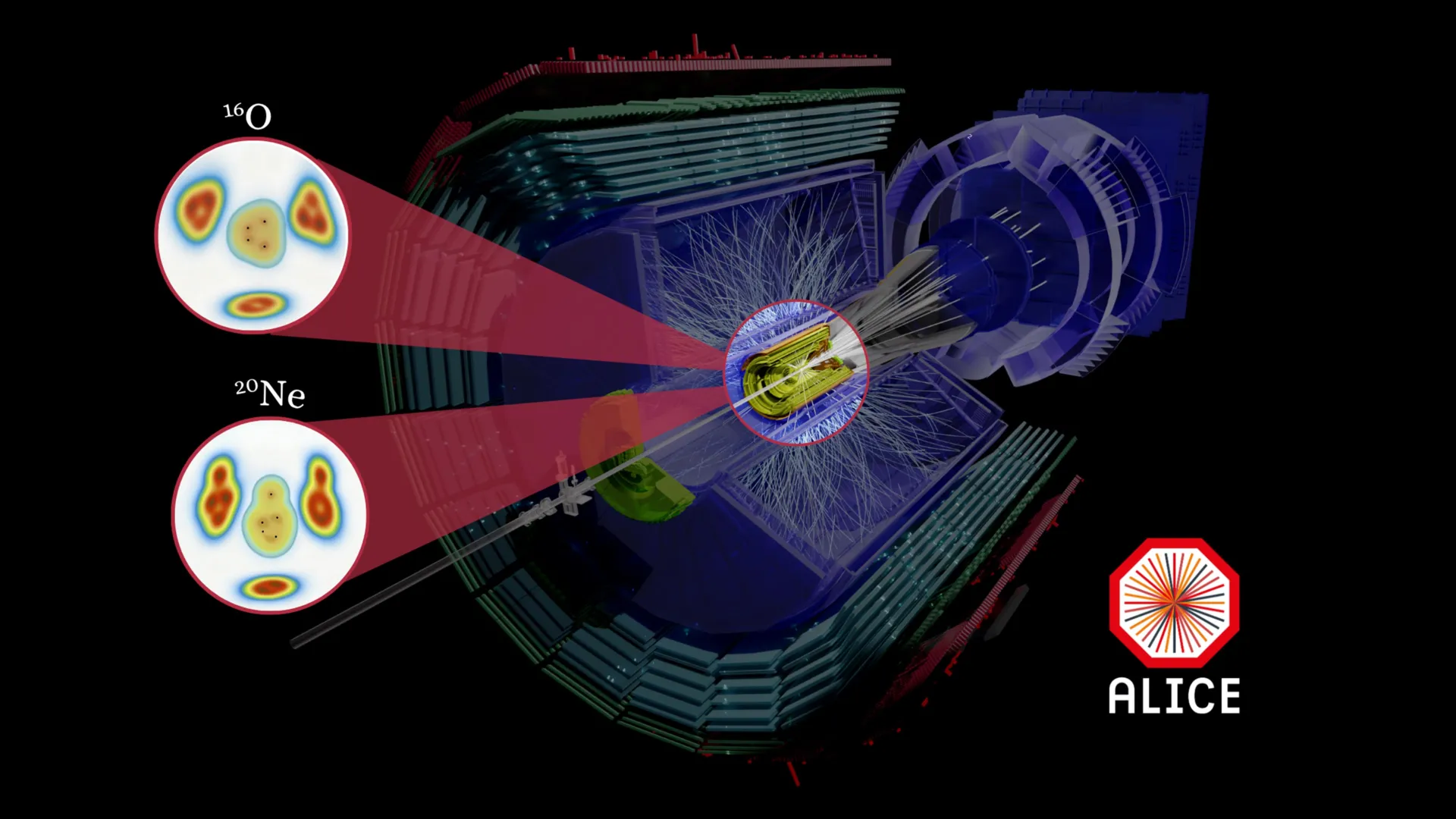
Before the cosmos blossomed with stars, planets, and the familiar tapestry of atoms, the Universe existed in an utterly alien state. In its infancy, merely a millionth of a second after the cataclysmic Big Bang, the fundamental building blocks of matter were not yet bound into protons and neutrons. Instead, they swirled in an unimaginably hot and dense "soup" known as quark-gluon plasma (QGP). Understanding this fleeting primordial epoch is crucial for piecing together the Universe’s grand narrative, from the formation of galaxies to the very nature of matter itself.
At the European Organization for Nuclear Research (CERN) in Switzerland, physicists embark on an ambitious quest to rewind the cosmic clock, reproducing these extreme conditions on a minuscule scale. The Large Hadron Collider (LHC), the world’s most powerful particle accelerator, acts as their cosmic time machine, smashing atomic nuclei together at nearly the speed of light. Among the myriad experiments conducted at this colossal facility, the A Large Ion Collider Experiment (ALICE) collaboration is specifically designed to study the QGP. Researchers from the Niels Bohr Institute at the University of Copenhagen, working in concert with the international ALICE team, have now achieved a significant breakthrough, challenging long-held assumptions about the conditions necessary to forge this primordial matter.
Recreating the Universe’s Primordial Matter: A Smaller "Little Big Bang"
The mechanism behind creating quark-gluon plasma at CERN involves accelerating atomic nuclei to phenomenal energies, then steering them into head-on collisions. These high-energy impacts momentarily melt the protons and neutrons within the nuclei, liberating their constituent quarks and gluons into a superheated, ultra-dense droplet of QGP. This ephemeral state of matter, existing for only a tiny fraction of a second, rapidly expands and cools, eventually reforming into the more stable particles that detectors can observe.
For decades, the scientific consensus held that generating QGP required collisions between very heavy atomic nuclei, such as lead. The sheer mass and number of nucleons (protons and neutrons) in lead nuclei were thought to be essential to achieve the sufficiently high energy density and interaction volume needed for the quarks and gluons to deconfine and form a plasma. Lead-lead collisions at the LHC have indeed successfully produced QGP, allowing physicists to study its properties, which include near-perfect fluidity and extremely high temperatures (trillions of degrees Celsius).
However, the latest experiments by the ALICE collaboration, spearheaded by researchers including Associate Professor You Zhou, formerly of the Niels Bohr Institute, have fundamentally altered this understanding. They have demonstrated that much smaller nuclei can also generate this primordial material. By colliding oxygen-16 and neon-20 nuclei—both significantly lighter than lead—researchers successfully created quark-gluon plasma. Oxygen-16, with 8 protons and 8 neutrons, and neon-20, with 10 protons and 10 neutrons, represent a substantial departure from the heavy-ion collisions previously considered indispensable.
"We have pushed the boundary for how small the atomic nuclei can be while still recreating this primordial matter – what you could call a Little Big Bang. This discovery is a testament to the extreme conditions achievable at the LHC and the sensitivity of our detectors," explains Associate Professor You Zhou. "We now know more about the fundamental conditions required for matter to transition into this extreme state. This doesn’t just refine our understanding; it expands the horizons of where and how we can study QGP."
The implications of this finding are profound. If QGP can be formed in smaller systems, it suggests that the conditions for deconfinement might be less stringent or that the mechanisms of plasma formation are more robust than previously theorized. This opens up new avenues for exploring the phase diagram of Quantum Chromodynamics (QCD), the theory describing the strong nuclear force, and could lead to a more comprehensive understanding of the transition from confined matter to the quark-gluon plasma state.
Zhou adds, "Hopefully, this will help us better understand how the plasma behaved during the first moments of the Universe – and how it later evolved into the forms of matter that everything around us is made of. The Universe’s earliest moments dictate so much of what we see today, and every detail we uncover helps us trace that evolutionary path." The research findings, a culmination of meticulous data analysis from the ALICE experiment, have been published in the prestigious journal Physical Review Letters, a testament to the scientific rigor and significance of the work.
A Tiny Big Bang With a Bowling Pin Signature: Unveiling Nuclear Shapes
The quark-gluon plasma itself is an elusive entity. Its existence is fleeting, surviving for only an infinitesimal fraction of a second before it expands, cools, and "hadronizes" – meaning its constituent quarks and gluons recombine to form a shower of ordinary particles, primarily mesons and baryons. Scientists cannot directly observe the plasma; instead, they meticulously measure the properties and trajectories of these emergent particles. It is through the collective flow patterns of these hadronic remnants that the hidden characteristics of the primordial plasma, and even the initial geometry of the colliding nuclei, are revealed.
The new results from the ALICE experiment have unveiled a fascinating correlation: the movement patterns of the particles emerging from the QGP preserve crucial information about the original geometric shape of the colliding atomic nuclei. This is a remarkable feat of experimental physics, akin to inferring the shape of an object solely by studying the ripples it creates in a fluid.
In collisions involving two oxygen nuclei, which are believed to be relatively spherical, the resulting particle patterns were observed to be uniformly rounded. However, when the researchers collided neon-20 nuclei, which are known to have a prolate (elongated) deformation—resembling a rugby ball or, more aptly for the analogy used, a bowling pin—the emergent particle patterns exhibited a distinctive bowling-pin shape. This anisotropic flow of particles is a direct fingerprint of the initial collision geometry.
"The particles from the primordial matter are directly governed by the geometric shape of the atomic nucleus. If the two nuclei we smash together are spherical, we get one pattern. If they are shaped like bowling pins, we get another," explains Postdoctoral Researcher Emil Gorm Dahlbæk Nielsen from the Niels Bohr Institute, a co-author of the study. "By studying how the particles move after the collision, we can gain insights into atomic nuclei that are otherwise difficult for physicists to obtain. This method provides a unique lens into nuclear structure."
He elaborates on the concept with an intuitive analogy: "It is a bit like shining light on an object and seeing its shadow. You cannot see the object directly, but its shadow reveals its shape. In the same way, the collective movement of the particles after the collision reveals the geometric shape of the atomic nuclei that was present at the very beginning of the collision, before the plasma even formed." The anisotropic pressure gradients within the expanding QGP, dictated by the initial spatial distribution of energy, translate these geometric variations into observable patterns in the final state particles.
Using Extreme Collisions to Probe Nuclear Structure: A Paradigm Shift
The study of atomic nuclei has been a cornerstone of physics for over 70 years. The Niels Bohr Institute, in particular, boasts a rich legacy in this field. Aage Bohr, son of the institute’s founder Niels Bohr, received the Nobel Prize in Physics in 1975 for his groundbreaking work on the collective motion of nucleons within the atomic nucleus, demonstrating that nuclei are not always perfectly spherical but can undergo vibrational and rotational deformations.
The shape of a nucleus is far more than a mere geometric curiosity. It is a profound reflection of how protons and neutrons arrange themselves under the influence of the strong nuclear force – one of nature’s four fundamental forces, and one that scientists are still striving to fully comprehend. The strong force binds quarks together within nucleons and, in its residual form, holds nucleons together within the nucleus, overcoming the electrostatic repulsion between positively charged protons. Understanding nuclear shapes provides crucial insights into the dynamics of this powerful, short-range force, impacting our understanding of nuclear stability, exotic nuclei, and even astrophysical processes like nucleosynthesis in supernovae.
Traditionally, physicists have investigated nuclear structure using relatively low-energy experiments. These methods often involve scattering electrons or other particles off nuclei to probe their charge distribution, or studying nuclear spectroscopy by observing how nuclei rotate and vibrate, similar to how molecules absorb and emit light. These "gentle" probes provide invaluable information but can be limited in their ability to reveal the most intricate details of nuclear deformation, especially for short-lived or highly exotic nuclei.
The new approach from the ALICE collaboration represents a radical departure from this traditional methodology. Instead of gently probing nuclei, researchers are now colliding them at the highest energies available, creating a transient state of QGP, and then reconstructing their initial shapes from the anisotropic flow patterns left behind in the final particle distributions.
"A precise understanding of nuclear structure helps us understand the strong force. But instead of carefully investigating nuclei at low energies, we smash them together at the highest energies we can create and can now read their shape from the imprint they leave behind," says You Zhou. This method effectively uses the quark-gluon plasma as a sensitive detector for the initial geometry of the colliding nuclei. The plasma’s collective expansion acts like an amplifier, translating subtle variations in the initial shape into macroscopic, measurable anisotropies in the outgoing particles.
The researchers believe this technique has the potential to represent a paradigm shift in nuclear structure physics. If further developed and refined, it could offer scientists an entirely new and powerful way to investigate atomic nuclei, particularly those whose internal structures remain poorly understood or are difficult to study with conventional low-energy methods due to their instability or short lifetimes. It opens a window into the dynamic interplay between the strong force, nuclear deformation, and the extreme conditions of the early Universe.
How Small Can a Little Big Bang Get? Future Horizons and Interdisciplinary Connections
The success in producing quark-gluon plasma from oxygen and neon nuclei has immediately prompted a new fundamental question: What is the absolute minimum size or energy threshold for a collision system to still produce QGP? Determining this boundary is one of the next major goals for the ALICE collaboration. Understanding the "critical point" where matter transitions from a confined hadronic state to a deconfined QGP state is a central aim of QCD thermodynamics. This involves mapping out the phase diagram of nuclear matter across varying temperatures and baryon densities.
To push these boundaries further, the team plans to conduct additional experiments using even lighter atomic nuclei, including helium-4. Helium-4, with its tightly bound, highly spherical nucleus (2 protons, 2 neutrons), would offer a critical baseline for understanding how nuclear geometry influences QGP formation and expansion in the smallest possible systems. These experiments could help pinpoint the minimum number of participating nucleons or the minimum energy density required for deconfinement.
"What is fascinating is that we can use the same experiment both to learn about the structure of atomic nuclei and to gain a better understanding of what happened during the birth of the Universe," You Zhou concludes. "These two things turn out to be much more closely connected than one might initially think." This statement perfectly encapsulates the interdisciplinary power of high-energy nuclear physics. The extreme conditions simulated at CERN offer a unique laboratory that simultaneously probes the fundamental nature of matter at its smallest scales and the grand evolutionary history of the cosmos.
The insights gained from these "Little Big Bangs" extend beyond just nuclear structure and the early Universe. They contribute to our understanding of the strong force, which is fundamental to everything from the stability of atomic nuclei to the properties of neutron stars, the densest objects in the Universe (apart from black holes). Moreover, studying the phase transitions of QCD could have implications for theoretical frameworks attempting to unify all fundamental forces and even shed light on phenomena like dark matter, which played a crucial role in the Universe’s early evolution. The ability to create and study quark-gluon plasma in increasingly diverse and smaller systems promises to unlock even more secrets about the Universe’s genesis and the fundamental forces that govern all matter.
