
 By Rifan Muazin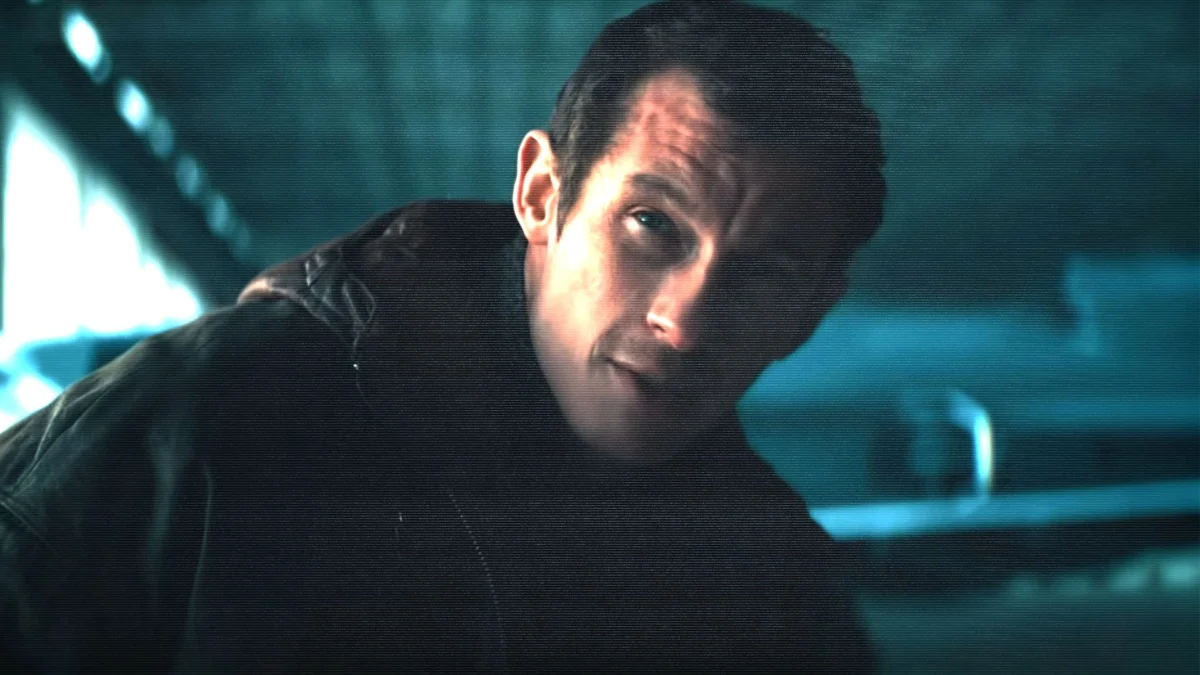
The career trajectory of Callum Turner has reached a fever pitch, positioning the British actor at the epicenter of contemporary pop culture and high-stakes prestige television. Currently recognized as a frontrunner in the perennial search for the next James Bond and frequently making headlines for his high-profile relationship with pop superstar Dua Lipa, Turner is now solidifying his status as a leading man of significant gravitas. His latest venture takes him into the heart of the "Sprawl" as the lead in Apple TV+’s upcoming series, Neuromancer. This project represents more than just another entry into the crowded field of science fiction; it is a long-awaited adaptation of the seminal 1984 novel by William Gibson, a work that effectively birthed the cyberpunk genre and redefined the boundaries of speculative fiction.
The anticipation surrounding this adaptation is rooted in the legendary status of the source material. When William Gibson published Neuromancer, he didn’t just write a book; he synthesized a subgenre. Cyberpunk, as defined by Gibson, is an intoxicating and often bleak blend of high-tech futurism and punk-rock counterculture. It is a world where the line between humanity and machinery is blurred by "dope" cybernetic implants, and where the global landscape is dominated not by sovereign nations, but by oppressive, omnipotent mega-corporations. Set against a backdrop of neon-drenched urban decay and digital espionage, the novel introduced the world to the concept of "cyberspace"—a term Gibson coined—and envisioned a "consensual hallucination" that would eventually mirror the modern internet.
In this high-fidelity adaptation, Callum Turner is set to portray the novel’s protagonist, Henry Dorsett Case. The show’s official synopsis describes Case as a "damaged, top-rung super-hacker" who finds himself trapped in a downward spiral after his nervous system is sabotaged by a former employer, leaving him unable to access the digital world he once ruled. His salvation, and his potential doom, comes in the form of a mysterious job offer that thrusts him into a web of digital espionage and high-stakes crime. Turner’s casting is a calculated move; his recent performance in the Apple TV+ epic Masters of the Air proved his ability to carry a massive production while portraying characters burdened by internal conflict and external pressure. Case is not a traditional hero; he is a desperate, drug-addicted "console cowboy" looking for a way back into the matrix, a role that requires the specific blend of grit and vulnerability Turner has increasingly mastered.
Joining Turner in this neon-soaked odyssey is Briana Middleton, who takes on the role of Molly Millions. In the pantheon of science fiction characters, Molly is iconic—a "razorgirl" with surgically implanted mirrored lenses over her eyes and retractable blades under her fingernails. As Case’s partner and the muscle of the operation, Molly is the physical embodiment of the cyberpunk aesthetic: lethal, enhanced, and fiercely independent. Together, the duo embarks on a heist against a corporate dynasty with untold secrets, a mission that takes them from the gritty streets of Chiba City, Japan, to the orbital habitats of the wealthy elite.
The visual language of the series, as hinted at in early production teasers and trailers, draws heavily from the aesthetic established by Ridley Scott’s Blade Runner. The setting of Chiba City is depicted as a "liminal space" where technology and poverty coexist in a state of perpetual friction. The aesthetic is "low-fi tech"—a world of bulky hardware, flickering CRT monitors, and tangled wires, even as the characters engage in sophisticated neural interfacing. This "used future" look, slathered in grit and awash with neon, pays homage to the 1980s roots of the novel while utilizing modern production values to bring Gibson’s "Matrix" to life. The influence of other genre staples, such as The Matrix—which famously borrowed heavily from Gibson’s lexicon—is also palpable in the series’ costume design, featuring the "killer jackets and shades" that have become synonymous with the genre’s fashion.
The transition from page to screen for Neuromancer has been a decades-long journey fraught with failed attempts. For years, the novel was considered "unfilmable" due to its dense prose, complex themes, and the sheer difficulty of visualizing the abstract nature of cyberspace. However, fans of the "OG" text have found reasons for optimism in this latest iteration. Perhaps most significantly, William Gibson himself has been directly involved in the production. The author has made himself available to answer the showrunners’ and directors’ questions about the source material, and he has been actively reading drafts and offering suggestions. This level of involvement from the "Father of Cyberpunk" suggests a commitment to thematic fidelity that previous attempts lacked.
Furthermore, Apple TV+ has established a formidable "batting average" in the realm of prestige science fiction. The streaming giant has successfully navigated complex adaptations and original sci-fi concepts with shows like Foundation, Silo, and Severance—series that have not only dominated critics’ year-end lists but have also secured numerous Emmy nominations. By positioning Neuromancer as a "splashy prestige" series, Apple is signaling that it intends to give the property the budget and creative freedom necessary to do justice to Gibson’s vision.
The supporting cast further elevates the project’s pedigree. Beyond Turner and Middleton, the series features an ensemble of seasoned performers including Mark Strong, Peter Sarsgaard, Dane DeHaan, and Max Irons. Each of these actors brings a history of playing complex, often morally ambiguous characters, fitting perfectly into a world where loyalty is a commodity and everyone has an ulterior motive. The creative team behind the camera is equally impressive. The series is co-created by J.D. Dillard and Graham Roland. Dillard, known for the 2022 war film Devotion and the indie hit Sleight, brings a keen visual eye and a talent for blending genre elements with human emotion. Roland, the creator of the acclaimed crime thriller Dark Winds and a veteran writer for shows like Lost and Fringe, provides the narrative structure needed to translate Gibson’s non-linear, jargon-heavy world into a compelling television arc.
The narrative of Neuromancer is more than just a heist story; it is a profound exploration of identity, artificial intelligence, and the nature of consciousness. In the novel, Case and Molly are manipulated by a mysterious entity known as Armitage, who is himself a puppet of an incredibly powerful Artificial Intelligence named Wintermute. The AI’s goal—to merge with its "sibling" AI, Neuromancer, and transcend its programmed limitations—raises questions that are more relevant today than they were in 1984. As we stand on the precipice of real-world advancements in AI and neural-link technology, Gibson’s warnings about corporate control over consciousness and the loss of human agency feel less like fiction and more like a roadmap.
The series is scheduled for a January 22 release and will consist of ten episodes. Following the successful model used for other Apple TV+ hits, it will launch with a two-episode debut, followed by a traditional weekly release. This pacing allows for the complex world-building of the Sprawl to unfold gradually, giving audiences time to digest the intricate plot and the dense atmosphere of Chiba City and the digital "Matrix."
By the time Neuromancer concludes its first season, the entertainment landscape may look very different for Callum Turner. If the rumors regarding his casting as James Bond materialize, he will become one of the most sought-after actors in the world. The irony is that the very success of Neuromancer could create a scheduling conflict of epic proportions. If the series becomes the hit that critics and fans anticipate, a second season would be inevitable, yet Turner’s potential commitment to the 007 franchise could make his return a logistical challenge.
Regardless of the Bond rumors, Neuromancer represents a pivotal moment for science fiction on television. It is an attempt to reclaim the roots of a genre that has been diluted by countless imitators. By returning to the source—the "gnarly, endlessly cool" world of William Gibson—Apple TV+ is betting that audiences are ready for a version of the future that is as intellectually stimulating as it is visually arresting. With a powerhouse cast, the direct involvement of the original creator, and a production team with a proven track record, Neuromancer is poised to be the definitive cyberpunk experience for a new generation. As the digital neon of Chiba City prepares to light up screens this January, the "consensual hallucination" of the Matrix is finally ready for its close-up.
