
 By Lina Irawan
As Asia burgeons with unprecedented wealth and an increasingly aging populace, its healthcare landscape is undergoing a profound transformation. At the forefront of navigating this complex shift is Prem Kumar Nair, CEO of IHH Healthcare, Asia’s largest private health group. Nair observes a continent where affluence has brought with it both the means to live longer and the propensity for lifestyle-related ailments, creating a dual challenge for healthcare providers. "As populations grow more affluent and people indulge in good food and wine, we’re seeing a rise in lifestyle diseases: diabetes, hypertension and high cholesterol," he notes in a recent interview with Fortune, underscoring a critical paradigm shift in regional health priorities.
This phenomenon is inextricably linked to Asia’s accelerating demographic transition. The region is aging at an unprecedented rate, with projections from the Asian Development Bank indicating that one in four people will be over 65 by 2050. While Asians generally boast longer life expectancies than their counterparts outside the region, this longevity often comes with a trade-off: extended lifespans do not always equate to healthier ones. A sobering study published by Stanford in April revealed that population aging alone accounted for a substantial 33.6% increase in the disease burden across key Asian economies, including mainland China, Japan, Singapore, South Korea, and Taiwan. This rising burden manifests in chronic conditions that demand long-term care, placing immense pressure on existing healthcare infrastructure and resources. The economic implications are vast, encompassing increased healthcare expenditure, potential workforce shortages, and the need for innovative care models to support an elderly population.
Recognizing this evolving imperative, IHH Healthcare is proactively stepping into the breach with "Healthspan," a pioneering preventive health and longevity program launched in July. Distinct from the often superficial, aesthetics-driven wellness industry, IHH’s Healthspan is firmly rooted in clinical intervention and scientific rigor. While currently offered exclusively in Singapore, Nair harbors ambitious plans to extend its reach across IHH’s nine other key markets, which include major economies like India, Turkey, and Greater China. "For many people, longevity means aesthetics: coloring your hair, and taking a whole lot of vitamins and supplements," Prem clarifies. "But for a healthcare provider like us, longevity is anchored very strongly in clinical science." This philosophy permeates the program’s offerings, which focus on evidence-based strategies to mitigate age-related decline and prevent chronic disease.
A prime example of Healthspan’s clinical focus is its approach to sarcopenia, the progressive, age-related loss of muscle mass and strength that significantly impacts quality of life and increases the risk of falls and fractures. Instead of merely addressing symptoms, IHH encourages older patients to engage in targeted resistance training. "We’ll encourage older patients to do resistance training, not for them to build biceps, but to make sure that their muscles can hold them up and they don’t fall and sustain knee or hip fractures," Prem explains. This preventive strategy aims to maintain functional independence, a critical component of true longevity. Furthermore, the Healthspan program strategically incorporates GLP-1 drugs, a class of medications, including popular names like Ozempic and Wegovy, which Prem acknowledges have become "the poster boy of longevity." However, he emphatically stresses that IHH’s application of these drugs is not for cosmetic weight loss, but rather for their clinically proven efficacy in preventing obesity-driven arthritis and metabolic diseases—conditions that severely diminish healthspan.
Beyond specialized programs, IHH is fundamentally re-engineering its service delivery model. As Asia’s population greys, the group is strategically expanding its network of ambulatory care centers. These smaller, community-based facilities represent a crucial shift away from traditional, large-scale hospital-centric care. Designed to handle procedures such as endoscopies and total knee replacements without requiring a full hospital admission, these centers offer a more accessible, cost-effective, and patient-friendly alternative. They are being strategically established in densely populated, rapidly aging urban centers like Singapore and Hong Kong. For instance, Singapore’s Parkway MediCentre in the Woodleigh district exemplifies this model, providing essential services like chronic disease management and specialist consultations in dermatology, obstetrics, and gynaecology, directly within the community. This move aligns with a broader global trend where aging societies are transitioning towards personalized, neighborhood-embedded healthcare options, enhancing convenience and reducing the strain on acute hospital beds. "We have transitioned from being a mega hospital player to a healthcare ecosystem player in all the countries that we are in," Prem asserts, envisioning this integrated, patient-centric approach as "the future of healthcare."
IHH Healthcare’s journey to becoming Asia’s largest private health group is a testament to strategic vision and adaptable growth. Incorporated in 2010 as a holding company for Malaysian sovereign wealth fund Khazanah Nasional Berhad’s extensive healthcare investments—which included Singapore-based Parkway, India-based Apollo (now part of its portfolio), and Malaysia-based Pantai and IMU Health—the entity rapidly consolidated its position. In 2012, it transformed into a public company, executing a landmark dual IPO on both the Malaysian bourse Bursa Malaysia and the Singapore Stock Exchange (SGX). This $2 billion offering was a global financial event, ranking as the third-biggest listing worldwide that year, surpassed only by Facebook and Malaysian palm oil giant Felda Global Ventures Holding. Today, IHH’s robust performance is evident in its stock market trajectory, with shares appreciating by over 20% in the past 12 months. The group’s expansive footprint now covers 89 hospitals across 10 countries, generating an impressive revenue of approximately $6 billion in 2025, securing its position at No. 58 on Fortune‘s Southeast Asia 500 list.
Historically, IHH’s early growth was primarily fueled by strategic acquisitions. Notable examples include the 2015 acquisition of India-based Globe Healthcare, followed three years later by the takeover of Fortis Healthcare, another significant Indian brand. However, a pivotal shift in this growth strategy occurred with Prem Kumar Nair’s arrival in 2020. Drawing on his 27 years of experience at competitor Raffles Medical Group, Nair redirected IHH’s focus towards organic growth within its existing markets and businesses. This strategic pivot was influenced by investor scrutiny regarding the efficiency of inorganic growth, particularly the complexities of integrating diverse entities. "A lot of investors were asking us whether M&As were an efficient way to grow, since each time we grow inorganically, we have to integrate the different entities," Prem reflects. "Eventually, we decided that the best form of growth is growing within our existing markets and clusters… organic growth is always better since the operational efficiency is there, as we’re leveraging existing businesses and already have hospital executives in the country." This strategy has yielded tangible results, with IHH Healthcare adding a substantial 4,000 beds to its hospitals under his leadership.
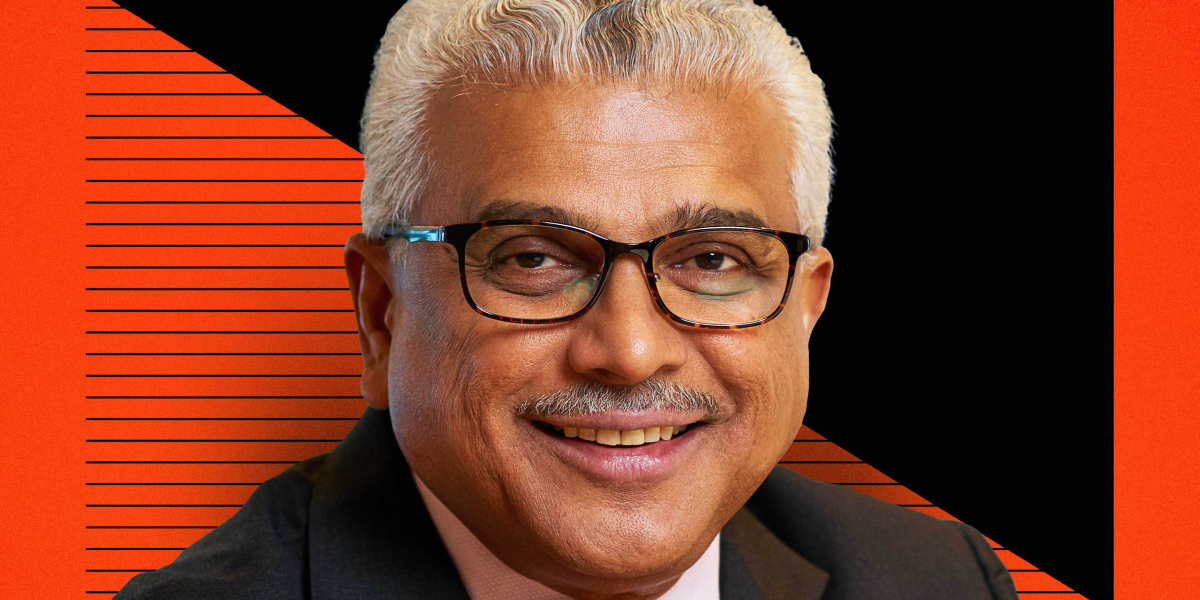
Prem’s tenure began amidst an unprecedented global health crisis: the COVID-19 pandemic. His role as IHH’s Singapore CEO at the time meant his leadership transition was far from "normal." Singapore’s stringent "circuit breakers" between 2020 and 2021—nationwide partial lockdowns, social gathering bans, office closures, and mandatory mask-wearing—demanded immediate and decisive action. "It was crisis management from the start," he recalls. IHH played a crucial role in the national response, deploying medical staff to checkpoints for virus screening and providing critical care to foreign workers in dormitories, which tragically became the epicenter of Singapore’s outbreak, accounting for nearly 90% of cases. This experience solidified Prem’s conviction regarding the indispensable nature of public-private partnerships during health emergencies. While "during peace time, we have our respective roles: The public sector works to provide affordable, accessible healthcare, while the private sector looks after patients who prefer quicker response times, more privacy and have the means to pay a premium," he explains, a pandemic demands "all hands on deck."
IHH’s diversified global presence, spanning multiple countries in Asia and beyond, has proven to be a crucial hedge against market volatility. "Being diversified has helped us a lot… there were times when Turkey faced macroeconomic issues like inflation, but Malaysia, Singapore and our other markets buoyed our economic performance," Prem notes. This geographical spread provides a robust shield against localized economic downturns or regulatory shifts, ensuring overall stability and continued growth. Looking ahead, while deepening its presence in existing markets remains a priority, IHH is also exploring expansion into adjacent, high-growth countries. Prem acknowledges that "all of the countries we’re in will at some point become saturated; competition is a given, so we have to look at new markets." Countries like Indonesia and Vietnam are on the radar, especially as regulatory environments in these nations evolve to become more amenable to foreign investment and participation in healthcare, with Indonesia, for instance, now allowing foreign doctors to practice and private hospitals to be fully owned by international entities. Competitors like Thompson and Raffles Medical have already made inroads into Vietnam, signaling the ripe opportunities in these emerging markets.
Four decades into his distinguished career, Prem observes a significant evolution in the mix of specialties dominating Asia’s healthcare institutions. A decade ago, cardiology was typically the largest specialty in most hospitals. However, advancements in preventive medicine, focusing on managing risk factors like cholesterol levels, hypertension, and diabetes, have led to a notable decline in cardiac disease rates. A recent study highlights this success, reporting a 26% drop in the age-standardized mortality rate of cardiovascular disease in Asia between 1990 and 2021. Consequently, "Cancer is now becoming the biggest subspecialty in all our hospitals," Prem states. In response, IHH is making substantial investments in cutting-edge oncology, including advanced cancer testing, genomic medicine, and precision medicine.
This commitment is demonstrated through strategic investments such as the $20 million Series A funding round IHH led in 2019 for Singapore-based genomic medicine firm Lucence. Lucence specializes in ultra-sensitive liquid biopsies, blood tests capable of detecting over ten types of cancer at early stages. IHH also invests in sophisticated proton therapy machines, which offer a more precise form of radiation treatment using accelerated proton particles, proving highly effective for complex cancers of the head, neck, brain, and liver. Prem clarifies IHH’s investment philosophy: "We’re a strategic investor, not a financial investor. So whatever we invest in, we actually use and validate." This ensures that investments directly contribute to enhancing clinical capabilities and patient outcomes across their network.
Further fostering innovation, IHH launched the IHH Catalyst program in February, a platform designed to connect healthcare entrepreneurs, clinicians, and operational leaders to identify and nurture promising health startups. The inaugural edition, held in India, focused on the nation’s priority health domains, including oncology, chronic disease management, and preventive care. The initiative is set to expand to North Asia, spearheaded by Gleneagles Hong Kong and Parkway Shanghai, demonstrating IHH’s commitment to cultivating a future-ready healthcare ecosystem.
The group is also bullish on the transformative potential of Artificial Intelligence (AI). A few years ago, IHH strategically converted its data and digital department into an AI transformation team, singularly focused on identifying and integrating AI-enabled healthcare solutions. Their most notable success to date is NurseShift.ai, an AI-powered system that automates hospital rostering. This task, which previously consumed approximately 51% of nursing supervisors’ time, has been streamlined, earning IHH Singapore a national honor from the Ministry of Health for health innovation. NurseShift.ai is now being rolled out beyond Singapore to Malaysia and Hong Kong. IHH is also actively developing AI-enabled clinical pathways, where advanced models analyze patient symptoms and risk factors to suggest tailored treatment plans for doctors to consider, edit, and approve. "One of the key reasons behind resource wastage is variation in healthcare," Prem explains. "Different specialists are trained differently, so they all do things differently. Some specialists may keep you in the hospital for two days, while others could opt for a week, but AI can help in standardizing this by giving clinicians a framework to build upon." Despite this enthusiasm for AI, Prem maintains that human medical judgment remains indispensable. "The medical staff are ultimately the ones performing the procedure, so there must be consensus," he emphasizes. "We must also allow for exceptions, since the profiles of patients can be quite different." This nuanced perspective underscores the intricate balance between technological advancement and the irreplaceable human element in patient care, acknowledging that "Healthcare and medicine can be complex in that way."
IHH Healthcare, under Prem Kumar Nair’s astute leadership, is not merely reacting to Asia’s evolving health landscape but actively shaping its future. By embracing preventive health, decentralizing care into communities, strategically investing in advanced oncology and digital innovation, and fostering a culture of organic growth, IHH is building a resilient, patient-centric healthcare ecosystem designed for the challenges and opportunities of the 21st century. This forward-thinking approach, deeply rooted in clinical science and technological integration, positions IHH as a pivotal player in defining how healthcare will be delivered in one of the world’s most dynamic and rapidly transforming regions.
